Tag: Financial Wellness

  • Stay Warm, Save Money

    FINANCIAL HEALTH

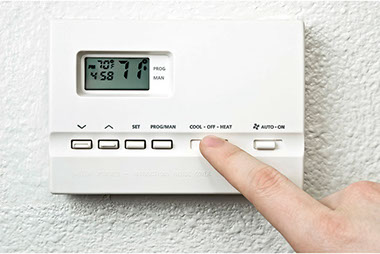
    Image of thermostat being set at 71 degrees.

    When temperatures drop, energy bills are higher. Duke Energy offers some simple energy (and money) saving tips:

    *  Check your heating system’s ductwork to ensure that it is well insulated and completely covered. Ductwork should be properly sealed and not allowed to hang loose under the house.

    *  Keep your thermostat at a comfortable setting. If you are going to be away for several days, turn the thermostat to a lower setting, but not off.

    *  Have your heating or cooling system checked each season by a qualified technician to make sure it is operating properly. Heating and cooling account for at least half of your energy bill.

    *  Check insulation, seal cracks, and weather-strips between heated and unheated areas such as garages, basements, and attics.

    *  If you have a window air conditioning unit, remove it for the winter months to prevent heat from escaping through and around the unit. If it cannot be moved, cover it to prevent drafts.

    *  Always make sure the fireplace damper seals tightly and remains closed except when a fire is burning or smoldering in the fireplace.

    *  Insulate your water heater with at least R-6 insulation. The water heater is the second-largest energy user in your home. You can save enough money in energy bills to pay back the cost of materials within months and then keep on saving.

    *  Ceiling fans help keep you comfortable in the summer and winter. Reversing the direction of the blades pushes warm air down into the room. Fans should turn counter-clockwise in the summer and clockwise in the winter.

    *  On sunny days, leave the draperies open to allow the sun’s rays to warm your house.

    © American Institute for Preventive Medicine

  • 3 Ways To Avoid Distractions At Work

    WORK LIFE

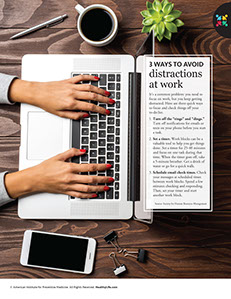
    Close up of hands typing on laptop keyboard.

    It’s a common problem: you need to focus on work, but you keep getting distracted. Here are three quick ways to focus and check things off your to-do list.

    1. Turn off the “rings” and “dings.” Turn off notifications for emails or texts on your phone before you start a task.

    2. Set a timer. Work blocks can be a valuable tool to help you get things done. Set a timer for 25-40 minutes and focus on one task during that time. When the timer goes off, take a 5-minute breather. Get a drink of water or go for a quick walk.

    3. Schedule email check times. Check your messages at scheduled times between work blocks. Spend a few minutes checking and responding. Then, set your timer and start another work block.

    Source: Society for Human Resource Management

    © American Institute for Preventive Medicine
  • 6 Tips To Become More Productive At Work

    WORK LIFE

    Image of women at work looking at notes posted on the wall.

    Productivity means you make the most of your time. You may get more done with less time or with fewer people. But it’s not just about being fast, it’s about maintaining quality too. Learning to be productive means you can showcase your talents and abilities by doing a great job with the resources and skills you have.

    Boosting productivity is often easier said than done. When you’re tired, distracted or simply don’t know how to organize your day, it can be hard to stay productive. Try these tips to make the most of your workday – and get more satisfaction out of your career while doing it!

    1.Break down big tasks.Large projects can be overwhelming, so we often put them off because we don’t know where to start. Instead of letting a large project sit on your to-do list, write down the first step you need to do to get it done. Make it something you know you can do, and set a deadline for yourself. Once that’s done, move on to the next step, and so on.

    2.Have real conversations instead of emailing.Email chains can become time-wasters and often lead to misunderstandings or missing information. When possible, talk to someone in person or on the phone instead of starting an email trail.

    3.Check email at set times.We can’t avoid email completely, but constant inbox chimes can quickly diminish your productivity. Instead of reading every email as it comes in, turn off your email program and only check it two to three times a day.

    4.Take quick breaks when you can.Back-to-back meetings or intense work sessions can drain you. But you don’t need to wait until your lunch hour to energize yourself. If you can, take a few moments to get up and walk around. Stretch at your desk or try deep-breathing exercises.

    5.Tackle those little things to clean up your to-do list.If you have a bunch of small, quick tasks nagging at you, set some time aside to get them done. Then you can focus on the bigger, more important things without other distractions.

    6.Set your own deadlines.If a task or project doesn’t have a due date, it’s easier to put off. Even if a specific deadline hasn’t been set, you can give yourself one. This helps you avoid hanging onto those things that sit undone for days or weeks.

    © American Institute for Preventive Medicine

  • Get Out Of Your Seat

    MEDICAL NEWS

    Image of women standing and talking on the phone.

    There are lots of things you can do to keep your body healthy. Eat nutritious foods like fruits and vegetables, get exercise, and see your doctor as needed for checkups. But the American Cancer Society says there’s something else we need to do: don’t sit so much.

    A large study showed that women who sat for more than six hours per day had a higher risk of cancer than those who sat for three hours or less. In addition, studies have found links between sitting for long periods and dying younger, the ACS says.

    But what if you have to sit for your job? There are some ways you can reduce your sitting time:

    *  Stand during conference calls.

    *  Take a quick standing or walking break every hour if you can.

    *  Park farther away from the building.

    *  Walk during your lunch break.

    Remember, every little bit helps. A few minutes of walking here and there can add up to big health benefits.

    © American Institute for Preventive Medicine

  • Piggy Bank Smarts

    FINANCIAL HEALTH

    Image of hand placing a dollar bill into a piggy bank.

    Smart money management begins at home. Washington University researcher Michal Grinstein-Weiss found that teaching kids about money in childhood helps them better manage their mortgage loans as adults. The study was in Social Work Research.

    The professor offers 5 ways parents can teach their kids financial literacy:

    1. Discuss and explain basic finances around the dinner table, especially the difference between needs and wants.

    2. Teach kids how to save and set short-term goals (a new toy) and long-term goals (college). Kids will follow by example if they see you saving for something such as a family vacation.

    3. Open a savings account for your child as early as possible. Even if you bank online, visit the bank with your child to make a deposit because actions reinforce behaviors. Review monthly statements together.

    4. Teach kids budgeting and money-management skills. Help your child figure out how much money to save for how long to reach a goal amount.

    5. Get kids involved in daily activities and decisions about spending. Take them grocery shopping and have them compare prices of different brands. Count out the cash during a sale.

    © American Institute for Preventive Medicine

  • Stop The Spending Cycle

    WELL-BEING

    Image of colorful shopping bags.

    Going overboard on one shopping trip, especially around the holidays, does not mean you have a shopping addiction. It’s normal to overdo it once in a while. And, everyone buys things that aren’t truly needed at times.

    But, if you think you or a loved one might have a shopping addiction, there is help. Often times, a shopping addiction is the result of another health issue like depression. Talk with your doctor about your feelings and symptoms. Antidepressants or other medications may be helpful.

    Or, you may wish to talk with a counselor about things that are bothering you. Sometimes, emotional burdens or troubles can make you look for happiness in things like shopping. If you are able to deal with those problems, you may not feel the need to shop as much.

    There are also support groups for people with a variety of addictions. Debtors Anonymous can help people who have gone into debt from too much spending.

    Don’t be afraid to seek help. The sooner you can address the problem, the sooner you can get your life back on track.

    © American Institute for Preventive Medicine

  • 4 Money Mistakes To Avoid

    FINANCIAL HEALTH

    Image of 3 friends.

    Little everyday choices can have a big impact on your finances. If you want to save more or spend less, think about whether you’re making any of these mistakes.

    Mistake #1: You put off saving money.

    Do you think that you can wait a few more months or even years before you need to save for retirement, your kids’ college or other future needs? Even if you can only put away a few dollars each week, start now. It can add up over time and the sooner you start, the more money you’ll have later.

    Mistake #2: You spend too much on “treats.”

    We all like to treat ourselves once in a while. But, if you’re spending money on treats often, such as going to the movies or buying yourself a new item, you could be creating money problems. Look for low-cost or free ways to reward yourself. Set aside some time with a friend, take a hot bath, watch a favorite movie at home or check out free museums and concerts.

    Mistake #3: You get lots of coupons in your mail and email.

    If you get catalogs in the mail and your inbox is filled with coupons and deals, this could be wrecking your money goals. After all, you may not need the items that are advertised. But, they look like such a good deal that you decide to buy them anyway. Do you really need another sweater or pair of jeans, or are you buying them because of the sale? Unsubscribe from email coupons and newsletters, and throw catalogs in the recycling bin. This can help lower the temptation to shop.

    Mistake #4: You don’t know how much money you really have.

    If you are struggling financially, it can be hard to look at your bank account balances. But, it’s better to know what you can afford than to go deeper into debt. Make a budget of what you have and what you can spend each month after bills are paid. Try to stick to your budget and find ways to cut out unnecessary items.

    © American Institute for Preventive Medicine

  • 6 Ways To Cool A Workplace Argument

    WORK LIFE

    Image of co-workers talking.

    No matter where you work, you’re bound to meet coworkers with different personalities and work styles. As a result, there may be times when you need to work through opinions that differ. Sometimes you may be faced with a heated argument. But, this type of situation doesn’t have to get worse.

    Learn how to calm an upset coworker with these tips from the Society for Human Resource Management:

    1.Remain calm.Yelling and unprofessional behavior doesn’t help anyone find a solution. It could escalate and end up out of control.

    2.Try to understand what the other person is saying.Look at them calmly and let them talk. Follow up by asking them to explain more if needed.

    3.Use “I” statements, such as “I feel disappointed that this project isn’t going well.”Rather than, “You aren’t doing a good job on this project.” Focus on behaviors or problems, not people.

    4.Discuss solutions to the problem.Write them down on paper or a white board if needed.

    5.Make sure everyone agrees on the solution.

    6.If an agreement can’t be reached, decide if you can “agree to disagree” on the issue.If that’s not an option, consider involving a neutral third person or a human resources staff member if needed.

    Knowing how to resolve conflict in the workplace is a valuable skill you can use throughout your life. Staying calm and collected in a tense situation gives you the ability to find a productive, positive solution.

    © American Institute for Preventive Medicine

  • Going Back To Work After A Leave

    WORK LIFE

    Image of 2 construction workers.

    Many people take a leave of absence from work at some point. It could be for a life event, such as maternity or paternity leave, or because of an illness. A leave of absence is usually an extended period of time off that goes beyond vacation or other type of leave.

    No matter how long your leave is, going back to work can be a big adjustment and cause you plenty of anxiety. But, you can make the transition smoother if you prepare for your new routine. Try these tips:

    *  Get organized. A week or two before you go back, start jotting down things you will need to do every day. Whether it’s packing lunches, walking the dog or dropping kids off at daycare, it helps to have it all written down to feel more in control of the situation. You can then create a schedule or to-do list which helps make it more manageable.

    *  Start moving back to your work schedule. It can be quite a shock to go back to a 6 a.m. work shift if you’ve been staying up late. At least two weeks before you go back, start transitioning your sleep schedule. Give your body time to adjust to getting up at that same time and change your bedtime accordingly. Aim for seven to eight hours of sleep so you can feel rested and productive.

    *  Allow for extra time in the morning. Set your alarm for earlier than you think you need to. You’ll be glad to have the extra time without rushing in the morning. Or, you may find that it takes you longer to get ready than you thought.

    *  Talk with your supervisor before going back. You can discuss your specific job duties and schedule. And, you can touch base about any changes or updates that may have taken place while you were gone. This could save you time and stress on your first day back.

    *  Discuss breastfeeding in advance. Moms who plan to pump breastmilk at work should ask their supervisor or human resources department about this before going back. Come up with a pumping schedule that works for you and your employer. Discuss where you can pump. You’ll need a clean and private area with access to a sink.

    Going back to work can be less stressful with some planning and open discussion with your employer. Don’t wait until you go back to deal with these questions and details.

    © American Institute for Preventive Medicine

  • Poor Behavior At Office Parties May Hurt Your Career

    WORK LIFE

    Image of a group of co-workers drinking after hours.

    Too many drinks combined with poor behavior at an office holiday party could signal the demise of employment for some employees, warned Lynne Richardson, dean of the Ball State University Miller College of Business. She said employees should be on their best behavior and treat the annual holiday office party as an extension of work. Supervisors can and will hold employees accountable for inappropriate actions at such events. Avoid excessive alcohol consumption, dress appropriately, abstain from discussing sensitive work-related issues and bring a date only if told it is proper.

    © American Institute for Preventive Medicine