Tag: Financial Wellness

  • Stop! Thief

    FINANCIAL HEALTH

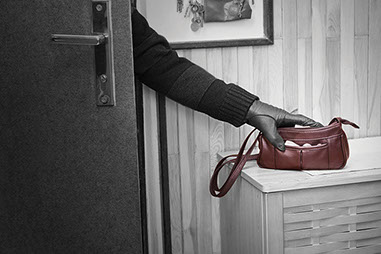
    Image of arm sneaking in from a door grabbing a purse on the counter.

    When your purse or wallet is lost or stolen, do you know the 8 steps you need to take right away because the thief is already cashing in on your loss? Act fast, advises the Federal Trade Commission:

    1. File a report with the police immediately. Get a copy in case your bank, credit card company, or insurance  company needs proof of the crime.

    2. Report the loss to your bank. Cancel checking and savings accounts. Open new ones, and stop payments on outstanding checks. Cancel each credit and charge card. Get new cards with new account numbers. Get a new ATM card, account number, and PIN or password.

    3. Call your utility companies. Tell them that someone may try  to get new service using your identification.

    4. Report your missing driver’s license to the department of  motor vehicles.

    5. Report missing cards to the major credit reporting agencies and place a fraud alert on your accounts: Equifax: 1-800-525-6285, Experian: 1-888-397-3742, TransUnion: 1-800-680-7289.

    6. Change the locks on your home and car if the keys were taken.

    7. Contact the Social Security Administration.    Call: 1-800-772-1213.

    8. Contact your insurance companies. Make sure no one tries to add someone to your policies.

    © American Institute for Preventive Medicine

  • 4 Tips For Lunchtime Walking

    WORK LIFE

    Coworkers walking outside.

    Sometimes lunchtime is the only time you have to exercise. That’s OK! Walking at lunch can boost your health. Here’s how to succeed:

    1.  Keep walking shoes and clothes at work. Then you don’t have to remember them each day.

    2.  Ask others to go with you. Having a friend can make walking more fun.

    3.  Put it in your calendar. If it’s scheduled, you may be more likely to do it.

    4.  Pack a lunch each day. Have healthy food ready to eat when you’re done.

    Source: American Heart Association

    © American Institute for Preventive Medicine

  • 7 Steps To A Great Work Day

    WORK LIFE

    Image of construction workers.

    1.  Allow yourself plenty of time in the morning. Don’t hit snooze on the alarm. Starting your day without rushing can help keep your stress levels down.

    2.  Take an invigorating shower or listen to upbeat music to wake up your body and mind. This will help jump-start your day.

    3.  Have a healthy breakfast with some protein and fiber to keep you going all morning. Try oatmeal with low-fat milk or an egg with whole grain toast. Pack a healthy lunch too!

    4.  When you get to work, write down the most urgent things that should be done. Respond to the most important emails or calls first. But, don’t forget about less urgent items. Write down a list of what you hope to get done by the end of the day.

    5.  Smile when you talk to people on the phone. Others will “hear” your smile in the tone of your voice. Even if you don’t feel like smiling, try it. You may find that it helps you have a more positive outlook. Smiling can “trick” your brain into feeling happy.

    6.  Don’t get overwhelmed. If your workload isn’t doable, speak up. Talk to your supervisor about small concerns before they become big problems. You may be able to get a deadline extension or find a creative way to get it done with help from a coworker.

    7.  Get to bed on time so you can start fresh and rested again tomorrow. Aim for seven to nine hours of sleep each night. Allow for some relaxing activity before bedtime to get your body and mind ready for sleep.

    Sources: American Institute of Stress, National Sleep Foundation

    © American Institute for Preventive Medicine

  • How To Be A Team Player At Work

    WORK LIFE

    Concept drawing on table to being a team palyer at work.

    You’re bound to run into many different personality types at the workplace. And when you’re working as a team, it can be challenging to adjust to different work styles.

    The American Management Association says teamwork leads to better problem solving and productivity. But it’s not as simple as just saying you’re part of a team. Here are some tips to help you achieve the best possible outcome with your group:

    *Use your strengths.People have different talents and skills that make them who they are. Offer to use your unique strengths to help get things done. Don’t wait to be asked; volunteer to help when you can.

    *Don’t place blame.When things don’t go well, it’s usually not helpful to blame someone else. Instead, look at the problem and work together to find ways to solve it.

    *Listen without talking.When others have ideas or opinions, listen to their side before jumping in with your thoughts. Listen with the goal of understanding their point, not adding your own.

    *Be aware of different work styles.You may be on a team with someone who does things differently than you. Instead of trying to correct them, see if you can learn something from their way of doing things.

    *Be dependable.The best team players are those who get things done on time. Missing deadlines could cause trouble for others on your team or jeopardize your project.

    *Communicate.If you’re running into problems or have too much on your plate, tell your team about it. Someone else may be able to help so you can keep the project running smoothly. People may have no idea you’re struggling – unless you speak up and tell them.

    © American Institute for Preventive Medicine

  • Protect Your Personal Information

    FINANCIAL HEALTH

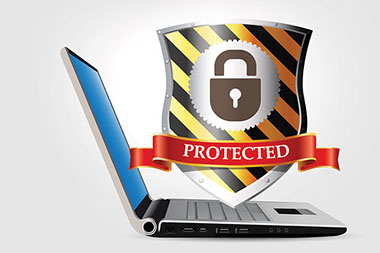
    Image of laptop with shield and lock key.

    Identity theft is a serious crime. It happens when someone steals your personal information such as your social security number or credit card numbers and uses it without your permission. You may see mistakes or mystery charges on your bank, credit card, or other account statements. You may receive bills for products or services you never received. Protect your personal information, urges the Federal Trade Commission. Get detailed information online atwww.ftc.gov/idtheft.

    *Keep your important papers secure.Limit what you carry in your wallet or purse. Pick up new checks at the bank instead of having them mailed to your home. Take outgoing mail to a collection box or the post office. Don’t leave it in your mailbox. Shred sensitive documents, receipts, credit card offers, insurance forms, checks, bank statements, and similar documents.

    *Secure your social security number.Only give it out when necessary (and ask if you can use a different kind of identification).

    *Protect your computer and mobile devices.Use anti-virus software. Don’t open files or click on links sent by strangers. Remove the memory cards from mobile devices before recycling them.

    *Protect your data online.Keep your passwords private. Don’t over share on social networking sites. If you post too much information about yourself, an identity thief can use that information to answer challenging questions on your accounts (birthdays, mother’s name, pet names, high school).

    © American Institute for Preventive Medicine

  • Stretching Exercises To Do At Your Desk

    WORK LIFE

    Image of office with employees working on computers.

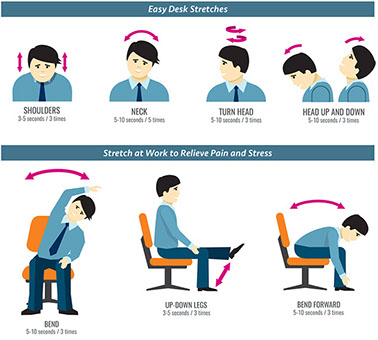
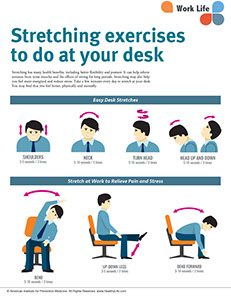
    Stretching has many health benefits, including better flexibility and posture. It can help relieve soreness from tense muscles and the effects of sitting for long periods. Stretching may also help you feel more energized and reduce stress. Take a few minutes every day to stretch at your desk. You may find that you feel better, physically and mentally.

    Illustration showing different desk stretches.

    © American Institute for Preventive Medicine

  • 4 Ways To Save Money At Home

    FINANCIAL HEALTH

    Young couple smiling and holding money.

    Homes come with costs. Rent, mortgage, utilities and other expenses can add up. Here are some ways to save right at home that can help your wallet.

    Unsubscribe from advertising.

    Getting emails from stores and companies can tempt you to buy things you don’t really need.

    Cool down the water heater.

    Turn down the water heater 10 degrees and you can save 5 percent on water heating costs.

    Check your insurance.

    Shop for homeowners insurance every year or two. You may find a cheaper plan with the same coverage.

    Source: American Academy of Family Physicians

    © American Institute for Preventive Medicine

  • 8 Ways To Be Promotable

    WORK LIFE

    Image of a group of co-workers smiling.

    No matter what the job, there are certain qualities that all top-performing employees share, according to job-placement expert Phil Blair, author of Job Won! Below are Blair’s 8 ways to be promotion-worthy:

    1.Look and act promotable.You’ve got a job, but unless you plan to make it the last job you ever have, think long term. Act like you’re a man or woman on a mission, always prepared to take the next step, to take your career to the next level. Dress accordingly. In fact, dress for the job you want, not the job you have. Showcase your work when you can. Go above and beyond.

    2.Create value in everything you do.Don’t just cross things off a to-do list. If you have a job to do, do it well. Commit your best effort to all tasks, large and small. That might be challenging at times, but people notice.

    3.Be resourceful.Think outside the box. If you’re doing a job and you see a better way to do it, speak up (in a polite, respectful way). Anticipate problems and find answers before they’re needed. Don’t be afraid to do a little legwork, a little sweating before it’s necessary. It will always pay off.

    4.Get noticed.There’s nothing wrong with stepping up and stepping out: Volunteer for extra duties. Look for chances to be part of a team. Likewise look for chances to work with other departments, both to learn about that department but also to meet new people.

    5.Stay informed.Become an expert in your field. That includes staying on top of industry news and trends, company policies, and department memos. Read the company newsletter. Talk to others in the know. The more information you have at hand, the better prepared you will be when opportunity comes knocking.

    6.Keep positive.No matter what’s going on, remain level-headed, upbeat, with your eye on the prize. There are always ups and downs but focus on the long term. If you have a temper, it is your responsibility to never show it at work.

    7.Be a team player.This is about more than just getting along with others or telling a good joke. In meetings or group efforts, you want to be seen as a valued contributor who offers feedback, meets deadlines, and gets things done-all for the common good. Know your teammates, their strengths, and strive to make them look good too.

    8.Conduct effective meetings.The best way to not get anything done is to call a meeting. That’s a little harsh but meetings are probably the most abused aspect of the workday. The best meetings are short, sweet, and to the point. If you’re calling the meeting or running it, make sure you have an agenda and stick to it. Make sure only the people who need to be at the meeting are there. Stay on point. Allow everyone to speak who wants to speak, but keep them focused on the subject. Try to complete all of the tasks of the meeting before the meeting ends. If that’s not possible, assign action items with due dates.
    © American Institute for Preventive Medicine

  • How To Make Fewer Mistakes At Work

    WORK LIFE

    Image of clock with person sleeping.

    Do you want to be your best at your job and avoid mistakes? There’s a healthy and simple way to do this: GET ENOUGH SLEEP.

    The National Sleep Foundation (NSF) says almost half of Americans said poor quality sleep affected their lives in the past seven days. And, many people report getting poor sleep on a regular basis.

    This poor sleep adds up to poor job performance, says the NSF. In one poll, up to a third of people admitted to falling asleep or feeling very sleepy at work in the last month. This can lead to minor errors, such as a typo in a letter to major mistakes that affect your career.

    When your body isn’t rested, it affects your brain and thinking in ways that could hurt your job performance and even hurt others. One study showed that when on-call resident doctors work overnight, they report 300 percent more medical errors that led to death than those who worked a 16-hour shift.

    Experts at the NSF say you should get at least seven to eight hours of sleep a night. Try to go to bed and get up at the same time each day, and create a relaxing bedroom environment for sleep. If you have chronic sleep problems, see your doctor for help.

    © American Institute for Preventive Medicine

  • Protect Yourself From Medical Identity Fraud

    MEDICAL NEWS

    Image of money and a stethoscope.

    It’s America’s fastest growing identity crime. DHHS says health care data hacking has affected more than 34 million Americans. Stolen records provide information for tax and insurance fraud.

    “When someone steals your medical identity, they corrupt your individual health record, so the next time you receive care your doctor can be working off a file riddled with bad information,” say ID Experts, a medical software provider.

    Use these wise fraud protection tips.

    *  Protect your health insurance card as carefully as you would your Social Security or credit cards. Theft of these cards allows someone to assume your identity to receive care. Treat their loss as seriously as a missing credit card; notify your insurance company and include it on any police report you file.

    *  Never share your insurance with a friend or family member. When someone pretends to be you to receive health care, your lifetime medical records become compromised. This can lead to a future misdiagnosis, a prescription mistake, or other inappropriate treatment.

    *  Use strong passwords on patient portals and change them often.

    *  Be observant in medical offices. Don’t just fill out the HIPAA policy form and then assume your provider is being careful. Raise concerns, like medical records sitting open on desks or unattended and unlocked computer terminals.

    *  Do NOT provide your medical information to someone who calls or emails you about your “possible involvement in a recent breach.”

    © American Institute for Preventive Medicine