Tag: First Aid

  • First Aid Precautions

    First Aid

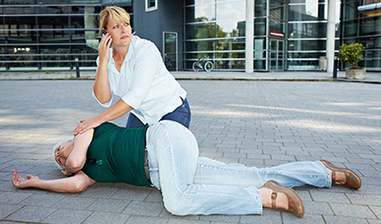
    Image of women on phone beside someone who is unresponsive.

    First Aid Safety Steps

    1.  LOOK around. Is it safe to help? If not, call  9-1-1, have someone else call, or seek medical help. If it is safe to help, stay calm and go to step 2.

    2.  CHECK for a response.

    *  Gently tap the person. Ask, “Are you okay?” Ask loudly. Call the person by name if you know it.

    *  If the person responds or moves, attend to his or her problem, as needed. If the person is injured or the problem is serious, call for emergency medical care. Give first aid as needed, until medical help arrives.

    *  If the person does not respond or move, begin CPR.

    3.  PROTECT yourself from hepatitis B virus and HIV, the virus that causes AIDS. You can get these from an infected person’s blood or other body fluids if they enter your body. These organisms can enter through cuts or breaks in your skin or through the lining of your mouth, nose, and eyes. When you give first aid or do CPR, take these steps, especially if you don’t know the person:

    *  Use plastic wrap or a plastic bag that you can throw away whenever you touch another person’s body fluids, blood, or other objects that may be soiled with his or her blood. If possible, have the person apply pressure to the wound with his or her own hand.

    *  Cover the person’s open wounds with dressings, extra gauze, or waterproof material.

    *  Using a mouth-to-mouth barrier device when you give rescue breaths may or may not protect you from picking up an infection. You do not need to give rescue breaths with Hands-Only CPR.

    *  Within 1 to 2 hours, report every incident that exposes you to another person’s blood or other body fluids to your doctor and EMS personnel.

    4.  FIND out if the person has certain medical needs.

    *  Ask if he or she has prescribed medicine, such as nitroglycerin, to take for a heart condition. Ask where he or she keeps the medicine. Find out how much to give. Ask the person or read the directions on the medicine’s label, if there is one.

    *  Ask the person if you can give the medicine to him or her.

    *  Look for a medical alert tag to find out about health problems the person has.

    *  Find out if the person is allergic to any medicine.

    Healthier at Home book by the American Institute for Preventive Medicine. www.HealthyLife.com. All rights reserved.

    © American Institute for Preventive Medicine

  • A Burning Issue: How To Handle Household Burns

    SELF-CARE CORNER

    Image of a mother helping daughter with a burn on the arm.

    Accidental burns can happen just about anywhere in your home, and they’re not always caused by fire. Hot objects or liquids, friction, the sun, electricity, or certain chemicals can also cause burns.

    Each year, about a half-million people nationwide seek medical attention for burns. Household burns lead to nearly 7 of 10 admissions to burn centers. The good news is that the number of deaths from severe burns has dropped by more than half over the past 4 decades, in large part because of treatments developed through NIH-funded research.

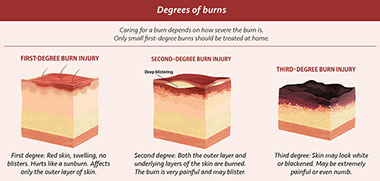
    Burns result in skin or tissue damage. The severity of a burn depends on the area it covers and how deep the damage goes. First-degree burns affect only the thin top layer of skin. Second-degree burns include the thick lower layer of skin. A third-degree burn is the most serious; it penetrates the entire thickness of the skin, permanently destroying it and the tissue that’s underneath.

    You can care for most minor burns at home. If the burn is red and painful with mild swelling or little blistering, then it’s a first-degree or minor second-degree burn.

    See a doctor if the burn is dark red and looks glossy with a lot of blistering. These are signs of a deep second-degree burn. Get immediate treatment if the burned skin is dry and leathery, perhaps with white, brown, or black patches. These are signs of a third-degree burn.

    Burns can become infected with bacteria or other germs if protective layers of skin are lost. Burns can also lead to painful inflammation, as your immune system shifts into gear.

    First aid for burns

    For minor burns:

    *  Immerse in fresh, cool water or apply cool compresses for 10 to 15 minutes.

    *  Dry the area with a clean cloth. Cover with sterile gauze or a non-adhesive bandage.

    *  Don’t apply ointments or butter; these may cause infection.

    *  Don’t break blisters.

    *  Over-the-counter pain medications may help reduce inflammation and pain.

    Call emergency services (911) if:

    *  Burns cover a large area of the body

    *  Burns affect the entire thickness of skin

    *  The victim is an infant or elderly

    *  The burn was caused by electricity, which can lead to “invisible” burns

    © American Institute for Preventive Medicine

  • Bites On The Hand That Feeds It

    SELF-CARE CORNER

    Image of different pets, including dogs, cats, rabbits and hamsters.

    More than 4 million people are bitten by dogs and cats each year. And orthopedic surgeon Dr. Stephen Kennedy said all bites to the hand should receive medical care, although he says most people are reluctant to see a doctor.

    Animal saliva contains a broad range of bacteria. Adult dog jaws, especially among larger breeds, can bite with a force of more than 300 pounds, and when combined with the variety and sharpness of their teeth can cause significant injuries to hand and finger ligaments, tendons, and bones.

    Cats do not have the jaw strength of dogs, but their sharp, narrow teeth also can cause serious injury. Up to half of cat bites get infected.

    Signs of infection:

    *  Redness

    *  Swelling

    *  Pain that worsens

    *  Fever

    If a bite occurs:

    *  Inspect the hand carefully for any puncture wounds. Even a small wound can inject lethal bacteria under the skin.

    *  If there is a puncture wound of any size, wash it as soon as possible with soap and water. Then seek medical advice.

    *  Get immediate medical attention if you see redness, feel increasing pain over time, or see red streaking up the hand or arm (or along a tendon). These are signs of a serious infection.

    Antibiotics are often given to reduce the chance of infection. More serious bites may need surgery to clean the wound.

    © American Institute for Preventive Medicine

  • Fishhook Removal

    First Aid

    A fishhook can nick or cut the skin, get stuck in the skin near its surface, or get deeply embedded in the skin. First aid treats most fishhook accidents.

    Questions to Ask

    Self-Care / First Aid

    For a Fishhook Deeply Embedded in the Skin

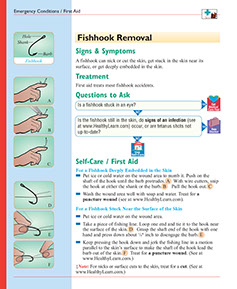
    *  Put ice or cold water on the wound area to numb it. Push on the shaft of the hook until the barb protrudes. See image A. With wire cutters, snip the hook at either the shank or the barb. See image B. Pull the hook out. See image C.

    *  Wash the wound area well with soap and water. Treat for a puncture wound.

    For a Fishhook Stuck Near the Surface of the Skin

    *  Put ice or cold water on the wound area.

    *  Take a piece of fishing line. Loop one end and tie it to the hook near the surface of the skin. See image D. Grasp the shaft end of the hook with one hand and press down about 1/8th inch to disengage the barb. See image E.

    *  Keep pressing the hook down and jerk the fishing line in a motion parallel to the skin’s surface to make the shaft of the hook lead the barb out of the skin. See image F. Treat for a puncture wound.

    {Note: For nicks or surface cuts to the skin, treat for a cut.

    Healthier at Home book by the American Institute for Preventive Medicine. www.HealthyLife.com. All rights reserved.

    © American Institute for Preventive Medicine

  • Bloody Nose Know-How

    MEDICAL NEWS

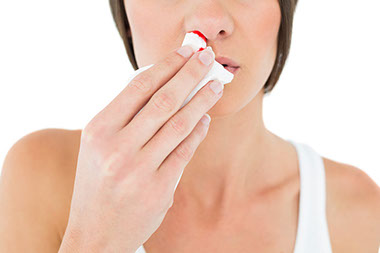
    Image of a nose bleed.

    Maybe you blew your nose too hard or bumped your nose. Causes aren’t always known. But when the blood starts gushing, nosebleeds can be frightening.

    Experts at eMedicineHealth tell what to do: Remain calm. Sit up straight and lean your head forward. Contrary to what some people think, do not lean your head back, you’ll only swallow the blood.

    Ice packs do not help either. Pinch your nostrils tightly together with your thumb and index finger for 10 minutes. Just hold it. Breathe through your mouth, of course. Do not release your grip.

    That should stop the blood flow, usually from an artery in the front of your nose. Then be nice to your tender nose for the rest of the day. Think about adding humidity to the air when you sleep, especially in dry winter weather.

    © American Institute for Preventive Medicine

  • In Case Of Accidental Poisoning, Act Fast

    First Aid

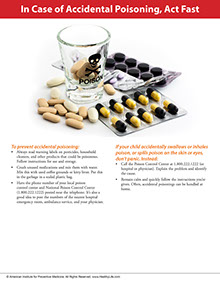
    Image of skull and bones that represent poison.

    To prevent accidental poisoning:

    *  Always read warning labels on pesticides, household cleaners, and other products that could be poisonous. Follow instructions for use and storage.

    *  Crush unused medications and mix them with water. Mix this with used coffee grounds or kitty litter. Put this in the garbage in a sealed plastic bag.

    *  Have the phone number of your local poison control center and National Poison Control Center (1.800.222.1222) posted near the telephone. It’s also a good idea to post the numbers of the nearest hospital emergency room, ambulance service, and your physician.

    If your child accidentally swallows or inhales poison, or spills poison on the skin or eyes, don’t panic. Instead:

    *  Call the Poison Control Center at 1.800.222.1222 (or hospital or physician). Explain the problem and identify the cause.

    *  Remain calm and quickly follow the instructions you’re given. Often, accidental poisonings can be handled at home.

    A Year of Health Hints book by the American Institute for Preventive Medicine. www.HealthyLife.com. All rights reserved.

    © American Institute for Preventive Medicine

  • Frostbite & Hypothermia

    First Aid

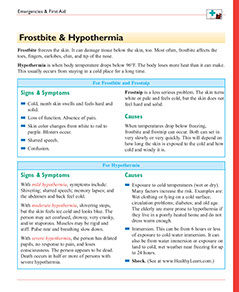
    Frostbite freezes the skin. It can damage tissue below the skin, too. Most often, frostbite affects the toes, fingers, earlobes, chin, and tip of the nose.

    Hypothermia is when body temperature drops below 96ºF. The body loses more heat than it can make. This usually occurs from staying in a cold place for a long time.

    Frostbite & Frostnip

    Signs & Symptoms

    *  Cold, numb skin swells and feels hard and solid.

    *  Loss of function. Absence of pain.

    *  Skin color changes from white to red to purple. Blisters occur.

    *  Slurred speech.

    *  Confusion.

    Frostnip is a less serious problem. The skin turns white or pale and feels cold, but the skin does not feel hard and solid.

    Causes

    When temperatures drop below freezing, frostbite and frostnip can occur. Both can set in very slowly or very quickly. This will depend on how long the skin is exposed to the cold and how cold and windy it is.

    Hypothermia

    Signs & Symptoms

    With mild hypothermia, symptoms include: Shivering; slurred speech; memory lapses; and the abdomen and back feel cold.

    With moderate hypothermia, shivering stops, but the skin feels ice cold and looks blue. The person may act confused, drowsy, very cranky, and/or stuporous. Muscles may be rigid and stiff. Pulse rate and breathing slow down.

    With severe hypothermia, the person has dilated pupils, no response to pain, and loses consciousness. The person appears to be dead. Death occurs in half or more of persons with severe hypothermia.

    Causes

    *  Exposure to cold temperatures (wet or dry). Many factors increase the risk. Examples are: Wet clothing or lying on a cold surface; circulation problems; diabetes; and old age. The elderly are more prone to hypothermia if they live in a poorly heated home and do not dress warm enough.

    *  Immersion. This can be from 6 hours or less of exposure to cold water immersion. It can also be from water immersion or exposure on land to cold, wet weather near freezing for up to 24 hours.

    *  Shock.

    Treatment

    Self-care measures can treat frostnip. Prompt emergency medical care is needed for frostbite to keep the area affected from getting infected and to prevent the loss of a limb. Hypothermia needs emergency medical care.

    Wind Chill Temperature

    As the wind increases, the body is cooled at a faster rate. This causes the skin temperature to drop. Wind chill temperature combines outdoor air temperature and wind speed to give a temperature of what it “feels like” on the skin. The National Weather Service has a “Wind Chill Chart” that shows temperatures, wind speeds, and exposure times that cause frostbite. To get this, accesswww.nws.noaa.gov/om/windchill.

    Questions to Ask

    {Note: The damage from exposure to the cold may not be noted for 72 hours.}

    Self-Care / First Aid

    First Aid for Frostbite and Hypothermia Before Emergency Care

    *  Gently move the person to a warm place and Call 9-1-1!

    *  Check for a response. Give Rescue Breaths or CPR, as needed.

    *  Loosen or remove wet and/or tight clothing. Remove jewelry.

    *  Don’t rub the area with snow or soak it in cold water.

    *  Warm the affected area by soaking it in a tub of warm water (101ºF to 104ºF) and an antiseptic solution, such as Betadine.

    *  Stop when the affected area becomes red, not when sensation returns. This should take about 45 minutes. If done too fast, thawing can be painful and blisters may develop.

    *  If warm water is not available, cover the person with blankets, coats, etc., or place the frostbitten body part in a warm body area, such as an armpit or on the abdomen (human heat) or use a blow dryer, if available.

    *  Keep exposed areas elevated, but protected.

    *  Don’t rub or massage a frostbitten area.

    *  Protect the exposed area from the cold. It is more sensitive to re-injury.

    *  Don’t break blisters.

    First Aid for Frostnip

    *  Warm the affected area. This can be done a number of ways:

    – Place cold fingers in armpits.

    – Place cold feet onto another person’s warm stomach.

    – Put the affected area in warm water (101ºF to 102ºF).

    After warming the area, the skin may be red and tingling. If it is not treated, frostnip can lead to frostbite.

    *  Protect the exposed area from the cold. It is more sensitive to re-injury.

    To Prevent Frostbite and Outdoor Hypothermia

    *  Stay indoors, as much as possible, when it is very cold and windy.

    *  Wear clothing made of wool or polypropylene. These fabrics stay warm even when wet. Layer clothing. Wear 2 or 3 pairs of socks instead of 1 heavy pair. Wear roomy shoes. Do not wear items that constrict the hands, wrists, or feet.

    *  Wear a hat that keeps your head and ears warm. A major source of heat loss is through the head.

    Healthier at Home book by the American Institute for Preventive Medicine. www.HealthyLife.com. All rights reserved.

    © American Institute for Preventive Medicine

  • Burn Notice

    SELF-CARE CORNER

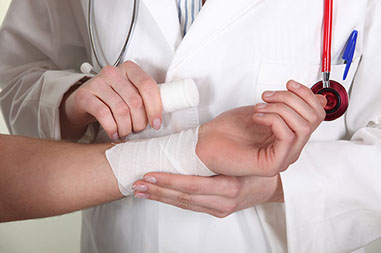
    Close-up image of a doctor wrapping up a burn on a patients arm.

    Follow this simple advice from the Home Safety Council and H2otStop to help reduce the risk of burn and scald injuries at home:

    Bathing

    *  Set your water heater at 120ºF or just below the medium setting.

    *  Fill the bathtub. Run your hand through the water to test for hot spots. Then help children get in. When children are in or near the tub, watch them closely. Young children and older people have thin skin. They burn more quickly.

    *  Install special tub spouts and shower heads that prevent hot water burns. These can sense if the water gets hot enough to cause a burn and shut off the flow of water.

    Cooking

    *  Wear long oven mitts to protect your skin when cooking or handling hot food.

    *  Turn pot handles toward the back of the stove so children cannot pull them down. Use back burners when cooking. Keep children away from the stove when you are cooking. Put tape on the floor around the stove/oven to help children learn to stay out of the “no-kid-zone.”

    *  Food cooked in the microwave can get very hot and cause a burn. Use oven mitts when you take off the lid. Stir and test the food before serving to make sure it is cool enough to eat.

    *  Keep hot drinks away from the edge of tables and counters. Do not use tablecloths or placemats because young children can pull them down. Use a travel mug with a tight-fitting lid for all hot drinks. This can help prevent a burn if the cup tips over.

    *  Do not hold or carry a child while you have a hot drink in your hand. Put only cold drinks in the cup holder of your child’s stroller and child safety seat.

    If a burn occurs:

    *  Cool it with running water. Do this right away.

    *  Keep the burned area in cool water for 3 minutes or longer. Do not put ice, butter, or lotion on the burn. This could make it worse.

    *  Call your doctor or 911 if the burn looks bad.

    © American Institute for Preventive Medicine

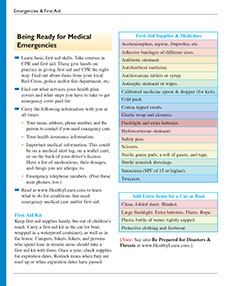
  • Being Ready For Medical Emergencies

    First Aid

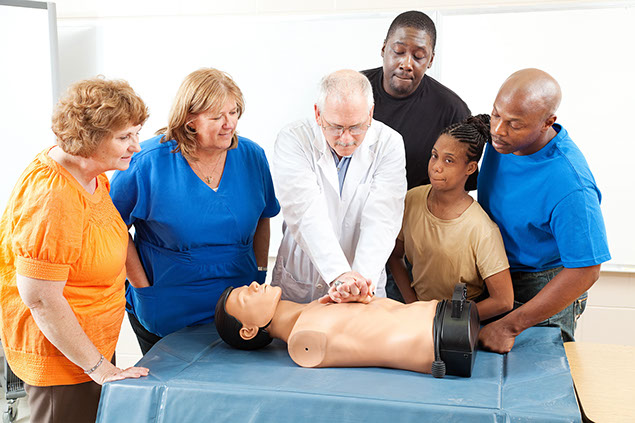
    *  Learn basic first-aid skills. Take courses in CPR and first aid. These give hands-on practice in giving first aid and CPR the right way. Find out about them from your local Red Cross, police and/or fire department, etc.

    *  Find out what services your health plan covers and what steps you have to take to get emergency costs paid for.

    *  Carry the following information with you at all times:

    – Your name, address, phone number, and the person to contact if you need emergency care.

    – Your health insurance information.

    – Important medical information. This could be on a medical alert tag, on a wallet card, or on the back of your driver’s license. Have a list of medications, their dosages, and things you are allergic to.

    – Emergency telephone numbers. (Post these near phones, too.)

    First-Aid Kit

    Keep first-aid supplies handy, but out of children’s reach. Carry a first-aid kit in the car (or boat, wrapped in a waterproof container), as well as in the house. Campers, bikers, hikers, and persons who spend time in remote areas should take a first-aid kit with them. Once a year, check supplies for expiration dates. Restock items when they are used up or when expiration dates have passed.

    First-Aid Supplies & Medicines

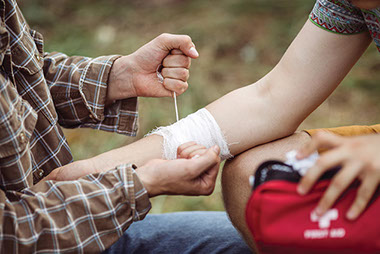
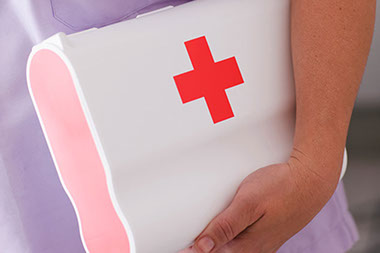
    Image of person holding first aid kit.

    *  Acetaminophen, aspirin, ibuprofen, etc.

    *  Adhesive bandages of different sizes.

    *  Antibiotic ointment.

    *  Antidiarrheal medicine.

    *  Antihistamine tablets or syrup.

    *  Antiseptic ointment or wipes.

    *  Calibrated medicine spoon & dropper (for kids).

    *  Cold pack.

    *  Cotton-tipped swabs.

    *  Elastic wrap and closures.

    *  Flashlight and extra batteries.

    *  Hydrocortisone ointment.

    *  Safety pins.

    *  Scissors.

    *  Sterile gauze pads, a roll of gauze, and tape.

    *  Sterile nonstick dressings.

    *  Sunscreen (SPF of 15 or higher).

    *  Tweezers.

    Add Extra Items for a Car or Boat

    *  Clean, folded sheet. Blanket.

    *  Large flashlight. Extra batteries. Flares. Rope.

    *  Plastic bottle of water, tightly capped.

    *  Protective clothing and footwear.

    Healthier at Home book by the American Institute for Preventive Medicine. www.HealthyLife.com. All rights reserved.

    © American Institute for Preventive Medicine