Tag: fitness

  • Benefits Of Walking

    Fitness

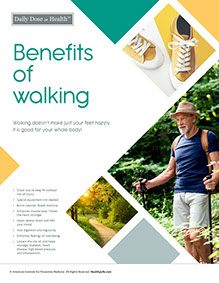
    Couple hiking through trees with walking sticks.

    Walking doesn’t make just your feet happy. It is good for your whole body!

    *  Great way to keep fit without risk of injury.

    *  Special equipment not needed.

    *  Burns calories. Builds stamina.

    *  Enhances muscle tone. Makes the heart stronger.

    *  Helps relieve stress and lifts your mood.

    *  Aids digestion and regularity.

    *  Enhances feelings of well-being.

    *  Lowers the risk of, and helps manage, diabetes, heart disease, high blood pressure, and osteoporosis.

    Page from HealthyLife Weigh book by the American Institute for Preventive Medicine. www.HealthyLife.com. All rights reserved.

    © American Institute for Preventive Medicine

  • Consider An Exercise Stress Test

    Fitness

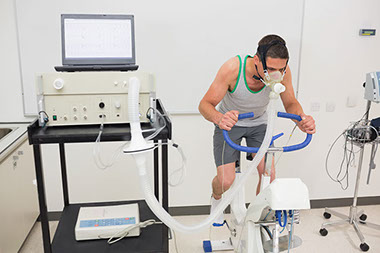
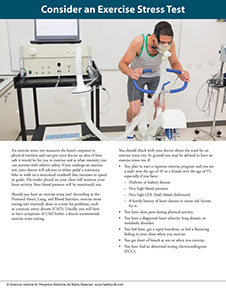
    Image of man performing a stress test.

    An exercise stress test measures the heart’s response to physical exertion and can give your doctor an idea of how safe it would be for you to exercise and at what intensity you can exercise with relative safety. If you undergo an exercise test, your doctor will ask you to either pedal a stationary bike or walk on a motorized treadmill that increases in speed or grade. Electrodes placed on your chest will monitor your heart activity. Your blood pressure will be monitored, too.

    Should you have an exercise stress test? According to the National Heart, Lung, and Blood Institute, exercise stress testing isn’t routinely done to screen for problems, such as coronary artery disease (CAD). Usually, you will have to have symptoms of CAD before a doctor recommends exercise stress testing.

    You should check with your doctor about the need for an exercise stress test. In general you may be advised to have an exercise stress test if:

    *  You plan to start a vigorous exercise program and you are a male over the age of 45 or a female over the age of 55, especially if you have:

    – Diabetes or kidney disease.

    – Very high blood pressure.

    – Very high LDL (bad) blood cholesterol.

    – A family history of heart disease or many risk factors for it.

    *  You have chest pain during physical activity.

    *  You have a diagnosed heart ailment, lung disease, or metabolic disorder.

    *  You feel faint, get a rapid heartbeat, or feel a fluttering feeling in your chest when you exercise.

    *  You get short of breath at rest or when you exercise.

    *  You have had an abnormal resting electrocardiogram (ECG).

    Page image from A Year of Health Hints book by the American Institute for Preventive Medicine. www.HealthyLife.com. All rights reserved.

    © American Institute for Preventive Medicine

  • Exercise Your Calories Away

    Weight Control

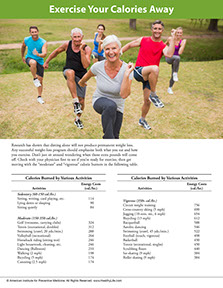
    Research has shown that dieting alone will not produce permanent weight loss. Any successful weight-loss program should emphasize both what you eat and how you exercise. Don’t just sit around wondering when those extra pounds will come off. Check with your physician first to see if you’re ready for exercise, then get moving with the “moderate” and “vigorous” calorie burners in the following table.

    Page from A Year of Health Hints book by the American Institute for Preventive Medicine. www.HealthyLife.com. All rights reserved.

    © American Institute for Preventive Medicine

  • Time To Get Physical

    Fitness

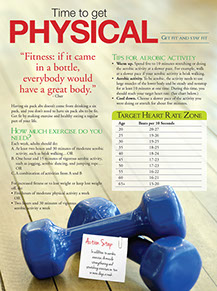
    Get fit and stay fit.

    “Fitness: if it came in a bottle, everybody would have a great body.”

    – Cher

    Having six pack abs doesn’t come from drinking a six pack, and you don’t need to have six pack abs to be fit. Get fit by making exercise and healthy eating a regular part of your life.

    How much exercise do you need?

    Each week, adults should do:

    A.  At least two hours and 30 minutes of moderate aerobic activity, such as brisk walking…OR

    B.  One hour and 15 minutes of vigorous aerobic activity, such as jogging, aerobic dancing, and jumping rope…OR

    C.  A combination of activities from A and B

    For increased fitness or to lose weight or keep lost weight off, do:

    *  Five hours of moderate physical activity a week…OR

    *  Two hours and 30 minutes of vigorous aerobic activity a week

    Tips for aerobic activity

    *  Warm up. Spend five to 10 minutes stretching or doing the aerobic activity at a slower pace. For example, walk at a slower pace if your aerobic activity is brisk walking.

    *  Aerobic activity. To be aerobic, the activity needs to use large muscles of the lower body and be steady and nonstop for at least 10 minutes at one time. During this time, you should reach your target heart rate. (See chart on this page.)

    *  Cool down. Choose a slower pace of the activity you were doing or stretch for about five minutes.

    Target Heart Rate Zone

    Age

    20

    25

    30

    35

    40

    45

    50

    55

    60

    65+

    Beats per 10 Seconds

    20-27

    19-26

    19-25

    18-25

    18-24

    17-23

    17-23

    16-22

    16-21

    15-20

    Action Step

    In addition to aerobic exercise, do muscle strengthening and stretching exercises on two or more days a week.

    Page image from the Ways to Well-Being Book by the American Institute for Preventive Medicine. www.HealthyLife.com. All rights reserved.

    © American Institute for Preventive Medicine

  • Be Physically Active

    Healthylife® Weigh

    Part 5

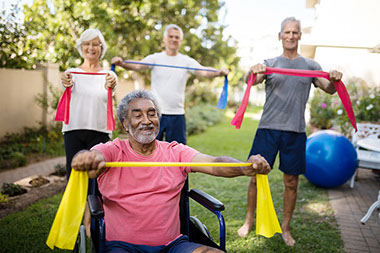
    Group of friends outside exercising.

    All physical activity has benefits for the body and mind. This section will help you find reasons to be active that go beyond weight management. This section will also help you to:

    *  Add variety to the physical activity you already enjoy.

    *  Value different types of activity that have different benefits.

    *  Make a plan to be more physically active.

    *  Manage time and other barriers to do physical activity.

    *  Develop a healthy relationship with your body.

    *  Appreciate what your body is capable of doing.

    HealthyLife® Weigh

    QUICK LINKS: PART 5

    Current Exercise Habits

    Find Reasons to Care About Physical Activity

    Mental Health

    Energy, Learning, Focus

    Physical Health

    Exercise and Sleep

    Reduce Sit-Time

    Do Activities You Enjoy

    Types of Physical Activity

    Cardio Training

    Resistance Training

    Stretching & Rehabilitation

    Yoga

    Massage

    Avoid Injury

    Appreciate the Journey

    Set Fitness Goals

    Plan Physical Activity

    Tackle Limitations

    Injury and Disability

    Manage Your Time

    Set Up for Success

    What Are You Waiting For?

    Responsibility for Change

    Create “If, Then” Plans

    Exercise and Eating

    Eating and Body Image

    How Do You View Your Body?

    Identify Disordered Eating

    Review and Prepare

    © American Institute for Preventive Medicine

  • Get Your Healthy Game Day On

    SELF-CARE CORNER

    Image of football field.

    The excitement of football, and even the activities and feelings of anticipation leading up to games, can be unhealthy in ways many do not realize, according to Jody Gilchrist, a cardiac nurse practitioner at the University of Alabama at Birmingham.

    Critical matchups, tight games, and crushing defeats can trigger adrenaline that reduces blood flow to the heart and other muscles and increases heart rate and blood pressure. Over time, these high levels of stress hormones can hurt your heart-even though a football game may be deemed good stress.

    Adding to the effects of stress on the body would be unhealthier foods at the tailgate party, and heavier eating and drinking during the game. Not a winning combination. Here are some tailgating tips:

    *  Help minimize stress by watching the game with people you enjoy.

    *  Knock out a few pushups and sit ups during commercial breaks.

    *  Chew gum or squeeze a stress ball to reduce anxiety and control your emotions.

    *  Take a brief walk at halftime, or if you are attending the game, take a walk around the stadium or to another section to meet a friend.

    *  Manage your net dietary intake by planning ahead and making healthier choices at other times of the day in anticipation of splurging a bit during the game.

    *  If tailgating at the stadium, try to conserve calories earlier in the day.

    *  If tailgating at home, consider using vegetables in place of chips for dips, and substitute Greek yogurt for sour cream or cream cheese dips.

    *  Because sodium causes fluid retention-something especially bad for heart patients-a good rule of thumb is to avoid foods that have more than 1 mg of sodium per calorie. At about 0.5 mg of sodium per calorie, natural foods such as fresh fruits and vegetables generally contain much less, so opt for them whenever possible.

    *  Do your best to avoid soft drinks, which are extremely high in sugar.

    In the end, your health will win-even if your team does not.

    © American Institute for Preventive Medicine

  • Is Your Heart Older Than You?

    MEDICAL NEWS

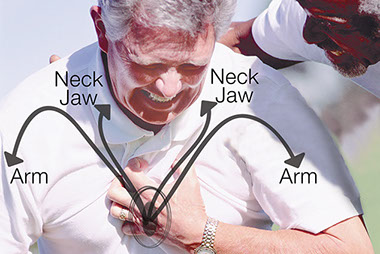
    Image of man suffering a heart attack.

    The year you were born reveals your age. It’s part of your identity. But despite the number on your driver’s license, your heart may be telling a different story.

    According to the Centers for Disease Control and Prevention, 75 percent of Americans have hearts that are older than their actual age. For men, the average heart age is 8 years older, and for women, it’s 5 years. This means many people are at high risk of heart attacks and strokes – even if they don’t know it.

    Your “heart age” is based on certain risk factors you may have for heart disease. This includes lifestyle habits, your body mass index, and certain health problems. You can lower your heart age by adopting heart-healthy habits such as a healthy diet, regular exercise, and not smoking.

    Signs of a heart attack

    *  Pressure, squeezing, or pain in the chest

    *  Pain in the jaw, neck, upper back, arms, or abdomen

    *  Trouble breathing

    *  Feeling dizzy or nauseated

    *  Cold sweats

    If you experience these symptoms, call 911 or have someone take you to the emergency room.

    Source: American Heart Association

    © American Institute for Preventive Medicine

  • Pump Up Your Heart In 5 Easy Steps

    SELF-CARE CORNER

    Image of older women laughing.

    Did you know that a good night’s sleep can help prevent heart disease? That’s just one way to lower your risk. Dr. Holly Andersen, director of education and outreach at NewYork-Presbyterian Hospital/Weill Cornell Medical Center, offers some easy steps to improve heart health and overall well-being:

    Step 1: Know your numbers.

    Your blood pressure, cholesterol, and triglyceride levels are the most important numbers you will need to know before you take the path to good heart health. A normal blood pressure level is 140/85 or lower, total cholesterol levels should be less than 200, and triglycerides less than 150.

    Step 2: Start walking.

    Exercise really is the fountain of youth. A simple 20- to 30-minute walk a few days a week can actually cut your risk of premature death by more than half. Physical activity also improves sleep, reduces stress, elevates mood, reduces blood pressure, improves cholesterol, improves brain health, and prevents memory loss.

    Step 3: Laugh out loud.

    Laughter is good medicine. Just 15 minutes of laughter is about equal to 30 minutes of aerobic exercise with respect to our heart health. So choose funny movies on Netflix. Laughter has also been linked to the healthy function of blood vessels, an increase in the brain hormones that improve mood, and reduction of pain  and anxiety.

    Step 4: Focus on your waistline, not your weight.

    Your waistline is a better measurement of your overall health than your weight because the amount of fat around your waistline is directly linked to high blood pressure and high cholesterol and can place you at increased risk for diabetes. Anything you can do to make your waistline smaller is definitely a step in the right direction. Liposuction doesn’t count!

    Step 5: Get a good night’s sleep.

    Sleep is one of the most undervalued elements of our daily routines, but it is absolutely vital to good health. Lack of sleep increases your blood pressure, induces stress, increases your appetite and slows down your metabolism, dampens your mood and decreases your brain power.

    © American Institute for Preventive Medicine

  • 3 “S”S To Get Fit During The Holidays

    BE FIT

    Jump roap shaped into a christmas tree with ornaments and fitness gear.

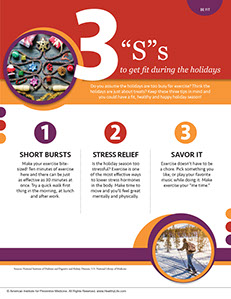
    Do you assume the holidays are too busy for exercise? Think the holidays are just about treats? Keep these three tips in mind and you could have a fit, healthy and happy holiday season!

    1.  Short bursts: Make your exercise bite-sized! Ten minutes of exercise here and there can be just as effective as 30 minutes at once. Try a quick walk first thing in the morning, at lunch and after work.

    2.  Stress relief: Is the holiday season too stressful? Exercise is one of the most effective ways to lower stress hormones in the body. Make time to move and you’ll feel great mentally and physically.

    3.  Savor it: Exercise doesn’t have to be a chore. Pick something you like, or play your favorite music while doing it. Make exercise your “me time.”

    Sources: National Institute of Diabetes and Digestive and Kidney Diseases, U.S. National Library of Medicine

    © American Institute for Preventive Medicine