Tag: fluoride

  • Tooth-Brushing Truth

    WELL-BEING

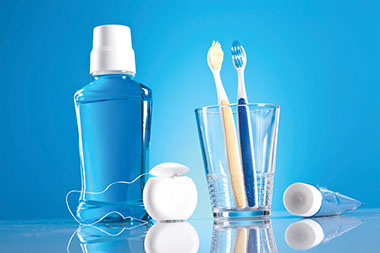
    Toothburshs, toothpaste, floss and mouthwash.

    Clean teeth are healthy teeth.

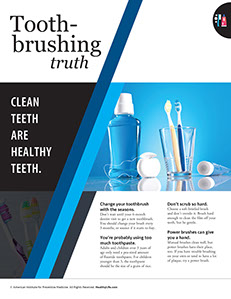
    Change your toothbrush with the seasons.

    Don’t wait until your 6-month dentist visit to get a new toothbrush. You should change your brush every 3 months, or sooner if it starts to fray.

    You’re probably using too much toothpaste.

    Adults and children over 3 years of age only need a pea-sized amount of fluoride toothpaste. For children younger than 3, the toothpaste should be the size of a grain of rice.

    Don’t scrub so hard.

    Choose a soft-bristled brush and don’t overdo it. Brush hard enough to clean the film off your teeth, but be gentle.

    Power brushes can give you a hand.

    Manual brushes clean well, but power brushes have their place, too. If you have trouble brushing on your own or tend to have a lot of plaque, try a power brush.
    © American Institute for Preventive Medicine
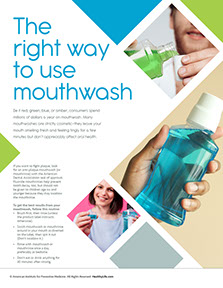
  • The Right Way To Use Mouthwash

    Dental & Mouth Concerns

    Image of blue mouthwash.

    Be it red, green, blue, or amber, consumers spend millions of dollars a year on mouthwash. Many mouthwashes are strictly cosmetic-they leave your mouth smelling fresh and feeling tingly for a few minutes but don’t appreciably affect oral health. If you want to fight plaque, look for mouthwash containing cetylpridinium chloride or domiphen bromide, ingredients that dissolve this troublesome film of bacterial goo. If you want to fight cavities (especially cavities that form between teeth, where your toothbrush can’t reach), look for an anti-plaque, anti-gingivitis mouthrinse. Fluoride mouthrinses help prevent tooth decay, too, but should not be given to children age six and younger because they may swallow the mouthrinse.

    To get the best results from your mouthwash, follow this routine.

    *  Brush first, then rinse (unless the product label instructs otherwise).

    *  Swish mouthwash or mouthrinse around in your mouth as directed on the label, then spit it out. (Don’t swallow it.)

    *  Rinse with mouthwash or mouthrinse once a day, preferably at bedtime.

    *  Don’t eat or drink anything for 30 minutes after rinsing.

    A Year of Health Hints book by the American Institute for Preventive Medicine. www.HealthyLife.com. All rights reserved.

    © American Institute for Preventive Medicine