Tag: focus

  • Mindfulness 2

    Healthylife® QuitWell™

    Part 2

    Image of man walking his dog.

    Mindfulness means you are fully aware of what you are sensing in the current moment. Mindfulness can help you get through a stressful or uncomfortable time without your usual tobacco/nicotine use. It can also:

    *  Give your mind a chance to think creatively and come up with the answers to tough questions.

    *  Help you gently pull yourself back to the present when your mind wants to go somewhere else.

    *  Exercise greater control over your actions and your energy.

    *  Understand yourself more.

    *  Lower inflammation in the body.

    *  Activate areas in the brain that give you feelings of calmness.

    Mindfulness Exercise

    Practice mindfulness while you listen to music, walk, run, eat, or sit in traffic. You can also try this the next time you feel the desire to have a cigarette, dip, or puff from your vape:

    *  Try to physically pause your body. Sit or stand still. Maybe you can lean against the back of a chair or a wall. Get comfortable.

    *  Focus on your breathing or anything in the present, such as the sounds you hear or an object in your sight.

    *  As thoughts pop up in your mind, notice them without judging them. Picture your thoughts like clouds floating by-let them go by. Return your focus to what you see, hear, and feel.

    *  Notice the feelings you have about smoking/your habit and what may be making you feel that way. Be aware of what is helping you do what you want and what is not helping.

    *  When your mind starts to drift, imagine gently guiding it back to the present, as if you’re helping a child that has strayed off the path.

    The craving may have gone away or is now much less. If this is the case, try to do something else while the craving continues to fade.

    © American Institute for Preventive Medicine

  • Mindfulness 3

    SleepWell® Program

    Week 4

    Image of women sitting out in nature.

    Mindfulness means you are fully aware of all aspects of what you are sensing in the present moment.

    *  You focus on current thoughts without judging them.

    *  You put past thoughts and what the future has in store out of your mind.

    Mindfulness Exercise

    *  Set aside five (or more) minutes. Find a place with no distractions. Get comfortable.

    *  Focus on your breathing or anything in the present, such as the sounds you hear or an object in your sight.

    *  As thoughts pop up in your mind, let them go without judging them. Return your focus to what you see, hear, feel, or are doing in the moment.

    You can also practice mindfulness while you listen to music, walk, run, garden, or with any activity.

    Take a Rest from Your Emotions

    Detach yourself from your thoughts and emotions. Imagine sitting on a hill and viewing your thoughts and feelings at the bottom of the hill. Observe your thoughts as they pass by. Or, you can stop and think about them. Tell yourself: “I have control over when and how I think about a situation.”

    Allow your emotional reactions to a situation or issue take a rest for a bit. This helps your mind use logical thinking.

    © American Institute for Preventive Medicine

  • Set Goals 2

    SleepWell® Program

    Week 2

    Image of wood blocks with letters spelling "smart."

    View sleep improvement as a long-term project, especially if you have had poor sleep for a long time. First, define small steps you want to take. Continue to reflect on your efforts.

    Small Steps

    Think of the actions you take on a daily basis as small steps towards your bigger goal. This guide has already given you many ideas for small steps. Examples are limiting caffeine and dimming the lights one hour before bedtime. Identify your next change and use the following guidelines to improve your goal. All goals should be:

    Chart on S.M.A.R.T.

    Stay motivated with the small successes you achieve along the way. Use your SleepWell® Tracker every day for feedback on the effect your actions have on your sleep.

    Reminder:If your sleep issues are chronic (last longer than three weeks), your primary goal should be to schedule an appointment with your doctor or a sleep specialist.

    Practice Goal-Setting

    Strengthen your goal using the S.M.A.R.T. tool. Start with a simple statement about what you want to accomplish. Next, write how your goal will be specific, measurable, attainable, relevant, and timely.

    Barriers to Change

    As you think more about your goal, roadblocks may appear. You may need tools or skills to achieve your goal. Identify what is making it difficult for you to change. Barriers do not mean you can’t make the change. Identify challenges that must be overcome to succeed.

    © American Institute for Preventive Medicine

  • Find The Energy To Exercise

    BE FIT

    Image of athletic shoes and a bottle of water.

    Too tired to work out? Try these tips to boost energy and get moving.

    1.  Move around. At work, try to switch between sitting and standing. Doing too much of one or the other may leave you feeling drained.

    2.  Sip lots of water. Starting in the morning, drink water and keep drinking it throughout the day. This can keep energy levels from sinking in the afternoon.

    3.  Eat healthy carbs. Choose whole grains, fruits and vegetables, such as carrots.

    4.  Watch your breathing. Slow, deep breaths can relax and energize you throughout the day.

    © American Institute for Preventive Medicine

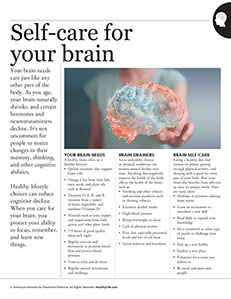
  • Self-Care For Your Brain

    SELF-CARE CORNER

    Photo illustration of brain with hands reaching out to touch it.

    Your brain needs care just like any other part of the body. As you age, your brain naturally shrinks, and certain hormones and neurotransmitters decline. It’s not uncommon for people to notice changes in their memory, thinking, and other cognitive abilities.

    Healthy lifestyle choices can reduce cognitive decline. When you care for your brain, you protect your ability to focus, remember, and learn new things.

    Your brain needs

    A healthy brain relies on a healthy lifestyle:

    *  Quality nutrients that support brain cells

    *  Omega 3 fats from fatty fish, nuts, seeds, and plant oils such as flaxseed

    *  Vitamins D, E, K, and B vitamins from a variety of fruits, vegetables, and sunshine (Vitamin D)

    *  Minerals such as iron, copper, and magnesium from leafy greens and other plant foods

    *  7-9 hours of good quality sleep each night

    *  Regular exercise and movement to promote blood flow and protect blood pressure

    *  Time to relax and de-stress

    *  Regular mental stimulation and challenge

    Brain drainers

    Some unhealthy choices or physical conditions can worsen mental decline over time. Anything that negatively impacts the health of the body affects the health of the brain, such as:

    *  Smoking and other tobacco and nicotine products, such as chewing tobacco

    *  Excessive alcohol intake

    *  High blood pressure

    *  Being overweight or obese

    *  Lack of physical activity

    *  Poor diet, especially processed foods and lots of red meat

    *  Social isolation and loneliness

    Brain self-care

    Eating a healthy diet that focuses on plants, getting enough physical activity, and sleeping well is good for every part of your body. But, your brain also benefits from self-care to meet its unique needs. Here are some ideas:

    *  Meditate to promote calming brain waves

    *  Learn an instrument to introduce a new skill

    *  Read daily to expand your knowledge

    *  Do a crossword or other type of puzzle to challenge your brain

    *  Pick up a new hobby

    *  Explore a new place

    *  Volunteer for a cause you believe in

    *  Be social and meet new people

    © American Institute for Preventive Medicine

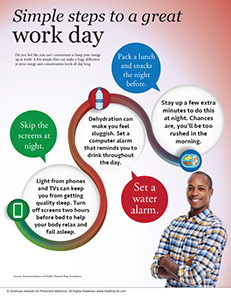
  • Simple Steps To A Great Work Day

    WORK LIFE

    Smiling man with arms crossed.

    Do you feel like you can’t concentrate or keep your energy up at work? A few simple fixes can make a huge difference in your energy and concentration levels all day long.

    Pack a lunch and snacks the night before.Stay up a few extra minutes to do this at night. Chances are, you’ll be too rushed in the morning.

    Set a water alarm.Dehydration can make you feel sluggish. Set a computer alarm that reminds you to drink throughout the day.

    Skip the screens at night.Light from phones and TVs can keep you from getting quality sleep. Turn off screens two hours before bed to help your body relax and fall asleep.

    Sources: National Institutes of Health, National Sleep Foundation

    © American Institute for Preventive Medicine