Tag: foot

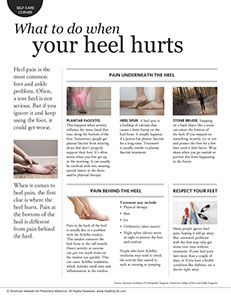
  • What To Do When Your Heel Hurts

    SELF-CARE CORNER

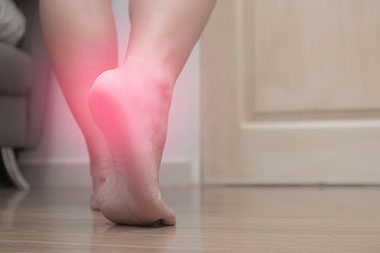
    Image of heel walking on bare floor.

    Heel pain is the most common foot and ankle problem. Often, a sore heel is not serious. But if you ignore it and keep using the foot, it could get worse.

    When it comes to heel pain, the first clue is where the heel hurts. Pain at the bottom of the heel is different from pain behind the heel.

    Pain underneath the heel

    *  Plantar fasciitis. This happens when activity inflames the tissue band that runs along the bottom of the foot. Sometimes, people get plantar fasciitis from wearing shoes that don’t properly support their foot. It’s often worse when you first get up in the morning. It can usually be resolved with rest, wearing special inserts in the shoes and/or physical therapy.

    *  Heel spur. A heel spur is a buildup of calcium that causes a bony bump on the heel bone. It usually happens if a person has plantar fasciitis for a long time. Treatment is usually similar to plantar fasciitis treatment.

    *  Stone bruise. Stepping on a hard object like a stone can injure the bottom of the heel. If you stepped on something recently, try to rest and protect the foot for a few days until it feels better. Wear shoes when you go outside to prevent this from happening in the future.

    Pain behind the heel

    Pain in the back of the heel is usually due to a problem with the Achilles tendon. This tendon connects the heel bone to the calf muscle. Heavy activity or exercise can put too much stress on the tendon too quickly. This can cause Achilles tendinitis, which includes small tears and inflammation in the tendon. Treatment may include:

    *  Physical therapy

    *  Rest

    *  Ice

    *  Orthotic(s) (shoe inserts)

    *  Night splint (device worn at night to protect the foot and tendon)

    People who have Achilles tendinitis may need to avoid the activity that caused it, such as running or jumping.

    Respect your feet

    Many people ignore heel pain, hoping it will go away. But, untreated problems with the foot may only get worse over time without treatment. If your heel pain lasts more than a couple of days, or if you have a health condition like diabetes, see a doctor right away.

    Source: American Academy of Orthopaedic Surgeons, American College of Foot and Ankle Surgeons
    © American Institute for Preventive Medicine
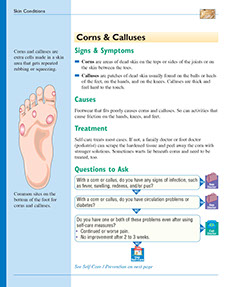
  • Corns & Calluses

    Skin Conditions

    Corns and calluses are extra cells made in a skin area that gets repeated rubbing or squeezing.

    Signs & Symptoms

    *  Corns are areas of dead skin on the tops or sides of the joints or on the skin between the toes.

    *  Calluses are patches of dead skin usually found on the balls or heels of the feet, on the hands, and on the knees. Calluses are thick and feel hard to the touch.

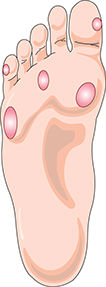
    Illustration of corns and calluses on the bottom of a foot.

    Common sites on the bottom of the foot for corns and calluses.

    Causes

    Footwear that fits poorly causes corns and calluses. So can activities that cause friction on the hands, knees, and feet.

    Treatment

    Self-care treats most cases. If not, a family doctor or foot doctor (podiatrist) can scrape the hardened tissue and peel away the corn with stronger solutions. Sometimes warts lie beneath corns and need to be treated, too.

    Questions to Ask

    Self-Care / Prevention

    {Note: Persons with diabetes should see a doctor for treatment for foot problems.}

    For Corns

    *  Don’t pick at corns. Don’t use toenail scissors, clippers, or any sharp tool to cut off corns.

    *  Don’t wear shoes that fit poorly or that squeeze your toes together.

    *  Soak your feet in warm water to soften the corn.

    *  Cover the corn with a protective, nonmedicated pad or bandage which you can buy at drug stores.

    *  If the outer layers of a corn have peeled away, apply a nonprescription liquid of 5 to 10% salicylic acid. Gently rub the corn off with cotton gauze.

    *  Ask a shoe repair person to sew a metatarsal bar onto your shoe to use when a corn is healing.

    For Calluses

    *  Don’t try to cut a callus off.

    *  Soak your feet in warm water to soften the callus. Pat it dry.

    *  Rub the callus gently with a pumice stone.

    *  Cover calluses with protective pads. You can get these at drug stores.

    *  Don’t wear poorly fitting shoes or other sources of friction that may lead to calluses.

    *  Wear gloves for a hobby or work that puts pressure on your hands.

    *  Wear knee pads for activities that put pressure on your knees.

    Healthier at Home book by the American Institute for Preventive Medicine. www.HealthyLife.com. All rights reserved.

    © American Institute for Preventive Medicine