Tag: fraud

  • Stopping Health Care Fraud

    Medical Care

    Health care fraud is stealing:

    *  It steals money from health insurance companies.

    *  It steals money from taxpayer programs, such as Medicare and Medicaid.

    *  It steals money from you.

    The stealing is done on purpose when someone submits false information to get paid for health care benefits. Health care fraud is a big problem. It occurs every day across the U.S. Persons from all ages, races, and incomes are victims of it.

    Types of Fraud

    Ways Medical Providers Commit Health Care Fraud

    *  They bill for services and/or supplies that were not given. A provider may use real patient information to fabricate an entire claim. Or, a claim can be padded with charges for services, etc. that did not take place.

    *  They bill for services that cost more than the ones that were given. This is called “upcoding.” For example, a provider may submit a claim for an extended office visit when the patient was seen only briefly. On the claim, the provider uses the code number for the extended visit, not for a brief visit, which costs less. Often, the provider “inflates” the patient’s diagnosis to justify billing for the more costly service.

    *  They charge more than once for the same service. This is double billing.

    *  They give services and/or order tests that are not medically needed. This is done just to get the insurance payment. The provider may even give a false diagnosis to justify doing this.

    *  They claim a non-covered treatment as one that is a covered expense. For example, a cosmetic surgery, such as a “tummy tuck,” is billed as a hernia repair.

    *  They bill separate claims for services that should be billed together as one. For example, surgery on four fingers done at the same time is billed as four claims, not one.

    *  They waive co-pays. This means they don’t collect money that patients should pay for out of their pockets. When patients don’t have to pay anything, they are more likely to agree to have services that aren’t medically needed. Also, health care providers use this practice as a way to misrepresent their “usual” fees to insurance companies and bill them for more than they should.

    *  They take money in exchange for patient referrals.

    *  They let an unlicensed person provide services and bill for them.

    Ways Patients Commit Health Care Fraud

    *  They submit claims for services, medicines, etc. that they didn’t get.

    *  They let another person use their health insurance card. They use someone else’s card.

    *  They change or forge bills, prescriptions, or receipts.

    *  They give wrong information on purpose to receive benefits.

    *  They fail to give information to the insurance company.

    *  They try to add someone who is not legally a dependent to their insurance plan. To do this, they lie about their marital status, paternity, etc.

    *  They don’t let the insurance plan know about a divorce. They do this on purpose to keep coverage for the ex-spouse and/or step children who are no longer eligible for coverage under the plan.

    *  They fail to disclose other insurance coverage. This could be worker’s compensation for an on-the-job- injury. It could be auto accident insurance payment for health care costs.

    *  They take money or other perks from a provider for receiving services.

    Ways Others Commit Health Care Fraud

    *  Identity theft. Health insurance card(s) or number(s) are taken and used to bill insurance programs for treatment not given.

    *  Mobile labs. Diagnostic labs in trailers, etc. give fake or needless procedures to consumers. Then, they bill insurance programs for costly procedures.

    Affects of Fraud

    Health Care Fraud Costs You Money

    *  It makes you pay more for health insurance. Your premiums go up. You pay more for out- of-pocket costs. Your co- pays and deductibles cost more.

    *  It increases the cost for Medicare and Medicaid. As a result, you may need to pay more taxes. Also, tax dollars spent on health care fraud leaves less money for other taxpayer programs, such as education.

    *  It increases costs in general. To cover increased costs for employee health benefits, companies need to charge more for products. Things you buy, such as cars, clothes, computers, etc. end up costing more money.

    Health Care Fraud Can Affect Your Health

    *  It can cause harm. Scam providers may order treatments that you don’t need. This includes heart surgery, which can threaten your life. They do this just to make money from your insurance company.

    *  It can use up lifetime caps or other limits of your benefits. Money used for false claims and needless treatments count toward your lifetime or other limits.

    *  It could cause injury and even death. This can occur in auto accidents that are staged to collect insurance money.

    Detect Fraud

    Ways To Detect It

    Fighting health care fraud is a priority for companies, insurers, and the government. They are using many measures to do this. These include:

    *  Computer software programs that help detect fraud. One kind analyzes data for trends or ratios that are unusual or not expected. Another kind quickly sorts data to get certain information, such as:

    – False billings.

    – Billing too much.

    – Billing too little.

    – Unusual patterns for paying vendors, etc.

    Software can also “rebundle” claims. This allows the insurance company to see if services performed at the same time were billed for as ones done at different times. These software programs don’t detect all types of fraud. Nothing about the coding or payment would signal fraud. For example, the software would not detect billing for an extended office visit when a brief visit was done.

    *  Special Investigation Units (SIUs). These include trained professionals in accounting, health care, law enforcement, nursing, etc.

    *  Fraud bureaus. These were created by state insurance regulators. They are found in most states.

    *  Employee training.

    *  Fraud hotlines.

    What You Can Do

    Ways To Help Prevent Health Care Fraud

    *  Learn about your health insurance. Read about your benefits. This can be in a booklet. It can be on the insurance company’s Web site.

    *  Find out what the plan does and does not pay for. Find out what you pay. Learn what the plan’s limits are. If you have more than one health plan, find out which expenses are covered by each plan. This prevents more than one plan from paying for the same service. Would you want an item you charge on a credit card to be billed on two credit cards?

    *  Ask questions about proposed treatment, tests, etc. Are these needed and why? What do they cost? Get a second opinion if surgery is proposed.

    *  Fill out, sign, and date one claim form at a time. I Keep a record of your medical care. Note the following:

    – Dates and places of care.

    – Services received.

    – Names of persons who treated you.

    – Medicines, supplies, and equipment you received.

    – Tests and other services that were ordered and if they were done.

    *  Don’t sign blank claim forms.

    *  If your health insurance company was not yet billed for services, give the provider your insurance information.

    *  Read the Explanation of Benefits (EOB) statements you get. An EOB is a report from your insurance company. It shows what it paid for and what it did not pay for. It is not a bill.

    – Compare the dates of services, procedures, tests, etc. with your medical bills. Do they match?

    – If you don’t understand the EOB form, contact your insurance company.

    *  Compare your medical bills and the EOB statements. Contact your provider and your insurance company to report errors.

    *  Protect your health insurance ID card. It represents your benefits. In general, be careful about giving out your insurance information.

    *  Don’t buy health insurance online

    *  Don’t buy health insurance from persons who sell it door-to-door or on the phone.

    *  Be wary of persons who offer cash or free items or services to get you to buy insurance.

    *  Read all medical bills you get from your doctor, hospital, etc.

    – Check the date(s) of service. Are these correct?

    – Look for errors.

    – Check to make sure that you received the services you are being billed for.

    – If the bill just lists a total charge, ask for an itemized bill. {Note: Ask for an itemized bill when you leave a hospital.} Ask for one that lists services in words you can understand, not just code numbers. Why? When providers bill for services, they use code numbers for diagnoses and procedures, such as ones called ICD-9-CM Codes. If necessary, ask what the code numbers stand for.

    – Check to see if you were billed more than once for the same service. Double-billing is a common error.

    – If a bill lists “miscellaneous” charges, find out all the items this includes.

    – If you don’t understand a bill, call the number on the statement. Call your insurance company, too. Get problems resolved before you pay for a bill or have the insurance company send payment.

    *  Know about the “qui tam” part of The False Claims Act. This allows a person to bring a civil case against persons who submitted false claims to the government, such as to Medicaid. If the lawsuit results in a court judgment, the “whistle blower” can get part of the money made.

    Is health care fraud a crime?

    Yes, it is a very serious crime. For the Department of Justice, health care fraud and abuse is the number two priority after violent crime. Persons convicted of health care fraud can go to prison. They can pay hefty fines. If the fraud they commit causes someone to die, they could be sentenced to life in prison.

    The cost of health care fraud is huge.

    *  Some estimates by government and law enforcement groups say it costs as much as $180 billion dollars a year!

    *  Medicare and Medicaid are big targets. One out of every seven dollars spent on Medicare is due to fraud and abuse.

    Resources

    BNA Health Care Fraud Report

    www.bna.com/products/health/hfra.htm

    Coalition Against Insurance Fraudwww.insurancefraud.org

    National Fraud Information Center/Internet Fraud Watch

    www.fraud.org

    National Health Care Anti-Fraud Association (NHCAA)
    www.nhcaa.org

    Cover image to the Health Care Fraud brochure by the American Institute for Preventive Medicine. www.HealthyLife.com. All rights reserved.

    © American Institute for Preventive Medicine
  • Protect Yourself From Identity Theft

    Financial Health

    Manage and minimize misuse of your personal information

    Consumers lose billions of dollars every year to crooks who steal their identity and money through fraud. Avoid becoming a victim.

    Keep your personal information safe and secure:

    *  Put your Social Security card, Medicare card, military ID, and passport in a secure place, unless you need to use them. Memorize your social security number (SSN). Lock your purse or wallet in a safe place at work. Or carry your wallet with you.

    *  Shred or cut up bank statements, checks, credit card applications, expired charge cards, medical and insurance forms, and prescription labels you no longer need before throwing them away. Otherwise, keep them locked up. You can opt out of credit card offers received in the mail atwww.optoutprescreen.comor by calling (888) 567-8688.

    *  Use passwords and PIN numbers to protect your credit card and bank accounts, your smartphone, and all computer devices. Choose passwords with upper and lower case letters, numbers, and symbols. Nix using common items like your house numbers, phone number, and last four digits of your SSN.

    *  Install and regularly update anti-virus and anti-spyware on your smartphone and computer devices.

    *  Use only secure sites online when you need to give financial or personal information. These have Web addresses with “https” or “shttp” or show a lock symbol.

    *  When you are away, have someone you trust pick up your mail or have the post office hold it for you.

    Avoid scams:

    *  Do not give your social security number or bank account numbers to persons in emails or on the phone.

    *  Don’t wire money to strangers, to sellers who insist on wire transfers for payment, or to anyone who claims to be a relative or family friend in an emergency who wants to keep the request a secret.

    *  Check your credit card, medical bill, and bank statements when you receive them in the mail or online. Report charges you did not make to the company right away.

    *  To help avoid ATM theft, use machines inside banks and ones you are familiar with. Don’t use machines that have extra items, even brochure holders, that could be cameras or that say they are “card cleaners.”

    Action Step

    Request a free copy of your credit report once every 12 months from three nationwide consumer reporting companies – Equifax, Experian, and TransUnion. Call (877) 322-8228. Check the reports for accuracy.

    Ways to Well-Being book by the American Institute for Preventive Medicine. www.HealthyLife.com. All rights reserved.

    © American Institute for Preventive Medicine
  • Learn How To Check Your Credit Report

    FINANCIAL HEALTH

    Image of finger pointing to the words 'Credit Report'

    The Consumer Financial Protection Bureau says everyone should check their credit report at least once a year. The information on your credit report could affect your ability to get a mortgage, car loan, a credit card or other loans. It can also affect the interest rate you get. Usually, a higher credit score makes it easier for you to get a loan and a lower interest rate. Most credit scores range from 300-850.

    You are entitled by law to a free report from all three credit reporting agencies (Equifax, Experian and TransUnion) once every 12 months. Take advantage of it – and check it over carefully when you receive it.

    But what should you look for when you get your report? Errors can happen, so be on the lookout for:

    *  Wrong name, phone number or address

    *  Accounts that don’t belong to you (this can happen when two people have similar names, or as a result of identity theft)

    *  Closed accounts reported as open

    *  Being listed as owner of an account where you are only an authorized user

    *  Accounts incorrectly reported as late or delinquent

    *  Wrong dates of payments, when the account was open or delinquency dates

    *  Same loan or debt listed multiple times (possibly with different names)

    *  Past errors that were corrected that may show up again

    *  Incorrect current balance or credit limit

    *  Accounts that appear more than once with different creditors listed (especially in the case of delinquent accounts or accounts in collections)

    If you find errors, contact:

    *  The credit reporting company who sent you the report, or

    *  The creditor or company that provided the incorrect information. This is known as the “furnisher” of the information.

    Your credit report tells you how to dispute inaccurate information. Sample dispute letters are available atwww.consumerfinance.gov. Go to Consumer Tools, then click on Credit Reports and Scores. You can use these letters if you find something incorrect on your credit report.

    How do I get my report?

    Many websites claim to offer free credit reports. But, some of them are trying to sell other products or services. To get your free credit report authorized by federal law, visit:

    *  AnnualCreditReport.com, or

    *  Call 1-877-322-8228

    This website offers free reports only, not scores. Your credit score is available for a fee. You do not have to buy any products or services advertised onannualcreditreport.com.

    You can also contact the credit agencies directly if you have questions or problems with your report:

    *  Equifax: 1-866-349-5191

    *  Experian: 1-888-397-3742

    *  TransUnion: 1-800-916-8800

    © American Institute for Preventive Medicine

  • Shopping Online Safely

    FINANCIAL HEALTH

    Image of couple shopping online.

    Using your computer, tablet or smartphone to shop can be quick and convenient. But, the internet is full of websites that aren’t trusted places to shop. To keep your personal information and money safe, follow these steps before you shop online:

    *Use major companies that you know.Look for a company address, phone number, and email. Read online reviews before buying.

    *Research the return policy.Can you get a full refund if you aren’t satisfied? What does it cost to send it back?

    *Know what shipping will cost.Be sure you know what the cost will be before you place the order. Shipping costs should be clearly listed on the website.

    *Never use cash.If you pay by credit card, your purchase is protected by the Fair Credit Billing Act. This means you can dispute charges you didn’t make. You may also be protected from having to pay for unauthorized charges if your card number is stolen.

    *Compare your credit card statement and your online receipt.Be sure the costs match.

    *Don’t use email for sending financial information.Email isn’t secure and someone could steal your information this way.

    Beware of fake online reviews

    You see a product online that has hundreds of glowing reviews. It must be great, right? Not necessarily. In fact, some companies have been sued by the FTC for providing fake online reviews. Some companies even pay people to write great reviews for their products, or delete negative reviews on their site.

    Take any online reviews with a grain of salt. If they seem too good to be true, they probably are. Almost any product will have some positive, neutral and negative opinions. If it doesn’t, this may be a red flag for a scam.

    Source: Federal Trade Commission

    © American Institute for Preventive Medicine

  • Smart Ways To Avoid Cybercrime

    FINANCIAL HEALTH

    Close up image of hands typing on laptop.

    Cybercrime is a growing problem as we rely on computers and the Internet more than ever before. Many people regularly shop online, send personal information, and even control appliances or household security over the Internet.

    Though this offers convenience, it’s important to take steps to keep your information and your family safe from cybercrime. Cybercrime happens every day with hackers stealing bank information, using computers to attack others, or erasing important online information.

    The U.S Department of Homeland Security recommends:

    *  Only use the Internet on a network that is password protected. Free or open networks may leave you vulnerable.

    *  Do not send personal information, such as your social security number or bank information, over the Internet. Companies will not ask you to send information this way.

    *  Do not open or respond to emails from people you don’t recognize and never click on the links inside the email.

    *  Use long, hard-to-guess passwords for all your devices and email accounts. Change your passwords regularly.

    *  Consider scaling back your social media sharing. Tighten privacy settings so only people you know well can see your activity.

    *  If you see an email or online offer that seems too good to be true, it’s probably a scam.

    © American Institute for Preventive Medicine

  • Stop! Thief

    FINANCIAL HEALTH

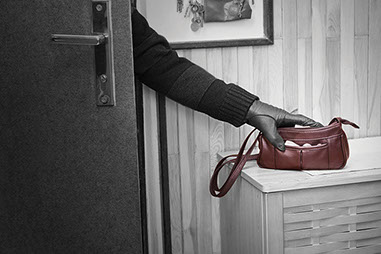
    Image of arm sneaking in from a door grabbing a purse on the counter.

    When your purse or wallet is lost or stolen, do you know the 8 steps you need to take right away because the thief is already cashing in on your loss? Act fast, advises the Federal Trade Commission:

    1. File a report with the police immediately. Get a copy in case your bank, credit card company, or insurance  company needs proof of the crime.

    2. Report the loss to your bank. Cancel checking and savings accounts. Open new ones, and stop payments on outstanding checks. Cancel each credit and charge card. Get new cards with new account numbers. Get a new ATM card, account number, and PIN or password.

    3. Call your utility companies. Tell them that someone may try  to get new service using your identification.

    4. Report your missing driver’s license to the department of  motor vehicles.

    5. Report missing cards to the major credit reporting agencies and place a fraud alert on your accounts: Equifax: 1-800-525-6285, Experian: 1-888-397-3742, TransUnion: 1-800-680-7289.

    6. Change the locks on your home and car if the keys were taken.

    7. Contact the Social Security Administration.    Call: 1-800-772-1213.

    8. Contact your insurance companies. Make sure no one tries to add someone to your policies.

    © American Institute for Preventive Medicine