Tag: fullness

  • Eat Soup To Satisfy

    HEALTHY EATING

    A bowl of soup.

    Healthy foods like vegetables and fruits have lots of nutrients and fewer calories. Eating a diet with plenty of vegetables and fruit can help you lose weight.

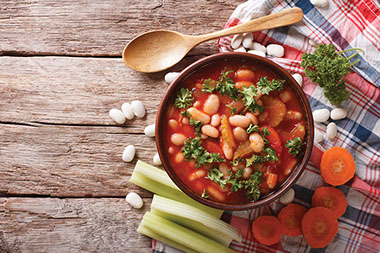
    Soup is a comforting way to enjoy vegetables (and sometimes fruit) of the season. It’s warm, easy to eat and may help you fill up. In fact, some evidence suggests that eating soup before a meal can help you eat less.

    You’ll need to make sure your soup is lower in calories if you want to lose weight. It helps to use lots of vegetables and some fruits, and avoid high-calorie ingredients like cream and sugar.

    © American Institute for Preventive Medicine

  • Feeling Full

    Healthylife® Weigh

    Part 6

    Man feeling full.

    Learn to better evaluate your fullness. It can take twenty minutes to start feeling physically full.

    1. Be satisfied in other ways. Enjoy the taste of food, the people you are with, or the place you are eating.

    2. Express gratitude for your food. This includes who prepared the food (it may be you!) and where it comes from.

    3. Drink a glass of water throughout the meal. This will help with digestion and feeling full.

    4. Make half your plate vegetables. It will take longer to eat these nutrient-dense foods.

    5. Keep consistent “food rules” like sitting at the table and drinking a glass of water with each meal or snack. This can be a built in “speed bump” for overeating. If you don’t want to sit at the table or drink water, you may not be physically hungry and emotional hunger is your trigger.

    6. When tracking your intake, also track your hunger-fullness using the scale to the right. Try to eat in the gray area (range 4-7). Avoid being too hungry or too full.

    The Hunger-Fullness Scale

    0: Empty

    1: Ravenous

    2: Over-hungry

    3: Hunger pangs

    4: Hunger awakens

    5: Neutral

    6: Just satisfied

    7: Completely satisfied

    8: Full

    9: Stuffed

    10: Sick

    7. Slow down. If you can, try to increase the time it takes you to finish your meal by 50%. If you currently finish dinner in 10 minutes, set a timer to stretch the meal out by 5 minutes-or longer!

    © American Institute for Preventive Medicine

  • 5 Ways To Feel Fuller, Longer

    HEALTHY EATING

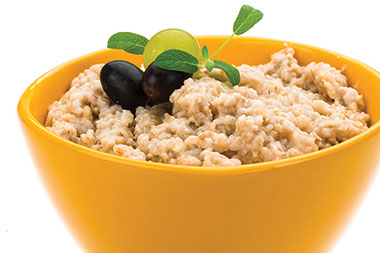
    Image of a bowl with oatmeal.

    Want to feel full without overeating?Certain nutrients and foods may help curb your appetite and make you feel fuller longer, according to the Institute of Food Technologists.

    1. Protein

    Add protein (such as low-fat cheese) to breakfast. And a high-protein afternoon snack containing soy can lead to appetite control and less evening snacking.

    2. Whole grains and fiber

    Oats increased appetite-control hormones up to  4 hours after a meal, but rice-based foods did not.

    3. Eggs

    Eggs are one of the densest proteins in the non-meat category. Eating one egg with breakfast will help to reduce hunger between meal times.

    4. Almonds

    The healthy fats in almonds decrease hunger and improve dietary vitamin E intake. People who ate 1.5 oz. of dry-roasted, lightly salted almonds every day helped curb their hunger without increasing body weight.

    5. Pulses

    Part of the legume family, pulses include dried peas, edible beans, lentils, and chickpeas. They are high in protein and low in fat, and are proven to contribute to a feeling of fullness.

    © American Institute for Preventive Medicine

  • Am I Hungry?

    HEALTHY EATING

    Image of empty dish plate.

    Learn to tell if you’re really hungry or just think you’re hungry. Before you grab something to eat, figure out if you are truly hungry or just bored. Maybe you are thirsty rather than hungry.

    Try this, says Anita Kobuszewski, RD, author of Food: Field to Fork, How to Grow Sustainably, Shop Wisely, Cook Nutritiously, and Eat Deliciously. Slow down and sit down. With your mouth closed, let your tongue rest relaxed, sinking low to the floor of your mouth. Close your eyes. Take a deep breath. Hold it for a count of 3. Exhale slowly through pursed lips. Relax. Repeat this 3 times.

    Before you open your eyes, ask your tummy if it’s hungry. If the answer is no, then move on. If the answer is yes, eat something healthy with protein, complex carbs, and a small amount of healthy fat. An example would be a glass of skim milk and a slice of whole grain toast with a dab of chunky peanut butter, or an apple with a dab of almond butter.

    The point is not to run on empty. The body needs a consistent flow of energy to keep all its systems running well.

    © American Institute for Preventive Medicine

  • Beans, Peas May Help You Slim Down

    HEALTHY EATING

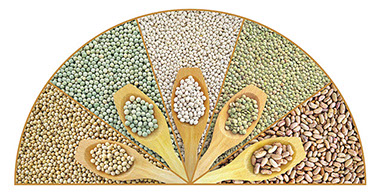
    Image of different types of peas.

    Have you ever eaten “pulses”? There’s a good chance you have – and you may want to start eating more of them.

    Pulses are the edible seeds of legumes. They include kidney beans, lima beans, butter beans, chick peas, black-eyed peas and lentils – available canned or dried.

    Nutritionists already praise pulses as an excellent source of fiber, protein and vitamins. But a recent study published in The American Journal of Clinical Nutrition says that adults who added pulses to their daily diet lost more weight than those who didn’t eat them. And, there was no other special effort involved. The feeling of fullness can help people eat less and consume fewer calories without feeling hungry.

    Pulses have other benefits too. They may help lower blood levels of LDL (bad) cholesterol. They also have a low glycemic index. Glycemic index measures how foods that contain carbohydrates raise blood sugar. Foods with a high glycemic index raise your blood sugar more than foods with a low glycemic index.

    © American Institute for Preventive Medicine