Signs & Symptoms
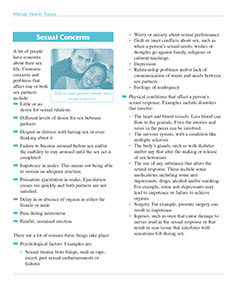
A lot of people have concerns about their sex life. Common concerns and problems that affect one or both sex partners include:
* Little or no desire for sexual relations
* Different levels of desire for sex between partners
* Disgust or distress with having sex or even thinking about it
* Failure to become aroused before sex and/or the inability to stay aroused until the sex act is completed
* Impotence in males. This means not being able to sustain an adequate erection.
* Premature ejaculation in males. Ejaculation comes too quickly and both partners are not satisfied.
* Delay in or absence of orgasm in either the female or male
* Pain during intercourse
* Painful, sustained erection
Psychological factors.
* Sexual trauma from things, such as rape, incest, past sexual embarrassments or failures
* Worry or anxiety about sexual performance
* Guilt or inner conflicts about sex, such as when a person’s sexual needs, wishes or thoughts go against family, religious or cultural teachings
* Depression
* Relationship problems and/or lack of communication of wants and needs between sex partners
Physical conditions that affect a person’s sexual response. Examples include disorders that involve:
* The heart and blood vessels. Less blood can flow to the genitals. Even the arteries and veins in the penis can be involved.
* The nervous system, with a condition like multiple sclerosis
* The body’s glands, such as with diabetes and/or any that alter the making or release of sex hormones
* The use of any substance that alters the sexual response. These include some medications including some anti-depressants, drugs, alcohol and/or smoking. For example, some anti-depressants may lead to impotence or failure to achieve orgasm.
* Surgery. For example, prostate surgery can result in impotence.
* Injuries, such as ones that cause damage to nerves used in the sexual response or that result in scar tissue that interferes with sensations felt during sex.
Treatment
A medical evaluation is the first step. It can determine if physical conditions, medications, etc. are the cause of the problem(s). A physical exam and certain tests can be done. These include:
* Hormonal studies
* Ones that check for neurological problems
* Ones that measure the flow of blood and the conditions of the veins and arteries in the penis
* Blood and urine tests to detect diabetes, urinary tract infections, etc.
* X-rays and/or ultrasound, if needed, which can help detect endometriosis, vaginal scar tissue, ovarian tumors, etc. in women
When a physical condition is found that causes the sexual concern or problem, treating it can get rid of or help with the problem. For example, several treatments exist for impotence. These include:
* Oral medications, such as Viagra, Levitra, and Cialis
* Special vacuum devices
* Self-injections of a prescription medicine and penile implant surgery for men
If no physical condition is found to be at fault, measures to deal with psychological causes can help. These include therapies of many kinds:
* Individual counseling
* Counseling with both partners
* Sex therapy
Questions to Ask: MEN ONLY
Questions to Ask: WOMEN ONLY
Questions to Ask: MEN & WOMEN
Self-Help
* Follow your doctor’s advice for a chronic illness, if you have one, to help prevent possible problems with sexual satisfaction.
* Practice safe sex to prevent sexually transmitted diseases.
* Limit alcohol and other drugs. A little alcohol can act as an aphrodisiac. Too much, however, can lead to unsafe sex, an inability to become aroused, violent behavior, etc.
The following things can help enhance the desire for sex. This is especially important for couples who both work outside the home and also have children. By the time they get into bed each night, sex seems like too much bother.
* Make a point to spend at least 15 minutes of uninterrupted time with your partner each day. If you can’t meet face to face, call each other on the telephone.
* Remember to express your affection for each other every day.
* Plan to spend part of a day alone together at least once a week. Make a date to take a walk in the park, go out for dinner or share other activities you both enjoy.
* Schedule a weekend away together every two months or so.
* Go to bed together at the same time. Tell yourself that what you haven’t accomplished by 11:00 p.m. can wait until the next day.
* Relax by giving each other a massage or taking a shower together.
* Keep the television out of the bedroom. Watching TV can be sexual suicide.
Don’t worry if your sexual encounters occasionally fail. Fatigue and stress are known to cause temporary impotence, a decrease in vaginal lubrication or the inability to have an orgasm. Don’t let yourselves become preoccupied with performance; just take pleasure in being together. Enjoy hugging, kissing and caressing.
For Premature Ejaculation
* The squeeze technique. If a man feels he’s about to ejaculate prematurely, he firmly pinches the penis directly below the head using the thumb and first two fingers of one hand and squeezes for 3 to 4 seconds.
* The start/stop method. The couple should abstain from intercourse for two weeks, but focus on touching. The man concentrates on the sensations in his penis as his partner touches his genitals and brings him to an erection. The man asks his partner to stop just before ejaculation. After a few minutes, his partner continues to arouse him, then stops again. This sequence is repeated two more times with ejaculation occurring the fourth time. Then each time the couple has sex, foreplay is prolonged.
For Lack of Sexual Response in Women
Couples can practice certain techniques to address sexual unresponsiveness in a woman. A few simple methods follow:
* For the first week, limit lovemaking to cuddling, kissing and nuzzling. Don’t touch the genitals or breasts.
* During the second week, the partner should gently touch the female’s vaginal area during lovemaking, but stop before she reaches orgasm to increase vaginal lubrication.
* During the third week, repeat the first two phases, then proceed with intercourse. If the vagina isn’t adequately lubricated, apply a water-soluble lubricant, such as K-Y Jelly to the penis to facilitate penetration. (Penetration may also be easier if the woman is on top.)
If a tight vaginal opening still makes penetration painful or impossible, the following exercise may help:
* The woman should gently place the tip of her partner’s little finger against her vagina and gently push his finger into her vagina. If this feels uncomfortable, she should stop and wait a few minutes.
* The couple should continue this exercise until the partner can insert two fingers in their partner’s vagina without causing pain or discomfort. (It may take several attempts over a period of weeks for this technique to work.)
(Note: The above techniques do not guarantee success. If they do not help improve your sexual concerns, consider professional help from a sex therapist.)