Tag: fund

  • Save For More Than Just A Rainy Day

    Financial Health

    Invest in your future.

    Money doesn’t grow on trees, but it can grow when you save and invest it wisely. First, identify what you want to save for:

    *  Emergency funds? (Plan for three to six months of expenses.) Holiday expenses? Vacations? A house? College for your kids? Retirement?

    *  Rank order your goals.

    Invest, but do not put all your eggs in one basket.

    Diversify with stocks, bonds, mutual funds, IRAs, real estate, and commodities, such as gold and silver. Find out more about investing fromwww.mymoney.gov. Things you can do on your own:

    *  If your employer has a retirement plan, such as a 401(k), have as much deducted from your pay as possible, especially if your employer matches some or all of the amount you contribute.

    *  Get resources on planning for retirement and long-term care fromwww.csrees.usda.gov/fsll.

    *  Check out “529” prepaid tuition and savings plans for college fromwww.collegesavings.org. These offer tax-saving advantages.

    *  Get professional investment advice from employer sponsored programs or from your financial planner. Find a certified professional from the Association for Financial Counseling and Planning Education atwww.afcpe.org.

    Revisit your budget:

    *  Pay off credit card or high interest debts first. Then use some or all of the payment money for your savings plan.

    *  Put aside whatever you can in savings accounts, checking accounts, and certificates of deposit.

    *  Look for additional ways to save fromhttp://investor.gov/sites/default/files/Saving-and-Investing.pdf

    *  Decide the best ways you are likely to save money.

    – Have your paycheck automatically deposited in your bank and have some go directly into one or more savings accounts.

    – Save money you get from tax refunds, work bonuses, and extra income.

    Action Step

    Beware of investments that promise high returns with little or no risk. If it sounds too good to be true, it usually is.
    Ways to Well-Being. Published by the American Institute for Preventive Medicine.

    © American Institute for Preventive Medicine
  • How To Set Up An Emergency Fund

    FINANCIAL HEALTH

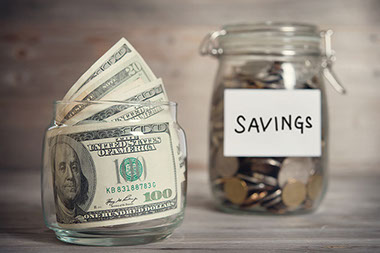
    Image of money in savings jar.

    An emergency fund is a great way to save yourself from financial disaster. It gives you peace of mind when unexpected expenses come up. And, it may help keep you out of debt when you need extra money for an emergency. People who don’t have emergency funds may have to turn to high-interest loans or more credit card debt.

    It can be difficult to set money aside when it’s being used for other day-to-day things. But, it is possible to do with a little discipline and planning. Here’s how:

    *Make it automatic.Have some money automatically put in a separate account with each paycheck. Even if the amount is small, it can add up over time. An automatic transfer is more convenient than doing it yourself. You may find that after a while, you don’t miss that extra money. You learn to get by without it.

    *Make it a priority.Pay your emergency fund first, before you use your paycheck for non-necessary items. Make a budget that doesn’t include your emergency money. This will ensure your bills and other necessities get paid without skipping your emergency fund payment.

    *Use a bank or credit union savings account.These are easier to access in an emergency than savings bonds, mutual funds or certificates of deposit (CDs). But, don’t put it in your regular checking account, where you may be tempted to use it for a non-emergency.

    *Keep the account totally separate.Make sure that account is for emergencies only. Make it a savings account instead of checking. Be sure the account doesn’t include fees or penalties.

    *“Do I need this?”Cover your credit card with a savings message to reduce non-essential spending.

    Creative ways to save

    Think of little ways you can change your daily routine to save money. You’ll be surprised how much you can save!

    Put away $.50 a day in loose change.

    Monthly savings: $15

    Yearly savings: $180

    Skip the coffee out and bring your own from home.

    Monthly savings: $80

    Yearly savings: $960

    Bring your own lunch 3 days a week instead of eating out.

    Monthly savings: $96

    Yearly savings: $1,152

    Eat dinner at home 2 more times per month.

    Monthly savings: $40-80

    Yearly savings: $480-960

    Source: Consumer Federation of America

    © American Institute for Preventive Medicine