Tag: gates

  • Child Safety

    Child Safety

    Do This, Not That

    According to the Centers for Disease Control and Prevention (CDC):

    *  Injuries are the leading cause of death in children and teens.

    *  Each year, nearly 9 million children aged 0 to 19 years are seen in emergency departments for injuries. More than 9,000 children die as a result of being injured.

    *  Injury treatment is the leading cause of medical spending for children.

    The leading causes of injury death differed by age group.

    *  For children less than 1 year of age, 2/3rds of injury deaths were due to suffocation.

    *  Drowning was the leading cause of injury death for those 1 to 4 years of age.

    *  For children 5 to 19 years of age, the most injury-related deaths were due to being an occupant in a motor vehicle traffic crash.

    Most child injures are preventable. Use the tips in this section to keep your children safe at home.

    General Guidelines

    Safe at Home - Do This, Not That Book. Published by the American Institute for Preventive Medicine. www.HealthyLife.com. All rights reserved.

    © American Institute for Preventive Medicine

  • Easy Ways To Childproof Your Home

    Child Safety

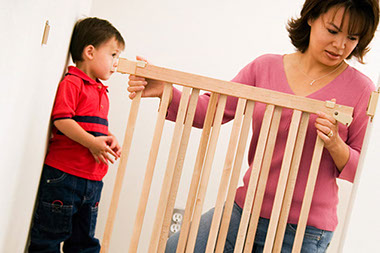
    Image of mom placing a safety gate on stairs.

    Is your home safe for curious children?

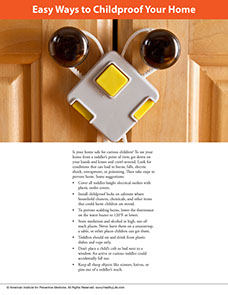
    To see your home from a toddler’s point of view, get down on your hands and knees and crawl around. Look for conditions that can lead to burns, falls, electric shock, entrapment, or poisoning. Then take steps to prevent harm. Some suggestions:

    *  Cover all toddler-height electrical outlets with plastic outlet covers.

    *  Install childproof locks on cabinets where household cleaners, chemicals, and other items that could harm children are stored.

    *  To prevent scalding burns, lower the thermostat on the water heater to 120ºF or lower.

    *  Store medicines and alcohol in high, out-of-reach places. Never leave them on a countertop, a table, or other places children can get them.

    *  Toddlers should eat and drink from plastic dishes and cups only.

    *  Don’t place a child’s crib or bed next to a window. An active or curious toddler could accidentally fall out.

    *  Keep all sharp objects like scissors, knives, or pins out of a toddler’s reach.

    A Year of Health Hints book by the American Institute for Preventive Medicine. www.HealthyLife.com. All rights reserved.

    © American Institute for Preventive Medicine

  • Childproofing

    FAMILY LIFE

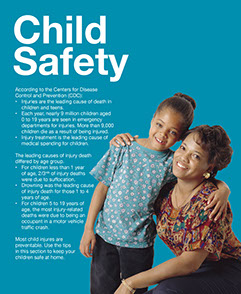
    Image of mother with toddler.

    Chase a toddler around for a day. Now that’s exercise. Any new parent quickly learns that a toddler is into everything. It only takes a quick second for that child to get out of your sight and around something potentially dangerous.

    The nation’s emergency physicians treat children every day who are injured by something in their own home or someone else’s home. Now is the time to childproof it, advises the American College of Emergency Physicians.

    What you can do in your home right now to protect young children

    *  Use safety latches for drawers and cabinets in kitchens, bathrooms, and other rooms that may contain dangerous products like cleaning supplies, knives and sharp objects, and medicines.

    *  Use safety gates to help prevent falls down stairs and to help prevent children from going in areas that may have potential dangers. Make sure these gates meet current safety standards. (Gates that only press against walls, called pressure-mounted gates, are not secure enough.)

    *  Place protective childproof covers on all electrical outlets that are in reach of children.

    *  Make sure all electrical cords are out of a child’s reach and properly secure.

    *  Fasten all heavy bookshelves, televisions, cabinets, or anything that could pose a potential tipping hazard to a secure wall, making sure it cannot fall on a child.

    *  Use toilet seat lid-locking devices on all toilet seats to decrease drowning hazards.

    *  Use cordless window coverings to help prevent strangulation.

    *  Use corner or edge bumpers on anything with sharp edges, like furniture and fireplaces.

    *  Create a protective barrier around pools and spas that include at least a 4-foot-tall fence with self-closing and self-latching gates. It’s also a good idea to look into getting pool alarms as an additional layer of protection.

    But the best device of all? Make sure a responsible person is with children at all times.
    © American Institute for Preventive Medicine