Tag: General Health

  • The Abcs Of Hepatitis

    MEDICAL NEWS

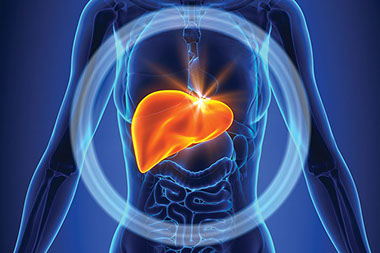
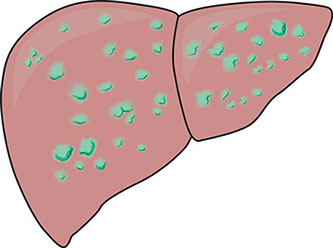
    Illustration of liver.

    Millions of Americans are living with hepatitis today, and many don’t know they have it. Hepatitis can be serious and can lead to lifelong health problems. To help fight this dangerous disease, it’s important to know how it is spread and what you can do to prevent it.

    What is hepatitis?

    Hepatitis is an inflammation of the liver. Without the liver, the body cannot process nutrients, fight infection, or filter the blood. Hepatitis can make someone very sick. Some people with viral hepatitis can get liver cancer or severe scarring of the liver, known as cirrhosis.

    How does someone get hepatitis?

    The three most common types of viral hepatitis are spread in different ways:

    *  Hepatitis A can spread if a person eats or drinks something that has been contaminated with the virus. A person with hepatitis A spreads the virus through their stool.

    *  Hepatitis B can spread when blood, semen or other body fluids from an infected person get into the body of another person. This can happen during childbirth, sexual contact, getting tattoos or piercings, sharing needles or medical equipment, or sharing personal items, such as razors.

    *  Hepatitis C spreads through blood. Sharing needles or personal equipment that comes into contact with blood is the main way it gets spread. It may also spread during sexual contact. Like hepatitis B, Hep C can infect a baby during childbirth if the mother has it.

    How do I prevent hepatitis?

    Many people don’t have symptoms of hepatitis and don’t know they are infected. This means they can spread it to others without knowing it.

    The best ways to help prevent the spread of hepatitis are:

    *  Getting the vaccine, if needed. Vaccines are available for hepatitis A and B.

    *  Getting screened for hepatitis if you are at risk and getting treatment when available.

    *  Being aware of risk factors and avoiding them whenever possible. This may include not sharing needles or other personal equipment as listed on this page. Use latex condoms during sexual activity.

    Is there a cure for viral hepatitis?

    Most people who get hepatitis A will recover after a few weeks or months. People with hepatitis B may need to be checked regularly for liver damage, and the infection may be lifelong. Hepatitis C can often be cured with today’s advanced medications.

    Ask your doctor if you are at risk for hepatitis and whether you should be screened or vaccinated.

    Sources: Centers for Disease Control, World Health Organization

    © American Institute for Preventive Medicine

  • Heart Disease

    Heart & Circulation Problems

    Heart disease is a common term for coronary artery disease (CAD). It is the number one cause of death in the U.S. in both men and women. With heart disease, arteries that supply blood to the heart become hardened and narrowed. Heart disease can lead to these problems:

    *  Angina. With this, the heart muscle does not get as much blood and oxygen as it needs for a given level of work. A heart attack damages the heart muscle. Angina does not. It is a warning sign that a heart attack could occur, though.

    *  Heart attack.

    *  Heart failure (HF). With this, the heart “fails” to supply the body with enough blood and oxygen for its needs. This develops slowly. It becomes chronic.

    Signs & Symptoms

    *  Symptoms of angina are pain, discomfort, or a squeezing pressure in the chest. Aching in a tooth, jaw, or neck can also occur. Symptoms usually go away with rest and/or nitroglycerin. Angina attacks may occur with anger, excitement, or exertion, such as walking up a hill.

    *  Symptoms of a heart attack.

    *  Symptoms of heart failure are: Shortness of breath; feeling very tired or weak; swelling in the lower legs, ankles, and feet; dry cough or one with pink, frothy mucus; rapid weight gain; and a fast heart beat.

    Causes

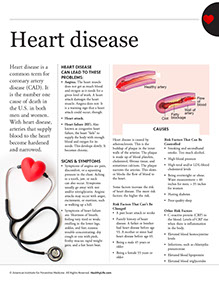
    Illustration of healthy artery vs a clogging artery.

    Heart disease is caused by atherosclerosis. This is the buildup of plaque in the inner walls of the arteries. The plaque is made up of blood platelets, cholesterol, fibrous tissue, and sometimes calcium. The plaque narrows the arteries. This slows or blocks the flow of blood to the heart.

    Some factors increase the risk of heart disease. The more risk factors; the higher the risk.

    Risk Factors That Can’t Be Changed

    *  A past heart attack or stroke.

    *  Being a male 45 years or older.

    *  Being a female 55 years or older.

    *  Family history of heart disease:

    – A father or brother had heart disease before age 55.

    – A mother or sister had heart disease before age 65.

    Risk Factors That Can Be Controlled

    *  High blood pressure.

    *  High-risk blood cholesterol levels.

    *  Smoking.

    *  Being overweight or obese.

    *  Lack of physical activity.

    *  Having diabetes and high total and/or LDL (bad) cholesterol.

    *  Using cocaine or amphetamines.

    *  Metabolic syndrome.

    Other Factors that May Play a Role in Heart Disease

    *  Waist measurement > 40 inches for men; > 35 inches for women.

    *  C-reactive protein (CRP) in the blood. Levels of CRP rise when there is inflammation in the body.

    *  Elevated blood homocysteine levels.

    *  Infections, such as chlamydia pneumoniae.

    *  Elevated blood lipoprotein (a).

    *  Elevated blood triglycerides.

    Treatment

    The goals of treatment are to relieve symptoms, control or reduce risk factors, stop or slow further damage to the arteries, and prevent and treat cardiac events. Treatment includes:

    *  Self-Care / Prevention measures on this page.

    *  Medications.

    *  Procedures to open blocked or narrowed arteries or bypass them.

    *  Cardiac rehabilitation (rehab).

    Questions to Ask

    Self-Care / Prevention

    *  Have regular medical checkups. Get your blood pressure checked at each office visit or or as advised by your doctor. Get your blood cholesterol tested regularly, as advised by your doctor.

    *  Don’t smoke. If you smoke, quit.

    *  Get to or stay at a healthy weight.

    *  Take all medications as prescribed.

    *  If you are 50 to 69 years old, ask your doctor about the benefits and harms of aspirin therapy (e.g., 1 low-dose aspirin daily) to help prevent cardiovascular disease.

    *  See your doctor if you have any of the Signs & Symptoms of Diabetes.

    *  Follow a diet low in saturated fats, trans fats, and cholesterol. Limit sodium to 1,500 to 2,400 milligrams per day. Follow theDASH Eating Plan.

    *  Get regular exercise. Follow your doctor’s advice.

    *  Manage stress. Practice relaxation techniques.

    *  If you drink alcohol, do so in moderation. Too much alcohol can raise the risk for high blood pressure, heart disease, stroke, and other health problems. Moderate drinking, may be linked to a lower risk of coronary heart disease in some persons. Moderation means no more than 2 drinks a day for men; 1 drink a day for women and persons age 65 and older. One drink = 5 oz. of wine; 12 oz. of beer; or 1-1/2 oz. of 80-proof liquor.

    *  Ask your doctor how much, if any, alcohol you should drink.

    *  Get your doctor’s advice about taking vitamins, minerals, and herbal products.

    Metabolic Syndrome

    Metabolic Syndrome is having at least three of these five conditions:

    1.  Abdominal obesity. Waist measurement for this varies according to sex and ethnic group. Ask your doctor.

    2.  High triglycerides:* ≥ 150 mg/dL

    3.  Low HDL-cholesterol:* < 40 mg/dL for males; < 50 mg/dL for females

    4.  High blood pressure:* ≤ 140 mm Hg systolic and/or ≤ 90 mm Hg diastolic

    5.  High fasting glucose:* ≥ 100 mg/dL

    * Or taking medication to treat this condition.

    Resources

    The American Heart Association

    800.AHA.USA1 (242.8721)

    www.heart.org/HEARTORG

    National Heart, Lung, and Blood Institute (NHLBI)

    www.nhlbi.nih.gov

    Healthier at Home book by the American Institute for Preventive Medicine. www.HealthyLife.com. All rights reserved.

    © American Institute for Preventive Medicine
  • Are You Washing Your Hands The Right Way?

    MEDICAL NEWS

    Water drop illustration with the words "Wash your hand".

    The Centers for Disease Control and Prevention (CDC) says washing your hands is like a “do-it-yourself” vaccine. Washing your hands properly and at the right time will slash your risk of getting sick with illnesses like colds, flu and stomach bugs that cause diarrhea and vomiting.

    Handwashing seems simple. But, there are some steps you must take to ensure your hands are truly clean.

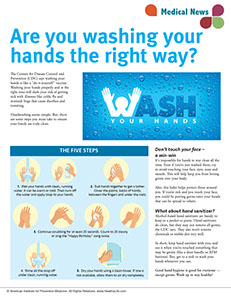
    The five steps

    1.  Wet your hands with clean, running water. It can be warm or cold. Then turn off the water and apply soap to your hands.

    2.  Rub hands together to get a lather. Cover the palms, backs of hands, between the fingers and under the nails.

    3.  Continue scrubbing for at least 20 seconds. Count to 20 slowly or sing the “Happy Birthday” song twice.

    4.  Rinse all the soap off under clean, running water.

    5.  Dry your hands using a clean towel. If one is not available, allow them to air dry completely.

    Don’t touch your face – a win-win

    It’s impossible for hands to stay clean all the time. Even if you’ve just washed them, try to avoid touching your face, eyes, nose and mouth. This will help keep you from letting germs into your body.

    Also, this habit helps protect those around you. If you’re sick and you touch your face, you could be putting germs onto your hands that can be spread to others.

    What about hand sanitizer?

    Alcohol-based hand sanitizers are handy to keep in a pocket or purse. Hand sanitizers do clean, but they may not remove all germs, the CDC says. They also won’t remove chemicals or visible dirt very well.

    In short, keep hand sanitizer with you, and use it when you’ve touched something that may be germy (like a door handle or ATM buttons). But, get to a sink to wash your hands whenever you can.

    Good hand hygiene is good for everyone – except germs. Wash up to stay healthy!

    © American Institute for Preventive Medicine

  • Heart Palpitations

    Heart & Circulation Problems

    Signs & Symptoms

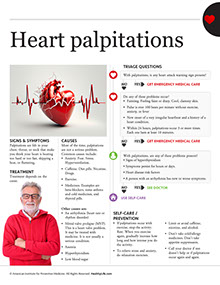
    Palpitations can be felt in the chest, throat, or neck. With them, it feels like the heart is pounding, racing, and/or fluttering. It can feel like the heart has skipped a beat.

    Causes

    Most of the time, palpitations are not a serious problem. Common causes include:

    *  Anxiety. Fear. Stress. Hyperventilation.

    *  Caffeine. Diet pills. Nicotine. Drugs.

    *  Exercise.

    *  Medicines. Examples are beta-blockers, some asthma and cold medicines, and thyroid pills.

    Other causes are:

    *  An arrhythmia (heart rate or rhythm disorder).

    *  Mitral valve prolapse (MVP). This is a heart valve problem. It may be treated with medicine. It is not usually a serious condition.

    *  Anemia.

    *  Hyperthyroidism.

    *  Low blood sugar.

    Treatment

    Treatment depends on the cause.

    Questions to Ask

    Self-Care / Prevention

    *  If palpitations occur with exercise, stop the activity. Rest. When you exercise again, gradually increase how long and how intense you do the activity.

    *  To relieve stress and anxiety, do relaxation exercises.

    *  Limit or avoid caffeine, nicotine, and alcohol.

    *  Don’t take cold/allergy medicines. Don’t take appetite suppressants.

    *  Call your doctor if rest doesn’t help or if palpitations occur again and again.

    Resources

    The American Heart Association

    800.AHA.USA1 (242.8721)

    www.heart.org/HEARTORG

    National Heart, Lung, and Blood Institute (NHLBI)

    www.nhlbi.nih.gov

    Healthier at Home book by the American Institute for Preventive Medicine. www.HealthyLife.com. All rights reserved.

    © American Institute for Preventive Medicine
  • Ebola Facts

    MEDICAL NEWS

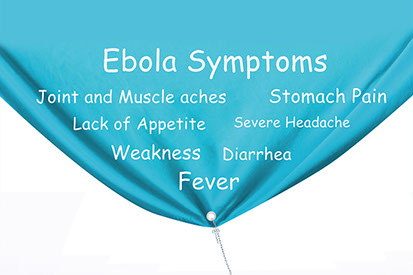
    Illustration of ebola symptoms.

    Although the risk of Ebola spreading in the U.S. is low, the CDC offers this information about a scary disease. A person infected with Ebola-a disease outbreak in countries in West Africa and isolated cases in the U.S.-can’t spread the disease until symptoms appear.

    The time from exposure to when signs or symptoms of the disease appear (called the incubation period) is 2 to 21 days, but the average time is 8 to 10 days. Signs of Ebola include fever (higher than 101.5ºF) and severe headache, muscle pain, vomiting, diarrhea, stomach pain, or unexplained bleeding or bruising.

    Ebola is spread through direct contact with blood and body fluids.

    Ebola is spread through direct contact (through broken skin or through your eyes, nose, or mouth) with:

    *  Blood and body fluids (like urine, feces, saliva, vomit, sweat, and semen) of a person who is sick with Ebola.

    *  Objects (such as needles) that have been contaminated with the blood or body fluids of a person sick with Ebola.

    There is no FDA-approved vaccine available for Ebola. Experimental vaccines and treatments are under development. You can protect yourself against Ebola.

    *  DO wash your hands often with soap and water or use an alcohol-based hand sanitizer.

    *  Do NOT touch the blood or body fluids of people who are sick.

    *  Do NOT handle items that may have come in contact with a sick person’s blood or body fluids, such as clothing, bedding, needles, or medical equipment.

    *  Do NOT touch the body of someone who has died of Ebola.

    Ebola is NOT spread through the air, water, or food.

    If you have traveled to an area with an Ebola outbreak or had close contact with a person sick with Ebola, you may be at risk.

    © American Institute for Preventive Medicine
  • Hepatitis

    General Health Conditions

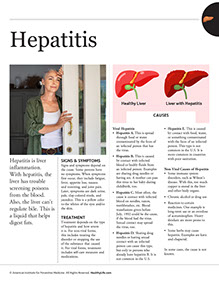
    Hepatitis is liver inflammation. With hepatitis, the liver has trouble screening poisons from the blood. Also, the liver can’t regulate bile. This is a liquid that helps digest fats.

    Signs & Symptoms

    Signs and symptoms depend on the cause. Some persons have no symptoms. When symptoms first occur, they include fatigue, fever, appetite loss, nausea and vomiting, and joint pain.

    Later, symptoms are dark urine, pale, clay-colored stools, and jaundice. This is a yellow color to the whites of the eyes and/or the skin.

    Illustration of hepatitis in the liver.

    Hepatitis in the Liver

    Causes

    One or More Types of Viral Hepatitis

    *  Hepatitis A. This is spread through food or water contaminated by the feces of an infected person that has the virus.

    *  Hepatitis B. This is caused by contact with infected blood or bodily fluids from an infected person. Examples are sharing drug needles or having sex. A mother can pass this virus to her baby during childbirth, too.

    *  Hepatitis C. Most often, the cause is contact with infected blood on needles, razors, toothbrushes, etc. Blood transfusions given before July, 1992 could be the cause, if the blood had the virus. Sexual contact may spread the virus, too.

    *  Hepatitis D. Sharing drug needles or having sexual contact with an infected person can cause this type, but only in persons who already have hepatitis B. It is not common in the U.S.

    *  Hepatitis E. This is caused by contact with food, water, or something contaminated with the feces of an infected person. This type is not common in the U.S. It is more common in Africa and India.

    Non-Viral Causes of Hepatitis

    *  Some immune system disorders, such as Wilson’s disease. With this, too much copper is stored in the liver and other body organs.

    *  Chronic alcohol or drug use.

    *  Reaction to certain medicines. One example is long-term use or an overdose of acetaminophen. Heavy drinkers are more prone to this.

    *  Some herbs may cause hepatitis. Examples are kava and chaparral.

    In some cases, the cause is not known.

    Treatment

    Treatment depends on the type of hepatitis and how severe it is. For non- viral forms, this includes treating the disorder or stopping the use of the substance that caused it. For viral forms, treatment includes self-care measures and medications.

    Questions to Ask

    Self-Care / Prevention

    To Help Prevent Hepatitis A and E

    *  Get a hepatitis A vaccine if advised by your doctor or health department. There is no vaccine for hepatitis E.

    *  When you travel to countries where the virus is widespread, wash your hands often. Drink boiled water. Don’t eat unpeeled or uncooked fruits or foods rinsed with water. Don’t use ice.

    *  If exposed to hepatitis A, contact your doctor to get immune globulin (IG) within 2 weeks of exposure.

    To Help Prevent Hepatitis B, C, and D

    *  Get 3 doses of hepatitis B vaccine if advised by your doctor. There is no vaccine for hepatitis C.

    *  Practice Safer Sex.

    *  Don’t share IV drug needles.

    *  Don’t share razors or toothbrushes. See that sterilized items are used for ear piercing, etc.

    To Help Prevent Non-Viral Forms

    *  Use alcohol in moderation, if at all.

    *  Don’t combine alcohol and acetaminophen. Take products that contain acetaminophen, such as Tylenol, as directed. Heed warnings listed on the label.

    To Treat Hepatitis

    *  Follow your doctor’s advice for medicines, etc.

    *  Rest.

    *  Drink at least 8 glasses of fluids a day.

    *  Avoid alcohol and any drugs or medicines that affect the liver, such as acetaminophen.

    *  Follow a healthy diet. Take vitamins and minerals as advised by your doctor.

    Resources

    National Center for HIV/AIDS, Viral Hepatitis, STD, and TB Prevention

    800.CDC.INFO (232.4636)

    www.cdc.gov/nchhstp

    Healthier at Home book by the American Institute for Preventive Medicine. www.HealthyLife.com. All rights reserved.

    © American Institute for Preventive Medicine
  • Germs: Just Don’T Share Them

    WORK LIFE

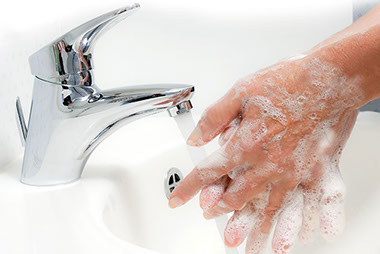
    Image of hands being wash with soap and water.

    If you must go to work or do necessary errands with a minor illness, follow these tips from the CDC to help prevent the spread of germs:

    *  Wash your hands often with soap and running water. Wash your hands after blowing your nose and using the bathroom.

    *  Cough or sneeze into a tissue and throw it away. If you do not have a tissue, cough or sneeze into your elbow, not your hand.

    *  Avoid touching your eyes, nose, or mouth.

    © American Institute for Preventive Medicine

  • Insomnia

    Women’s Health

    Insomnia is having trouble falling asleep. It can last from a single night to a few weeks. It can occur from time to time or be a chronic problem.

    Signs & Symptoms

    *  Waking up during the night and not being able to get back to sleep.

    *  Waking up too early.

    *  Not getting enough sleep or getting poor quality sleep.

    *  Fatigue or feeling drowsy during the day because of lack of sleep.

    Causes

    *  Too much caffeine or having it before bedtime.

    *  Changes in sleep/wake schedules, such as work shift changes and jet lag.

    *  Going to bed with a full bladder or any problem that causes you to urinate or have a bowel movement during the night.

    *  Too much noise when you fall asleep. This includes a snoring partner.

    *  Menopausal symptoms, such as hot flashes.

    *  A lack of physical exercise.

    *  Lack of a sex partner.

    *  Side effects of some medicines, such as decongestants, corticosteroids, and stay-awake pills.

    *  Emotional stress. Depression. Anxiety.

    *  Posttraumatic Stress Disorder (PTSD).

    *  Fibromyalgia.

    *  Any condition, illness, injury, or surgery that causes pain and/or discomfort which interrupts sleep.

    *  Asthma, allergies, and early-morning wheezing.

    *  An overactive thyroid gland.

    *  Heart or lung conditions that cause shortness of breath when lying down.

    Treatment

    *  Self-care and prevention measures.

    *  Treating the problem.

    *  Prescribed short-acting sleeping pills.

    Questions to Ask

    Self-Care / Prevention

    *  Avoid caffeine for 8 hours before bedtime. Caffeine is in coffee, tea, chocolate, colas, and some other soft drinks. Check labels for caffeine content in over-the-counter medicines.

    *  Avoid long naps during the day.

    *  Have no more than 1 alcoholic drink with or after dinner. Even though alcohol is a sedative, it can disrupt sleep. Check with your doctor about using any alcohol if you are taking medicines.

    *  An hour or two before going to bed, dim the lights in the house.

    *  Before you go to bed, have food items rich in the amino acid L-tryptophan, such as milk, turkey, or tuna fish. Do not take L-tryptophan supplements, though. Eating foods with carbohydrates, such as cereal, breads, and fruits, may help as well.

    *  Do regular exercise, but not within a few hours of going to bed.

    *  Before bedtime, take a warm bath or read a book or do some type of repetitive, calm activity. Avoid things that hold your attention, such as watching a suspense movie.

    *  Keep your bedroom quiet, dark, and comfortable. Use clean, fresh sheets and pillows. Keep the room temperature neither too warm nor too cool.

    *  Ban worry from the bedroom. Don’t rehash the mistakes of the day as you toss and turn.

    *  Follow a regular bedtime routine. Lock or check doors and windows, brush your teeth, etc.

    *  Count sheep! Picturing a repeated image may bore you to sleep.

    *  Listen to recordings that help promote sleep. Look for them at a library or bookstore.

    *  If you’ve tried to fall asleep, but are still awake after 30 minutes, get out of bed. Read a relaxing book or sit quietly in the dark. Do this for about 20 minutes. Then go back to bed. Repeat this as many times as you need to until you are able to fall asleep.

    *  Take over-the-counter sleep aids (e.g., melatonin, Tylenol PM, etc.) as advised by your doctor. Don’t take anyone else’s sleeping pills.

    Resources

    National Center on Sleep Disorders Research

    www.nhlbi.nih.gov/about/ncsdr

    National Sleep Foundation

    www.sleepfoundation.org

    Women's Self-Care book by the American Institute for Preventive Medicine. www.HealthyLife.com. All rights reserved.

    © American Institute for Preventive Medicine
  • Hair Loss: More Than Skin Deep

    WELL-BEING

    Image of man with thining hair.

    Hair loss is a common issue among men and women alike. The U.S. National Library of Medicine says about 50 million men and 30 million women have some degree of hair loss or baldness. Most of the time, this is due to hereditary hair loss.

    Sometimes, however, hair loss is a sign of a health problem. Hair loss can sometimes be caused by:

    *  Thyroid problems

    *  Diabetes

    *  Low iron in the blood (anemia)

    *  Prostate cancer in men

    *  High blood pressure (hypertension)

    *  Polycystic ovary syndrome (PCOS) in women

    Hair loss doesn’t always mean you have a serious illness. Sometimes hair falls out for a little while and then starts to grow back. Some of the reasons this happens include:

    *  Hair breakage from chemicals like perms and hair color

    *  Hairstyles that pull on the hair, such as tight ponytails and braids

    *  A stressful event, such as a death in the family

    *  Stress on the body from major surgery, childbirth or some illnesses

    *  Brushing hair too hard or too often

    *  Some prescription medicines, including those for arthritis, cancer, depression, gout, heart disease and high blood pressure

    *  Hormone changes, such as during pregnancy or menopause

    If you notice sudden hair loss, it’s important to find out the cause. If you notice large amounts of hair falling out when combing or washing your hair, or thinning or bald spots, make an appointment with your doctor.

    Common hair loss treatments

    Knowing the cause of your hair loss is the first step to treatment. For instance, if iron levels are low, your doctor may recommend an iron supplement. Treatments for common hereditary hair loss include:

    *  Topical minoxidil (brand name Rogaine, which can be purchased in stores)

    *  Finasteride (prescription medicine for men only)

    *  Topical or oral estrogen or other hormones (prescription for women only)

    *  Hair transplant surgery

    Source: American Academy of Dermatology

    © American Institute for Preventive Medicine
  • Insomnia 2

    General Health Conditions

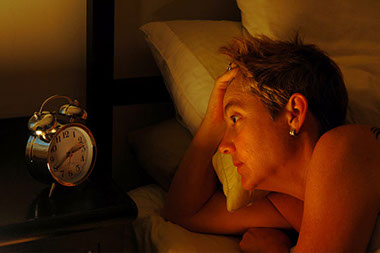
    Image of woman in bed awake at 2:40am.

    Do You Have Insomnia?

    Answer these questions:

    1. Do you have trouble falling asleep?

    2. Do you have problems staying asleep?

    3. Do you wake up too early and can’t get back to sleep?

    4. Do any of these problems last at least 3 weeks?

    If you answered yes to number 4, answer these questions about problems that occur when you are awake:

    5. Do you feel like you do not get enough refreshing sleep?

    6. Do you yawn and feel tired?

    7. Do you lack energy or have fatigue?

    8. Do you have a hard time concentrating?

    9. Do you feel depressed and/or cranky?

    If you answered yes to question number 4 and yes to any question from number 5 through 9, you could have insomnia.

    Why You Need Sleep

    Getting enough sleep and good quality sleep helps you maintain good health and function your best during the day. You need sleep to:

    *  Have energy.

    *  Think clearly.

    *  React quickly.

    *  Be productive.

    *  Learn and remember things.

    *  Help your immune system fight infections.

    According to the National Sleep Foundation, about 50% of adults in the U.S. have problems with sleep at least a few nights a week. And recent studies find that the average person gets less than 6 hours of sleep per night. (On average, adults need at least 7 to 8 hours of sleep each night.)

    A lack of sleep or getting poor quality sleep can lead to a wide range of health problems.

    Health Problems from a Lack of Sleep

    *  Anxiety, depression, and alcohol abuse.

    *  Obesity.

    *  Heart disease.

    *  High blood pressure.

    *  Diabetes.

    *  Stroke.

    *  Gum disease.

    *  Accidents and an increased risk for injury and death. About 20% of all serious car crashes are linked to driver sleepiness. Also, workers with severe insomnia make 2½ times more serious work errors than persons who get proper sleep.

    Getting enough, quality sleep is as vital to good heath and long life as are healthy eating and regular exercise.

    Do’s & Don’ts for Insomnia

    Do’s

    *  Do regular exercise daily. Physical activity releases muscle tension, relieves anger, and improves mood.

    *  Do mild exercises four or more hours before bedtime.

    *  Do relaxation exercises as needed throughout the day and before you go to bed.

    *  Follow a regular daily schedule for meals and snacks.

    *  Choose larger meals at breakfast and lunch than at dinner. At each meal, have complex carbohydrate foods, such as whole-grain breads and cereals, fruits and vegetables.

    *  Limit caffeine to 300 milligrams (mgs.) a day. More than 500 to 600 mgs. a day may cause you to be anxious, nervous, and makes it harder to sleep well.

    *  Cut down on caffeine gradually. Daily usage of caffeine can result in physical dependence. If caffeine is stopped abruptly, withdrawal symptoms can occur. These include headache, feeling down, having a hard time concentrating, and fatigue.

    Don’ts

    *  Don’t do vigorous exercise within six hours of going to bed.

    *  Don’t have large meals near bedtime. These may keep you awake, especially if you have heartburn or a similar problem.

    *  Don’t have caffeine for 6 hours before bedtime.

    HealthyLife SleepWell by the American Institute for Preventive Medicine. www.HealthyLife.com. All rights reserved.

    © American Institute for Preventive Medicine