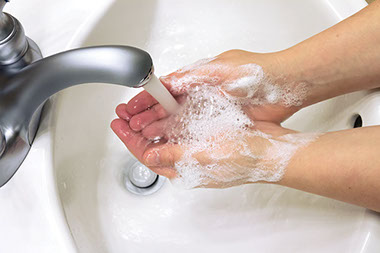
Tag: germs

  • Disinfecting Your Home Safely

    WELL-BEING

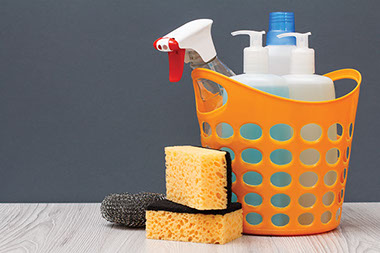
    Bucket with cleaning supplies.

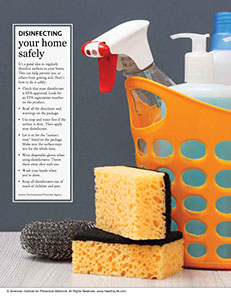
    It’s a good idea to regularly disinfect surfaces in your home. This can help prevent you or others from getting sick. Here’s how to do it safely:

    *  Check that your disinfectant is EPA-approved. Look for an EPA registration number on the product.

    *  Read all the directions and warnings on the package.

    *  Use soap and water first if the surface is dirty. Then apply your disinfectant.

    *  Let it sit for the “contact time” listed on the package. Make sure the surface stays wet for the whole time.

    *  Wear disposable gloves when using disinfectants. Throw them away after each use.

    *  Wash your hands when you’re done.

    *  Keep all disinfectants out of reach of children and pets.

    Source: Environmental Protection Agency

    © American Institute for Preventive Medicine

  • Hand Washing Or Sanitizer?

    WELL-BEING

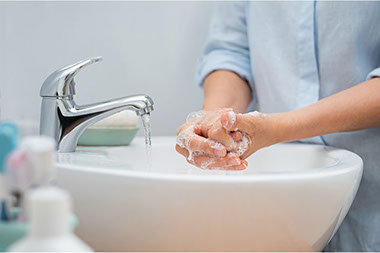
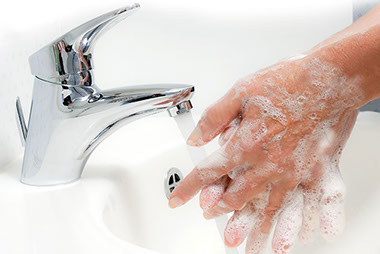
    Close up image of person washing hand with soap and water.

    If there’s one habit that’s good for everyone’s health, it’s hand washing. But is hand sanitizer just as good as soap and water? Maybe not. Hand sanitizers:

    *  Do not get rid of all germs.

    *  Don’t work well when hands have dirt or grease on them.

    *  May not remove dangerous chemicals, like pesticides and heavy metals.

    Hand washing does all these things – when you use soap and water and scrub for at least 20 seconds.

    Use hand sanitizer when you can’t get soap and water. But always choose the sink and soap when you can!

    Source: Centers for Disease Control and Prevention

    © American Institute for Preventive Medicine

  • How To Avoid Hospital Germs

    Medical Care

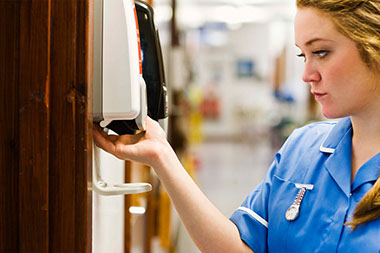
    Image of nurse using antibacterial dispenser.

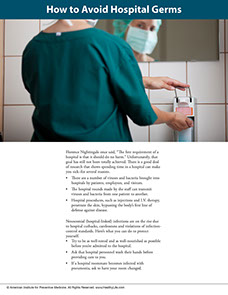
    Florence Nightingale once said, “The first requirement of a hospital is that it should do no harm.”

    Unfortunately, that goal has still not been totally achieved. There is a good deal of research that shows spending time in a hospital can make you sick-for several reasons.

    *  There are a number of viruses and bacteria brought into hospitals by patients, employees, and visitors.

    *  The hospital rounds made by the staff can transmit viruses and bacteria from one patient to another.

    *  Hospital procedures, such as injections and I.V. therapy, penetrate the skin, bypassing the body’s first line of defense against disease.

    Nosocomial (hospital-linked) infections are on the rise due to hospital cutbacks, carelessness and violations of infection-control standards. Here’s what you can do to protect yourself.

    *  Try to be as well-rested and as well-nourished as possible before you’re admitted to the hospital.

    *  Ask that hospital personnel wash their hands before providing care to you.

    *  If a hospital roommate becomes infected with pneumonia, ask to have your room changed.

    Page from A Year of Health Hints book by the American Institute for Preventive Medicine. www.HealthyLife.com. All rights reserved.

    © American Institute for Preventive Medicine

  • Are You Washing Your Hands The Right Way?

    MEDICAL NEWS

    Water drop illustration with the words "Wash your hand".

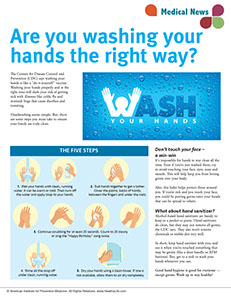
    The Centers for Disease Control and Prevention (CDC) says washing your hands is like a “do-it-yourself” vaccine. Washing your hands properly and at the right time will slash your risk of getting sick with illnesses like colds, flu and stomach bugs that cause diarrhea and vomiting.

    Handwashing seems simple. But, there are some steps you must take to ensure your hands are truly clean.

    The five steps

    1.  Wet your hands with clean, running water. It can be warm or cold. Then turn off the water and apply soap to your hands.

    2.  Rub hands together to get a lather. Cover the palms, backs of hands, between the fingers and under the nails.

    3.  Continue scrubbing for at least 20 seconds. Count to 20 slowly or sing the “Happy Birthday” song twice.

    4.  Rinse all the soap off under clean, running water.

    5.  Dry your hands using a clean towel. If one is not available, allow them to air dry completely.

    Don’t touch your face – a win-win

    It’s impossible for hands to stay clean all the time. Even if you’ve just washed them, try to avoid touching your face, eyes, nose and mouth. This will help keep you from letting germs into your body.

    Also, this habit helps protect those around you. If you’re sick and you touch your face, you could be putting germs onto your hands that can be spread to others.

    What about hand sanitizer?

    Alcohol-based hand sanitizers are handy to keep in a pocket or purse. Hand sanitizers do clean, but they may not remove all germs, the CDC says. They also won’t remove chemicals or visible dirt very well.

    In short, keep hand sanitizer with you, and use it when you’ve touched something that may be germy (like a door handle or ATM buttons). But, get to a sink to wash your hands whenever you can.

    Good hand hygiene is good for everyone – except germs. Wash up to stay healthy!

    © American Institute for Preventive Medicine

  • Bites On The Hand That Feeds It

    SELF-CARE CORNER

    Image of different pets, including dogs, cats, rabbits and hamsters.

    More than 4 million people are bitten by dogs and cats each year. And orthopedic surgeon Dr. Stephen Kennedy said all bites to the hand should receive medical care, although he says most people are reluctant to see a doctor.

    Animal saliva contains a broad range of bacteria. Adult dog jaws, especially among larger breeds, can bite with a force of more than 300 pounds, and when combined with the variety and sharpness of their teeth can cause significant injuries to hand and finger ligaments, tendons, and bones.

    Cats do not have the jaw strength of dogs, but their sharp, narrow teeth also can cause serious injury. Up to half of cat bites get infected.

    Signs of infection:

    *  Redness

    *  Swelling

    *  Pain that worsens

    *  Fever

    If a bite occurs:

    *  Inspect the hand carefully for any puncture wounds. Even a small wound can inject lethal bacteria under the skin.

    *  If there is a puncture wound of any size, wash it as soon as possible with soap and water. Then seek medical advice.

    *  Get immediate medical attention if you see redness, feel increasing pain over time, or see red streaking up the hand or arm (or along a tendon). These are signs of a serious infection.

    Antibiotics are often given to reduce the chance of infection. More serious bites may need surgery to clean the wound.

    © American Institute for Preventive Medicine

  • Crowd Control

    MEDICAL NEWS

    Image of a crowd of people.

    Wherever there are crowds, such as at football games, conventions, or music concerts, there are germs. Mayo Clinic infectious diseases expert Dr. Gregory Poland tells how you can avoid illness when you’re in a large throng of people, even in subways and on airplanes.

    Whenever you’re in a venue with hundreds or thousands of people gathering, you automatically run increased risk for getting “something.” The people around you may not have the same immunization programs or the same standards of personal cleanliness or food safety, he said, especially if you’re in an international group.

    Besides illnesses such as whooping cough, measles, mumps, colds and flu, other heightened dangers in places with large numbers of people passing through include respiratory diseases such as tuberculosis; vermin such as head lice and bedbugs; food-borne sickness such as E. coli, salmonella, hepatitis A and traveler’s diarrhea; and skin conditions including athlete’s foot and staph infections.

    Dr. Poland offers these tips for sidestepping illness:

    *  Keep your vaccines up to date: The most important ones include the MMR vaccine for measles, mumps and rubella; the seasonal flu shot; and a relatively new vaccine called Tdap, for tetanus, diphtheria, and whooping cough.

    *  Wash your hands thoroughly with soap and hot water or an alcohol-based hand sanitizer.

    *  Dine carefully: If it’s not cooked well, boiled or peeled, forget it. Make sure food that is supposed to be hot is served hot and food that is supposed to be cold is served cold, and make sure dishes and utensils are clean.

    *  Wear shower/pool shoes when using the shower or pool in public places.

    *  Avoid swimming pools, hot tubs, or whirlpools unless you are certain they are properly maintained, and it’s hard to tell.

    *  Don’t smoke: It raises the odds you’ll get Legionnaires’ disease if you’re exposed to the legionella bacteria and can also make you more susceptible to respiratory illnesses in general.

    *  Don’t try on hats in stores to minimize the risk of getting head lice. If you buy a hat, seal it in a plastic bag to carry it home, then freeze it for several days or launder it before wearing.

    *  Scout for bedbugs in a hotel room, and once in a room, only place your luggage on wooden surfaces or in the bathtub, not on the floor, bed, chair or couch until you determine whether bedbugs are present.

    *  Be an advocate for your health: If someone near you is obviously ill, move away if you can, or ask to be reseated.
    © American Institute for Preventive Medicine

  • Germs: Just Don’T Share Them

    WORK LIFE

    Image of hands being wash with soap and water.

    If you must go to work or do necessary errands with a minor illness, follow these tips from the CDC to help prevent the spread of germs:

    *  Wash your hands often with soap and running water. Wash your hands after blowing your nose and using the bathroom.

    *  Cough or sneeze into a tissue and throw it away. If you do not have a tissue, cough or sneeze into your elbow, not your hand.

    *  Avoid touching your eyes, nose, or mouth.

    © American Institute for Preventive Medicine

  • How Not To Get Sick When Traveling

    SELF-CARE CORNER

    Illustration of different city landmarks.

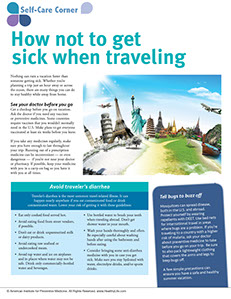
    Nothing can ruin a vacation faster than someone getting sick. Whether you’re planning a trip just an hour away or across the ocean, there are many things you can do to stay healthy while away from home.

    See your doctor before you go

    Get a checkup before you go on vacation. Ask the doctor if you need any vaccines or preventive medicines. Some countries require vaccines that you wouldn’t normally need in the U.S. Make plans to get everyone vaccinated at least six weeks before you leave.

    If you take any medicines regularly, make sure you have enough to last throughout your trip. Running out of a prescription medicine can be inconvenient – or even dangerous –  if you’re not near your doctor or pharmacy. If possible, keep your medicine with you in a carry-on bag so you have it with you at all times.

    Avoid traveler’s diarrhea

    Traveler’s diarrhea is the most common travel-related illness. It can happen nearly anywhere if you eat contaminated food or drink contaminated water. Lower your risk of getting it with these guidelines:

    *  Eat only cooked food served hot.

    *  Avoid eating food from street vendors, if possible.

    *  Don’t eat or drink unpasteurized milk or dairy products.

    *  Avoid eating raw seafood or undercooked meats.

    *  Avoid tap water and ice on airplanes and in places where water may not be safe. Drink only commercially-bottled water and beverages.

    *  Use bottled water to brush your teeth when traveling abroad. Don’t get shower water in your mouth.

    *  Wash your hands thoroughly and often. Be especially careful about washing hands after using the bathroom and before eating.

    *  Consider bringing some anti-diarrhea medicine with you in case you get sick. Make sure you stay hydrated with water, electrolyte drinks, and/or sports drinks.

    Tell bugs to buzz off

    Mosquitoes can spread disease, both in the U.S. and abroad. Protect yourself by wearing repellents with DEET. Use bed nets for international travel in areas where bugs are a problem. If you’re traveling to a country with a higher risk of malaria, ask your doctor about preventive medicine to take before you go on your trip. Be sure to also pack lightweight clothing that covers the arms and legs to keep bugs off.

    A few simple precautions can ensure you have a safe and healthy summer vacation.

    © American Institute for Preventive Medicine

  • Mouth To Hand

    SELF-CARE CORNER

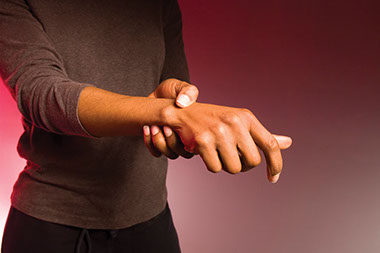
    Image of person holding their wrist.

    Tingling, numbness and pain in your fingers and wrists? Is it just tired hands or something more severe? While, these can all be signs of tired, overused hands, these symptoms can also indicate something serious, such as a repetitive stress injury, tendonitis, aggravation of arthritis or sprains, and even carpal tunnel syndrome.

    With over 152.7 billion text messages sent per month in the U.S. alone, according to CTIA-The Wireless Association, it is becoming clear that our society is shifting its primary method of communication from our mouths and voices to our hands and fingers. With this shift, there has also been an increase in the number of injuries related to these repetitive motions.

    “It is important that patients don’t dismiss symptoms of sore fingers, occasional numbness and tingling,” says George Kardashian, MD, an orthopedic surgeon and hand specialist at The Center for Bone and Joint Disease. “These symptoms are all the body’s way of saying it needs a break or a more serious injury will occur.”

    Since it is almost impossible to stop using mobile devices or computers completely, it is important to know how to prevent these symptoms from turning from sore, tired fingers into something more severe.

    *  Take frequent breaks from typing and texting.

    *  Stretch your hands and fingers.

    *  Use ice packs to reduce swelling.

    *  See your doctor if you have continuing symptoms.

    © American Institute for Preventive Medicine

  • Wash Away The 5 Most Common Handwashing Myths

    WELL-BEING

    Image of hands being washed with water and soup.

    Think you know how to wash your hands? Think again. A 2013 study in the Journal of Environmental Health showed that only 5% of people properly wash their hands on a daily basis. Cintas Corporation and Henry the Hand Foundation have teamed up to dispel the  5 most common handwashing myths.

    Keeping hands clean is one of the most important ways to avoid getting sick and spreading germs. Researchers at the NIH found that people touch their faces on average 3.6 times per hour. So handwashing is the answer. Test your knowledge about the best way to clean your hands.

    1. It doesn’t matter how long I wash my hands as long as I use soap – FALSE

    The next time you’re in the restroom and washing your hands, think of the chorus of your favorite song. Studies show that you should scrub your hands with soap for a minimum of 15-30 seconds in order to effectively remove germs.

    2. Hand sanitizers can replace washing your hands with soap and water – FALSE

    Washing hands with soap and water is the best and most effective way to reduce the number of microbes and germs on hands. Although alcohol-based (at least 60%) hand sanitizers can quickly reduce the number of germs on hands in some situations, they are not as effective as soap and water when it comes to removing and inactivating dangerous gastrointestinal illness-causing germs.

    3. The hotter the water you use for handwashing, the better – FALSE

    Studies show that water temperature does not affect germ removal. In fact, there is no research to prove that higher temperatures improve handwashing at all. Hotter water can also dry out skin, which leaves your skin more susceptible to germs and can make handwashing painful. It is best to wash your hands with the temperature that you find comfortable.

    4. You don’t have to dry your hands after washing them – FALSE

    Studies show that germs can be more easily transferred to and from wet hands, which is why drying hands is essential to staving off bacteria after handwashing.

    5. Hand dryers are more hygienic than paper towels – FALSE

    Researchers found that paper towels are superior to air dryers and can help remove bacteria, unlike air dryers, which can increase bacteria counts. Because air dryers have been shown to spread bacteria between 3 and 6 feet from the device, paper towels are also far less likely to contaminate other restroom users.

    © American Institute for Preventive Medicine