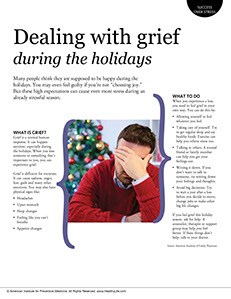
Tag: grief

  • Coping With The Loss Of A Spouse

    FAMILY LIFE

    Image of sad, older female sitting on couch.

    Losing a husband or wife is devastating. A whirlwind of intense emotions-overwhelming sadness as well as shock, fear, guilt, anger, and numbness-make the days and weeks after a spouse’s death agonizing and confusing.

    It may be small comfort to know that these feelings are normal and will be temporary.

    “Sadness may never go away entirely,” said clinical psychologist Dr. Hayley Hirschmann of Morris Psychological Group, “but the pain of acute grief becomes less intense over time as the good days start to outnumber the bad.”

    Dr. Hirschmann offers this advice:

    *Accentuate the positive:Studies have shown that those who are able to draw on humor and pleasurable memories are happier and healthier than those whose thoughts of the deceased are mostly sad and focused on their loss.

    *Let others help:Don’t shy away from expressing your feelings to those close to you; you will feel less alone if you can share your grief with a sympathetic listener. Accept help with chores and legal and financial responsibilities. Consider joining a bereavement support group.

    *Take care of yourself:Eat well, exercise regularly, get enough sleep. Be alert to falling into bad habits.

    *Don’t make big changes right away:Wait a while before moving or changing jobs.

    © American Institute for Preventive Medicine
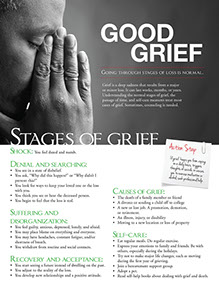
  • Telling Kids About Tragedy

    FAMILY LIFE

    Image of parents talking to their child.

    Talking to kids about scary events and disasters is important when they’re old enough to understand. Kids may have more fear of an event if they don’t know any details. They may imagine something much worse than what happened.

    Although telling kids some details may help, the American Academy of Pediatrics says it’s important that you filter the information you give your child. Think about the child’s age, personality and what they will be able to cope with. These steps can get the conversation started:

    *Ask the child what they know about the event.This can help you separate facts from fiction. It gives you a way to explain the things they already know in a way that is direct but not scary.

    *Avoid any graphic details.Although the media may share lots of details that are graphic and scary, children should be shielded from these things.

    *Don’t be too vague.Saying “something happened that was bad” doesn’t give enough information. Instead, name the place where it happened and tell them that some people were hurt. The police/firemen/ government, etc. are helping people and working to keep us safe.

    *Keep it open ended.Tell them if they have any questions, they can ask you.

    Is your child coping?

    After a disaster, some children have a hard time coping. These red flags may be a sign that your child needs help:

    *  Trouble sleeping, nightmares or being very tired all the time

    *  Unusual aches and pains, such as headache or feeling “sick” often

    *  Appetite changes

    *  Social changes, such as aggression or being clingy

    *  Frequent feelings of sadness or fear

    Talk to your child’s doctor if you notice any of these changes.

    © American Institute for Preventive Medicine