
Tag: grocery

  • Develop Supermarket Savvy

    Weight Control

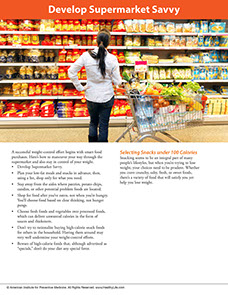
    A successful weight-control effort begins with smart food purchases. Here’s how to maneuver your way through the supermarket and also stay in control of your weight.

    *  Plan your low-fat meals and snacks in advance, then, using a list, shop only for what you need.

    *  Stay away from the aisles where pastries, potato chips, candies, or other potential problem foods are located.

    *  Shop for food after you’ve eaten, not when you’re hungry. You’ll choose food based on clear thinking, not hunger pangs.

    *  Choose fresh foods and vegetables over processed foods, which can deliver unwanted calories in the form of sauces and thickeners.

    *  Don’t try to rationalize buying high-calorie snack foods for others in the household. Having them around may very well undermine your weight-control efforts.

    *  Beware of high-calorie foods that, although advertised as “specials,” don’t do your diet any special favor.

    Selecting Snacks under 100 Calories

    Snacking seems to be an integral part of many people’s lifestyles, but when you’re trying to lose weight, your choices need to be prudent. Whether you crave crunchy, salty, fresh, or sweet foods, there’s a variety of food that will satisfy you yet help you lose weight. The table below lists 25 snacks that are all less than 100 calories each!
    Page from A Year of Health Hints book by the American Institute for Preventive Medicine. www.HealthyLife.com. All rights reserved.

    © American Institute for Preventive Medicine

  • Saving Food, Saving Money

    FINANCIAL HEALTH

    Image of couple at the grocery store.

    In the U.S., we throw out millions of tons of food each year. Most people have thrown out food that spoiled or was simply never eaten. This harms the environment because it adds up to more waste, and it’s also harmful to your budget. It’s a lot like throwing money in the garbage! In addition, some of that wasted food could have gone to people who don’t have enough to eat.

    Shopping, planning, saving

    The number one way to stop wasting food is to plan meals and shop for only those meals. You’ll need to make a shopping list and stick to it when you go to the store.

    Your list should have ingredients for all your meals, including main dishes, sides, drinks and snacks. Then, buy only what’s on the list. This requires some extra time and planning, but the savings can add up.

    Some people like to shop for the whole week, while others shop for only a few days at a time. This is up to you. No matter how you like to shop, having a list can save you money and cut down on food waste.

    In the end, your budget and the environment will thank you. As an added bonus, you will be eating healthier by planning your meals ahead of time.

    Keep the pantry organized

    Have you ever bought a can of beans, only to find that you already had three at home? Having an organized pantry can help avoid this.

    Try putting your pantry into sections. You may wish to divide up canned foods into categories like fruit, vegetables, beans and other foods. Have another section for pasta, one for rice and so on. Being able to quickly glance at the pantry when you’re making your shopping list can save time and prevent buying duplicates.

    Other tips to prevent food waste

    *  Buying bulk portions can be a big saving – but only if you eat it. Only buy these large portions if you plan to use or freeze it all before it expires.

    *  Eat leftovers! Have a leftover dinner night, rather than cooking another meal. Get creative and use leftovers to make a casserole, soup or sandwiches.

    *  Check your fridge first. Before you go shopping, see what you already have in your fridge. Eat what you have on hand before buying more.

    *  Ask local food banks about their needs. Donate food that you don’t think you will use instead of throwing it away.

    Source: Environmental Protection Agency

    © American Institute for Preventive Medicine

  • Shopping Cart Spills Can Be Prevented

    FAMILY LIFE

    Image of mother with toddler sitting in a shopping cart.

    Kids dangling over shopping carts reaching for candy, standing up, and riding underneath. Every 22 minutes a child goes to the ER with a shopping cart-related injury. A study in Clinical Pediatrics found that falls from a shopping cart accounted for the majority of injuries for children up to 4 years old, followed by running into/falling over the cart, cart tipovers, and entrapment of arms, legs, and fingers in the cart. The kids suffered concussions and other head injuries.

    Dr. Gary Smith, director of the Center for Injury Research and Policy at Nationwide Children’s Hospital, said parents need to understand the dangers. He suggests these strategies:

    *  Always use the shopping cart safety straps. Be sure your child is snugly secured in the straps and that the child’s legs are placed through the leg openings. If parts of the cart restraint system are missing or are not working, choose another cart.

    *  Use a cart that has a child seat that is low to the ground, if one is available.

    *  Make sure your child remains seated. Stay with the cart and your child at all times.

    *  Avoid placing infant carriers on top of shopping carts. If your child is not old enough to sit upright in the shopping cart seat, consider other options such as leaving your child at home with another adult while you are at the store, using in-store child care areas, using a front- or back-pack carrier, or using a stroller.

    © American Institute for Preventive Medicine