Tag: guidelines

  • Child Passenger Safety

    Child Safety

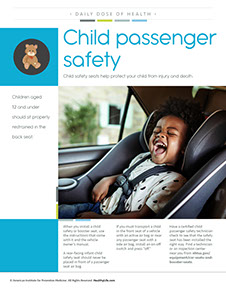
    Yound child in a car seat laughing.

    Child safety seats help protect your child from injury and death.

    Children aged 12 and under should sit properly restrained in the back seat.

    When you install a child safety or booster seat, use the instructions that come with it and the vehicle owner’s manual.

    A rear-facing infant child safety seat should never be placed in front of a passenger seat air bag.

    If you must transport a child in the front seat of a vehicle with an active air bag or near any passenger seat with a side air bag, install an on-off switch and press “off.”

    Have a certified child passenger safety technician check to see that the safety seat has been installed the right way. Find a technician or an inspection center near you fromnhtsa.gov/equipment/car-seats-and-booster-seats.

    A Year of Health Hints book by the American Institute for Preventive Medicine. www.HealthyLife.com. All rights reserved.

    © American Institute for Preventive Medicine

  • Tips For Myplate

    Healthylife® Weigh

    Part 2

    Middle aged man in kitchen about to prepare food.

    This activity will go through each part of MyPlate.

    *  Learn how eating certain foods can help your body, energy level, and mood. Learn new ways to prepare foods.

    *  Enjoy foods that taste good to you. Eat new things that you want to try. Avoid eating foods just because you think you “should” eat them. Explore different ways to prepare and eat foods. Celebrate cultural traditions and foods that are special to you.

    *  Allow some room in your diet for less nutritious foods. Make this a small part of your diet. If you have too many less nutritious foods, it will be more difficult to manage weight.

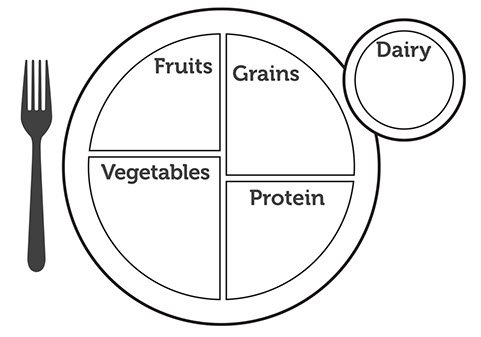
    The chart on “Plan a Balanced Day” gives a whole day’s servings of different food groups. Write amounts from these groups from the plan you selected. Write them on a blank plate. Remember, these are totals for the day.

    © American Institute for Preventive Medicine

  • New Guidelines On How To Eat Right

    HEALTHY EATING

    Image of family sitting at the kitchen table eating dinner.

    When it comes to eating right, it’s easy to get frustrated. It seems there’s always a new diet in the news, telling you to avoid certain foods or only eat certain things. How do you know what works and what’s just a fad?

    Every five years, the U.S. Department of Agriculture issues new eating tips for Americans to help them make healthy food choices. These guidelines aim to help you eat a wide variety of healthy foods and minimize unhealthy choices. The latest guidelines were recently released, and they recommend that you eat the following:

    *  Vegetables in a variety of colors – dark green, yellow, red, and orange

    *  Legumes (beans and peas), starchy foods like potatoes, and other fresh produce

    *  Plenty of whole fruits

    *  A variety of grains like bread and pasta, making sure at least half of them are whole grains

    *  Fat-free or low-fat dairy, including milk, yogurt, cheese, and/or fortified non-dairy beverages

    *  Protein foods, including seafood, lean meats and poultry, eggs, nuts, seeds, and soy products

    *  Healthy oils, such as olive and canola

    What not to eat

    The guidelines say you should limit saturated fats to less than 10 percent of your daily calories. Do the same for added sugars – no more than 10 percent of total calories. Avoid trans fats altogether. Limit daily sodium intake to 2,300 mg. You can find all of these nutrients on the nutrition facts panel.

    Activity and your health

    Finally, the USDA recommends adults get at least 30 minutes of exercise, five days a week. Walking is a great choice for most people. This can be broken up into smaller, 10-minute increments if needed. The main point is to avoid being inactive. Exercise has numerous benefits for your health, including reduced risks of heart disease, obesity, type 2 diabetes, and even some types of cancers.

    The guidelines are meant to be a helpful resource. If you’re not meeting all of them now, don’t give up. Each day that you work toward these healthy guidelines is a step in the right direction.

    © American Institute for Preventive Medicine

  • Re-Freeze Foods Safely

    HEALTHY EATING

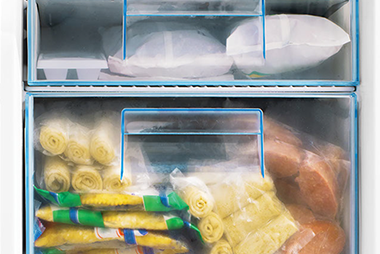
    Image of a freezer.

    It’s an old-wives’ tale that foods cannot be refrozen. But follow guidelines for safe food handling, according to the Partnership for Food Safety Education and the USDA.

    If raw foods such as meat, poultry, egg products, and seafood have been thawed in the refrigerator, then they may be safely re-frozen without cooking for later use. Never thaw raw foods by letting them sit on the kitchen counter. If raw foods are thawed outside of the refrigerator, for example in the microwave or in cool water, they should be cooked immediately. Never re-freeze raw or not fully cooked foods that have been thawed outside of the refrigerator.

    © American Institute for Preventive Medicine

  • Use Antibiotics Wisely

    MEDICAL NEWS

    Image of mother with sick child in bed.

    Antibiotics do not fight infections caused by viruses such as colds, flu, most sore throats, bronchitis, and many sinus and ear infections. Instead, symptom relief might be the best treatment option for viral infections, advises the CDC.

    Get smart about when antibiotics are needed-to fight bacterial infections. When you use antibiotics appropriately, you do the best for your health, your family’s health, and the health of those around you.

    Know that antibiotics

    *  Will not cure a viral infection

    *  Will not keep other people from getting sick

    *  Will not help you or your child feel better

    *  May cause unnecessary and harmful side effects

    *  May contribute to antibiotic resistance, which is when bacteria are able to resist the effects of an antibiotic and continue to cause harm

    Rest, fluids, and over-the-counter products may be your or your child’s best treatment option against viral infections.

    © American Institute for Preventive Medicine