Tag: gum-disease

  • Gum (Periodontal) Disease

    Dental & Mouth Concerns

    Image of women sitting in dental chair shaking hands with the dentist.

    Signs, Symptoms & Causes

    Gum (periodontal) diseases include:

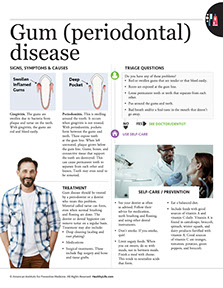
    Gingivitis. The gums are swollen due to bacteria from plaque and tartar on the teeth. With gingivitis, the gums are red and bleed easily.

    Periodontitis. This is swelling around the tooth. It occurs when gingivitis is not treated. With periodontitis, pockets form between the gums and teeth. These expose teeth at the gum line. When left untreated, plaque grows below the gum line. Gums, bones, and connective tissue that support the teeth are destroyed. This can cause permanent teeth to separate from each other and loosen. Teeth may even need to be removed.

    Treatment

    Gum disease should be treated by a periodontist or a dentist who treats this problem. Material called tartar can form, even when normal brushing and flossing are done. The dentist or dental hygienist can remove tartar on a regular basis. Treatment may also include:

    *  Deep cleaning (scaling and root planing).

    *  Medications.

    *  Surgical treatments. These include flap surgery and bone and tissue grafts.

    Questions to Ask

    Self-Care / Prevention

    *  See your dentist as often as advised. Follow his or her advice for medication, teeth brushing and flossing and using other dental instruments.

    *  Don’t smoke. If you smoke, quit.

    *  Eat a balanced diet.

    *  Limit sugary foods. When you eat sweets, do so with meals, not in between meals. Finish a meal with cheese. This tends to neutralize acids that form.

    *  Include foods with good sources of vitamin A and vitamin C daily. Vitamin A is found in cantaloupe, broccoli, spinach, winter squash, and dairy products fortified with vitamin A. Good sources of vitamin C are oranges, tomatoes, potatoes, green peppers, and broccoli.
    Healthier at Home book by the American Institute for Preventive Medicine. www.HealthyLife.com. All rights reserved.

    © American Institute for Preventive Medicine

  • Avoid Gum Disease With These Tips

    SELF-CARE CORNER

    Image of variety of cleaning supplies.

    Are you wondering if “a little blood” on your toothbrush is a reason to be concerned? It could indicate the early stages of gum disease, which can lead to serious dental problems later. Almost half of adults over age 30 have gum disease. Plus, 70 percent of people over age 65 have it, too.

    The good news is, you can take steps now to prevent it from getting worse. This could save you from tooth loss or gum problems.

    What causes gum disease?

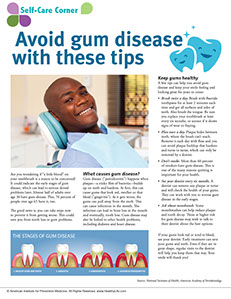
    Gum disease (“periodontitis”) happens when plaque-a sticky film of bacteria-builds up on teeth and hardens. At first, this can cause gums that look red, swollen or that bleed (“gingivitis”). As it gets worse, the gums can pull away from the teeth. This can cause infections in the mouth. The infection can lead to bone loss in the mouth and eventually, tooth loss. Gum disease may also be linked to other health problems, including diabetes and heart disease.

    Keep gums healthy

    A few tips can help you avoid gum disease and keep your smile feeling and looking great for years to come:

    *  Brush twice a day. Brush with fluoride toothpaste for at least 2 minutes each time and get all surfaces and sides of teeth. Also brush the tongue. Be sure you replace your toothbrush at least every six months, or sooner if it shows signs of wear or fraying.

    *  Floss once a day. Plaque hides between teeth, where the brush can’t reach. Remove it each day with floss and you can avoid plaque buildup that hardens and turns to tartar, which can only be removed by a dentist.

    *  Don’t smoke. More than 60 percent of smokers have gum disease. This is one of the many reasons quitting is important for your health.

    *  See your dentist every six months. A dentist can remove any plaque or tartar and will check the health of your gums. They can work with you to reverse gum disease in the early stages.

    *  Ask about mouthwash. Some mouthwashes can help reduce plaque and tooth decay. Those at higher risk for gum disease may wish to talk to their dentist about the best options.

    If your gums look red or tend to bleed, see your dentist. Early treatment can save your gums and teeth. Even if they are in great shape, regular visits to the dentist will help you keep them that way. Your smile will thank you!

    Sources: National Institutes of Health, American Academy of Periodontology

    © American Institute for Preventive Medicine