Tag: gums

  • Take A Good Look At Your Gums

    Dental & Mouth Concerns

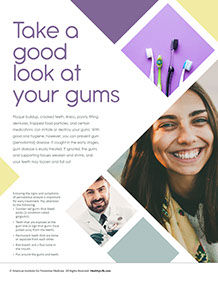
    Image of man at the dentist office looking at xrays.

    Plaque buildup, crooked teeth, illness, poorly fitting dentures, trapped food particles, and certain medications can irritate or destroy your gums. With good oral hygiene, however, you can prevent gum (periodontal) disease. If caught in the early stages, gum disease is easily treated. If ignored, the gums and supporting tissues wither, and your teeth may loosen and fall out.

    Knowing the signs and symptoms of periodontal disease is important for early treatment. Pay attention to the following:

    *  Swollen red gums that bleed easily (a condition called gingivitis).

    *  Teeth that are exposed at the gum line (a sign that gums have pulled away from the teeth).

    *  Permanent teeth that are loose or separate from each other.

    *  Bad breath and a foul taste in the mouth.

    *  Pus around the gums and teeth.
    A Year of Health Hints book by the American Institute for Preventive Medicine. www.HealthyLife.com. All rights reserved.

    © American Institute for Preventive Medicine

  • Teeth & Mouth Changes With Aging

    Dental & Mouth Concerns

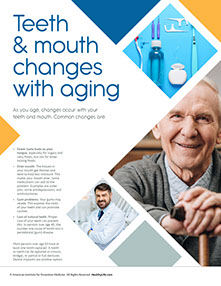
    Image of older women at the dentist office.

    As you age, changes occur with your teeth and mouth. Common changes are:

    *  Fewer taste buds on your tongue, especially for sugary and salty foods, but not for bitter tasting foods

    *  Drier mouth. The tissues in your mouth get thinner and tend to hold less moisture. This makes your mouth more dry. Some medications can add to the problem. Examples are water pills, some antidepressants, and antihistamines.

    *  Gum problems. Your gums may recede. This exposes the roots of your teeth and can promote cavities.

    *  Loss of natural teeth. Proper care of your teeth can prevent this. In persons over age 40, the number one cause of tooth loss is periodontal (gum) disease.

    More than half of persons over age 50 have at least one tooth replaced. A tooth or teeth can be replaced as crowns, bridges, partial or full dentures. Dental implants are another option.

    Health at Home Lifetime book by the American Institute for Preventive Medicine. www.HealthyLife.com. All rights reserved.

    © American Institute for Preventive Medicine
  • Why You Should Floss

    WELL-BEING

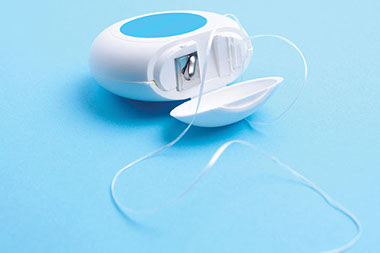
    Image of floss.

    According to a survey by the American Dental Association, only 4 in 10 Americans floss at least once a day. And, 20 percent of Americans don’t do it at all.

    Most dentists agree that everyone should floss daily. There are places between teeth that a brush simply can’t reach. If you’re wondering if it’s worth spending the small amount of time each day, consider these benefits of flossing:

    *Less scraping at the dentist.At your next checkup, the hygienist may spend less time removing tartar between your teeth and at the gum line. Flossing removes it from these hard-to-reach areas before it hardens on your teeth.

    *A lower risk of gum disease and cavities.By removing plaque between your teeth, you remove bacteria that can lead to tooth decay and gum disease.

    *Fresher breath.Small particles of food between the teeth, even if you can’t see them, can make breath smell unpleasant.

    The American Dental Association says you can floss any time of day. Pick the time when you’re more likely to stick with it, whether it’s morning, after lunch or before bed.

    © American Institute for Preventive Medicine