Tag: gut

  • Gut Check: Tips For Healthy Digestion

    SELF-CARE CORNER

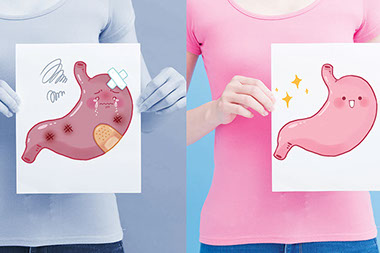
    Person holding a paper with a stomach illustration, one half happy stomach the other half a sick stomach.

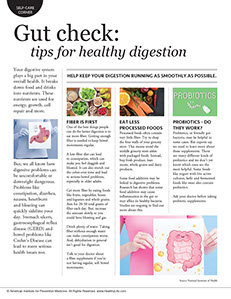
    Your digestive system plays a big part in your overall health. It breaks down food and drinks into nutrients. These nutrients are used for energy, growth, cell repair and more.

    But, we all know how digestive problems can be uncomfortable or downright dangerous. Problems like constipation, diarrhea, nausea, heartburn and bloating can quickly sideline your day. Stomach ulcers, gastroesophageal reflux disease (GERD) and bowel problems like Crohn’s Disease can lead to more serious health issues too.

    Help keep your digestion running as smoothly as possible.

    Fiber is first

    One of the best things people can do for better digestion is to eat more fiber. Getting enough fiber is needed to keep bowel movements regular.

    A low-fiber diet can lead to constipation, which can make you feel sluggish and bloated. It can also stretch out the colon over time and lead to serious bowel problems, especially in older adults.

    Get more fiber by eating foods like fruits, vegetables, beans and legumes and whole grains. Aim for 20-30 total grams of fiber each day. But, increase the amount slowly or you could have bloating and gas.

    Drink plenty of water. Taking fiber without enough water can make constipation worse. And, dehydration in general isn’t good for digestion.

    Talk to your doctor about a fiber supplement if you’re not having regular, soft bowel movements.

    Eat less processed foods

    Processed foods often contain very little fiber. Try to shop the four walls of your grocery store. This means avoid the middle grocery store aisles with packaged foods. Instead, buy fresh produce, lean meats, whole grains and dairy products.

    Some food additives may be linked to digestive problems. Research has shown that some food additives may cause inflammation in the gut or may affect its healthy bacteria. Studies are ongoing to find out more about this.

    Probiotics – do they work?

    Probiotics, or friendly gut bacteria, may be helpful in some cases. But experts say we need to learn more about these supplements. There are many different kinds of probiotics and we don’t yet know which ones are the most helpful. Some foods like yogurt with live active cultures, kefir and fermented foods like miso also contain probiotics.

    Ask your doctor before taking probiotic supplements.

    Source: National Institutes of Health
    © American Institute for Preventive Medicine
  • Microbiome: What It Can Do

    SELF-CARE CORNER

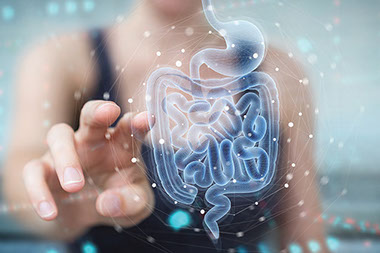
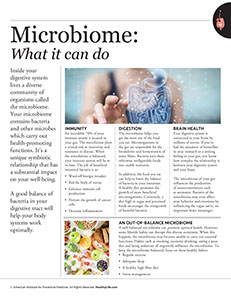
    Hand reaching out to touch an illustration of digestive system.

    Inside your digestive system lives a diverse community of organisms called the microbiome. Your microbiome contains bacteria and other microbes which carry out health-promoting functions. It’s a unique symbiotic relationship that has a substantial impact on your well-being.

    A good balance of bacteria in your digestive tract will help your body systems work optimally.

    Immunity

    An incredible 70% of your immune system is located in your gut. The microbiome plays a critical role in immunity and resistance to disease. When the microbiome is balanced, your immune system will be at its best. The job of beneficial intestinal bacteria is to:

    *  Ward off foreign invaders

    *  Rid the body of toxins

    *  Enhance immune cell production

    *  Prevent the growth of cancer cells

    *  Decrease inflammation

    Digestion

    The microbiome helps you get the most out of the food you eat. Microorganisms in the gut are responsible for the breakdown and fermentation of some fibers. Bacteria turn these otherwise undigestable foods into usable nutrients.

    In addition, the food you eat can help or harm the balance of bacteria in your intestines. A healthy diet promotes the growth of more beneficial microorganisms. Conversely, a diet high in sugar and processed foods encourages the overgrowth of harmful bacteria.

    Brain health

    Your digestive system is connected to your brain by millions of nerves. If you’ve had the sensation of butterflies in your stomach or a sinking feeling in your gut, you know how complex the relationship is between your digestive system and your brain.

    The microbiome of your gut influences the production of neurotransmitters such as serotonin. Bacteria of the microbiome may even affect your behavior and emotions by influencing the vagus nerve, an important brain messenger.

    An out-of-balance microbiome

    A well-balanced microbiome can promote optimal health. However, some lifestyle habits can disrupt this diverse ecosystem. When this happens, the microbiome may become unable to carry out essential functions. Habits such as smoking, excessive drinking, eating a poor diet and being sedentary all negatively influence the microbiome. To keep the microbiome balanced, focus on these healthy habits:

    *  Regular exercise

    *  Adequate sleep

    *  A healthy high-fiber diet

    *  Stress management

    © American Institute for Preventive Medicine
  • Tips For Good Digestion

    Mature Health: Over Age 50

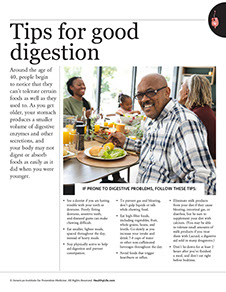
    Image of mature couple eating at home.

    Around the age of 40, people begin to notice that they can’t tolerate certain foods as well as they used to. As you get older, your stomach produces a smaller volume of digestive enzymes and other secretions, and your body may not digest or absorb foods as easily as it did when you were younger.

    If you are prone to digestive problems, follow these tips.

    *  See a dentist if you are having trouble with your teeth or dentures. Poorly fitting dentures, sensitive teeth, and diseased gums can make chewing difficult.

    *  Eat smaller, lighter meals, spaced throughout the day, instead of heavy meals. As a person ages, the blood supply to the small intestine declines, hindering the absorption of nutrients from a sudden, large delivery of food.

    *  To prevent gas and bloating, don’t gulp liquids or talk while chewing food.

    *  Limit the amount of gas-producing foods you eat. Cabbage, onions, and cooked dried beans are common offenders.

    *  Eliminate milk products from your diet if they cause bloating, intestinal gas, or diarrhea, but be sure to supplement your diet with calcium. (You may be able to tolerate small amounts of milk products if you treat them with Lactaid, a digestive aid sold in many health food stores.

    *  Avoid wearing tight clothing around your waist at mealtime.

    *  Don’t lie down for at least 2 hours after you’ve finished a meal, and don’t eat right before bedtime.

    A Year of Health Hints book by the American Institute for Preventive Medicine. www.HealthyLife.com. All rights reserved.

    © American Institute for Preventive Medicine