Tag: habits

  • Burn Calories Without Trying

    BE FIT

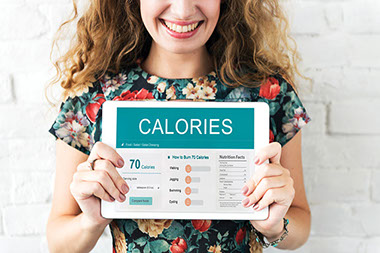
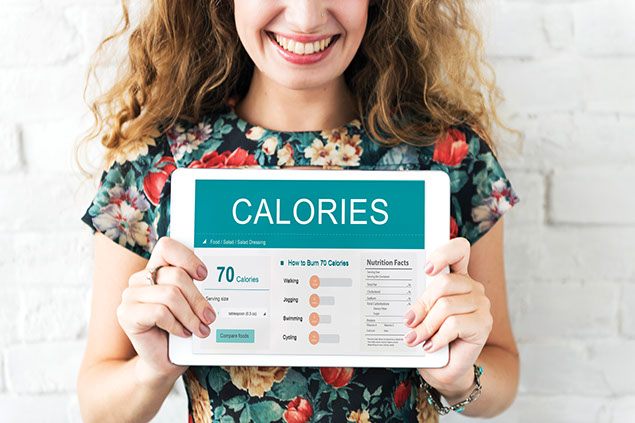
    Image of women holding up tablet with calorie tracking.

    When you’re not exercising, you can still burn extra calories! Use little ways to get more fit every day.

    Don’t make things convenient.

    Take the stairs instead of the elevator. Park farther away from your destination and walk. Use your bike instead of a car for quick grocery store runs. Put your favorite snack foods in the basement, rather than on the main floor near the TV.

    Get up.

    Take a short break every hour if you sit at a desk. Get up, move your arms and legs or even do a few jumping jacks. Use a hands-free headset so you can get up and walk or lift weights while you’re on the phone. Have a meeting? See if you can stand during part of it or even have a walking meeting.

    Sneaky exercises.

    Do some isometric exercises if you sit a lot. Try squeezing your glute muscles and knees together for eight counts, holding for five seconds then release. Do this every couple of hours.

    Move whenever you can. Walk in place instead of standing still.

    © American Institute for Preventive Medicine

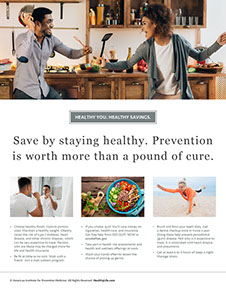
  • Save By Staying Healthy. Prevention Is Worth More Than A Pound Of Cure.

    Medical Care

    Couple play dueling in the kitchen, laughing.

    *  Choose healthy foods. Control portion sizes. Maintain a healthy weight. Obesity raises the risk of type 2 diabetes, heart disease, and other chronic diseases, which can be very expensive to treat. Persons who are obese may be charged more for life and health insurance.

    *  Be fit at little or no cost. Walk with a friend.  Join a mall walkers program.

    *  If you smoke, quit! You’ll save money on cigarettes, health care, and insurance. Get free help from 800.QUIT. NOW orsmokefree.gov.

    *  Take part in health risk assessments and health and wellness offerings at work.

    *  Wash your hands often to lessen the chance of picking up germs.

    *  Brush and floss your teeth daily. Get a dental checkup once or twice a year. Doing these help prevent periodontal (gum) disease. Not only is it expensive to treat, it is associated with heart disease and pneumonia.

    *  Get at least 6 to 8 hours of sleep a night. Manage stress.

    A Year of Health Hints book by the American Institute for Preventive Medicine. www.HealthyLife.com. All rights reserved.

    © American Institute for Preventive Medicine

  • Daily Habits For A Restful Sleep

    SELF-CARE CORNER

    Clock sitting on night stand.

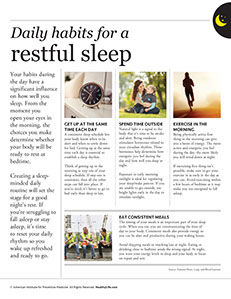
    Your habits during the day have a significant influence on how well you sleep. From the moment you open your eyes in the morning, the choices you make determine whether your body will be ready to rest at bedtime.

    Creating a sleep-minded daily routine will set the stage for a good night’s rest. If you’re struggling to fall asleep or stay asleep, it’s time to reset your daily rhythm so you wake up refreshed and ready to go.

    Get up at the same time each day

    A consistent sleep schedule lets your body know when to be alert and when to settle down for bed. Getting up at the same time each day is essential to establish a sleep rhythm.

    Think of getting up in the morning as step one of your sleep schedule. If step one is consistent, then all the other steps can fall into place. If you’re tired, it’s better to go to bed early than sleep in late.

    Spend time outside

    Natural light is a signal to the body that it’s time to be awake and alert. Being outdoors stimulates hormones related to your circadian rhythm. These hormones help determine how energetic you feel during the day and how well you sleep at night.

    Exposure to early morning sunlight is ideal for regulating your sleep/wake pattern. If you are unable to get outside, use bright lights early in the day to simulate sunlight.

    Exercise in the morning

    Being physically active first thing in the morning can give you a boost of energy. The more active and energetic you feel during the day, the more likely you will wind down at night.

    If exercising first thing isn’t possible, make sure to get your exercise in as early in the day as you can. Avoid exercising within a few hours of bedtime as it may make you too energized to fall asleep.

    Eat consistent meals

    The timing of your meals is an important part of your sleep cycle. When you eat, you are communicating the time of day to your body. Consistent meals also provide energy so you can be alert and productive during your waking hours.

    Avoid skipping meals or snacking late at night. Eating or drinking close to bedtime sends the wrong signal. At night, you want your energy levels to drop and your body to focus on repair and rest.

    Source: National Heart, Lung, and Blood Institute

    © American Institute for Preventive Medicine

  • The Keys To Physical Well-Being Are Healthy Habits

    Personal Safety

    Couple eating watermelon.

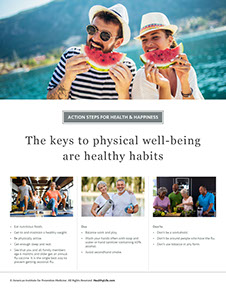
    *  Eat nutritious foods.

    *  Get to and maintain a healthy weight.

    *  Be physically active.

    *  Get enough sleep and rest.

    *  See that you and all family members age 6 months and older get an annual flu vaccine. It is the single best way to prevent getting seasonal flu.

    Dos

    *  Balance work and play.

    *  Wash your hands often with soap and water or hand sanitizer containing 60% alcohol.

    *  Avoid secondhand smoke.

    Don’ts

    *  Don’t be a workaholic.

    *  Don’t be around people who have the flu.

    *  Don’t use tobacco in any form.

    A Year of Health Hints book by the American Institute for Preventive Medicine. www.HealthyLife.com. All rights reserved.

    © American Institute for Preventive Medicine

  • How To Teach Children Gratitude

    FAMILY LIFE

    Young child hugging mother.

    Children may often want every new toy and thing they see. But you can help teach them gratitude with these tips:

    1.Make getting things a surprise.This helps kids see something as a gift, not an entitlement. For instance, “surprise” them with a trip to the park or their favorite dessert on special occasions.

    2.Be careful with choices.Allowing children to choose something big, such as a vacation destination, will make them think they can get whatever they want. Instead, the adults can choose the vacation plans and present it as a surprise.

    3.Talk about what made them happy each day.This teaches kids to be thankful for good things. It can be as simple as playing at recess, seeing a friend or enjoying what they ate for lunch.

    4.Serve others as a family.Community charity programs such as working at a food bank are a great way for kids to see how much they have. Also, do smaller things like bring meals to neighbors who are going through a hard time.

    5.Show them how to be positive.Being demanding, whiny or jealous quickly turns into being ungrateful for what they have. You can point out positives in nearly any situation to teach them how to find it themselves. “It’s really hot today, but I’m so glad we have cold water to drink” is a great example.

    6.Insist on saying “please” and “thank you.”Give them positive reinforcement every time they use these words. This helps to teach them the importance of showing  gratitude and respect for other people.

    7.Give them chores to do.Yes, kids are busy, but simple things like putting away their clothes, helping with dishes and picking up their toys are valuable lessons. Chores teach kids that it takes work to keep up a household and that they should contribute. Even five to 10 minutes of chores a day is helpful.

    8.Consider gifts of “experiences” instead of “things.”Not sure what to get them because they already have so much? How about tickets to a movie or show? Or a trip to a water park for a day? Chances are, they will remember those fun experiences far longer than any toy or gadget.

    Source: American Academy of Pediatrics

    © American Institute for Preventive Medicine

  • 8 Healthy Sleep Habits

    Sleep Well

    Bed with blue bedding.

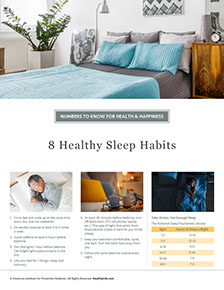
    1. Go to bed and wake up at the same time every day, even on weekends.

    2. Do aerobic exercise at least 3 to 4 times a week.

    3. Avoid caffeine at least 6 hours before bedtime.

    4. Dim the lights 1 hour before bedtime. Get bright light exposure early in the day.

    5. Use your bed for 2 things−sleep and intimacy.

    6. At least 30 minutes before bedtime, turn off electronics (TV, cell phone, laptop, etc.). The type of light that emits from these devices makes it hard for you to fall asleep.

    7. Keep your bedroom comfortable, quiet, and dark. Turn the clock face away from you.

    8. Follow the same bedtime routine every night.

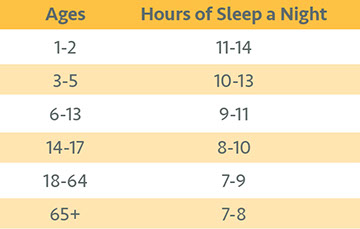
    Take Action: Get Enough Sleep

    The National Sleep Foundation advises:

    © American Institute for Preventive Medicine

  • Mindful Eating Can Boost Your Health

    HEALTHY EATING

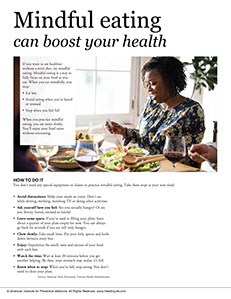
    Women eating with friends.

    If you want to eat healthier without a strict diet, try mindful eating. Mindful eating is a way to fully focus on your food as you eat. When you eat mindfully, you may:

    *  Eat less

    *  Avoid eating when you’re bored or stressed

    *  Stop when you feel full

    When you practice mindful eating, you eat more slowly. You’ll enjoy your food more without overeating.

    How to do it

    You don’t need any special equipment or classes to practice mindful eating. Take these steps at your next meal:

    *Avoid distractions:Make your meals an event. Don’t eat while driving, working, watching TV or doing other activities.

    *Ask yourself how you feel:Are you actually hungry? Or are you thirsty, bored, stressed or lonely?

    *Leave some space:If you’re used to filling your plate, leave about a quarter of your plate empty for now. You can always go back for seconds if you are still truly hungry.

    *Chew slowly:Take small bites. Put your fork, spoon and knife down between every bite.

    *Enjoy:Experience the smell, taste and texture of your food with each bite.

    *Watch the time:Wait at least 20 minutes before you get another helping. By then, your stomach may realize it’s full.

    *Know when to stop:When you’re full, stop eating. You don’t need to clean your plate.

    Sources: American Heart Association, Veterans Health Administration

    © American Institute for Preventive Medicine

  • Say Goodbye To Bad Habits

    WELL-BEING

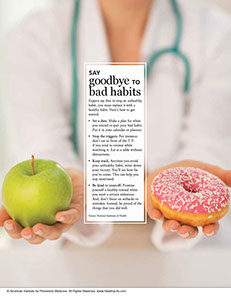
    Doctor holding apple in one hand and a donut in the other hand.

    Experts say that to stop an unhealthy habit, you must replace it with a healthy habit. Here’s how to get started.

    *Set a date.Make a plan for when you intend to quit your bad habit. Put it in your calendar or planner.

    *Stop the triggers.For instance, don’t eat in front of the T.V. if you tend to overeat while watching it. Eat at a table without distractions.

    *Keep track.Anytime you avoid your unhealthy habit, write down your victory. You’ll see how far you’ve come. This can help you stay motivated.

    *Be kind to yourself.Promise yourself a healthy reward when you meet a certain milestone. And, don’t focus on setbacks or mistakes. Instead, be proud of the things that you did well.

    Source: National Institutes of Health

    © American Institute for Preventive Medicine

  • Mind Your Mindless Munching

    Weight Control

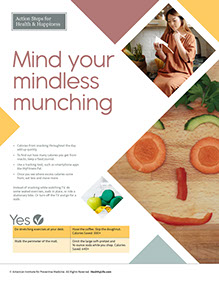
    Women in kitchen, writing in a journal.

    *  Calories from snacking throughout the day add up quickly.

    *  To find out how many calories you get from snacks, keep a food journal.

    *  Use a tracking tool, such as smartphone apps like MyFitness Pal.

    *  Once you see where excess calories come from, eat less and move more.

    *  Instead of snacking while watching TV, do some seated exercises, walk in place, or ride a stationary bike. Or turn off the TV and go for a walk.

    *  Do stretching exercises at your desk.

    *  Walk the perimeter of the mall.

    *  Have the coffee. Skip the doughnut. Calories Saved: 300+.

    *  Omit the large soft-pretzel and 16-ounce soda while you shop. Calories Saved: 640+.

    Page from HealthyLife Weigh book by the American Institute for Preventive Medicine. www.HealthyLife.com. All rights reserved.

    © American Institute for Preventive Medicine