Tag: habits

  • See The Light In Healthy Ways

    Eye Conditions

    Women wearing sunglasses with a huge smile.

    *  Compact fluorescent light bulbs (CFLs) uses 75% less energy and last 10 times longer than incandescent bulbs, but contain tiny amounts of mercury. Recycle them according to your state’s guidelines. To safely dispose of a broken CFL, follow EPA guidelines fromepa.gov/hg.

    *  Wear eyewear that protects your eyes from ultraviolet (UV) light when it is sunny and even on cloudy days. Choose sunglasses that block 99 to 100% of both UVA and UVB rays.

    *  Wear a wide-brimmed hat during outdoor activities.

    *  Open blinds and curtains to let daylight fill rooms during the day.

    *  Install a skylight or solar panels for light and warmth and to save on cooling, heating, and lighting costs.

    *  Turn off lights when not in use. Install motion sensors, timers, and task lighting to save on light usage. One to two hours before bedtime, dim the lights.

    *  Wear protective eyewear during sporting events. Before mowing the lawn, look for and remove debris.

    Health at Home Lifetime book by the American Institute for Preventive Medicine. www.HealthyLife.com. All rights reserved.

    © American Institute for Preventive Medicine

  • Thinking About Changing

    WELL-BEING

    Image of young man working at a warehouse.

    Do you want to lose weight, quit smoking, eat healthier, get fit, manage stress, drink less alcohol? First, ask yourself:  Are you ready to change?

    Meg Baker, director of Employee Wellness at the University of Alabama at Birmingham, says while the focus on self-improvement is good, you must be ready to make a change in order to actually do so. To help prepare for any lifestyle change, Baker offers some tips:

    *  Develop small, short-term goals that will fit into your schedule. Make them realistic.

    *  Consider the benefits and reasons for the change.

    *  Talk to a family member, friend, or coworker about goals. Sharing your goals with others will increase the likelihood of your staying committed to a new gym regimen or stop smoking plan, and they may want to join you.

    “If the new behavior has lost its luster, switch things up,” Baker said. “Variety is the key to life and can keep you from getting burned out. Spice things up by changing your normal exercise routine, finding new healthy recipes online, or joining a new exercise class.”

    © American Institute for Preventive Medicine

  • Be Persistent

    Healthylife® Weigh

    Part 7

    Man at gym holding a water bottle and apple.

    You may be reading this page well before you reach your goal. That’s okay. Understand that weight loss takes time. Continue to build on what you do each day. Remember, it isn’t a single healthy meal or workout that will get you to your goal. It’s also not a single poor choice or skipped workout that will derail you.

    *  Build trends of healthy choices.

    *  Know and live your values.

    *  Treat your thoughts and actions with compassion.

    *  Don’t settle with just what you know now. Keep learning.

    *  Create a web of support.

    © American Institute for Preventive Medicine

  • Tips For Keeping A Food Diary

    HEALTHY EATING

    Image of young man writing in a journal.

    If you’re trying to lose weight or simply want to eat healthier, keeping a food diary can help. Often times, we eat little bites here and there that don’t seem like much, but calories from them can add up quickly. A food diary will help you see everything you eat and drink so you can be more aware of extra calories or unhealthy choices. It can also help you see if you are eating because of stress or emotions. Then, you can find ways to stop these habits.

    A food diary doesn’t have to be complicated. Food diary apps are available, but they’re not necessary. The American Academy of Family Physicians and the CDC say you should write down these things:

    *  What you ate and drank

    *  The time you ate meals and snacks

    *  Where you ate and any other activity you were doing (watching TV, checking emails, etc.)

    *  Who you were with

    *  How you were feeling (before, during, and after eating)

    Don’t rely on your memory at the end of the day. It’s too difficult to remember every bite or sip. Instead, have the diary with you and write things down as soon as you can. Being honest and taking note of everything you eat and drink can help you see your eating patterns and pinpoint ways you can make healthy changes.

    © American Institute for Preventive Medicine

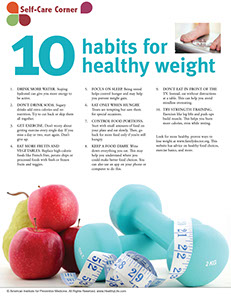
  • 10 Habits For Healthy Weight

    SELF-CARE CORNER

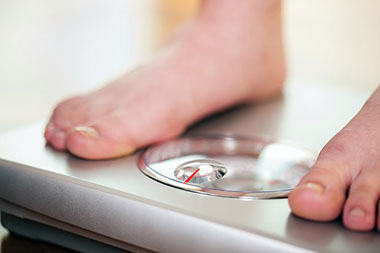
    Image of feet on a scale.

    1.  Drink more water. Staying hydrated can give you more energy to be active.

    2.  Don’t drink soda. Sugary drinks add extra calories and no nutrition. Try to cut back or skip them all together.

    3.  Get exercise. Don’t worry about getting exercise every single day. If you miss a day or two, start again. Don’t give up.

    4.  Eat more fruits and vegetables. Replace high-calorie foods like French fries, potato chips or processed foods with fresh or frozen fruits and veggies.

    5.  Focus on sleep. Being rested helps control hunger and may help you prevent weight gain.

    6.  Eat only when hungry. Treats are tempting but save them for special occasions.

    7.  Control food portions. Start with small amounts of food on your plate and eat slowly. Then, go back for more food only if you’re still hungry.

    8.  Keep a food diary. Write down everything you eat. This may help you understand where you could make better food choices. You can also use an app on your phone or computer to do this.

    9.  Don’t eat in front of the TV. Instead, eat without distractions at a table. This can help you avoid mindless overeating.

    10. Try strength training. Exercises like leg lifts and push-ups build muscle. This helps you burn more calories, even while resting.

    Look for more healthy, proven ways to lose weight atwww.familydoctor.org. This website has advice on healthy food choices, exercise basics, and more.

    © American Institute for Preventive Medicine

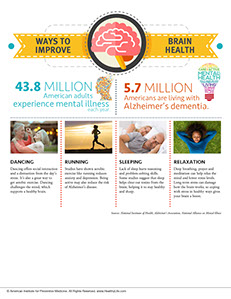
  • Ways To Improve Brain Health

    MEDICAL NEWS

    Image of older couple dancing.

    Dancing

    Dancing offers social interaction and a distraction from the day’s stress. It’s also a great way to get aerobic exercise. Dancing challenges the mind, which supports a healthy brain.

    Running

    Studies have shown aerobic exercise like running reduces anxiety and depression. Being active may also reduce the risk of Alzheimer’s disease.

    Sleeping

    Lack of sleep hurts reasoning and problem-solving skills. Some studies suggest that sleep helps clear out toxins from the brain, helping it to stay healthy and sharp.

    Relaxation

    Deep breathing, prayer and meditation can help relax the mind and lower stress levels. Long-term stress can damage how the brain works, so coping with stress in healthy ways gives your brain a boost.

    Sources: National Institutes of Health, Alzheimer’s Association, National Alliance on Mental Illness

    © American Institute for Preventive Medicine

  • 4 Money Mistakes To Avoid

    FINANCIAL HEALTH

    Image of 3 friends.

    Little everyday choices can have a big impact on your finances. If you want to save more or spend less, think about whether you’re making any of these mistakes.

    Mistake #1: You put off saving money.

    Do you think that you can wait a few more months or even years before you need to save for retirement, your kids’ college or other future needs? Even if you can only put away a few dollars each week, start now. It can add up over time and the sooner you start, the more money you’ll have later.

    Mistake #2: You spend too much on “treats.”

    We all like to treat ourselves once in a while. But, if you’re spending money on treats often, such as going to the movies or buying yourself a new item, you could be creating money problems. Look for low-cost or free ways to reward yourself. Set aside some time with a friend, take a hot bath, watch a favorite movie at home or check out free museums and concerts.

    Mistake #3: You get lots of coupons in your mail and email.

    If you get catalogs in the mail and your inbox is filled with coupons and deals, this could be wrecking your money goals. After all, you may not need the items that are advertised. But, they look like such a good deal that you decide to buy them anyway. Do you really need another sweater or pair of jeans, or are you buying them because of the sale? Unsubscribe from email coupons and newsletters, and throw catalogs in the recycling bin. This can help lower the temptation to shop.

    Mistake #4: You don’t know how much money you really have.

    If you are struggling financially, it can be hard to look at your bank account balances. But, it’s better to know what you can afford than to go deeper into debt. Make a budget of what you have and what you can spend each month after bills are paid. Try to stick to your budget and find ways to cut out unnecessary items.

    © American Institute for Preventive Medicine

  • 4 Behaviors For A Healthy Wallet

    FINANCIAL HEALTH

    Concept image of growing leaf with stacked coins.

    1. Make a budget and stick to it.

    Many money experts will tell you that you need to know where your money is going each month. Creating a budget helps to see how much you spend on certain things and where you can cut back to save even more.

    2. Check your credit report each year.

    You are entitled to a free credit report once per year. This is an important step to help spot identity theft early. Your credit report can affect your mortgage rate and ability to get a loan.

    3. Shop around for a good APR on your next loan.

    The annual percentage rate (APR) on a loan is an important number. This is the total cost, including fees and interest, described as a yearly rate. The APR can vary widely between banks or lenders. It pays to take some extra time to find the best rate. Make sure you understand exactly what you will pay.

    4. Put money away for an emergency fund.

    Having an emergency fund offers peace of mind and protection from unexpected costs. Even a few dollars a week can add up, so save what you can.

    Paycheck checkup

    The Internal Revenue Service (IRS) says employees should look at their paycheck withholdings each year. Withholdings are taxes that are taken out of your paycheck.

    It’s especially important to check your withholdings in 2018, the IRS says. The Tax Cuts and Jobs Act, signed in December 2017, may change how much you want withheld.

    The IRS has a withholding calculator on their website at:apps.irs.gov/app/withholdingcalculator. This calculator can help you be sure that you aren’t having too much or too little tax withheld from your paychecks.

    © American Institute for Preventive Medicine

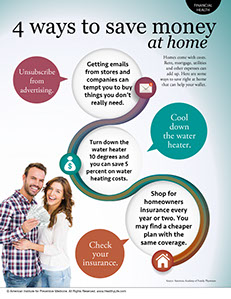
  • 4 Ways To Save Money At Home

    FINANCIAL HEALTH

    Young couple smiling and holding money.

    Homes come with costs. Rent, mortgage, utilities and other expenses can add up. Here are some ways to save right at home that can help your wallet.

    Unsubscribe from advertising.

    Getting emails from stores and companies can tempt you to buy things you don’t really need.

    Cool down the water heater.

    Turn down the water heater 10 degrees and you can save 5 percent on water heating costs.

    Check your insurance.

    Shop for homeowners insurance every year or two. You may find a cheaper plan with the same coverage.

    Source: American Academy of Family Physicians

    © American Institute for Preventive Medicine