Tag: habits

  • 6 Simple Steps To A Healthier Marriage

    FAMILY LIFE

    Image of young smiling couple sitting against a wall.

    Having a healthy, supportive marriage is important to your overall well-being. But the stresses of life, work, family, and day-to-day problems can put a strain on even the best marriage at times.

    Fortunately, there are some ways you can help keep your marriage strong – or work on problems before they become major issues. Here are some tips from the National Healthy Marriage Resource Center:

    1. Make every effort to keep your commitment.

    Marriage will have “good times and bad,” and you need to realize that challenges will happen. The key is to work through them and be aware that everyone has disagreements and difficulties. No marriage is perfect, but with extra effort from both partners, you can make yours last.

    2. Make time for each other.

    Even when you’re overwhelmed with work, children, or other tasks, don’t forget about your marriage. Set aside time for a dinner alone or even a weekend getaway if you can. If that’s not possible, have 15 to 30 minutes of time to talk and connect each day – without TV or cell phones.

    3. Have a sense of humor.

    Life’s little mishaps are easier to take when you can laugh at them. Mistakes that don’t really hurt anyone don’t have to turn into arguments. Don’t focus on who’s to blame. Laugh at it if you can, and work on a solution together. Forgive your spouse (and yourself!) and try to find the humor in the situation.

    4. Communication is key.

    This is an important aspect of any marriage. Talk about what’s bothering you – and what you love. Listen to what your spouse is saying, and don’t be quick to defend yourself. No one has to “win” an argument. If you both listen and respect each other, a solution or compromise can usually be found.

    5. Do “little” things for your spouse.

    Make a favorite meal for the other person, do the dishes without being asked, or leave a love note. These small things can add up to big happiness. Just showing your spouse that you care about him or her will help build your marriage each day.

    6. Choose your battles.

    Before you get angry about something, ask yourself if it’s worth an argument. If it’s important to you, approach the subject calmly and be honest. If not, take a deep breath and focus your energy on better things.

    Marriage isn’t always easy, but working to keep it strong and healthy can have big payoffs. People in healthy marriages have better mental health and may even live longer. Give your marriage the attention it deserves, and you’ll both enjoy the benefits.

    © American Institute for Preventive Medicine
  • 8 Commandments For Living Long And Living Well

    WELL-BEING

    Image of a group of people with exercise balls.

    You won’t live forever, but you can’t live like there’s no tomorrow, because tomorrow is coming. You can prepare for tomorrow today by making smart lifestyle choices or changing poor health habits-it’s never too late to do that, says Dr. Edward Creagan in his book How Not to Be My Patient: A Physician’s Secrets for Staying Healthy and Surviving Any Diagnosis. Here are Dr. Ed’s eight commandments:

    1. Form stable long-term relationships.

    2. Maintain ideal body weight.

    3. Eat a plant-based diet.

    4. Be active.

    5. No smoking.

    6. Use alcohol in moderation, if at all.

    7. Foster a sense of spirituality and a sense of connectedness to nature or your higher power or force.

    8. Find meaning and purpose in life.

    © American Institute for Preventive Medicine
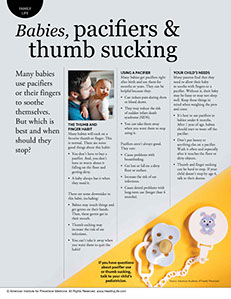
  • Babies, Pacifiers & Thumb Sucking

    FAMILY LIFE

    Baby sucking his thumb as father holds him.

    Many babies use pacifiers or their fingers to soothe themselves. But which is best and when should they stop?

    The thumb and finger habit

    Many babies will suck on a favorite thumb or finger. This is normal. There are some good things about this habit:

    *  You don’t have to buy a pacifier. And, you don’t have to worry about it falling on the floor and getting dirty.

    *  A baby always has it when they need it.

    There are some downsides to this habit, including:

    *  Babies may touch things and get germs on their hands. Then, these germs get in their mouth.

    *  Thumb sucking may increase the risk of ear infections.

    *  You can’t take it away when you want them to quit the habit!

    Using a pacifier

    Many babies get pacifiers right after birth and use them for months or years. They can be helpful because they:

    *  Can reduce pain during shots or blood draws.

    *  They may reduce the risk of sudden infant death syndrome (SIDS).

    *  You can take them away when you want them to stop using it.

    Pacifiers aren’t always good. They can:

    *  Cause problems with breastfeeding.

    *  Get lost or fall on a dirty floor or surface.

    *  Increase the risk of ear infections.

    *  Cause dental problems with long-term use (longer than 6 months).

    Your child’s needs

    Many parents find that they need to allow their baby to soothe with fingers or a pacifier. Without it, their baby may be fussy or may not sleep well. Keep these things in mind when weighing the pros and cons:

    *  It’s best to use pacifiers in babies under 6 months. After 1 year of age, babies should start to wean off the pacifier.

    *  Don’t put honey or anything else on a pacifier. Wash it often and especially after it touches the floor or dirty objects.

    *  Thumb and finger sucking can be hard to stop. If your child doesn’t stop by age 4, talk to their doctor.

    If you have questions about pacifier use or thumb sucking, talk to your child’s pediatrician.

    Source: American Academy of Family Physicians

    © American Institute for Preventive Medicine

  • A Healthy Diet Helps With Stress

    SUCCESS OVER STRESS

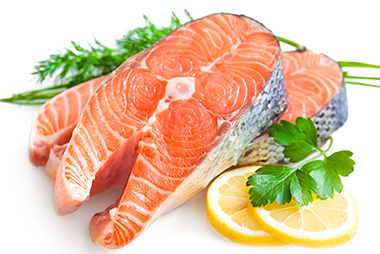
    Image of salmon.

    Can the foods you eat help you cope with stress? Yes, according to experts at the Academy of Nutrition and Dietetics. When you can’t avoid stress completely, focus on these foods to help you through it:

    Whole grains and healthy carbohydrates

    Whole grain bread, pasta, brown rice and sweet potatoes are all complex carbohydrates, which may help boost feel-good hormones in the brain.

    Heart-healthy fats

    Foods rich in omega-3 fats, such as salmon, flax seeds and walnuts may help improve mood and reduce stress and anxiety.

    Soothing hot teas

    Lavender and chamomile teas are good choices to help you relax and potentially get better sleep – keys to dealing with stress.

    Dark chocolate

    The antioxidants in this treat may help reduce stress. Be sure to keep your portion to one ounce or less a day, and choose dark varieties only. Milk and white chocolates do not offer these benefits.

    © American Institute for Preventive Medicine