BE FIT
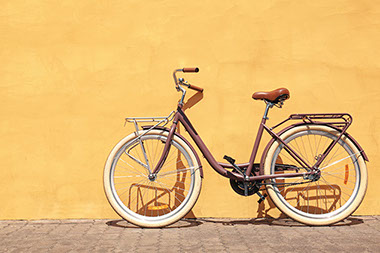
Bike sales have increased during the COVID-19 pandemic. Bicycling is great exercise! However, it’s important to keep yourself safe while on two wheels. Collisions can and do occur, and some can be serious.
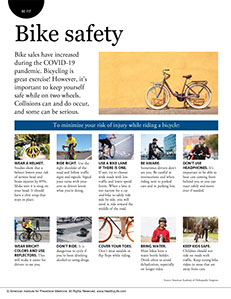
To minimize your risk of injury while riding a bicycle:
*Wear a helmet.Studies show that a helmet lowers your risk of serious head and brain injuries by 85%. Make sure it is snug on your head. It should have a chin strap that stays in place.
*Ride right.Use the right shoulder of the road and follow traffic signs and signals. Signal your turns with your arm so drivers know what you’re doing.
*Use a bike lane if there is one.If not, try to choose wide roads with less traffic and lower speed limits. When a lane is too narrow for a car and bike to safely ride side by side, you will need to ride toward the middle of the road.
*Be aware.Sometimes drivers don’t see you. Be careful at intersections and when riding next to parked cars and in parking lots.
*Don’t use headphones.It’s important to be able to hear cars coming from behind you so you can react safely and move over if needed.
*Wear bright colors and use reflectors.This will make it easier for drivers to see you.
*Don’t ride.It is dangerous to cycle if you’ve been drinking alcohol or using drugs.
*Cover your toes.Don’t wear sandals or flip flops while riding.
*Bring water.Most bikes have a water bottle holder. Drink often to avoid dehydration, especially on longer rides.
*Keep kids safe.Children should not ride on roads with traffic. Keep young bike riders in areas that are away from cars.
Source: American Academy of Orthopaedic Surgeons
© American Institute for Preventive Medicine