Tag: Health Conditions

  • Disappearing Hair: Know About Alopecia

    SELF-CARE CORNER

    Women showing hair loss.

    Hair loss is a normal part of life and aging. The average person loses 100 strands of hair from their scalp every day. Usually, these hairs grow back as part of a hair follicle’s lifecycle.

    However, as people get older, hair loss usually outpaces hair regrowth. In addition, some people may be susceptible to losing their hair early in life.

    Alopecia, another name for hair loss, can be frustrating, embarrassing, and tough to manage. But, there may be options available to slow, halt, or reduce the appearance of thinning hair.

    Causes of alopecia

    There are many different types of alopecia, each with a different cause.

    For example, androgenetic alopecia, commonly known as pattern baldness, is linked to your genetics. If your dad or mom experienced pattern baldness, the likelihood is you will too.

    Other causes include:

    *  Aging

    *  Genetics

    *  Hormones

    *  Stress

    *  Thyroid dysfunction

    *  Medications

    *  Chemical hair treatments

    *  Autoimmune reactions

    Treatment options

    The best way to manage hair loss depends on the cause. While some forms of alopecia may be slowed or halted, others are irreversible. Your medical doctor or dermatologist is your best resource when exploring treatments for alopecia.

    Options may include:

    *  Topical medications or shampoos

    *  Oral medications

    *  Corticosteroid injections

    *  Hair transplant

    *  Wigs or hairpieces

    Caring for your hair

    How you treat your hair may contribute to alopecia in some cases. The better care you take of the hair you have, the healthier it will be.

    *  Use a gentle shampoo that won’t remove moisture from your hair.

    *  Apply conditioner after every shampoo.

    *  Limit how long and how often you blow-dry your hair.

    *  Avoid wearing your hair in a tight bun, ponytail, or braid.

    *  Brush or comb your hair gently. Avoid tugging.

    If you are dealing with alopecia, talk to your doctor to find out the cause and discuss the best treatment options for you.

    © American Institute for Preventive Medicine

  • Microbiome: What It Can Do

    SELF-CARE CORNER

    Hand reaching out to touch an illustration of digestive system.

    Inside your digestive system lives a diverse community of organisms called the microbiome. Your microbiome contains bacteria and other microbes which carry out health-promoting functions. It’s a unique symbiotic relationship that has a substantial impact on your well-being.

    A good balance of bacteria in your digestive tract will help your body systems work optimally.

    Immunity

    An incredible 70% of your immune system is located in your gut. The microbiome plays a critical role in immunity and resistance to disease. When the microbiome is balanced, your immune system will be at its best. The job of beneficial intestinal bacteria is to:

    *  Ward off foreign invaders

    *  Rid the body of toxins

    *  Enhance immune cell production

    *  Prevent the growth of cancer cells

    *  Decrease inflammation

    Digestion

    The microbiome helps you get the most out of the food you eat. Microorganisms in the gut are responsible for the breakdown and fermentation of some fibers. Bacteria turn these otherwise undigestable foods into usable nutrients.

    In addition, the food you eat can help or harm the balance of bacteria in your intestines. A healthy diet promotes the growth of more beneficial microorganisms. Conversely, a diet high in sugar and processed foods encourages the overgrowth of harmful bacteria.

    Brain health

    Your digestive system is connected to your brain by millions of nerves. If you’ve had the sensation of butterflies in your stomach or a sinking feeling in your gut, you know how complex the relationship is between your digestive system and your brain.

    The microbiome of your gut influences the production of neurotransmitters such as serotonin. Bacteria of the microbiome may even affect your behavior and emotions by influencing the vagus nerve, an important brain messenger.

    An out-of-balance microbiome

    A well-balanced microbiome can promote optimal health. However, some lifestyle habits can disrupt this diverse ecosystem. When this happens, the microbiome may become unable to carry out essential functions. Habits such as smoking, excessive drinking, eating a poor diet and being sedentary all negatively influence the microbiome. To keep the microbiome balanced, focus on these healthy habits:

    *  Regular exercise

    *  Adequate sleep

    *  A healthy high-fiber diet

    *  Stress management

    © American Institute for Preventive Medicine

  • What You Need To Know About Measles

    MEDICAL NEWS

    Young child with measles.

    In 2019, the U.S. has seen the biggest measles outbreak since 1994. Measles was declared eliminated in the year 2000, but in recent years measles has come back.

    This outbreak is due to two main factors:

    1.  Many people travel abroad. They may travel to a place where measles is common. They catch measles there and bring it back to the U.S. with them. They may not even know they have measles until several days after they return.

    2.  Some people in the U.S. do not get the measles vaccine. If they are exposed, they get sick and can spread measles to others.

    Dangerously easy to catch

    Measles is highly contagious. It spreads through the air. An infected person can simply breathe and spread measles. It can also be spread through coughing and sneezing.

    You don’t even have to be near a person with measles to catch it from them. Measles stays in the air for a long time. In fact, you could go into a room two hours after an infected person has left and still catch measles.

    Many times, people spread measles before they even know they have it.

    Almost everyone who hasn’t gotten the measles vaccine will catch measles if they are exposed.

    Know the signs

    *  Very high fever (this usually comes first)

    *  Cough, runny nose and red eyes

    *  Diarrhea

    *  Ear infection

    *  Rash of tiny red spots, usually starting at the head and spreading all over

    Serious complications

    Serious problems can happen to a person who catches measles, especially babies and young children. This includes:

    *  Pneumonia (a serious lung infection)

    *  Brain swelling (encephalitis)

    *  Permanent brain damage

    *  Deafness

    *  Death

    Get the shot

    The best way to avoid getting measles is to get the measles vaccine. This can also keep you from spreading it to babies who are too young to get the shot.

    Two doses of the MMR (measles, mumps, rubella) shot are 97 percent effective in preventing measles. Children should get the first dose at 12 to 15 months of age. They get the second dose at 4 to 6 years of age.

    Some adults have not received the MMR shot. Even adults who have received it may need a booster shot. Your doctor can perform a simple blood test to see if you are immune to measles.

    Ask your doctor if you need the measles vaccine or if you should have the blood test done. The MMR vaccine is very safe and it works. Most health insurance covers the cost of the vaccine. If you have any concerns, discuss them with your doctor.

    Sources: American Medical Association, Centers for Disease Control and Prevention

    © American Institute for Preventive Medicine

  • First Aid Kits: Stay Up To Date

    SELF-CARE CORNER

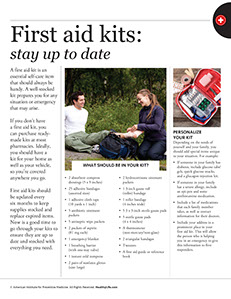
    Women helping wrap man's foot and ankle with sprain wrap.

    A first aid kit is an essential self-care item that should always be handy. A well-stocked kit prepares you for any situation or emergency that may arise.

    If you don’t have a first aid kit, you can purchase ready-made kits at most pharmacies. Ideally, you should have a kit for your home as well as your vehicle, so you’re covered anywhere you go.

    First aid kits should be updated every six months to keep supplies stocked and replace expired items. Now is a good time to go through your kits to ensure they are up to date and stocked with everything you need.

    What should be in your kit?

    *  2 absorbent compress dressings (5 x 9 inches)

    *  25 adhesive bandages (assorted sizes)

    *  1 adhesive cloth tape (10 yards x 1 inch)

    *  5 antibiotic ointment packets

    *  5 antiseptic wipe packets

    *  2 packets of aspirin (81 mg each)

    *  1 emergency blanket

    *  1 breathing barrier (with one-way valve)

    *  1 instant cold compress

    *  2 pairs of nonlatex gloves (size: large)

    *  2 hydrocortisone ointment packets

    *  1 3-inch gauze roll (roller) bandage

    *  1 roller bandage (4 inches wide)

    *  5 3 x 3-inch sterile gauze pads

    *  5 sterile gauze pads (4 x 4 inches)

    *  A thermometer (non-mercury/non-glass)

    *  2 triangular bandages

    *  Tweezers

    *  A first aid guide or reference book

    Personalize your kit

    Depending on the needs of yourself and your family, you should add special items unique to your situation. For example:

    *  If someone in your family has diabetes, include glucose tabs/gels, quick glucose snacks, and a glucagon injection kit.

    *  If someone in your family has a severe allergy, include an epi-pen and some antihistamine medication.

    *  Include a list of medications that each family member takes, as well as contact information for their doctors.

    *  Include your address in a prominent place in your first aid kit. This will allow the person who is helping you in an emergency to give this information to first responders.
    © American Institute for Preventive Medicine
  • Myths About Underactive Thyroid

    MEDICAL NEWS

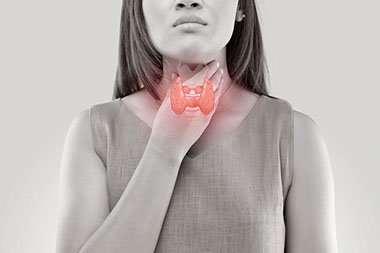
    Image of women holding her neck with an illustration of the thyroid gland on top.

    One of the most common thyroid problems is hypothyroidism, or underactive thyroid.

    Hypothyroidism means the thyroid gland isn’t making enough thyroid hormones. This can cause a number of symptoms, including:

    *  Fatigue

    *  Trouble with learning or remembering

    *  Dry hair, nails or skin

    *  Constipation

    *  Sore muscles

    *  Weight gain or bloating

    *  Heavy or irregular menstrual periods

    Although hypothyroidism is a common problem, there are many myths about it. Read on to learn about some common myths – and what you should know and hypothyroidism.

    Myth:You can’t lose weight if you have a thyroid problem.

    Fact:Many people can get to a healthy weight with hypothyroidism after getting on the proper dose of thyroid medication. They may need to work with a nutritionist or other health provider and get plenty of exercise. But losing weight is doable.

    Myth:You can’t get pregnant if you have hypothyroidism.

    Fact:Many women can get pregnant with an underactive thyroid. They should work with their doctor to make sure they are on thyroid medication that is safe and effective. It’s important to take thyroid medication consistently and carefully throughout pregnancy.

    Myth:Only older women have hypothyroidism.

    Fact:Thyroid problems can affect anyone, of any age. But women older than 60 years are at an increased risk for hypothyroidism.

    Myth:People with underactive thyroid need to take iodine.

    Fact:People with hypothyroidism should be on a medication that their doctor prescribes. Taking iodine supplements is usually not needed.

    Myth:High doses of thyroid medicine are better.

    Fact:Having too much thyroid hormone can lead to health problems like rapid heart rate, irregular heartbeat, bone loss and can even become life threatening. Work with your doctor to be sure your thyroid blood levels are within a healthy range.

    Myth:I can manage underactive thyroid with a healthy diet.

    Fact:A healthy diet is great for everyone, including people with underactive thyroid. However, even the best food choices cannot replace missing thyroid hormones. A person needs to take their thyroid medication as their doctor prescribes to replace these hormones.

    Source: American Association of Clinical Endocrinologists

    © American Institute for Preventive Medicine

  • When Blood Pressure Is Low

    MEDICAL NEWS

    Man taking his blood pressure at home.

    High blood pressure gets a lot of attention. But low blood pressure can cause health problems as well.

    If blood pressure is too low, your organs will not receive enough blood. This can quickly become dangerous. While a one-time low blood pressure reading is not usually concerning, a doctor should address chronic low blood pressure that occurs with other symptoms.

    Symptoms

    The normal range for blood pressure is between 90/60 mm/Hg to 120/80 mm/Hg. However, some people naturally have lower blood pressure than others. Low blood pressure is a problem when accompanied by any of these symptoms:

    *  Feeling dizzy or lightheaded

    *  Nausea or vomiting

    *  Blurry vision

    *  Confusion

    *  Fainting

    *  Fatigue

    *  Weakness

    *  Clammy, pale skin

    *  Rapid, shallow breathing

    *  Sleepiness

    *  Depression

    Causes

    Low blood pressure can be a sign of a problem that needs to be addressed right away. Causes may include:

    *  Severe allergic reaction

    *  Sudden loss of blood volume due to dehydration, injury, or internal bleeding

    *  Septic shock caused by infection impacts the blood vessels causing blood pressure to drop

    *  Heart problems such as heart attack or changes in heart rhythm, which may prevent the heart from pumping blood efficiently

    *  Certain medications or substances can lower blood pressure

    *  Orthostatic hypotension which is temporary and happens when you change position quickly

    *  Endocrine or hormone imbalances

    Treatment

    If you have low blood pressure, your doctor is your best resource for treatment. Depending on the specific cause, treatment may include:

    *  Changing or switching medications if recommended by your doctor

    *  Drinking more fluids to stay well hydrated

    *  Moving slowly when going from sitting to standing

    *  Wearing compression socks to prevent blood from pooling in the legs

    *  Medicines to increase heart strength and improve blood pressure

    *  Avoiding alcohol

    *  In severe cases, receiving blood through an IV

    © American Institute for Preventive Medicine
  • Foot Health Matters With Diabetes

    SELF-CARE CORNER

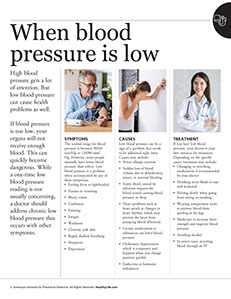
    Patient having his foot examined by a doctor.

    People with diabetes have a higher risk of getting certain foot problems. This usually happens because diabetes can cause nerve damage in the feet. This is known as diabetic neuropathy, which can lead to tingling, burning or weakness in your feet.

    Why does neuropathy matter?

    Diabetic neuropathy isn’t just painful. It also means that you may not feel things like cuts, injuries or heat or cold on your feet. Your feet could get hurt or burned and you wouldn’t know it. Then, with reduced blood flow, your body may not be able to heal the skin very well.

    Keeping skin healthy

    Wash, dry and moisturize the skin on your feet every day. Also, check for problems. Here’s how:

    *  After bathing, dry your feet gently with a towel.

    *  Look for corns, calluses, blisters or cuts. If you notice any of these, call your health care provider. Don’t try to remove corns or calluses yourself.

    *  If your skin looks healthy, you can moisturize. Apply a skin cream to dry areas.

    *  Don’t apply cream between your toes. This can cause fungus to grow. Keep the area between toes clean and dry.

    *  If you can’t trim your toenails easily, have this done by a podiatrist or other health provider.

    Good shoes are your friend

    Poorly fit shoes can cause sores, or ulcers, on your feet. These can lead to infection. Even if you don’t feel pain, see your doctor about any sores on your feet. You should also stay off your feet until your doctor says it’s ok. Don’t walk in your bare feet because this can put your feet at risk.

    You can avoid many foot ulcers by getting comfortable, supportive shoes. A podiatrist or foot specialist may help you find a pair that fits your feet well without rubbing. Wearing socks that wick moisture, such as wool socks, can also help. Wearing wet socks or shoes can lead to fungal infections.

    Helpful ways to avoid foot problems with diabetes:

    1.  Go to regular checkups.

    2.  See your doctor if you have any foot injuries or skin changes on your feet.

    3.  Follow your diabetes plan to keep blood sugar under control.

    4.  Check your feet every day.

    Source: American Diabetes Association

    © American Institute for Preventive Medicine
  • Say Goodbye To Winter Rash

    SELF-CARE CORNER

    Female using face cream on cheeks.

    Winter weather can create havoc for your skin. Cold air, low humidity, and the use of central heating all contribute to skin becoming dry, red, and itchy. A winter rash is a common skin condition that develops in the cool months.

    In addition, cool temperatures and dry air create a condition ripe for flair-ups for people who have skin conditions. This includes eczema or psoriasis.

    If you are prone to winter rashes, there are simple steps you can take to protect your skin and keep you comfortable all winter long.

    Keep your skin moisturized

    A thick, cream-based moisturizer is often a good choice in the winter. Because winter rashes are usually caused by dryness of the skin, find a lotion or cream that keeps your skin soft and smooth.

    Moisturize right after you bathe while your skin is still damp. For patches of skin that are dry, red, or itchy, you can apply lotion as often as needed.

    Avoid hot showers or baths

    Soaking in a steaming hot bath or shower might sound nice, but all that hot water can dry out your skin. When you bathe or shower, keep the water warm and limit your time to five or ten minutes.

    For some people, bathing every other day can aid in keeping the skin moisturized by allowing the skin’s natural oils to accumulate.

    Use a humidifier

    In cooler months, the air is cold and it also contains less water. If your home heating system does not have built-in humidity control, you may choose to purchase a humidifier to add moisture to the air.

    Ideal indoor air humidity should be between 30-50%. If you are using a humidifier, aim to stay in that range to prevent dryness.

    When to seek treatment for a rash

    Call your doctor if you have any of these symptoms:

    *  You develop open cuts or sores

    *  Your dry skin keeps you from sleeping

    *  You have itching without a visible rash

    *  Your self-care efforts do not relieve your dry skin

    © American Institute for Preventive Medicine

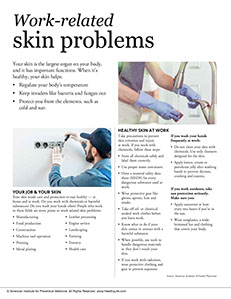
  • Work-Related Skin Problems

    WORK LIFE

    Electrician wearing gloves while working.

    Your skin is the largest organ on your body, and it has important functions. When it’s healthy, your skin helps:

    *  Regulate your body’s temperature

    *  Keep invaders like bacteria and fungus out

    *  Protect you from the elements, such as cold and sun

    Your job & your skin

    Your skin needs care and protection to stay healthy – at home and at work. Do you work with chemicals or harmful substances? Do you wash your hands often? People who work in these fields are more prone to work-related skin problems:

    *  Manufacturing

    *  Food production

    *  Construction

    *  Machine tool operation

    *  Printing

    *  Metal plating

    *  Leather processing

    *  Engine service

    *  Landscaping

    *  Farming

    *  Forestry

    *  Health care

    Healthy skin at work

    Take precautions to prevent skin irritation and injury at work. If you work with chemicals, follow these steps:

    *  Store all chemicals safely and label them correctly.

    *  Use proper waste containers.

    *  Have a material safety data sheet (MSDS) for every dangerous substance used at work.

    *  Wear protective gear like gloves, aprons, hats and masks.

    *  Take off oil- or chemical-soaked work clothes before you leave work.

    *  Know what to do if your skin comes in contact with a harmful substance.

    *  When possible, use tools to handle dangerous materials so they don’t touch your skin.

    *  If you work with radiation, wear protective clothing and gear to prevent exposure.

    If you wash your hands frequently at work:

    *  Do not clean your skin with chemicals. Use only cleansers designed for the skin.

    *  Apply lotion, cream or petroleum jelly after washing hands to prevent dryness, cracking and eczema.

    If you work outdoors, take sun protection seriously. Make sure you:

    *  Apply sunscreen at least every two hours if you’re in the sun.

    *  Wear sunglasses, a wide-brimmed hat and clothing that covers your body.

    Source: American Academy of Family Physicians

    © American Institute for Preventive Medicine
  • Get The Facts About Stuttering

    MEDICAL NEWS

    Adult helping child with speech.

    Speech is an important part of communicating. Yet millions of people cope with a speech disability every day.

    What is stuttering?

    Stuttering is a problem that affects how your speech flows. People who stutter may:

    *  Stretch words out for too long when speaking

    *  Have pauses where they can’t get a word out

    *  Repeat whole words or parts of words

    *  Have uncontrolled movements when speaking, such as trembling in the jaw or excessive blinking

    Scientists don’t fully understand why stuttering happens. But we do have plenty of facts about this speech disorder. Learn more about what it is and how you can help someone who has it.

    FACT #1: Stuttering isn’t related to intelligence.

    Stuttering isn’t a problem with being confused or less intelligent. In fact, many intelligent and successful people have dealt with this speech disorder.

    FACT #2: Finishing a word or sentence for someone is not helpful.

    People who don’t understand stuttering may get frustrated or impatient when someone stutters. They may just want to say the word for them so they can keep talking. This is not helpful and could make stuttering worse.

    FACT #3: Stuttering is not caused by stress or being tense.

    Experts believe that people who stutter may have some brain differences. These  differences affect how a person’s brain works when they speak. But it’s not caused by anxiety, stress or a mental health condition. However, being stressed could make stuttering worse for a person who already has the disorder.

    FACT #4: Stuttering is more common in children.

    Many children stutter while they are learning how to speak and understand others. Most of the time, children stop stuttering before they become adults. They may need help from their doctor and a speech-language pathologist. If you’re concerned about your child’s stuttering, talk to their pediatrician.

    If you have concerns about stuttering, finding words or other speech issues, talk to your doctor about seeing a licensed speech-language pathologist.

    Sources: American Speech-Language-Hearing Association, National Institutes of Deafness and Other Communication Disorders

    © American Institute for Preventive Medicine