Tag: Health Conditions

  • Constipation

    Abdominal & Urinary Conditions

    Constipation is having trouble passing stool or having hard stools. “Regularity” does not mean that you have a bowel movement every day. Normal bowel habits range from 3 movements a day to 3 each week. What is more important is what is normal for you.

    Signs & Symptoms

    *  A hard time passing stool. Not being able to pass stool. Having very hard stool.

    *  Straining to have a bowel movement.

    *  Abdominal swelling. The feeling of continued fullness after passing stool.

    Causes

    *  Drinking too few fluids. Not eating enough dietary fiber.

    *  Not being active enough.

    *  Not going to the bathroom when you have the urge to pass stool.

    *  Misuse of laxatives.

    *  A side effect of some heart, pain, and antidepressant medicines, as well as, antacids, antihistamines, and water pills.

    *  Chronic illnesses that slow the digestive tract. Examples are diabetes and an underactive thyroid.

    *  Cancer or other diseases of the bowel.

    Treatment

    Self-care usually treats constipation. You may also need to talk to your doctor about health problems and medicines that could cause the problem.

    Questions to Ask

    Self-Care / Prevention

    *  Eat foods high in dietary fiber. Examples are bran, whole-grain breads and cereals, and fresh fruits and vegetables.

    *  Drink at least 1-1/2 to 2 quarts fluids every day. Have hot water, tea, etc. to stimulate the bowel.

    *  Get enough exercise.

    *  Don’t resist the urge to pass stool.

    *  If you take antacids or iron supplements and get constipated easily, discuss the use of these with your doctor.

    *  Take stool softeners (e.g., Colace), fiber supplements (e.g., Metamucil), “stimulant” laxatives (e.g., Ex-Lax), or enemas, as directed on the label and by your doctor.

    Healthier at Home book by the American Institute for Preventive Medicine. www.HealthyLife.com. All rights reserved.

    © American Institute for Preventive Medicine

  • Earwax

    Ear, Nose & Throat Conditions

    Earwax coats and protects the lining of the ear canal. It filters dust and helps keep the ears clean. Normally, earwax is soft and drains by itself. Sometimes it hardens and forms a plug.

    Signs & Symptoms

    Signs and symptoms of earwax buildup are:

    *  Blocked or plugged feeling in the ear

    *  Partial hearing loss (temporary)

    *  Ringing in the ear

    *  Ear discomfort or pain

    Causes

    *  Exposure to excessive dust or dirt

    *  A family history of earwax buildup

    Simple earwax build-up can be treated using self-care. If self-care doesn’t take care of the problem, a doctor can clear the earwax with a special vacuum, scoop, or water-pik-like device.

    Prevention

    *  Wear earplugs when exposed to excessive dust or dirt.

    *  Don’t use cotton swabs in the ear. They tend to pack the earwax down more tightly.

    *  Don’t push objects into the ear canal.

    Self-Care

    {Note: Use only if you know that your eardrum is not ruptured or infected. See signs of a ruptured eardrum and ear infection under “When to Seek Medical Care” on this page.}

    *  Don’t try to scrape out earwax. You could put a hole in your eardrum or damage the skin of your ear canal.

    *  Use an over-the-counter product, such as Murine Ear Drops, Debrox, etc. Follow package directions.

    *  Hold a warm, wet washcloth on the blocked ear or, take a warm shower. Let the water gently flow into the ear. Use the tip of a warm washcloth to remove the softened wax. Don’t use cold water. This may cause dizziness.

    *  Lie on your side or tilt your head sideways. Using a clean medicine dropper, carefully squeeze a few drops of lukewarm water into your ear. Leave the water there for about 10 minutes. Tilt your head to let the water drain out of the ear. After several minutes, do the same thing again. If the ear wax has not cleared in 3 hours, repeat this entire procedure. {Note: Instead of just warm water, you can use a mixture of 1 part warm water and 1 part hydrogen peroxide. Keep the drops in the ear for 3, not 10 minutes, though.}

    *  Rest a hot water bottle on the affected ear for a few minutes. Afterward, use a washcloth to remove the softened wax.

    When to Seek Medical Care

    Contact Doctor When:

    *  You have sudden or total hearing loss in one or both ears.

    *  Earwax has not cleared after using self-care for several days.

    *  You have signs of a ruptured eardrum:

    – Ear pain

    – Blood or other ear discharge

    – Partial hearing loss

    – Ringing or burning in the ear

    *  You have ear pain with any of these signs of an ear infection:

    – Feeling of fullness in the ear that leads to ear pain

    – Fever of 101°F or higher

    – Blood, pus, or fluid from the ear

    – Temporary hearing loss

    – Redness and swelling of the skin of the ear canal

    – Nausea, vomiting, and/or dizziness

    Health at Home Lifetime book by the American Institute for Preventive Medicine. www.HealthyLife.com. All rights reserved.

    © American Institute for Preventive Medicine

  • Fishhook Removal

    First Aid

    A fishhook can nick or cut the skin, get stuck in the skin near its surface, or get deeply embedded in the skin. First aid treats most fishhook accidents.

    Questions to Ask

    Self-Care / First Aid

    For a Fishhook Deeply Embedded in the Skin

    *  Put ice or cold water on the wound area to numb it. Push on the shaft of the hook until the barb protrudes. See image A. With wire cutters, snip the hook at either the shank or the barb. See image B. Pull the hook out. See image C.

    *  Wash the wound area well with soap and water. Treat for a puncture wound.

    For a Fishhook Stuck Near the Surface of the Skin

    *  Put ice or cold water on the wound area.

    *  Take a piece of fishing line. Loop one end and tie it to the hook near the surface of the skin. See image D. Grasp the shaft end of the hook with one hand and press down about 1/8th inch to disengage the barb. See image E.

    *  Keep pressing the hook down and jerk the fishing line in a motion parallel to the skin’s surface to make the shaft of the hook lead the barb out of the skin. See image F. Treat for a puncture wound.

    {Note: For nicks or surface cuts to the skin, treat for a cut.

    Healthier at Home book by the American Institute for Preventive Medicine. www.HealthyLife.com. All rights reserved.

    © American Institute for Preventive Medicine

  • Hearing Loss

    Ear, Nose & Throat Conditions

    People over age 50 are likely to lose some hearing each year. The decline is usually gradual. About 30% of adults age 65 through 74 and about 50% of those age 85 and older have hearing problems.

    Hearing problems can get worse if they are ignored and not treated. People with hearing problems may withdraw from others because they may not be able to understand what others say. Hearing loss can cause an older person to be labeled “confused” or “senile.”

    Signs & Symptoms

    *  Words are hard to understand. This worsens when there is background noise.

    *  Certain sounds are overly loud or annoying.

    *  Hearing a hissing or ringing background noise. This can be constant or it can come and go.

    *  Concerts, TV shows, etc. are less enjoyable because much goes unheard.

    Causes

    Presbycusis (prez-bee-KU-sis). This is a gradual type of hearing loss. It is common with aging. With this, you can have a hard time understanding speech. You may not tolerate loud sounds. You may not hear high pitched sounds. Hearing loss from presbycusis does not cause deafness.

    *  Ear wax that blocks the ear canal.

    *  A chronic middle ear infection or an infection of the inner ear.

    *  Medicines (e.g., aspirin).

    *  Blood vessel disorders, such as high blood pressure.

    *  Acoustic trauma, such as from a blow to the ear or from excessive noise. Noise-Induced Hearing Loss (NIHL) can be from a one-time exposure to an extremely loud sound or to repeated exposure to loud level sounds.

    *  Ménière’s disease. This is a problem of the inner ear. The hearing loss comes and goes. Dizziness is also a symptom.

    *  Small tumors on the auditory nerve. Brain tumor (rarely).

    Treatment

    *  Earwax is removed by a health care provider.

    *  Hearing aid(s). These make sounds louder.

    *  Speech reading. This is learning to read lips and facial expressions.

    *  Auditory training. This helps with specific hearing problems.

    *  Surgery. This can be done if the problem requires it.

    Questions to Ask

    Self-Care / Prevention

    For Gradual, Age-Related Hearing Loss

    *  Ask people to speak clearly, distinctly, and in a normal tone.

    *  Look at people when they are talking to you. Watch their expressions.

    *  Try to limit background noise when speaking with someone.

    *  In a church or theater, sit in the 3rd or 4th row with people sitting around you.

    *  Install a flasher or amplifier on your phone, door chime, and alarm clock.

    To Hear Sounds Better

    *  Use a hearing aid. There are many kinds. Examples are ones worn:

    – In-the-Ear (ITE).

    – Behind-the-Ear (BTE).

    – In-the-Canal (ITC).

    *  To find the hearing aid that works best for you, see an audiologist. Ask him or her about a trial period with different hearing aids to find one you are comfortable with.

    *  Use devices and listening systems that help you hear better when you use your telephone, mobile phone, TV, stereo, etc.

    To Clear Earwax

    Use only if the eardrum is not ruptured. Check with your doctor if you are not sure.

    *  Lie on your side. Using a syringe or medicine dropper, carefully squeeze a few drops of lukewarm water into your ear (or have someone else do this). Let the water remain there for 10 to 15 minutes and then shake it out. Now, squeeze a few drops of hydrogen peroxide, mineral oil, or an over-the-counter cleaner, such as Debrox, into the ear. Let the excess fluid flow out of the ear.

    *  After several minutes, put warm water in the ear again. Let it stay there for 10 to 15 minutes. Tilt the head to allow it to drain out of the ear.

    Repeat this entire procedure again in 3 hours if the earwax has not cleared.

    Resources

    American Speech-Language Hearing Association

    800.638.8255

    www.asha.org

    Better Hearing Institute

    800.EAR.WELL (327.9355)

    www.betterhearing.org

    Healthier at Home book by the American Institute for Preventive Medicine. www.HealthyLife.com. All rights reserved.

    © American Institute for Preventive Medicine

  • Insomnia

    Women’s Health

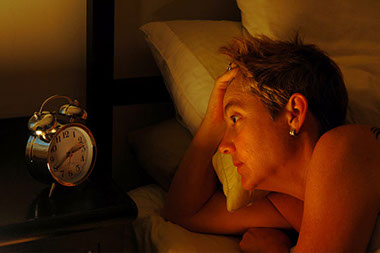
    Insomnia is having trouble falling asleep. It can last from a single night to a few weeks. It can occur from time to time or be a chronic problem.

    Signs & Symptoms

    *  Waking up during the night and not being able to get back to sleep.

    *  Waking up too early.

    *  Not getting enough sleep or getting poor quality sleep.

    *  Fatigue or feeling drowsy during the day because of lack of sleep.

    Causes

    *  Too much caffeine or having it before bedtime.

    *  Changes in sleep/wake schedules, such as work shift changes and jet lag.

    *  Going to bed with a full bladder or any problem that causes you to urinate or have a bowel movement during the night.

    *  Too much noise when you fall asleep. This includes a snoring partner.

    *  Menopausal symptoms, such as hot flashes.

    *  A lack of physical exercise.

    *  Lack of a sex partner.

    *  Side effects of some medicines, such as decongestants, corticosteroids, and stay-awake pills.

    *  Emotional stress. Depression. Anxiety.

    *  Posttraumatic Stress Disorder (PTSD).

    *  Fibromyalgia.

    *  Any condition, illness, injury, or surgery that causes pain and/or discomfort which interrupts sleep.

    *  Asthma, allergies, and early-morning wheezing.

    *  An overactive thyroid gland.

    *  Heart or lung conditions that cause shortness of breath when lying down.

    Treatment

    *  Self-care and prevention measures.

    *  Treating the problem.

    *  Prescribed short-acting sleeping pills.

    Questions to Ask

    Self-Care / Prevention

    *  Avoid caffeine for 8 hours before bedtime. Caffeine is in coffee, tea, chocolate, colas, and some other soft drinks. Check labels for caffeine content in over-the-counter medicines.

    *  Avoid long naps during the day.

    *  Have no more than 1 alcoholic drink with or after dinner. Even though alcohol is a sedative, it can disrupt sleep. Check with your doctor about using any alcohol if you are taking medicines.

    *  An hour or two before going to bed, dim the lights in the house.

    *  Before you go to bed, have food items rich in the amino acid L-tryptophan, such as milk, turkey, or tuna fish. Do not take L-tryptophan supplements, though. Eating foods with carbohydrates, such as cereal, breads, and fruits, may help as well.

    *  Do regular exercise, but not within a few hours of going to bed.

    *  Before bedtime, take a warm bath or read a book or do some type of repetitive, calm activity. Avoid things that hold your attention, such as watching a suspense movie.

    *  Keep your bedroom quiet, dark, and comfortable. Use clean, fresh sheets and pillows. Keep the room temperature neither too warm nor too cool.

    *  Ban worry from the bedroom. Don’t rehash the mistakes of the day as you toss and turn.

    *  Follow a regular bedtime routine. Lock or check doors and windows, brush your teeth, etc.

    *  Count sheep! Picturing a repeated image may bore you to sleep.

    *  Listen to recordings that help promote sleep. Look for them at a library or bookstore.

    *  If you’ve tried to fall asleep, but are still awake after 30 minutes, get out of bed. Read a relaxing book or sit quietly in the dark. Do this for about 20 minutes. Then go back to bed. Repeat this as many times as you need to until you are able to fall asleep.

    *  Take over-the-counter sleep aids (e.g., melatonin, Tylenol PM, etc.) as advised by your doctor. Don’t take anyone else’s sleeping pills.

    Resources

    National Center on Sleep Disorders Research

    www.nhlbi.nih.gov/about/ncsdr

    National Sleep Foundation

    www.sleepfoundation.org

    Women's Self-Care book by the American Institute for Preventive Medicine. www.HealthyLife.com. All rights reserved.

    © American Institute for Preventive Medicine

  • Peptic Ulcers

    Abdominal & Urinary Conditions

    Illustration of a peptic ulcer.

    A peptic ulcer is a sore in the stomach or first part of the small bowel.

    Peptic Ulcers

    Signs & Symptoms

    *  A gnawing or burning pain is felt in the abdomen between the breastbone and navel. The pain often occurs between meals and in the early hours of the morning. It may last from a few minutes to a few hours and may be relieved with eating or antacids.

    *  Appetite and weight loss.

    *  Nausea or vomiting dark, red blood or material that looks like coffee grounds.

    *  Bloody, black, or tarry stools.

    *  Paleness and weakness if anemia is present.

    Causes

    *  An infection with Helicobacter pylori (H. pylori) bacteria. This is the main cause.

    *  The repeated use of aspirin and other nonsteroidal anti-inflammatory drugs (NSAIDs), such as ibuprofen and naproxen sodium.

    A small percentage of peptic ulcers are caused by Zollinger-Ellison Syndrome. With this rare disorder, the body makes excess acid.

    Family history, smoking, caffeine, and making excess digestive acids play a role in peptic ulcers. So does stress, especially some types of physical stress (e.g., severe burns and major surgery).

    Treatment

    Treatment includes medicines to treat the problem and surgery, if needed.

    Questions to Ask

    Self-Care / Prevention

    *  Take medications as prescribed.

    *  Eat healthy foods. Include foods high in fiber.

    *  Don’t have coffee (regular and decaffeinated); tea and soft drinks with caffeine; and fruit juices high in acid like tomato juice. Don’t have alcohol or foods that bother you.

    *  Don’t use aspirin and other NSAIDs. Follow your doctor’s advice for prescribed NSAIDs.

    *  Try over-the-counter antacids or acid controllers (with your doctor’s okay). Use them on a short-term basis. Don’t try to self- medicate an ulcer.

    *  Don’t smoke. If you smoke, quit.

    Healthier at Home book by the American Institute for Preventive Medicine. www.HealthyLife.com. All rights reserved.

    © American Institute for Preventive Medicine

  • Sickle Cell Anemia

    Bone & Muscle Problems

    Red blood cells are normally round. In sickle cell anemia, the red blood cells take on a sickle shape. This makes the blood thicker and doesn’t let oxygen get to the body’s tissues like it should. When sickled cells get stuck in the blood vessels, they cut off the blood supply. With no oxygen, pain occurs. The result is a “Sickle Cell Crisis.”

    Signs & Symptoms

    *  Bone and joint pain. This is the most common complaint. The pain can also be in the chest, back, or abdomen.

    *  Shortness of breath and a hard time breathing.

    *  Swollen hands and feet.

    *  Jaundice. The whites of the eyes and/or the skin looks yellow.

    *  Paleness.

    *  Repeated infections, especially pneumonia or meningitis.

    *  Kidney problems. Leg ulcers. Gallstones (at an early age). Gout.

    *  Seizures.

    *  Strokes (at an early age).

    Causes

    Sickle cell anemia is inherited. In the U.S., it mostly affects African Americans, but can occur in other ethnic groups. Examples are persons whose ancestors are from Cuba, Central and South America, Greece, Italy, Turkey, and Saudi Arabia. About 1 in 12 African Americans carries the gene for the sickle cell trait. If both parents carry the trait, the chance of having a child with sickle cell anemia is 1 out of 4. About 1 in 375 African Americans and about 1 in every 1,000 Latin Americans are born with sickle cell anemia. Signs of the disease aren’t noticed until the end of the infant’s first year. All hospitals in the U.S. screen newborns for sickle cell disease.

    To prevent sickle cell anemia in offspring, couples, especially African American couples, should have a blood test to see if they are carriers for the sickle cell trait. Genetic counseling can help them decide what to do.

    Treatment

    Medical treatment is needed. Painful episodes are treated with painkillers, fluids, and oxygen. Other treatments:

    *  Hydroxyurea medicine.

    *  Blood transfusions.

    *  Stem cell transplant. This may be an option for children who have a brother or sister without sickle cell disease that is a matched donor.

    In the U.S., the life span for a person with sickle cell disease is 40-60 years.

    Questions to Ask

    Self-Care / Prevention

    *  Follow your doctor’s treatment plan. Wear a medical alert tag.

    *  Avoid physical stress and high altitudes.

    *  Discuss airplane travel with your doctor.

    *  Ask your doctor what over-the- counter medicines you can use before you try any.

    *  Drink at least 8 glasses of water a day. Get the rest you need.

    *  Follow a balanced diet. Have at least 5 servings of fruits and vegetables a day. Take folic acid (a B vitamin) supplements and other vitamins and minerals, as advised by your doctor.

    *  Don’t wear tight clothing.

    *  If at home and in a “sickle cell crisis:”

    – Stay warm. Apply warm compresses to painful parts of your body.

    – Rest in bed.

    – Take pain medication, as prescribed.

    Healthier at Home book by the American Institute for Preventive Medicine. www.HealthyLife.com. All rights reserved.

    © American Institute for Preventive Medicine

  • Tips To Protect Your Eyes

    Eye Conditions

    Man smiling wearing dark sunglasses.

    Look cool and protect your eyes at the same time!

    *  Anytime your eyes are exposed to ultraviolet (UV) light, wear eyewear that protects your eyes. Do this when it is sunny and even on cloudy days. Choose sunglasses that block 99 to 100% of both UVA and UVB rays.

    *  Pick the color lenses you want, but make sure they have UV protection.

    *  Take sunglasses you already have to your eye doctor or to an optical shop. A UV meter can measure the amount of UV a lens can absorb.

    *  The sun’s UV rays are the most harmful between 11 a.m. and 3 p.m.

    *  Reflected glare from snow or ice doubles the risk of UV damage.

    *  If you wear contact lenses, choose ones with UV protection and wear sunglasses that have it, too. These protect eye tissue that the contact lenses do not cover.

    Health at Home Lifetime book by the American Institute for Preventive Medicine. www.HealthyLife.com. All rights reserved.

    © American Institute for Preventive Medicine

  • Are You Washing Your Hands The Right Way?

    MEDICAL NEWS

    Water drop illustration with the words "Wash your hand".

    The Centers for Disease Control and Prevention (CDC) says washing your hands is like a “do-it-yourself” vaccine. Washing your hands properly and at the right time will slash your risk of getting sick with illnesses like colds, flu and stomach bugs that cause diarrhea and vomiting.

    Handwashing seems simple. But, there are some steps you must take to ensure your hands are truly clean.

    The five steps

    1.  Wet your hands with clean, running water. It can be warm or cold. Then turn off the water and apply soap to your hands.

    2.  Rub hands together to get a lather. Cover the palms, backs of hands, between the fingers and under the nails.

    3.  Continue scrubbing for at least 20 seconds. Count to 20 slowly or sing the “Happy Birthday” song twice.

    4.  Rinse all the soap off under clean, running water.

    5.  Dry your hands using a clean towel. If one is not available, allow them to air dry completely.

    Don’t touch your face – a win-win

    It’s impossible for hands to stay clean all the time. Even if you’ve just washed them, try to avoid touching your face, eyes, nose and mouth. This will help keep you from letting germs into your body.

    Also, this habit helps protect those around you. If you’re sick and you touch your face, you could be putting germs onto your hands that can be spread to others.

    What about hand sanitizer?

    Alcohol-based hand sanitizers are handy to keep in a pocket or purse. Hand sanitizers do clean, but they may not remove all germs, the CDC says. They also won’t remove chemicals or visible dirt very well.

    In short, keep hand sanitizer with you, and use it when you’ve touched something that may be germy (like a door handle or ATM buttons). But, get to a sink to wash your hands whenever you can.

    Good hand hygiene is good for everyone – except germs. Wash up to stay healthy!

    © American Institute for Preventive Medicine

  • Ebola Facts

    MEDICAL NEWS

    Illustration of ebola symptoms.

    Although the risk of Ebola spreading in the U.S. is low, the CDC offers this information about a scary disease. A person infected with Ebola-a disease outbreak in countries in West Africa and isolated cases in the U.S.-can’t spread the disease until symptoms appear.

    The time from exposure to when signs or symptoms of the disease appear (called the incubation period) is 2 to 21 days, but the average time is 8 to 10 days. Signs of Ebola include fever (higher than 101.5ºF) and severe headache, muscle pain, vomiting, diarrhea, stomach pain, or unexplained bleeding or bruising.

    Ebola is spread through direct contact with blood and body fluids.

    Ebola is spread through direct contact (through broken skin or through your eyes, nose, or mouth) with:

    *  Blood and body fluids (like urine, feces, saliva, vomit, sweat, and semen) of a person who is sick with Ebola.

    *  Objects (such as needles) that have been contaminated with the blood or body fluids of a person sick with Ebola.

    There is no FDA-approved vaccine available for Ebola. Experimental vaccines and treatments are under development. You can protect yourself against Ebola.

    *  DO wash your hands often with soap and water or use an alcohol-based hand sanitizer.

    *  Do NOT touch the blood or body fluids of people who are sick.

    *  Do NOT handle items that may have come in contact with a sick person’s blood or body fluids, such as clothing, bedding, needles, or medical equipment.

    *  Do NOT touch the body of someone who has died of Ebola.

    Ebola is NOT spread through the air, water, or food.

    If you have traveled to an area with an Ebola outbreak or had close contact with a person sick with Ebola, you may be at risk.

    © American Institute for Preventive Medicine