Tag: Health Conditions

  • Like It Loud? Your Ears Don’T

    WELL-BEING

    Image of man listening to music with headphones.

    What do a lawn mower, a motorcycle, and a music player have in common? They can all cause permanent hearing loss.

    Many people assume that only extremely loud sounds, such as gunshots, can damage the ears. But any loud noise, such as power tools, headphones turned up too loud, lawn equipment, or a concert, can lead to hearing loss. This is known as noise-induced hearing loss.

    Noise-induced hearing loss often happens gradually, so you don’t realize the damage that’s being done over time. For instance, being around loud machinery every day or listening to loud music in earphones regularly can cause hearing damage that adds up. The National Institutes of Health states that 26 million Americans between the ages of 20 and 69 have hearing loss caused by excessive noise.

    The Centers for Disease Control and Prevention (CDC) says anything over 85 decibels can damage hearing. The louder it is, the faster it can cause hearing loss if used regularly and/or for long periods. Normal conversation is 60 decibels, and a hair dryer is around 90.

    Save your hearing

    The best way to prevent noise-induced hearing loss is to avoid loud noises whenever you can. But, this may not be possible if your job requires you to be around certain equipment. If you can’t avoid it, always wear proper hearing protection. This includes earplugs and/or ear muffs that have a noise reduction rating (NRR) listed.

    If you notice you have trouble hearing, talk to your doctor.

    © American Institute for Preventive Medicine
  • Simple Steps To Save Your Sight

    WELL-BEING

    Image of older male getting eyes checked by a doctor.

    Age-related macular degeneration (AMD) is the number one cause of blindness in older adults. AMD damages central vision, which means things like reading, driving and seeing faces are limited or impossible. There is no cure for AMD, but there are procedures and steps you can take to help save vision. Lower your risk of getting AMD with these tips:

    *Don’t smoke.Studies show that smoking increases the risk of AMD. Smokers are twice as likely to get AMD as nonsmokers. If you do smoke, take steps to quit.

    *Know your family history.People with a close relative who has AMD have a 50 percent chance of getting AMD. Detecting AMD early means you could save your vision.

    *Eat a healthy diet.People who eat omega-3 fatty acids, found in fatty fish, are less likely to get AMD. Also, focus on eating leafy greens such as spinach, kale and leafy lettuce. Eat plenty of whole fruits (not fruit juice).

    *Limit unhealthy fats and cholesterol.Eating a lot of saturated fat and cholesterol raises the risk of getting AMD. Avoid processed (packaged) foods with unhealthy saturated and trans fats.

    *Be active.Exercise may keep your eyes healthy. Exercising at least three times per week can reduce your risk of getting AMD.

    *See your eye doctor regularly.An eye doctor can catch AMD early with an eye exam. Find out how often you should have your eyes checked.

    *Protect your eyes from the sun.Always wear sunglasses that have 100 percent UV protection when you are outside. For additional coverage, wear a wide-brimmed hat.

    *Get regular checkups from your doctor.Keeping cholesterol, blood sugar and blood pressure under control also helps maintain healthy eyes.

    *Your vision is too important to leave to chance.A healthy lifestyle and good medical care can help you avoid AMD or catch it early, before it damages your sight.

    Sources: American Academy of Ophthalmology, American Macular Degeneration Foundation

    © American Institute for Preventive Medicine
  • Under Pressure: What To Know About Glaucoma

    MEDICAL NEWS

    Image of eldery women getting her eyes checked.

    Glaucoma is a leading cause of blindness for people over 60, so it’s important to know what you can do about it.

    Glaucoma happens when too much fluid builds up in the eye. This extra fluid causes pressure that damages the optic nerve. This damage cannot be undone once it happens. It can lead to loss of all or part of your vision. But, glaucoma can be managed and the damage to vision can be decreased with proper medical care.

    People at highest risk for glaucoma

    Anyone can get glaucoma. But certain groups of people may be more likely to get it, including:

    *  People with a family history of glaucoma

    *  African Americans over age 40

    *  Anyone over age 60, but Mexican Americans are especially at risk

    *  People who have high eye pressure, thin corneas or optic nerve problems

    *  People with high blood pressure that’s not well controlled

    Signs and symptoms

    Glaucoma often doesn’t have early signs and symptoms until damage has already been done. That’s why getting regular eye exams is so important. For many people, the first sign of glaucoma is loss of their peripheral (side) vision.

    Don’t assume you don’t have glaucoma because your eyes “feel fine.” Many people develop glaucoma without any symptoms.

    Illustration of eye with excessive pressure which can lead to glaucoma.

    What can you do about glaucoma?

    Glaucoma has no cure, but there are things you can do to slow it down and save your vision:

    *  If you have glaucoma, take your medicines every day. Ask your eye doctor how often you need to be seen, and stick to your appointments.

    *  Get a complete eye exam at least every 2 years or as often as recommended. This includes a dilated eye exam.

    *  Even if you don’t have glaucoma, ask your eye doctor about your risk. This includes telling your doctor about any family history of glaucoma.

    People with certain risk factors for glaucoma may be given special eye drops. These drops can lower the risk of getting glaucoma but they must be used regularly to be effective.

    If you are diagnosed with glaucoma, you and your doctor will discuss what treatment is best for you. It may depend on what type of glaucoma you have and how severe it is. Treatments may include:

    *  Eye drops that lower pressure in the eye

    *  Surgery done with a laser that helps the eye drain fluid better

    *  Traditional surgery that may include placing a new drainage tube in the eye

    Save your sight – see your eye doctor to get checked for glaucoma!

    Sources: American Academy of Ophthalmology, National Eye Institute

    © American Institute for Preventive Medicine

  • Allergies Annoying You?

    SELF-CARE CORNER

    Women outside blowing her nose.

    A runny nose, sneezing, itchy eyes… allergy symptoms can be miserable and common. More than 50 million Americans have allergies.

    People can get allergies at different times of the year. This is because different allergy triggers come and go as the seasons change:

    *  If you have allergies in the spring, you may be allergic to tree pollen.

    *  People who notice allergy symptoms in the summer are usually allergic to grass or weed pollen.

    *  Those who notice their allergies getting worse in late summer to fall are probably reacting to ragweed pollen.

    *  Allergy symptoms related to wet, rainy weather are often due to mold.

    *  If you have allergies year-round, you may be allergic to something indoors like dust mites or pet dander.

    What does allergy medicine do?

    There are many medicines available today that treat allergies. Each one works in a different way and can help people with different types of allergies. With the help of your doctor, you can find a solution that helps control your allergy symptoms. This can include:

    *  Antihistamines. They stop histamine, which is a chemical that the body releases when it is exposed to an allergen. These can help tackle all types of allergy symptoms, from runny nose to itching. Some antihistamines are pills, and others are nose sprays.

    *  Nasal (nose) sprays. Some allergy nose sprays contain an antihistamine ingredient. Others may contain a steroid to help stop swelling and inflammation, which causes a runny nose and sneezing. Nose sprays can help shut down the allergic reaction that starts in the nose.

    *  Eye drops. Eye drops for allergies are helpful for people who notice itchy or watery eyes. They don’t usually help with sneezing or other allergy symptoms.

    *  Immunotherapy. Includes allergy shots or small tablets placed under the tongue. These treatments expose the body to a small amount of the allergen over time. Your healthcare provider will have to give these to you.

    With all the treatments available today, you don’t have to live with miserable allergy symptoms. But talk with your healthcare provider before you try any new medicines.

    Sources: American Academy of Family Physicians, Asthma and Allergy Foundation of America

    © American Institute for Preventive Medicine

  • 7 Daily Health Habits

    General Health Conditions

    A wooden bowl filled with berries.

    1.  Drink at least 6 to 8 glasses of water or other unsweetened fluids.

    2.  Spend 2 hours or less of non-work screen time (laptops, video games, cell phones, etc.).

    3.  Be physically active for 30 or more minutes.

    4.  Wash your hands often to lower your risk of picking up and spreading germs.

    5.  Eat 5 or more servings of vegetables and fruits. Fill half of your plate with these foods.

    6.  Limit sodium from salt and foods to 2,300 mg per day. Omit salt at the table. Eat less processed foods. Read food labels.

    7.  Sleep 7 to 9 hours a night.

    Take Action: Fight Decay the 2-1-2 Way

    *  2 times a day, brush your teeth

    *  1 time a day, floss your teeth

    *  2 times a year, get a dental cleaning and checkup

    Health at Home Lifetime book by the American Institute for Preventive Medicine. www.HealthyLife.com. All rights reserved.

    © American Institute for Preventive Medicine

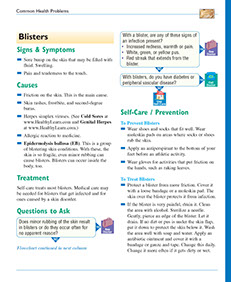
  • Blisters

    Skin Conditions

    Signs & Symptoms

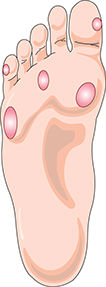
    *  Sore bump on the skin that may be filled with fluid. Swelling.

    *  Pain and tenderness to the touch.

    Causes

    *  Friction on the skin. This is the main cause.

    *  Skin rashes, frostbite, and second-degree burns.

    *  Herpes simplex viruses.

    *  Allergic reaction to medicine.

    *  Epidermolysis bullosa (EB). This is a group of blistering skin conditions. With these, the skin is so fragile, even minor rubbing can cause blisters. Blisters can occur inside the body, too.

    Treatment

    Self-care treats most blisters. Medical care may be needed for blisters that get infected and for ones caused by a skin disorder.

    Questions to Ask

    Self-Care / Prevention

    To Prevent Blisters

    *  Wear shoes and socks that fit well. Wear moleskin pads on areas where socks or shoes rub the skin.

    *  Apply an antiperspirant to the bottom of your feet before an athletic activity.

    *  Wear gloves for activities that put friction on the hands, such as raking leaves.

    To Treat Blisters

    *  Protect a blister from more friction. Cover it with a loose bandage or a moleskin pad. The skin over the blister protects it from infection.

    *  If the blister is very painful, drain it. Clean the area with alcohol. Sterilize a needle. Gently, pierce an edge of the blister. Let it drain. If no dirt or pus is under the skin flap, pat it down to protect the skin below it. Wash the area well with soap and water. Apply an antibiotic ointment and cover it with a bandage or gauze and tape. Change this daily. Change it more often if it gets dirty or wet.

    Healthier at Home book by the American Institute for Preventive Medicine. www.HealthyLife.com. All rights reserved.

    © American Institute for Preventive Medicine

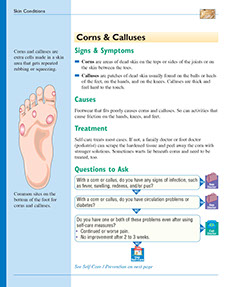
  • Corns & Calluses

    Skin Conditions

    Corns and calluses are extra cells made in a skin area that gets repeated rubbing or squeezing.

    Signs & Symptoms

    *  Corns are areas of dead skin on the tops or sides of the joints or on the skin between the toes.

    *  Calluses are patches of dead skin usually found on the balls or heels of the feet, on the hands, and on the knees. Calluses are thick and feel hard to the touch.

    Illustration of corns and calluses on the bottom of a foot.

    Common sites on the bottom of the foot for corns and calluses.

    Causes

    Footwear that fits poorly causes corns and calluses. So can activities that cause friction on the hands, knees, and feet.

    Treatment

    Self-care treats most cases. If not, a family doctor or foot doctor (podiatrist) can scrape the hardened tissue and peel away the corn with stronger solutions. Sometimes warts lie beneath corns and need to be treated, too.

    Questions to Ask

    Self-Care / Prevention

    {Note: Persons with diabetes should see a doctor for treatment for foot problems.}

    For Corns

    *  Don’t pick at corns. Don’t use toenail scissors, clippers, or any sharp tool to cut off corns.

    *  Don’t wear shoes that fit poorly or that squeeze your toes together.

    *  Soak your feet in warm water to soften the corn.

    *  Cover the corn with a protective, nonmedicated pad or bandage which you can buy at drug stores.

    *  If the outer layers of a corn have peeled away, apply a nonprescription liquid of 5 to 10% salicylic acid. Gently rub the corn off with cotton gauze.

    *  Ask a shoe repair person to sew a metatarsal bar onto your shoe to use when a corn is healing.

    For Calluses

    *  Don’t try to cut a callus off.

    *  Soak your feet in warm water to soften the callus. Pat it dry.

    *  Rub the callus gently with a pumice stone.

    *  Cover calluses with protective pads. You can get these at drug stores.

    *  Don’t wear poorly fitting shoes or other sources of friction that may lead to calluses.

    *  Wear gloves for a hobby or work that puts pressure on your hands.

    *  Wear knee pads for activities that put pressure on your knees.

    Healthier at Home book by the American Institute for Preventive Medicine. www.HealthyLife.com. All rights reserved.

    © American Institute for Preventive Medicine
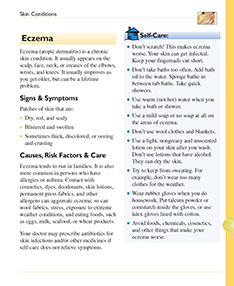
  • Eczema

    Skin Conditions

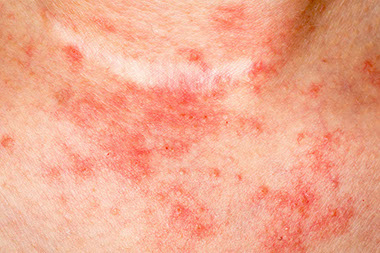
    Image of an eczema rash.

    Eczema (atopic dermatitis) is a chronic skin condition. It usually appears on the scalp, face, neck, or creases of the elbows, wrists, and knees. It usually improves as you get older, but can be a lifetime problem.

    Signs & Symptoms

    Patches of skin that are:

    *  Dry, red, and scaly

    *  Blistered and swollen

    *  Sometimes thick, discolored, or oozing and crusting

    Causes, Risk Factors & Care

    Eczema tends to run in families. It is also more common in persons who have allergies or asthma. Contact with cosmetics, dyes, deodorants, skin lotions, permanent press fabrics, and other allergens can aggravate eczema; so can wool fabrics, stress, exposure to extreme weather conditions, and eating foods, such as eggs, milk, seafood, or wheat products.

    Your doctor may prescribe antibiotics for skin infections and/or other medicines if self-care does not relieve symptoms.

    Self-Care

    *  Don’t scratch! This makes eczema worse. Your skin can get infected. Keep your fingernails cut short.

    *  Don’t take baths too often. Add bath oil to the water. Sponge bathe in between tub baths. Take quick showers.

    *  Use warm (not hot) water when you take a bath or shower.

    *  Use a mild soap or no soap at all on the areas of eczema.

    *  Don’t use wool clothes and blankets.

    *  Use a light, nongreasy and unscented lotion on your skin after you wash. Don’t use lotions that have alcohol. They can dry the skin.

    *  Try to keep from sweating. For example, don’t wear too many clothes for the weather.

    *  Wear rubber gloves when you do housework. Put talcum powder or cornstarch inside the gloves, or use latex gloves lined with cotton.

    *  Avoid foods, chemicals, cosmetics, and other things that make your eczema worse.

    When to Seek Medical Care

    Contact Doctor When:

    *  You have signs of an infection: Fever; and/or large amount of weeping or crusting skin areas.

    *  Your skin is red, you can’t stop scratching, and this keeps you from sleeping.

    *  You get no relief from self-care.

    Health at Home Lifetime book by the American Institute for Preventive Medicine. www.HealthyLife.com. All rights reserved.

    © American Institute for Preventive Medicine

  • Flatulence (Gas)

    Abdominal & Urinary Conditions

    Image of man plugging his nose with hand.

    Flatulence is passing gas through the anus. For the average adult, this happens about 6 to 20 times a day.

    Signs & Symptoms

    *  Pressure or discomfort in the lower abdomen or anal area.

    *  Passing gas. A foul odor occurs sometimes.

    Causes

    Gas is caused by swallowing air and digesting foods. Eating high fiber foods like beans, peas, and whole-grains create more gas than other foods. Dairy foods can create large amounts of gas in some people.

    Gas may signal other problems, too. These include lactose intolerance, taking certain antibiotics, and abnormal muscle movement in the colon.

    Gas can also be a symptom of celiac disease. With this, the lining of the small intestine is damaged from eating gluten. This is a protein in wheat, barley, and rye. Other symptoms of celiac disease are pain and bloating in the abdomen; diarrhea; weight loss; anemia; and a certain skin rash. Treatment is a gluten-free diet. Find out about celiac disease fromwww.celiac.nih.gov.

    Treatment

    Self-care treats most cases of gas. If the gas is due to another problem, treating the problem reduces or gets rid of the gas.

    Questions to Ask

    Self-Care / Prevention

    *  Try not to swallow air. Don’t have carbonated drinks and chewing gum. These can cause more air to get into your stomach.

    *  When you add fiber to your diet, do so gradually.

    *  When you pass gas, note which foods you have eaten. Eat less of the foods that often cause gas. Common ones are apples, bran, whole-wheat foods, cabbage-family vegetables, eggs, dairy products, prunes, and beans.

    *  To prevent getting gas from many “gassy” foods, try an over-the-counter product, such as Beano. This helps prevent gas from beans, bran, nuts, onions, soy, and many vegetables.

    *  Try an over-the-counter medicine with simethicone, such as Gas-X.

    *  Release the gas when you need to. Go to another room if it will help you be less embarrassed.

    Healthier at Home book by the American Institute for Preventive Medicine. www.HealthyLife.com. All rights reserved.

    © American Institute for Preventive Medicine

  • Heart Disease

    Heart & Circulation Problems

    Heart disease is a common term for coronary artery disease (CAD). It is the number one cause of death in the U.S. in both men and women. With heart disease, arteries that supply blood to the heart become hardened and narrowed. Heart disease can lead to these problems:

    *  Angina. With this, the heart muscle does not get as much blood and oxygen as it needs for a given level of work. A heart attack damages the heart muscle. Angina does not. It is a warning sign that a heart attack could occur, though.

    *  Heart attack.

    *  Heart failure (HF). With this, the heart “fails” to supply the body with enough blood and oxygen for its needs. This develops slowly. It becomes chronic.

    Signs & Symptoms

    *  Symptoms of angina are pain, discomfort, or a squeezing pressure in the chest. Aching in a tooth, jaw, or neck can also occur. Symptoms usually go away with rest and/or nitroglycerin. Angina attacks may occur with anger, excitement, or exertion, such as walking up a hill.

    *  Symptoms of a heart attack.

    *  Symptoms of heart failure are: Shortness of breath; feeling very tired or weak; swelling in the lower legs, ankles, and feet; dry cough or one with pink, frothy mucus; rapid weight gain; and a fast heart beat.

    Causes

    Illustration of healthy artery vs a clogging artery.

    Heart disease is caused by atherosclerosis. This is the buildup of plaque in the inner walls of the arteries. The plaque is made up of blood platelets, cholesterol, fibrous tissue, and sometimes calcium. The plaque narrows the arteries. This slows or blocks the flow of blood to the heart.

    Some factors increase the risk of heart disease. The more risk factors; the higher the risk.

    Risk Factors That Can’t Be Changed

    *  A past heart attack or stroke.

    *  Being a male 45 years or older.

    *  Being a female 55 years or older.

    *  Family history of heart disease:

    – A father or brother had heart disease before age 55.

    – A mother or sister had heart disease before age 65.

    Risk Factors That Can Be Controlled

    *  High blood pressure.

    *  High-risk blood cholesterol levels.

    *  Smoking.

    *  Being overweight or obese.

    *  Lack of physical activity.

    *  Having diabetes and high total and/or LDL (bad) cholesterol.

    *  Using cocaine or amphetamines.

    *  Metabolic syndrome.

    Other Factors that May Play a Role in Heart Disease

    *  Waist measurement > 40 inches for men; > 35 inches for women.

    *  C-reactive protein (CRP) in the blood. Levels of CRP rise when there is inflammation in the body.

    *  Elevated blood homocysteine levels.

    *  Infections, such as chlamydia pneumoniae.

    *  Elevated blood lipoprotein (a).

    *  Elevated blood triglycerides.

    Treatment

    The goals of treatment are to relieve symptoms, control or reduce risk factors, stop or slow further damage to the arteries, and prevent and treat cardiac events. Treatment includes:

    *  Self-Care / Prevention measures on this page.

    *  Medications.

    *  Procedures to open blocked or narrowed arteries or bypass them.

    *  Cardiac rehabilitation (rehab).

    Questions to Ask

    Self-Care / Prevention

    *  Have regular medical checkups. Get your blood pressure checked at each office visit or or as advised by your doctor. Get your blood cholesterol tested regularly, as advised by your doctor.

    *  Don’t smoke. If you smoke, quit.

    *  Get to or stay at a healthy weight.

    *  Take all medications as prescribed.

    *  If you are 50 to 69 years old, ask your doctor about the benefits and harms of aspirin therapy (e.g., 1 low-dose aspirin daily) to help prevent cardiovascular disease.

    *  See your doctor if you have any of the Signs & Symptoms of Diabetes.

    *  Follow a diet low in saturated fats, trans fats, and cholesterol. Limit sodium to 1,500 to 2,400 milligrams per day. Follow theDASH Eating Plan.

    *  Get regular exercise. Follow your doctor’s advice.

    *  Manage stress. Practice relaxation techniques.

    *  If you drink alcohol, do so in moderation. Too much alcohol can raise the risk for high blood pressure, heart disease, stroke, and other health problems. Moderate drinking, may be linked to a lower risk of coronary heart disease in some persons. Moderation means no more than 2 drinks a day for men; 1 drink a day for women and persons age 65 and older. One drink = 5 oz. of wine; 12 oz. of beer; or 1-1/2 oz. of 80-proof liquor.

    *  Ask your doctor how much, if any, alcohol you should drink.

    *  Get your doctor’s advice about taking vitamins, minerals, and herbal products.

    Metabolic Syndrome

    Metabolic Syndrome is having at least three of these five conditions:

    1.  Abdominal obesity. Waist measurement for this varies according to sex and ethnic group. Ask your doctor.

    2.  High triglycerides:* ≥ 150 mg/dL

    3.  Low HDL-cholesterol:* < 40 mg/dL for males; < 50 mg/dL for females

    4.  High blood pressure:* ≤ 140 mm Hg systolic and/or ≤ 90 mm Hg diastolic

    5.  High fasting glucose:* ≥ 100 mg/dL

    * Or taking medication to treat this condition.

    Resources

    The American Heart Association

    800.AHA.USA1 (242.8721)

    www.heart.org/HEARTORG

    National Heart, Lung, and Blood Institute (NHLBI)

    www.nhlbi.nih.gov

    Healthier at Home book by the American Institute for Preventive Medicine. www.HealthyLife.com. All rights reserved.

    © American Institute for Preventive Medicine