Tag: Health Conditions

  • When To Brush Your Teeth

    SELF-CARE CORNER

    Image of soda in a glass.

    Consuming acidic foods and beverages, such as sports and energy drinks, citrus fruits, wine, and tomatoes, can erode tooth enamel-the glossy outer layer of the tooth. Brushing your teeth too soon after eating and drinking these items can cause more damage because you are essentially brushing the acid into the teeth, not getting rid of it, say experts at the Academy of General Dentistry. Instead, you should rinse your mouth with water after consuming acidic foods and beverages and wait at least 30 minutes before brushing your pearly whites!

    © American Institute for Preventive Medicine

  • All About Brushing And Flossing

    Dental & Mouth Concerns
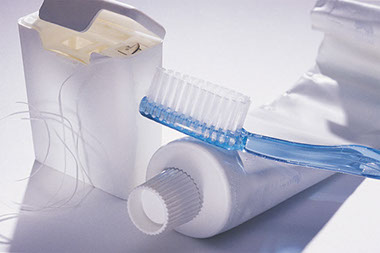
    Image of toothbrush and toothpaste with floss.

    Whiter teeth, fresher breath, fewer cavities. Who could ask for more from toothpaste? Some dental products make additional claims. Here’s a short guide to ingredients and product claims to help you decide which toothpaste is best for your teeth. (Note: Choose products with the American Dental Association (ADA) Seal of Acceptance on the labels. For more information on the ADA Seal of Acceptance and brand name products that have this seal, accesswww.ada.org.)

    Fluoride. To help prevent cavities, children and adults should use a toothpaste that contains fluoride. (Note: Many dentists prescribe fluoride supplements for people whose household drinking water contains little or no fluoride. If your drinking water is low in fluoride, you might want to ask your dentist about this option.)

    Desensitizing toothpaste. Some toothpastes are specially formulated for people whose teeth are sensitive to touch or temperature changes.

    Anti-plaque and tartar control toothpastes. Plaque is a sticky, bacteria-laden goo that clings to the surface of your teeth. Unless plaque is removed every 24 to 36 hours, it can turn into a cement-like substance called tartar. And tartar destroys your gums. Plaque- and tartar-control formula toothpastes, used along with flossing and regular dental visits, can help to prevent plaque buildup. Mouthwash can help, too.

    Whitening toothpastes. These remove stains on the surface of the teeth with gentle polishing, chemical agents, or other nonbleaching action. (Note: Consult your dentist before using over-the-counter peroxide-containing whiteners or bleaching agents.)

    Don’t Forget to Floss

    Waxed. Unwaxed. Fine. Regular. Plain or fancy, all dental floss does the job: It removes bacteria and plaque from between your teeth and above and below the gum line areas your toothbrush can’t reach. It also removes particles of food lodged between your teeth. Floss carefully at least once a day to help keep plaque from building up. (If plaque hardens into cement-like deposits called tartar, your teeth can start to decay or wobble due to loss of bone.)

    Here’s how to floss.

    1.  Cut a piece of floss about one-and-a-half feet long. Wrap the ends of the floss about your middle fingers.

    2.  Hold the floss tightly between your thumb and index finger, exposing about one inch of floss. Gently guide the floss between your teeth, being careful not to snap it into the gums.

    3.  With the floss at the gum line, curve it into a C shape against one tooth and gently scrape the side of the tooth with the floss. Repeat on each of your teeth, top and bottom, using a fresh section of floss for each tooth.

    4.  After you’ve flossed, rinse your mouth with water or mouthwash to remove remaining debris. Your gums may be tender and bleed for the first week. That’s normal. But if the bleeding continues, see your dentist.

    Here are some additional hints.

    *  If you find flossing awkward and messy, try using a dental floss holder sold in drugstores. Instead of wrapping the floss around your fingers, you insert the floss in a small, plastic fork-like holder.

    *  To help you remember to floss daily, without fail, floss after you brush your teeth.
    A Year of Health Hints book by the American Institute for Preventive Medicine. www.HealthyLife.com. All rights reserved.

    © American Institute for Preventive Medicine
  • Cataract

    Eye Conditions

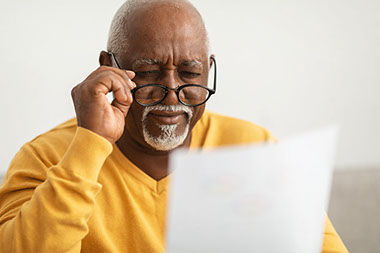
    Older man with glasses trying to read a piece of paper.

    A cataract is a cloudy area in the lens of the eye.

    Get regular eye and physical exams to help detect when cataracts are forming.

    Imagine a thick cloud covering the lens of one or both eyes. This is what it is like to have cataracts. You may see glare from lamps or the sun and halos around lights. It is also harder to see at night. Let your doctor know if you have these problems.

    Cataracts are the leading cause of blindness around the world. Vision can be restored, in most cases, with cataract surgery, one of the safest and most common surgeries done.

    Consider cataract surgery when a cataract keeps you from doing the things you want to do. Find out more from the American Academy of Ophthalmology ataao.org.

    Health at Home Lifetime book by the American Institute for Preventive Medicine. www.HealthyLife.com. All rights reserved.

    © American Institute for Preventive Medicine

  • Diabetes Prevention

    Diabetes Education

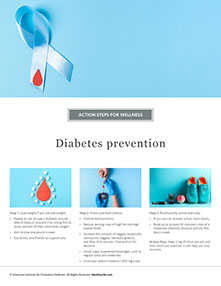
    Gloved hands, helping another hand check blood sugar level.

    Step 1: Lose weight if you are overweight.

    *  People at risk of type 2 diabetes may be able to delay or prevent it by losing five to seven percent of their total body weight.

    *  Aim to lose one pound a week.

    *  Ask family and friends to support you.

    Step 2: Make wise food choices.

    *  Control food portions.

    *  Reduce serving sizes of high fat and high calorie foods.

    *  Increase the amount of veggies (especially nonstarchy veggies, like leafy greens), and fiber that you eat. Choose fruit for desserts.

    *  Avoid sugar sweetened beverages, such as regular soda and sweet tea.

    *  Limit your sodium intake to 1,500 mg a day.

    Step 3: Be physically active every day.

    *  If you are not already active, start slowly.

    *  Build up to at least 30 minutes a day of a moderate-intensity physical activity five days a week.

    Action Step:Keep a log of what you eat and how much you exercise. It will help you stay on track.

    Health at Home Lifetime book by the American Institute for Preventive Medicine. www.HealthyLife.com. All rights reserved.

    © American Institute for Preventive Medicine
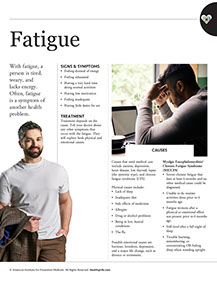
  • Fatigue

    General Health Conditions

    With fatigue, a person is tired, weary, and lacks energy. Often, fatigue is a symptom of another health problem.

    Signs & Symptoms

    *  Feeling drained of energy.

    *  Feeling exhausted.

    *  Having a very hard time doing normal activities.

    *  Having low motivation.

    *  Feeling inadequate.

    *  Having little desire for sex.

    Causes

    Causes that need medical care include anemia, depression, heart disease, low thyroid, lupus (the systemic type), and chronic fatigue syndrome (CFS).

    Other physical causes include: Lack of sleep; poor diet; side effects of medicines; allergies; drug or alcohol problems; being in hot, humid conditions; and the flu.

    Possible emotional causes are burnout, boredom, and a major life change, such as divorce or retirement.

    Treatment

    Treatment depends on the cause. Tell your doctor about any other symptoms that occur with the fatigue. He or she will explore both physical and emotional causes.

    Questions to Ask

    Self-Care / Prevention

    *  If fatigue is due to a medical problem, follow your doctor’s or health care provider’s guidelines for rest, diet, medication, etc.

    *  Get regular physical activity. Exercise can give you more energy, especially if you sit all day at work. Exercise can calm you, too.

    *  Cool off. Working or playing in hot weather can drag you down. Rest in a cool, dry place as often as you can. Drink plenty of water.

    *  Avoid too much caffeine and alcohol.

    *  Don’t use illegal drugs.

    *  Lighten your work load. Assign tasks to others when you can, both at work and at home. Ask for help when you need it from family and friends. Hire help if you need to.

    *  Change your routine. Try to do something new and that you want to do every day.

    *  If you do too much, make time for some peace and quiet.

    *  Do something for yourself. Plan time to do things that meet only your needs, not just those of others.

    Resources

    Treating Chronic Fatigue Syndrome & Fibromyalgia

    www.treatcfsfm.org

    Healthier at Home book by the American Institute for Preventive Medicine. www.HealthyLife.com. All rights reserved.

    © American Institute for Preventive Medicine
  • Gallstones

    Abdominal & Urinary Conditions

    Image of gallstones.

    The gallbladder stores bile. This substance helps digest fats. Gallstones form when bile hardens into pieces of stone-like material. These deposit in the gallbladder or bile ducts (which carry bile to the small intestine). The stones can range in size from less than a pinhead to 3 inches across.

    Signs & Symptoms

    *  Feeling bloated and gassy, especially after eating fried or fatty foods.

    *  Steady pain in the upper right abdomen lasting 20 minutes to 5 hours.

    *  Pain between the shoulder blades or in the right shoulder.

    *  Indigestion. Nausea. Vomiting. Severe abdominal pain with fever. Sometimes a yellow color to the skin and/or the whites of the eyes.

    {Note: Gallstone symptoms can be hard to tell apart from heart-related or other serious problems. A doctor should evaluate any new symptoms.}

    Gallstones

    Illustration of gallbadder with gallstones.

    Causes

    *  Ethnic background (i.e., Native Americans) and family history of gallstones. Being middle age.

    *  Obesity. Very rapid weight loss.

    *  Being female. Having had many pregnancies. Taking estrogen.

    *  Having diabetes. Having diseases of the small intestine.

    Treatment

    *  A low-fat diet.

    *  Surgery to remove the gallbladder. This is the most common treatment. You can still digest foods without a gallbladder.

    Questions to Ask

    Self-Care / Prevention

    *  Avoid high-fat foods. Don’t eat large meals.

    *  Get to and stay at a healthy body weight. If you are overweight, lose weight slowly (1 to 1-1/2 pounds per week). Do not follow a rapid weight loss diet unless under strict medical guidance.

    *  Eat a high fiber, low-fat diet.

    Healthier at Home book by the American Institute for Preventive Medicine. www.HealthyLife.com. All rights reserved.

    © American Institute for Preventive Medicine
  • Hernias

    Abdominal & Urinary Conditions

    A hernia occurs when body tissue “bulges” through a weak area or hole in a muscle. Often, this happens in the wall of the abdomen.

    Signs & Symptoms

    *  A bulge in the skin. The bulge may be more easy to see when you cough, lift, or strain, or when you lie flat on your back. The bulge may feel soft.

    *  Mild pain or discomfort at the hernia site. The pain may only be felt when you strain, lift, or cough. The pain can be extreme when the hernia bulges out and can’t be pushed back in.

    *  For an inguinal hernia, weakness, pressure, burning, or pain in the groin area. A lump in the groin near the thigh may be seen when standing.

    *  Swelling of the scrotum.

    Causes

    A weakness in the wall of the abdomen is often the cause. Some persons are born with this problem. Hernias can run in families. Other causes include:

    *  Lifting heavy objects. Heavy coughing.

    *  Obesity.

    *  Straining to pass stool.

    *  Abdominal surgery.

    *  Being male or elderly.

    Treatment

    Treatment depends on the type and symptoms. Some hernias can be put back into the body. Others may need treatment with surgery.

    Questions to Ask

    Self-Care / Prevention

    *  Don’t smoke. If you smoke, quit. Avoid secondhand smoke.

    *  Maintain a healthy diet. Lose weight if you are overweight.

    *  Avoid constipation. Don’t strain to pass stool.

    *  Exercise to keep abdominal muscles strong. Follow your doctor’s advice.

    *  When you do sit ups, keep your knees bent and your feet flat on the floor.

    *  Follow proper lifting techniques.

    *  Wear a weight lifting belt to support the back when lifting.

    *  Wear a truss. This is a device that holds a hernia in place.

    *  For mild pain, take an over-the-counter medicine for pain. If even mild pain lasts longer than a week, see your doctor.

    Common Hernias Include

    *  Hiatal hernia.

    *  Inguinal hernia. A part of the intestine bulges through a muscle near the groin or scrotum.

    *  Incisional hernia. This is a bulge through a muscle at the site of a past surgical scar.

    *  Femoral hernia. This is a bulge in the top front of a thigh. It is most common in obese women.

    *  Ventral hernia. This is a bulge in the middle of the abdomen, usually near the navel.

    Healthier at Home book by the American Institute for Preventive Medicine. www.HealthyLife.com. All rights reserved.

    © American Institute for Preventive Medicine
  • Leg Pain & Ankle Pain

    Bone & Muscle Problems

    Pain in the legs or ankles can range from mild to severe. The type and amount of pain depends on the cause.

    For Pain, in General

    *  Take an over-the-counter medicine for pain as directed on the label. If the pain is not better after a few doses, call your doctor.

    *  Use a heating pad (set on low), a hot pack, or a moist, warm towel on the area of pain. If the pain is due to an injury, don’t use heat for 48 hours. Use R.I.C.E.

    To Help Prevent Leg Pain & Ankle Pain

    *  Get to and stay at a healthy weight.

    *  Get regular exercise. This helps to keep ankle and leg muscles strong.

    *  Before you exercise, stretch and warm up your muscles. When you are done, cool them down.

    *  Protect your knees. Use knee pads when you garden or kneel. Always land on bent knees when jumping. Avoid deep knee bend exercises.

    *  Don’t wear high-heeled shoes. Keep your shoes in proper shape.

    *  Take good care of your feet.

    R.I.C.E.

    *  Rest the injured area for 24 to 48 hours.

    *  Ice the area as soon as possible. Keep doing this for 10 minutes every 2 hours for the first 48 hours. Use an ice pack, ice in a heavy plastic bag with a little water, a bag of frozen vegetables, etc. Put a thin towel between the ice pack and the skin.

    *  Compress the area. Wrap with an elastic bandage. Do not cut off circulation. Remove the bandage every 3 to 4 hours, for 15 to 20 minutes each time.

    *  Elevate the area above heart level, if possible. Place it on a pillow, folded blanket, stack of newspapers, etc.

    Baker’s Cyst

    Illustration of baker's cyst.

    Signs & Symptoms

    Painless or painful swelling behind the knee. May feel like a water-filled balloon.

    What to Do

    Call doctor.

    Broken Bone or Dislocation

    Image of broken foot bone.

    Signs & Symptoms

    Any of the signs that follow occur after a leg or ankle injury. A bone sticks out or bones in the injured limb make a grating sound. The injured limb looks deformed, crooked, or the wrong shape. You lose feeling in the injured limb. The skin under the affected injured area is cold and blue. The limb is very painful and/or swollen or you can’t bear weight on the limb or move it.

    Bursitis

    Signs & Symptoms

    Pain and swelling around a knee or hip joint. The pain gets worse with movement. Fever (maybe).

    What to Do

    See doctor.

    Deep-vein thrombosis (DVT) with or without a blood clot to the lung

    Illustration of deep vein thrombosis.

    Signs & Symptoms

    Pain, redness (may have shades of red, purple, and blue), or swelling in one ankle or leg. May be followed by severe shortness of breath that came on all of a sudden. May include coughing up blood or pink-frothy sputum. Chest pain.

    What to Do

    Get medical care fast!

    Flu

    Signs & Symptoms

    Aches in leg muscles and joints with fever and/or chills. Headache. Dry cough. Sore throat. Fatigue.

    Gout

    Illustration of gout.

    Signs & Symptoms

    Sudden, severe pain in a toe, knee, or ankle joint. The pain can be felt even when clothing is rubbed against the joint. The joint area is swollen, red, or purplish in color. It also feels warm, and is very tender to the touch.

    What to Do

    See doctor.

    Heart Failure

    Image of swollen feet.

    Signs & Symptoms

    Swelling of both ankles at the same time. Shortness of breath. May have a dry cough or a cough with pink, frothy mucus.

    What to Do

    Get medical care fast!

    Infection. Could also be Cellulitis.

    Signs & Symptoms

    Pain with fever, redness, tenderness, warmth and pus at a wound site. A red streak up the leg (rarely).

    What to Do

    See doctor.

    Leg Cramp

    Signs & Symptoms

    Sudden, sharp, tightening pain in the leg, often the calf. The muscle feels hard to the touch. The pain subsides after a minute or so and the muscle relaxes.

    Self-Care

    *  Walk on the leg.

    *  Shake the leg and then elevate it.

    *  Sit with your leg flat on the floor. Flex your foot upward, then toward your knee. Reach for your toes and pull them toward your knee. This stretches the calf muscles.

    *  Have someone massage the cramped muscle gently, but firmly.

    *  Apply a heating pad (set on low), a hot pack, or moist, warm towel to the muscle cramp.

    *  Rub the muscle that is cramping. Rub upward from the ankle toward the heart.

    (Note: Do not rub a leg if you suspect phlebitis or thrombosis.)

    To Prevent Leg Cramps

    *  Get good sources of calcium, potassium, and magnesium. See lists at left. Take calcium, potassium, and magnesium as advised by your doctor.

    *  Drink plenty of water and other fluids. Limit drinks with caffeine. Avoid drinks with alcohol. Doing these things can help prevent dehydration which could cause leg cramps.

    *  Warm up your muscles before you exercise. Cool down your muscles when you are done.

    *  With your doctor’s okay, wear elastic stockings while you are awake.

    *  Another way to stretch your calf muscles is to ride a stationary bicycle for a few minutes.

    *  Take a warm bath before bedtime.

    *  Sleep with loose-fitting blankets and night clothes. Keep your legs warm.

    *  If you have severe leg cramps or get them often, tell your doctor. Ask if any medication you take could cause your leg cramps. Ask for ways to treat your leg cramps.

    *  Before you go to bed, stretch your calf muscles. Here’s one way to do this:

    – Stand an arm’s length away from a wall. Lean against it with the palms of your hands.

    – Bend your left knee. Keep your right leg straight behind you. Keep both feet flat on the floor and your back straight.

    – Lean forward. Feel your right calf muscle stretch. Hold the stretch as you count to 10 slowly.

    – Repeat, switching leg positions.

    Lyme Disease

    Signs & Symptoms

    Muscle or joint pain and chronic swelling of the knee joints. These problems develop months or years after a deer-tick bite and a bulls-eye red rash with pale centers.

    What to Do

    See doctor.

    Osteoarthritis

    Signs & Symptoms

    Pain, stiffness, and sometimes swelling of the knee or ankle joints. Often, the joint has gotten tender over months or years and may look enlarged or deformed.

    Osteoporosis

    Illustration of osteoporosis.

    Signs & Symptoms

    Leg or ankle pain with gradual loss of height; stooped posture; backache; and/or past bone fractures, especially in the wrists and hips.

    Paget’s Disease

    This is a bone disorder that progresses slowly. Most persons with this disease do not develop symptoms.

    Signs & Symptoms

    Leg pain that radiates from the lower back. Pain or stiffness in the knees. Bowing of the legs or other bone deformity. Unexplained bone fractures. May have headache, dizziness, hearing loss, and/or ringing in the ears.

    What to Do

    See doctor.

    Self-Care / Prevention

    *  If needed, take an over-the-counter medicine for pain as directed on the label.

    *  Take other medicines as prescribed by your doctor.

    *  Get regular checkups to detect hearing loss.

    Peripheral Vascular Disease

    Signs & Symptoms

    Sudden and severe pain in a leg that is not relieved with rest.

    What to Do

    Get medical care fast!

    Signs & Symptoms

    Muscle pain in one or both legs. Fatigue in the thighs, calves, and feet. This improves with rest. Open sores on the lower leg, ankles, or toes. Weak or no pulse in the affected limb. Cold or numb feet. Pale, bluish-colored toes.

    What to Do

    See doctor.

    Sciatica

    Illustration of sciatica.

    Signs & Symptoms

    Sharp pain from the buttocks down the leg. Numbness and tingling in the leg.

    Sprain, Strain, or Sport Injury

    Signs & Symptoms

    Pain in the leg or ankle after an injury that does not keep you from moving the limb.

    Rheumatoid Arthritis

    Illustration of rheumatoid arthritis.

    Signs & Symptoms

    Pain, stiffness, and swelling, usually in both knees or ankle joints. The joint looks deformed. Weakness and fatigue. Dry mouth and dry, painful eyes.

    Varicose Veins

    Signs & Symptoms

    Pain or itching in the legs with swollen and twisted veins that look blue and are close to the surface of the skin. The veins bulge and feel heavy. Swelling in the legs and ankles.

    Healthier at Home book by the American Institute for Preventive Medicine. www.HealthyLife.com. All rights reserved.

    © American Institute for Preventive Medicine
  • Repetitive Motion Injuries

    Bone & Muscle Problems

    Repetitive motion injuries (RMIs) are also called repetitive strain injuries (RSIs). They result from doing the same activity over and over for a long period of time. This can be at work, at home, during sports, and/or with hobbies.

    Signs & Symptoms

    Signs and symptoms depend on the injury.

    For Carpal Tunnel Syndrome (CTS)

    *  Thumb, index, middle, and ring fingers feel numb.

    *  Tingling feeling in the hand(s).

    *  Pain is felt in the thumb and fingers. The pain may be worse at night. It can wake you up.

    *  Pain starts in the hand and spreads to the arm. The pain can even travel to the shoulder.

    *  The fingers swell. It feels like your fingers are swollen. Your hands feel weak in the morning.

    *  You have trouble holding on to things. You drop things.

    *  You have a hard time writing with a pencil or pen, opening a jar, buttoning a blouse, etc.

    Causes

    In general, RMIs are caused by repeated movements that involve:

    *  Drilling or hammering.

    *  Lifting.

    *  Pushing or pulling.

    *  Squeezing.

    *  Twisting.

    *  Wrist, finger, and hand movements.

    For Carpal Tunnel Syndrome (CTS)

    Repeated motions, typing vibrations, etc. cause swelling of the tendons inside the carpal tunnel. This is the narrow tunnel in the wrist. The swelling puts pressure on the nearby nerves.

    Treatment

    For Carpal Tunnel Syndrome (CTS)

    This is easier to treat and less likely to cause future problems if it is found early. Women are more likely to get CTS than men, because their carpal tunnel is usually smaller. Once diagnosed, CTS can be treated with:

    *  Preventing further damage.

    *  Wearing a wrist brace, splint, etc. as advised. It may need to be worn while you sleep and during the day.

    *  Over-the- counter medicines to reduce pain and swelling. Examples are aspirin, ibuprofen, and naproxen sodium.

    *  Physical therapy.

    *  Occupational therapy.

    *  Cortisone shots in the wrist area.

    *  Surgery, if needed.

    Questions to Ask

    Self-Care / Prevention

    For Preventing Wrist and Hand Injuries

    Whenever your hands and wrists do the same activity time and again, you increase your risk for CTS and tendinitis. Change how you do a task and you may avoid some of these injuries.

    *  Do not hold an object in the same position for a long time. Even simple tasks, such as hammering nails, can cause injury when done over a period of time.

    *  Give your hands a break. Rest them for a few minutes each hour.

    *  Lift objects with your whole hand or with both hands. Gripping or lifting with the thumb and index finger puts stress on your wrist.

    *  If your line of work causes pain in your hands and wrists, alternate the stressful tasks with other work.

    *  Exercise your hands and wrists as often as you can. Here are two examples:

    – Place your hands in front of you. Spread your fingers as far apart as possible. Hold for 5 seconds. Relax. Repeat 5 times with each hand.

    – Turn your wrists in a circle, palms up and then palms down. Relax your fingers and keep your elbows still. Repeat 5 times.

    For Carpal Tunnel Syndrome

    *  Lose weight. CTS is linked to obesity.

    *  Take an over-the-counter medicine to reduce the pain and swelling as directed.

    *  Use a wrist splint. Many drug and medical supply stores carry splints that keep the wrist angled slightly back with the thumb parallel to the forearm. This position helps to keep the carpal tunnel open.

    Other Tips

    *  Keep your head upright and your ears, shoulders, and hips in a straight line.

    *  Keep your work within reach without having to stretch or strain your arms, shoulders, or back. Don’t stretch to reach items on an assembly line. Wait for the items to reach you.

    *  Change positions or tasks often. This avoids repeated stress on a single body part.

    *  Use the proper tools for the job. Use tools made to reduce vibration and/or pressure, if needed.

    Resources

    National Institute of Arthritis and Musculoskeletal and Skin Diseases (NIAMS)

    877.22.NIAMS (226.4267)

    www.niams.nih.gov

    Healthier at Home book by the American Institute for Preventive Medicine. www.HealthyLife.com. All rights reserved.

    © American Institute for Preventive Medicine
  • Stye

    Eye Conditions

    Close up image of eye with a stye.

    A stye is an infection in a tiny gland of the eyelid.

    Illustration of a stye.

    Signs & Symptoms

    *  Red, painful bump or sore on an eyelid.

    *  Watery or tearing eye that burns and itches.

    *  The red bump may form a head and appears yellow if it contains pus. This usually drains on its own within days.

    Causes

    Sties form from clogged oil glands at the base of an eyelash.

    Treatment

    Most sties respond well to self-care and don’t need further treatment.

    Questions to Ask

    Self-Care / Prevention

    *  Wash your hands often.

    *  Don’t touch your eyes with your fingers. Use a tissue instead.

    *  Use clean washcloths and towels each time you wash your face.

    *  Don’t share washcloths, towels, makeup, or eye drops with others.

    *  Don’t expose your eyes to excessive dust or dirt.

    To Relieve the Discomfort of a Stye

    *  Apply warm (not hot), wet compresses to the affected area 3 to 4 times a day for 5 to 10 minutes at a time. Use a clean washcloth each time.

    *  Don’t poke or squeeze the stye. A more serious infection could occur.

    *  If the stye drains on its own, gently wash the pus away with a clean, wet cloth.

    Healthier at Home book by the American Institute for Preventive Medicine. www.HealthyLife.com. All rights reserved.

    © American Institute for Preventive Medicine