Tag: Health Conditions

  • Keeping An Eye Out For Cataracts

    SELF-CARE CORNER

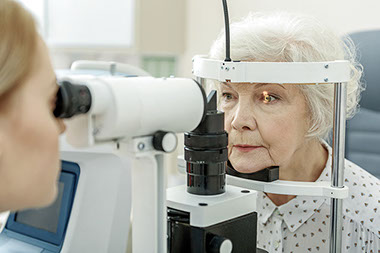
    Eye doctor examining patients eye.

    Most people will have cataracts by the age of 80. But they don’t have to mean loss of vision. They are treatable.

    What is a cataract?

    A normal lens inside the eye is clear. Cataracts happen when the proteins in the eye’s lens start to break down. Then they clump together. This causes cloudiness and problems with your vision.

    Cataracts may occur with normal aging. But they can also happen after an eye injury or if you had eye surgery.

    Signs of cataracts

    People often notice changes in vision when cataracts start to form. These changes include:

    *  Blurry or distorted vision

    *  Being sensitive to light

    *  Seeing a “halo” around lights

    *  Seeing double

    *  Trouble seeing at night or in dimly lit rooms

    *  Seeing colors as dull or yellow-tinted

    Prevention

    The best way to help prevent cataracts is with eye sun protection. Wear sunglasses that block out 100 percent of UV rays when you’re outside during the day. Not all sunglasses offer 100 percent UV protection. Check the packaging to be sure. Wear a wide-brimmed hat to keep sun off your face.

    Smoking increases the risk for cataracts, so quit smoking. Get help quitting if you need it.

    Finally, get a dilated eye exam regularly. Ask your eye care specialist or doctor how often you need one.

    Seeing a doctor

    If you think you might have cataracts, talk to a doctor. You may need an eye exam from an optometrist or ophthalmologist. During the exam, your eye care specialist can perform tests to look for cataracts.

    Treatment options

    If your doctor finds cataracts, don’t panic. There are ways to treat them.

    First, your doctor may recommend new glasses or contacts for mild symptoms. You may also find that using brighter lights or a magnifying lens is helpful for reading or working.

    If your cataracts are interfering with life, you may need surgery. Cataracts surgery involves putting a new artificial lens in the eye. It is a safe surgical procedure and works well for most people.

    Sources: American Academy of Ophthalmology, National Eye Institute

    © American Institute for Preventive Medicine

  • Understanding Epilepsy

    MEDICAL NEWS

    Purple ribbon and brain to represent epilepsy awareness.

    Epilepsy is a broad term that encompasses a variety of brain disorders that cause seizures. It is one of the most common brain conditions and can affect people of any age.

    Signs & symptoms

    The primary symptom of epilepsy is seizures. A seizure is a brief change in brain activity. It can last anywhere from a few seconds to several minutes.

    Someone may be diagnosed with epilepsy if they have two or more seizures unrelated to another cause, such as a fever or low blood sugar.

    Seizures can look different in different people. Signs may include:

    *  Confusion

    *  Staring

    *  Rapid blinking

    *  Twitching or shaking

    *  Falling to the ground

    *  Loss of consciousness

    *  Body stiffening

    Causes

    While the cause of epilepsy is unknown for many people, certain conditions impact the brain and may lead to the development of epilepsy:

    *  Brain tumor

    *  Traumatic brain injury

    *  Infection in the brain from a virus, bacteria, or parasite

    *  Stroke

    *  Oxygen deprivation of the brain

    *  Certain genetic disorders

    *  Certain neurological diseases

    Treatment

    If left untreated, recurring seizures impact quality of life, increase the risk of injury, and may shorten life expectancy.

    Common treatments include:

    *  Medicine: Anti-seizure medication works by controlling improper brain signals.

    *  Surgery: This can remove the affected area if seizure activity occurs in only one part of the brain.

    *  Diet: A specialized ketogenic diet may be effective for some types of epilepsy, especially in children.

    *  Nerve stimulation: An implanted device stimulates the vagus nerve to reduce seizures.

    Self-care

    Successful epilepsy treatment takes the combined efforts of healthcare professionals and the person with epilepsy. Many self-care practices aid in reducing seizure triggers and keeping the body healthy:

    *  Take all medications as prescribed.

    *  Keep a record of seizures and any potential triggers.

    *  Get plenty of sleep every night.

    *  Eat a healthy, well-balanced diet.

    *  Get regular physical activity and movement.

    © American Institute for Preventive Medicine

  • Be Smart About Seizures

    MEDICAL NEWS

    A brain model.

    A seizure is a sudden surge of electrical activity in the brain. It can cause a person to have uncontrolled movements. A grand mal seizure or tonic-clonic seizure is the most serious. It usually involves jerking movements, shaking and the inability to talk or communicate.

    When it comes to seizures, there are plenty of myths. Knowing the truth about seizures could save someone’s life.

    Myth:A person having a seizure could swallow their tongue.

    Truth:This is not possible. Never put something in a person’s mouth if they are having a seizure.

    Myth:You should hold the person down.

    Truth:Do not try to hold or move the person unless they are in immediate danger of getting hurt. You can help get them on the floor and turn on their side. This keeps the person from injuring themselves or falling.

    Myth:You should always give mouth-to-mouth or CPR during a seizure.

    Truth:People usually start breathing normally after the seizure is over. But if the patient stops breathing for more than 30 seconds, call 911 and begin CPR.

    Should you call 911?

    Call 911 if:

    *  The person has never had a seizure before.

    *  The person stops breathing for more than 30 seconds, or has trouble breathing after the seizure.

    *  The seizure happened in the water.

    *  The person is pregnant.

    *  The person doesn’t wake up after the seizure.

    *  The person has a health condition like heart disease or diabetes.

    *  The seizure lasts longer than five minutes.

    *  The person is hurt.

    Source: Centers for Disease Control and Prevention

    © American Institute for Preventive Medicine

  • Keeping An Eye Out For Retinal Detachment

    SELF-CARE CORNER

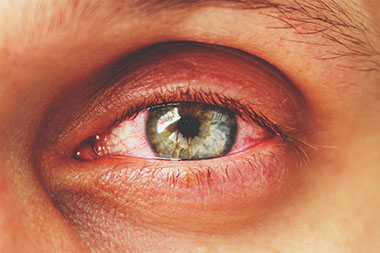
    Close up of eye.

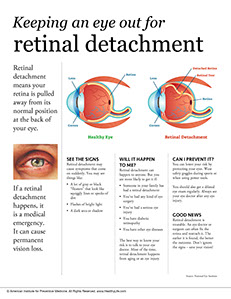
    Retinal detachment means your retina is pulled away from its normal position at the back of your eye. If a retinal detachment happens, it is a medical emergency. It can cause permanent vision loss.

    See the signs

    Retinal detachment may cause symptoms that come on suddenly. You may see things like:

    *  A lot of gray or black “floaters” that look like squiggly lines or specks of dirt

    *  Flashes of bright light

    *  A dark area or shadow

    Will it happen to me?

    Retinal detachment can happen to anyone. But you are more likely to get it if:

    *  Someone in your family has had a retinal detachment

    *  You’ve had any kind of eye surgery

    *  You’ve had a serious eye injury

    *  You have diabetic retinopathy

    *  You have other eye diseases

    The best way to know your risk is to talk to your eye doctor. Most of the time, retinal detachment happens from aging or an eye injury.

    Can I prevent it?

    You can lower your risk by protecting your eyes. Wear safety goggles during sports or when using power tools.

    You should also get a dilated eye exam regularly. Always see your eye doctor after any eye injury.

    Good news

    Retinal detachment is treatable. An eye doctor or surgeon can often fix the retina and reattach it. The earlier it is found, the better the outcome. Don’t ignore the signs – save your vision!

    Source: National Eye Institute
    © American Institute for Preventive Medicine

  • Understanding Multiple Sclerosis

    MEDICAL NEWS

    Women in wheel chair.

    Multiple sclerosis (MS) is a common condition affecting millions of people across the world.

    What is MS?

    MS is an autoimmune disease. Your immune system is designed to fight off invaders like viruses and bacteria. Autoimmune means the immune system attacks healthy tissue by mistake.

    With MS, the immune system attacks a protective coating on the nerves in the brain and spinal cord. When this coating, called the myelin sheath, is damaged, the nerves have trouble sending signals.

    Types of MS

    Most people with MS have relapsing-remitting MS (RRMS). RRMS causes MS symptoms over a few days or weeks, known as a relapse. Then, MS symptoms go away for months or even years. When symptoms go away, this is called remission. The relapse and remission cycle repeats itself over time.

    Other people may have symptoms that slowly get worse. They don’t have periods of remission. This is known as primary progressive or secondary progressive MS.

    Symptoms of MS

    MS symptoms are very different from person to person. They can also change over time. Symptoms include:

    *  Feeling tired (fatigue)

    *  Weakness

    *  Loss of balance

    *  Numbness or tingling

    *  Stiff muscles or spasms

    *  Blurry vision

    *  Dizziness

    *  Loss of control of bladder or bowels

    *  Trouble with memory, learning or attention

    *  Speech problems

    *  Shaking

    *  Seizures

    If you have one or more of these symptoms, it doesn’t mean you have MS. However, you should see your doctor to find out the cause.

    How is MS treated?

    If you have MS, see your doctor regularly. Treatment can help slow the disease and manage symptoms. There are different medications available to treat MS, and physical therapy is helpful for some people. A doctor who specializes in treating MS can recommend the best treatment for you.

    While there is no cure, treatments for MS continue to improve. With a doctor’s help, many people with MS can manage their symptoms and feel their best.

    © American Institute for Preventive Medicine

  • Bloated Belly: Ways To Get Relief

    SELF-CARE CORNER

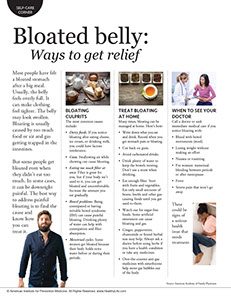
    Image of tea and different tea leaves.

    Most people have felt a bloated stomach after a big meal. Usually, the belly feels overly full. It can make clothing feel tighter. The belly may look swollen. Bloating is usually caused by too much food or air and gas getting trapped in the intestines.

    But some people get bloated even when they didn’t eat too much. In some cases, it can be downright painful. The best way to address painful bloating is to find the cause and know how you can treat it.

    Bloating culprits

    The most common causes include:

    *  Dairy foods. If you notice bloating after eating cheese, ice cream, or drinking milk, you could have lactose intolerance.

    *  Gum. Swallowing air while chewing can cause bloating.

    *  Eating too much fiber at once. Fiber is great for you, but if your body isn’t used to it, you can get bloated and uncomfortable. Increase the amount you eat gradually.

    *  Bowel problems. Being constipated or having irritable bowel syndrome (IBS) can cause painful bloating. Drinking plenty of water can help with constipation and fiber absorption.

    *  Menstrual cycles. Some women get bloated because their body holds extra water before or during their periods.

    Treat bloating at home

    Many times, bloating can be managed at home. Here’s how:

    *  Write down what you eat and drink. Record when you get stomach pain or bloating.

    *  Cut back on gum.

    *  Avoid carbonated drinks.

    *  Drink plenty of water to keep the bowels moving. Don’t use a straw when drinking.

    *  Eat enough fiber. Start with fruits and vegetables. Eat only small amounts of beans, lentils and other gas-causing foods until you get used to them.

    *  Watch out for sugar-free foods. Some artificial sweeteners can cause bloating and gas.

    *  Ginger, peppermint, chamomile or fennel herbal teas may help. Always ask a doctor before using herbs if you have a health condition or take any medicines.

    *  Over-the-counter anti-gas medicines with simethicone help move gas bubbles out of the body.

    When to see your doctor

    Call a doctor or seek immediate medical care if you notice bloating with:

    *  Blood with bowel movements (stool)

    *  Losing weight without making an effort

    *  Nausea or vomiting

    *  For women: menstrual bleeding between periods or after menopause

    *  Fever

    *  Severe pain that won’t go away

    These could be signs of a serious health issue that needs treatment.

    Source: American Academy of Family Physicians

    © American Institute for Preventive Medicine

  • Keeping Your Brain Healthy

    WELL-BEING

    Elderly female painting.

    Brain health is your ability to learn, remember, plan and concentrate on things. Exercise is good for your brain – but it’s a different type of workout. Here are some things to know about boosting your own brain health.

    Puzzles are great – but they don’t fight dementia.

    There is no evidence that crosswords and sudoku puzzles can prevent Alzheimer’s disease. But they’re still great brain exercise, so keep doing them!

    Bring out your creative side.

    Recent studies show that doing a creative art can help improve memory, comprehension and problem-solving abilities as you age. So pick up that musical instrument, paintbrush or whatever is fun and creative for you to do.

    Talk to your doctor.

    If you’re worried about memory loss or brain changes, talk to your doctor. They can help you find out the cause of any brain changes and work toward a solution. For instance, lack of sleep and certain medications can cause changes in mood or memory.

    Source: National Institute on Aging

    © American Institute for Preventive Medicine
  • Understanding Psoriatic Arthritis

    MEDICAL NEWS

    Image of women's arm rash.

    Psoriatic arthritis (PA) is an inflammatory autoimmune condition in which the immune system mistakenly attacks the joints. Up to 1 in 3 people with the skin condition psoriasis will go on to develop PA.

    Most people who experience PA have had psoriasis for ten or more years. However, it is possible to develop PA without showing symptoms of psoriasis. PA is most likely to develop in middle age, though it can occur at any age. It can even occur in children.

    Signs & symptoms

    The most common symptom of PA is pain and swelling of the joints. The joints most likely to be affected include the fingers, ankles, wrists, and knees.

    Swelling of the fingers and toes is also common. This is called dactylitis, which causes discomfort and difficulty bending or using the fingers. In addition, the swelling can lead to stiffness and decreased range of motion, especially in the morning.

    Other symptoms of PA include fatigue, redness of the eyes, and pitting of the nails.

    Though PA is predominantly a joint condition, some organs of the body may be affected. For example, the digestive system, lungs, and heart can be damaged if the condition is left untreated.

    Diagnosis & treatment

    While there is no diagnostic test for PA, doctors make a diagnosis based on their observation, a health history, and by ruling out other possibilities. Tests that may be used include X-rays to assess the bones and joints and blood tests to look for markers of inflammation.

    Prompt treatment of PA is essential to prevent damage to the joints or organs. Unfortunately, there is no cure for PA, but many treatment options are available to manage pain and decrease inflammation.

    A primary care doctor, rheumatologist, and dermatologist may all be part of the care team for treating PA.

    Living with PA

    Thanks to the many effective treatments available, people with PA can reduce the side effects of the condition and lead active, healthy lives.

    In addition to medical resources, lifestyle habits such as exercise and eating an anti-inflammatory diet can help manage symptoms.

    If you have PA, always talk to your doctor to find out what activities or lifestyle choices are right for you.

    Sources: Arthritis Foundation, National Psoriasis Foundation

    © American Institute for Preventive Medicine

  • Caring For Toe Injuries

    SELF-CARE CORNER

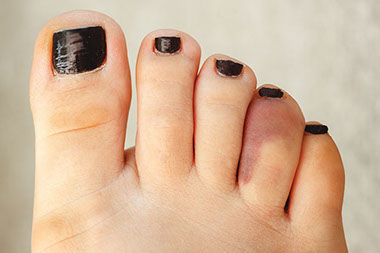
    Close up of injured toe.

    Toes are an important part of walking and balance. And their bones and ligaments are small, so they can be easily injured.

    Many people think doctors won’t do anything about an injured toe. This is not true. A broken or sprained toe may need medical attention. But minor toe injuries may get better with some simple home care.

    What to do if you hurt your toe

    *  If the pain is not severe, try putting ice on it for 10 minutes at a time. Be careful not to get the toe too cold.

    *  If needed, take an over-the-counter pain medicine.

    *  Stay off the foot if possible. Try to elevate it when sitting down.

    *  Look for signs of bruising and swelling, which could mean a possible sprain or broken toe.

    *  If the pain is severe, contact your doctor or seek urgent medical care.

    *  If pain and swelling don’t get better within two days, see a health care provider.

    *  Elevate the affected toe to help with swelling.

    Sprained vs. broken toe

    A sprain means that the ligaments in the toe have been injured. You can usually walk on a sprained toe, but it may still be very sore from swelling and bruising.

    Sprains may happen when you overstretch the toe during sports, running or jumping. “Turf toe” is a sprain of the big toe that is quite common in athletes.

    If you have a broken toe, you may not be able to move the toe or put weight on it. It may have a lot of swelling and bruising. The pain may not get better, even after a couple of days. Broken toes can happen during sports and activities. They also occur with falls and accidents or when you drop something heavy on your foot.

    Should you get medical care?

    Some minor toe injuries can be treated at home. But toe sprains and breaks can be more serious. Don’t ignore toe pain that lasts more than two days. See a health care provider if you think your toe is sprained or broken.

    If you have diabetes

    Always see a health care provider for any kind of foot or toe injury.

    Sources: American College of Foot and Ankle Surgeons, American Podiatric Medical Association

    © American Institute for Preventive Medicine

  • Listen To Your Ears

    SELF-CARE CORNER

    Workers with safety gear protecting head, eyes and ears.

    It’s easy to take hearing for granted. But without proper care of your ears, you could end up with hearing loss or ear problems.

    Worried about wax

    Your body makes ear wax to protect your ears. Wax keeps dust and other particles from getting inside.

    Only clean the outside of your ears with a tissue, washcloth or cotton swab. Never stick anything, including a cotton swab, in your ear. This will push wax farther down into the ear and can create a harmful blockage.

    If you feel that there’s a lot of wax in the ear, you can safely try to soften it with a drop of mineral oil or glycerin. Your doctor can also remove ear wax blockages without damaging your ear.

    Saying no to noise

    One of the most common reasons people lose their hearing is exposure to loud noises. This can happen very quickly after a loud sound like an explosion. Or, it can happen over time if a person is exposed to loud sounds for months or years.

    You can help prevent noise-induced hearing loss with one simple tool: ear plugs. Wear them when going to a loud concert, watching fireworks or attending loud events. Wear them when mowing the lawn or using loud power equipment at home.

    If you have a job where you are exposed to noise, make sure you are using the right hearing protection. You may need something more powerful than ear plugs for certain jobs. Talk about this with your employer.

    Use headphones with care

    The World Health Organization says people should limit how much they use headphones. Don’t use them more than one hour a day. Keep the volume as low as possible, but no louder than 60 percent.

    Noise-cancelling headphones help you keep the volume low because they block out sounds around you. But, you should not use these when driving, cycling or walking because you won’t be able to hear possible dangers nearby.

    Talk to your doctor about your hearing health. Together, you can decide when you may need a hearing test.

    Sources: American Academy of Family Physicians, National Institute on Deafness and Other Communication Disorders

    © American Institute for Preventive Medicine