Tag: Health Conditions

  • Fibromyalgia

    Bone & Muscle Problems

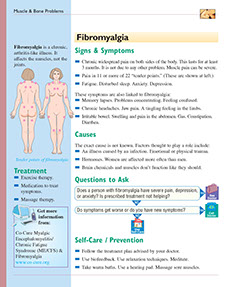
    Fibromyalgia is a chronic, arthritis-like illness. It affects the muscles, not the joints.

    Signs & Symptoms

    *  Chronic widespread pain on both sides of the body. This lasts for at least 3 months. It is not due to any other problem. Muscle pain can be severe.

    *  Pain in 11 or more of 22 “tender points.” (These are shown at right.)

    *  Fatigue. Disturbed sleep. Anxiety. Depression.

    These symptoms are also linked to fibromyalgia:

    *  Memory lapses. Problems concentrating. Feeling confused.

    *  Chronic headaches. Jaw pain. A tingling feeling in the limbs.

    *  Irritable bowel. Swelling and pain in the abdomen. Gas. Constipation. Diarrhea.

    Causes

    The exact cause is not known. Factors thought to play a role include:

    *  An illness caused by an infection. Emotional or physical trauma.

    *  Hormones. Women are affected more often than men.

    *  Brain chemicals and muscles don’t function like they should.

    Treatment

    *  Exercise therapy.

    *  Medication to treat symptoms.

    *  Massage therapy.

    Questions to Ask

    Self-Care / Prevention

    *  Follow the treatment plan advised by your doctor.

    *  Use biofeedback.

    *  Use relaxation techniques. Meditate.

    *  Take warm baths.

    *  Use a heating pad.

    *  Massage sore muscles.

    Resources

    National Institute of Arthritis and Musculoskeletal and Skin Diseases (NIAMS)

    www.niams.nih.gov

    Healthier at Home book by the American Institute for Preventive Medicine. www.HealthyLife.com. All rights reserved.

    © American Institute for Preventive Medicine

  • Gout: Relief At Last

    Abdominal & Urinary Conditions

    If you wake up in the middle of the night with excruciating pain in your big toe, you could have gout. Or perhaps your instep, heel, ankle, or knee hurts. How about your wrists and elbows? Your joints can become so inflamed that even rubbing against the bed sheet can be torture. You may even experience fever and chills.

    Gout is a form of arthritis most common in men in their fifties. It is caused by increased blood levels of uric acid, produced by the breakdown of protein in the body. When blood levels of uric acid rise above a critical level, thousands of hard, tiny uric acid crystals collect in the joints. These crystals act like tiny, hot, jagged shards of glass, resulting in pain and inflammation. Crystals can collect in the tendons and cartilage, in the kidneys (as kidney stones), and in the fatty tissues beneath the skin.

    A gout attack can last several hours to a few days and can be triggered by:

    *  Mild trauma or blow to the joint.

    *  Drinking alcohol (beer and wine more so than distilled alcohol).

    *  Eating a diet rich in red meat (especially organ meats such as liver, kidney, or tongue).

    *  Eating sardines or anchovies.

    *  Taking certain drugs, such as diuretics.

    Illustration of gout.

    Don’t assume you have gout without consulting a physician. Many conditions can mimic an acute attack of gout (including infection, injury, or rheumatoid arthritis). A doctor can accurately diagnose your problem.

    If you do have gout, treatment will depend on why your uric acid levels are high. Your doctor can conduct a simple test to determine whether your kidneys aren’t clearing uric acid from the blood the way they should, or whether your body simply produces too much uric acid.

    The first goal, then, is to relieve the acute gout attack. The second goal is to normalize the uric acid levels to prevent a recurrence.

    *  For immediate relief, your doctor may prescribe colchicine or a nonsteroidal anti-inflammatory drug and tell you to rest the affected joint.

    *  For long-term relief, your doctor will probably recommend that you lose excess weight, limit your intake of alcohol and red meat, drink lots of liquids, and take medication (if necessary).

    A Year of Health Hints book by the American Institute for Preventive Medicine. www.HealthyLife.com. All rights reserved.

    © American Institute for Preventive Medicine

  • Hives

    Skin Conditions

    Image of a hive rash below neck.

    Hives can be (but aren’t always) an allergic response to something you touched, inhaled, or swallowed.

    Signs & Symptoms

    *  Red or pink, raised areas on the skin (welts). Each welt can range in size from less than 1/8″ to 8″ or larger in diameter.

    *  Itching

    *  Hives often appear, sometimes in clusters, on the face, and trunk of the body. Less often, hives appear on the scalp or backs of the hands and feet.

    *  Swelling on the eyelids, lips, tongue, or genitals may occur.

    *  Hives can change shape, fade, then rapidly reappear.

    *  A single hive lasts less than 24 hours. After an attack, though, new ones may crop up for up to 6 weeks.

    Causes & Care

    Common causes of hives are reactions to medicines, such as aspirin, sulfa, and penicillin and exposure to chemicals and things you are allergic to.

    Sometimes it is not known what causes hives. To identify the triggers, keep a diary of when you get hives. List things you expect may have caused the hives.

    In most cases, hives are harmless and go away on their own if you avoid what caused them. Self-care helps with symptoms. Prescribed medicines may be needed for severe hives or for attacks of hives that recur.

    Your doctor may advise allergy testing if you have hives that last a long time or recur. Emergency medical care is needed for hives that are part of a severe allergic reaction.

    Self-Care

    *  Take a lukewarm bath or shower. Heat worsens most rashes and makes them itch more. Add an oatmeal bath product, such as Aveeno, or one cup of baking soda to the bath water.

    *  Apply a cold compress.

    *  Wear loose-fitting clothes.

    *  Relax as much as you can. Relaxation therapy may help ease the itching and discomfort of hives.

    *  Ask your doctor whether or not you should take an antihistamine and to recommend one. Antihistamines can help relieve itching and suppress hives. Take as directed by your doctor or by directions on the label.

    *  Use calamine lotion on itchy areas.

    *  Don’t take aspirin, ibuprofen, ketoprofen, or naproxen sodium. These may make hives worse.

    When to Seek Medical Care

    Contact Doctor When:

    *  You have constant and severe itching, and/or a fever with hives.

    *  Hives last for more than 6 weeks.

    *  Hives started after taking medicine.

    Get Immediate Care When:

    Hives are present with signs of a severe allergic reaction (anaphylactic shock).

    Signs of a Severe Allergic Reaction

    *  A hard time breathing or swallowing

    *  Severe swelling all over, or of the face, lips, tongue, and/or throat n Obstructed airway

    *  Wheezing

    *  Dizziness, weakness

    *  “Signs & Symptoms” of shock

    Health at Home Lifetime book by the American Institute for Preventive Medicine. www.HealthyLife.com. All rights reserved.

    © American Institute for Preventive Medicine

  • Get Vaccines To Prevent Measles

    Skin Conditions

    Image of toddler getting a shot by a doctor.

    In January 2015, CDC issued a health advisory to notify public health departments and healthcare facilities about a multi-state outbreak of measles. The outbreak started at Disneyland in Dec., 2014. During that entire year, the CDC reported a record number of measles in the U.S. with 644 cases from 27 states. This is the greatest number of cases since measles was eliminated in the U.S. in 2000.

    Why the rise in measles?

    *  The majority of the people who got measles did not receive vaccines.

    *  Measles is still common in many parts of the world including some countries in Europe, Asia, the Pacific, and Africa.

    *  Travelers with measles continue to bring the disease into the U.S.

    Measles is a highly contagious respiratory disease caused by a virus. Coughs and sneezes spread the virus through the air. Measles starts with a fever, runny nose, cough, red eyes, and sore throat. A rash that spreads all over the body follows. About three out of 10 people who get measles will develop one or more serious problems including pneumonia, ear infections, or diarrhea. These problems are more common in adults and young children.

    Guidelines for measles vaccines

    Children should get 2 doses of measles, mumps, and rubella (MMR) vaccine:

    *  First Dose: 12-15 months of age. Some infants younger than 12 months should get a dose of MMR if they are traveling out of the country.

    *  Second Dose: 4-6 years of age

    *  If not given at these times, a two-dose series is needed for all school-age children and adolescents.

    Adults born after 1956 should get at least one dose of MMR vaccine, unless they can show that they have either been vaccinated or had all three diseases.

    Health News by the American Institute for Preventive Medicine. www.HealthyLife.com. All rights reserved.

    © American Institute for Preventive Medicine

  • Safety Tips For Your Teeth

    Dental & Mouth Concerns

    Your teeth are vulnerable to nicks, chips, stains, and strains. To protect your teeth from damage and injury, take these precautions.

    *  Don’t chew ice, pens, or pencils.

    *  Don’t use your teeth to open paper clips or otherwise function as tools.

    *  If you smoke a pipe, don’t bite down on the stem.

    *  If you grind your teeth at night, ask your dentist if you should be fitted for a bite plate to prevent tooth grinding.

    *  If you play contact sports like football or hockey, wear a protective mouth guard.

    *  Always wear a seat belt when riding in a car.

    *  Avoid sucking on lemons or chewing aspirin or vitamin C tablets. The acid wears away tooth enamel.

    Image of man brushing teeth.
    A Year of Health Hints book by the American Institute for Preventive Medicine. www.HealthyLife.com. All rights reserved.

    © American Institute for Preventive Medicine

  • Take A Good Look At Your Gums

    Dental & Mouth Concerns

    Image of man at the dentist office looking at xrays.

    Plaque buildup, crooked teeth, illness, poorly fitting dentures, trapped food particles, and certain medications can irritate or destroy your gums. With good oral hygiene, however, you can prevent gum (periodontal) disease. If caught in the early stages, gum disease is easily treated. If ignored, the gums and supporting tissues wither, and your teeth may loosen and fall out.

    Knowing the signs and symptoms of periodontal disease is important for early treatment. Pay attention to the following:

    *  Swollen red gums that bleed easily (a condition called gingivitis).

    *  Teeth that are exposed at the gum line (a sign that gums have pulled away from the teeth).

    *  Permanent teeth that are loose or separate from each other.

    *  Bad breath and a foul taste in the mouth.

    *  Pus around the gums and teeth.

    A Year of Health Hints book by the American Institute for Preventive Medicine. www.HealthyLife.com. All rights reserved.

    © American Institute for Preventive Medicine

  • 4 Reasons To Get Your Colonoscopy

    MEDICAL NEWS

    Illustration of doctor's hand with the word "Colonoscopy."

    If you’re age 50 or older, your doctor may have recommended you get a colonoscopy. This test, which uses a thin, lighted tube to view inside the colon and rectum, checks for:

    *  Polyps, which are growths or bumps that could turn into cancer

    *  Colorectal cancer (cancer in the colon and/or rectum)

    A colonoscopy gives the doctor a chance to remove polyps and possible cancerous growths during the test.

    Even though a colonoscopy is a safe and effective way to help prevent colorectal cancer or find it early, many people put off getting one. This is often because they are nervous about the test or they don’t want to do the “prep.” Preparing for a colonoscopy usually means you take medicines that cause diarrhea the day before the test. This can be inconvenient, but it’s worth the hassle.

    Here are 4 good reasons you should call your doctor about scheduling it today:

    1.Early colon cancer has no symptoms.Many people have polyps or even colon cancer for months or years and don’t know it. A colonoscopy can find these things early and increase the chances of a good outcome. The earlier colon cancer is found, the higher the likliehood of successful treatment.

    2.One day of prep could save your life.No one likes to have diarrhea. But, one day of prep means you’re getting a test that checks for a common and sometimes deadly cancer. In fact, the American Cancer Society says more than 50,000 Americans will die from colorectal cancer in 2018. It is the third most common cancer in the U.S.

    3.There are ways to make the prep easier.Ask your doctor about adding certain flavorings to your medicine to make it taste better. Also, there are many clear liquids other than water you may be able to drink. Sports drinks, tea, coffee, popsicles and some broths may be allowed. Usually, red, blue and purple dyes need to be avoided, but other flavors are fine.

    4.Can’t put a price on peace of mind.With so many people being diagnosed with colorectal cancer, isn’t it worth a day of discomfort to know that you’ve been screened? Even if a polyp or possible sign of cancer is found, you can get on the path to treatment that could be life-saving.

    Sources: Centers for Disease Control and Prevention, National Institutes of Health, American Cancer Society

    © American Institute for Preventive Medicine

  • Cataract Facts

    WELL-BEING

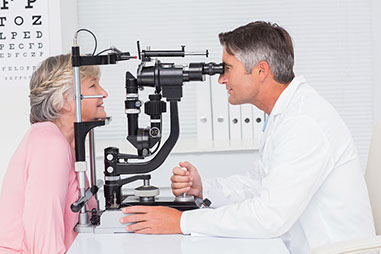
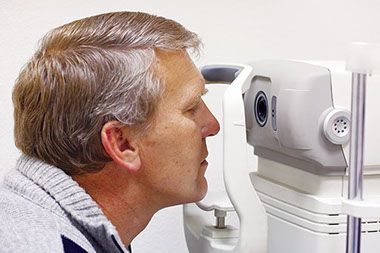
    Image of eye doctor and patient.

    With aging comes the possibility of developing cataracts. In fact, age is the primary risk factor for developing a clouding of the lens of one or both eyes.

    Smoking and diabetes may contribute to the proteins in the eye that clump together and begin to cloud vision, but wear and tear over the years is the main culprit, according to the National Eye Institute.

    If you have trouble identifying blues and purples, you may have what is called lens discoloration from a cataract forming. The condition can begin as early as age 40, but after age 60 is when cataracts start to reduce the sharpness of your vision.

    Other signs of cataract formation include glaring headlights and poor night vision, double vision, faded colors, or frequent prescription changes in your eyeglasses or contacts.

    Wearing sunglasses and a hat with a wide brim to block ultraviolet sunlight may help to delay cataracts. If you smoke, stop. Researchers also believe good nutrition can help reduce the risk of age-related cataract. They advise eating green leafy vegetables, fruit, and other foods with antioxidants.

    If you are age 60 or older, you should have a comprehensive dilated eye exam at least once every 2 years. In addition to checking for cataracts, your eye care professional can check for signs of age-related macular degeneration, glaucoma, and other vision disorders. Early treatment for many eye diseases may save your sight.

    © American Institute for Preventive Medicine

  • How To Put In Eyedrops

    SELF-CARE CORNER

    Image of young women putting eyedrops into eye.

    *  Wash your hands with soap and water.

    *  Shake the eyedrop container gently. Make sure the prescription is for you. Check to see how many drops you are to put in and when.

    *  Remove the cap. Set it aside. Do not touch the dropper tip with your hand.

    *  Tilt your head back. With both eyes open, look at a point on the ceiling.

    *  Pull your lower lid down gently to form a pocket for the drop. Position the tip of the bottle less than an inch above your lower lid.

    *  Squeeze the bottle lightly to allow the drop to fall into the pocket.

    *  Close your eyes without squeezing them. Keep eyes closed for 30 seconds. Gently blot with a clean tissue.

    *  Replace the cap on the eyedrop bottle.

    *  Keep eyedrops out of sunlight.

    Other tips:

    *  Do not wear contact lenses while using eyedrops or ointments.

    *  If you have eyedrops and eye ointment, put in the eyedrops before the ointment.

    *  You may find this easier to do in front of a mirror or lying flat on your back.

    *  Check the bottle’s expiration date. Throw it away if outdated.

    Source: National Institutes of Health

    © American Institute for Preventive Medicine

  • Prevent Diabetes

    SELF-CARE CORNER

    Image of home testing glucose machine surrounded by vegetables.

    Diabetes may run in your family, but you can avoid or delay its development.

    You can reduce your risk for type 2 diabetes by eating a healthy diet, getting plenty of physical activity, and losing  excess weight, according to NIH in Health. Type 2 diabetes occurs due to problems related to a hormone called insulin. When your body digests food, it’s broken down and converted to glucose and other molecules, which then travel through the bloodstream. Insulin signals cells to let glucose in for use as an energy source.

    In a person with type 2 diabetes, either the body’s cells have trouble using insulin or the body isn’t making enough insulin. As a result, glucose can build up to harmful levels in the blood. That’s why people with diabetes often have high blood glucose levels.

    These high levels raise your risk for heart disease, kidney problems, blindness, amputations, and other serious conditions.

    Being overweight, obese, or inactive increases the risk to develop type 2 diabetes. You can change these risk factors. Losing just 5-10 percent of your weight and exercising 30 minutes a day on 5 days a week goes a long way to lower your risk.

    Steps to prevent diabetes

    *  Move more. It doesn’t matter what activity you do, as long as you enjoy it.

    *  Choose healthy foods. Eat fiber-rich fruits and vegetables.

    *  Maintain a healthy weight. With healthy eating and physical activity, you can drop pounds and keep them off.

    *  Set reasonable goals. Start with small changes, even walking 15 minutes a day. Add 5 minutes per day next week and so on. Goal: 30 minutes, 5 days a week.

    *  Record your progress. Keep a diary of what you eat and drink and the number of minutes you exercise to stay focused on your goal.

    *  Keep at it. Making even small changes is hard in the beginning. If you get off track, start again.

    © American Institute for Preventive Medicine