Tag: Health Conditions

  • Fire & Burn Awareness

    First Aid

    Dental hygiene products, tooth brush, tooth paste, mouth wash, etc.

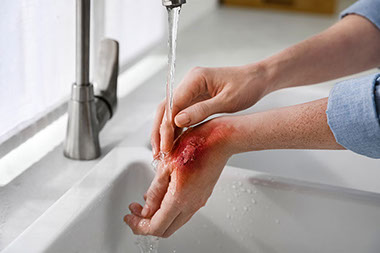
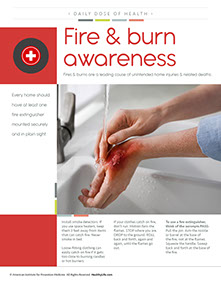
    Fires & burns are a leading cause of unintended home injuries & related deaths.

    Every home should have at least one fire extinguisher mounted securely and in plain sight.

    Install smoke detectors. If you use space heaters, keep them 3 feet away from items that can catch fire. Never smoke in bed.

    Loose-fitting clothing can easily catch on fire if it gets too close to burning candles or hot burners.

    If your clothes catch on fire, don’t run. Motion fans the flames. STOP where you are. DROP to the ground. ROLL back and forth, again and again, until the flames go out.

    To use a fire extinguisher, think of the acronym PASS:

    Pull the pin. Aim the nozzle or barrel at the base of the fire, not at the flames. Squeeze the handle. Sweep back and forth at the base of the fire.

    Health at Home Lifetime book by the American Institute for Preventive Medicine. www.HealthyLife.com. All rights reserved.

    © American Institute for Preventive Medicine

  • Gum (Periodontal) Disease

    Dental & Mouth Concerns

    Image of women sitting in dental chair shaking hands with the dentist.

    Signs, Symptoms & Causes

    Gum (periodontal) diseases include:

    Gingivitis. The gums are swollen due to bacteria from plaque and tartar on the teeth. With gingivitis, the gums are red and bleed easily.

    Periodontitis. This is swelling around the tooth. It occurs when gingivitis is not treated. With periodontitis, pockets form between the gums and teeth. These expose teeth at the gum line. When left untreated, plaque grows below the gum line. Gums, bones, and connective tissue that support the teeth are destroyed. This can cause permanent teeth to separate from each other and loosen. Teeth may even need to be removed.

    Treatment

    Gum disease should be treated by a periodontist or a dentist who treats this problem. Material called tartar can form, even when normal brushing and flossing are done. The dentist or dental hygienist can remove tartar on a regular basis. Treatment may also include:

    *  Deep cleaning (scaling and root planing).

    *  Medications.

    *  Surgical treatments. These include flap surgery and bone and tissue grafts.

    Questions to Ask

    Self-Care / Prevention

    *  See your dentist as often as advised. Follow his or her advice for medication, teeth brushing and flossing and using other dental instruments.

    *  Don’t smoke. If you smoke, quit.

    *  Eat a balanced diet.

    *  Limit sugary foods. When you eat sweets, do so with meals, not in between meals. Finish a meal with cheese. This tends to neutralize acids that form.

    *  Include foods with good sources of vitamin A and vitamin C daily. Vitamin A is found in cantaloupe, broccoli, spinach, winter squash, and dairy products fortified with vitamin A. Good sources of vitamin C are oranges, tomatoes, potatoes, green peppers, and broccoli.

    Healthier at Home book by the American Institute for Preventive Medicine. www.HealthyLife.com. All rights reserved.

    © American Institute for Preventive Medicine

  • Hyperventilation

    First Aid

    Hyperventilation is breathing too deeply and faster than normal. This causes too much carbon dioxide to be exhaled. As a result, levels of carbon dioxide in the blood and brain tissue drop.

    Signs & Symptoms

    *  Your heart pounds.

    *  It feels like you can’t get enough air.

    *  You feel tingling and numbness in the arms, legs, and around the mouth.

    *  You feel a sense of doom.

    *  You may pass out.

    Symptoms usually last 20 to 30 minutes, but seem to last hours. Though scary, hyperventilation is not usually dangerous.

    Causes

    *  Anxiety is the most common cause.

    *  Panic attacks.

    *  Central nervous system problems.

    Treatment

    Self-care may be enough to treat hyperventilation. If it persists or occurs with other symptoms, seek medical care.

    Questions to Ask

    Self-Care / Prevention

    *  Open up a small paper bag. Loosely cover your nose and mouth with it. Breathe slowly into the bag. Rebreathe the air in the bag. Do this about 10 times. Set the bag aside. Breathe normally for a couple of minutes.

    *  Repeat the steps above for up to 15 minutes.

    *  Try to breathe slowly. Focus on taking one breath every 5 seconds.

    {Note: If you still hyperventilate after using Self-Care / First Aid, call your doctor.}

    Healthier at Home book by the American Institute for Preventive Medicine. www.HealthyLife.com. All rights reserved.

    © American Institute for Preventive Medicine

  • Multiple Sclerosis

    Brain & Nervous System

    Multiple Sclerosis (MS) is a chronic disease of the brain and spinal cord. With MS, a covering that protects nerves (myelin) and the nerves are damaged or destroyed. Over time, scar tissue forms along the damaged myelin. Nerves can’t send signals like they should. As a result, movement, sensation, etc. are impaired or lost.

    Illustration showing multiple sclerosis.

    Signs & Symptoms

    *  Fatigue.

    *  Feelings of pins and needles. Numbness. Leg stiffness.

    *  Poor coordination. Unsteady gait. Impaired movement.

    *  Bladder problems.

    *  Blurred vision. Double vision. Loss of vision in one eye.

    *  Depression. Mild problems with memory, learning, etc.

    *  Swallowing problems.

    Early signs and symptoms may be mild and present for years before MS is diagnosed.

    Symptoms vary from person to person. They may last for hours or weeks. They can vary from day to day and can come and go with no set pattern.

    Some persons have only a few symptoms over the course of the disease. For others, symptoms continue and/or worsen with time. Most persons with MS get symptom flare-ups (relapses) that are followed by partial or complete recoveries (remissions).

    Causes

    The exact cause of MS is not known. It may be due to a number of factors. These include: A virus, genetics, and an immune system problem. Toxins, trauma, poor nutrition, and other factors may also play a role. Things known to come before the onset of MS include: Overwork; fatigue, the postpartum period for women; acute infections; and fevers. Multiple sclerosis is more common in:

    *  Women than in men.

    *  Caucasians than in Hispanics or African Americans. It is rare among Asians and certain other ethnic groups.

    *  Adults between the ages of 20 and 50. Young children, teens, and older adults can also have MS.

    *  People who are born and live up to at least age 15 years old in places farther from the equator. These include North America, Europe, and Southern Australia.

    Treatment

    There is no cure yet for MS, but most people with it live a normal life span. Treatment for MS includes:

    *  Prescribed medication to lessen the number and severity of flare-ups and to slow the progression of the disease. Research favors early treatment with this type of medicine.

    *  Short-term courses of IV or oral corticosteroids. These reduce inflammation during MS flare-ups.

    *  Medications to control and treat MS symptoms. Treating infections, when present.

    *  Physical and occupational therapy.

    *  Counseling. Support groups.

    *  Clinical trails. Accesswww.clinicaltrials.gov.

    Questions to Ask

    Self-Care / Prevention

    *  Follow your doctor’s guidelines for home care.

    *  Maintain a normal routine at work and at home. Avoid activities that lead to fatigue or put too much physical stress on the body. Get plenty of rest.

    *  Manage emotional stress.

    *  Avoid the heat and sun. Don’t take hot showers or baths. Increased body temperature can cause symptoms. Cool baths or swimming in a pool may improve symptoms by lowering body temperature.

    *  Have body massages to help maintain muscle tone.

    *  Treat a fever as soon as it occurs.

    *  Get regular exercise. Physical therapy may be helpful.

    *  Get counseling, if needed.

    *  Get a seasonal flu shot every year and other vaccines as advised.

    *  If you smoke, quit!

    Resources

    Multiple Sclerosis Foundation

    888.MS.FOCUS (673.6287)

    www.msfocus.org

    National Multiple Sclerosis Society

    800.FIGHT.MS (344.4867)www.nationalmssociety.org

    Healthier at Home book by the American Institute for Preventive Medicine. www.HealthyLife.com. All rights reserved.

    © American Institute for Preventive Medicine

  • Seizures 2

    First Aid

    A seizure is a sudden “episode” caused by an electrical problem in the brain. With a seizure, a person has change in awareness, body movements, or sensation.

    Signs & Symptoms

    There are many types of seizures. Common types are:

    A Generalized Tonic Clonic Seizure

    This is also called a grand mal seizure. A convulsion occurs with this type. Signs of a convulsion include:

    *  Brief loss of consciousness. Falling down.

    *  The arms and legs stiffen, jerk, and twitch.

    *  This type usually lasts 1 to 2 minutes. When it ends, the person’s muscles relax. He or she may lose bladder control, be confused, have a headache, and fall asleep. This is the type most people think of with the word “seizure.”

    An Absence Seizure

    This is also called a petit mal seizure. A convulsion does not occur with this type. Signs of an absence seizure include:

    *  Blank stares. It looks like the person is daydreaming or not paying attention.

    *  Lip smacking. Repeated blinking, chewing or hand movements.

    *  This type of seizure usually lasts only a few seconds, but can occur many times a day. When the seizure ends, the person is not confused, but is not aware that the seizure occurred.

    *  Absence seizures are common in children and can result in learning problems.

    A Fever (Febrile) Seizure

    This type is brought on by a high fever in infants and small children. High fevers cause most seizures in children aged 6 months to 5 years. Signs are ones of a convulsion listed in the left column. Most febrile seizures last 1 to 2 minutes, but can last longer. Seeing a child have a febrile seizure causes alarm. In general, these seizures are harmless.

    Causes

    Causes include epilepsy (a brain disorder), infections that cause a high fever, heat stroke, and electric shock. Head injury, stroke, and toxic substances can also cause a seizure. Sometimes the cause of a seizure is not known.

    Treatment

    Seizure disorders are treated with medication. Other medical treatments may be needed.

    Questions to Ask

    Self-Care / First Aid

    For Seizures with Convulsions

    *  Stay calm. Protect the person from injury. Cushion the head with a pillow, a coat, etc. Move sharp objects out of the way.

    *  Loosen tight clothes, especially around the neck.

    *  If the person vomits, clear the mouth of it.

    *  Do not hold the person down or throw water on the face. Don’t put anything into the mouth. (A spoon in the mouth does not prevent tongue biting.)

    *  If the seizure in a child is due to a fever, start bringing the child’s temperature down as soon as the seizure stops. Sponge the child’s body with room temperature water. Do not put the child in a bathtub. Do not use ice. Do not use rubbing alcohol.

    *  Report how long the seizure lasts and the symptoms that occur.

    *  After the seizure, lay the person on his or her side. Let the person sleep. Check for a medical alert tag. Respond as needed. Do not embarrass the person.

    *  Call 9-1-1 (except for a febrile seizure or a seizure in a person you know has a seizure disorder).

    Febrile Seizure Prevention

    For a child who has had a febrile seizure in the past, give acetaminophen or ibuprofen at the first sign of a fever. Give the right kind and dose for his or her weight. Insert suppositories that lower fevers, instead, if prescribed by the child’s doctor. {Note: Don’t give aspirin to anyone less than 19 years old.}

    *  Dress the child in light, loose clothes.

    *  Apply washcloths rinsed in lukewarm (not cold) water to your child’s forehead and neck. Sponge the child’s arms, legs, and trunk with lukewarm water. Don’t use cold water, ice, or rubbing alcohol.

    *  Keep trying to bring the fever down until it is 101ºF or less.

    Healthier at Home book by the American Institute for Preventive Medicine. www.HealthyLife.com. All rights reserved.

    © American Institute for Preventive Medicine

  • Teeth & Mouth Changes With Aging

    Dental & Mouth Concerns

    Image of older women at the dentist office.

    As you age, changes occur with your teeth and mouth. Common changes are:

    *  Fewer taste buds on your tongue, especially for sugary and salty foods, but not for bitter tasting foods

    *  Drier mouth. The tissues in your mouth get thinner and tend to hold less moisture. This makes your mouth more dry. Some medications can add to the problem. Examples are water pills, some antidepressants, and antihistamines.

    *  Gum problems. Your gums may recede. This exposes the roots of your teeth and can promote cavities.

    *  Loss of natural teeth. Proper care of your teeth can prevent this. In persons over age 40, the number one cause of tooth loss is periodontal (gum) disease.

    More than half of persons over age 50 have at least one tooth replaced. A tooth or teeth can be replaced as crowns, bridges, partial or full dentures. Dental implants are another option.

    Health at Home Lifetime book by the American Institute for Preventive Medicine. www.HealthyLife.com. All rights reserved.

    © American Institute for Preventive Medicine

  • 6 Benefits Of Drinking Water

    WELL-BEING

    Illustration of drinking water and it's benefits.

    Your body needs water for nearly every function. But, many people aren’t getting enough. While fluids from other drinks and even some foods can help hydrate you, drinking plain water has some advantages. It’s calorie-free, doesn’t cause cavities and doesn’t cost anything. Start filling up a reusable water bottle today and take advantage of these water perks:

    Headache prevention:Dehydration can cause a severe headache. If you drink water throughout the day, you can avoid this.

    Better workout:Water is needed for proper energy levels and muscle function. Drink enough before and after workouts to avoid dehydration and sluggishness.

    Joint pain relief:Dehydration can cause achy bones and joints. Water is needed to keep joints lubricated and healthy.

    Healthier skin:Staying hydrated helps your skin stay hydrated, too. This can make skin feel healthier.

    Healthy weight:Drinking water instead of soda or sugary drinks can save you hundreds of extra calories and help get to, or stay at, a healthy weight.

    Healthier kidneys and bladder:Drinking enough water helps prevent kidney stones and urinary tract infections.

    Talk with your doctor about how much water you should drink each day. People with end stage kidney disease, heart failure or certain other conditions may need to limit their fluids.

    © American Institute for Preventive Medicine

  • Clean Contacts Matter

    SELF-CARE CORNER

    Image of contact solution, case and eye drops.

    If you wear contact lenses, it’s important to keep them clean and care for them properly. Not taking care of your contact lens could cause an eye infection known as keratitis, which can cause serious eye problems. The CDC says 988,000 people had keratitis in 2010. The biggest risk factor was improper care of contact lenses.

    You can greatly reduce your risk of this infection by doing the following things each day:

    *  Wash your hands with soap and water before inserting or removing your lenses.

    *  Use only sterile contact lens solution and disinfectant. Don’t use water, saliva, or other liquids to store or rinse your lenses.

    *  Gently rub your lenses with disinfectant daily.

    *  Remove your lenses before showering, swimming and sleeping.

    *  Use fresh solution every day. Dump out all the old solution.

    *  Don’t wear lenses longer than directed. For instance, some disposable contacts are designed to be worn for one day. Some can be worn for several weeks or longer. Ask your eye care professional if you’re not sure.

    *  Don’t use expired solution or contacts.

    *  Replace your contact lens case every three to six months.

    Source: The American Academy of Ophthalmology

    © American Institute for Preventive Medicine

  • Is Bad Breath A Health Problem?

    WELL-BEING

    Image of women placing tooth paste on tooth brush.

    After eating foods like onions or garlic, your mouth may smell less than pleasing to those around you. Usually, brushing, flossing and using mouthwash or sugar-free mints can get your mouth fresh again. Although bad breath is sometimes just bad luck, it can also be a sign of a health problem.

    When bad breath is normal

    Many people have bad breath in the morning. Even if you brushed and flossed well before bed, you may not have great-smelling breath when you wake up. This is because bacteria in the mouth multiply and make sulfur compounds while you sleep. These sulfur compounds usually smell stinky.

    Morning breath may be worse than normal if you slept with your mouth open. This is because the bacteria and sulfur compounds thrive in a dry mouth. If you have a stuffy nose from a cold, your morning breath may be worse for a few days. Floss at night before bed to help minimize morning breath.

    Other ways to help prevent dry mouth include drinking plenty of water throughout the day and avoid using tobacco products.

    Tooth decay and gum disease

    Tooth decay, also known as cavities, can smell bad because bacteria can live inside the holes or cavities in the teeth.

    Not brushing and flossing every day can lead to gum disease. This is sometimes called gingivitis or periodontitis. With gum disease, sticky bacteria called plaque collects in the mouth. Plaque smells bad, and people with gum disease usually have more plaque than normal.

    Besides persistent bad breath, signs of tooth decay and gum disease include:

    *  Tooth pain

    *  A very sensitive tooth

    *  Red, swollen or bleeding gums

    *  Loose teeth

    *  Gums pulling away from the teeth

    See your dentist if you notice these problems. Gum disease and cavities can be treated, but it’s better if you catch these problems early. Most people should see their dentist every six months for a checkup and cleaning.

    Health problems and bad breath

    Bad breath can be a sign of a health problem. If bad breath continues despite good dental care, it may be a sign of a sinus or throat infection. Breath that smells fruity or like rotten apples can be a sign of diabetes. In rare cases, breath that smells like ammonia or rotten eggs can be a sign of a serious kidney or liver problem.

    Your breath may be trying to tell you something. See your dentist and doctor if you’re concerned about bad breath so you can find out the cause and get treatment if needed.

    Sources: American Dental Association, National Institutes of Health

    © American Institute for Preventive Medicine

  • Protect Your Bones

    SELF-CARE CORNER

    Image of women drinking a glass of milk.

    Bones feel solid, but the inside of a bone is actually filled with holes like a honeycomb. Bone tissues are broken down and rebuilt all the time. While some cells build new bone tissue, others dissolve bone and release the minerals inside, according to experts at NIH in Health.

    As we get older, we begin to lose more bone than we build. The tiny holes within bones get bigger, and the solid outer layer becomes thinner. In other words, our bones get less dense. Hard bones turn spongy, and spongy bones turn spongier. If this loss of bone density goes too far, it’s called osteoporosis. Over 10 million people nationwide are estimated to have osteoporosis.

    In bad accidents, it’s normal for bones to break. But if your bones are dense enough, they should be able to withstand most falls. Bones weakened by osteoporosis, though, are more likely to break.

    You can lower your risk of osteoporosis.

    Getting plenty of calcium, vitamin D, and exercise is a good start.

    *Calciumis a mineral that helps bones stay strong. It can come from the foods you eat-including milk and milk products, dark green leafy vegetables like kale and collard greens-or from dietary supplements.

    *Vitamin Dhelps your body absorb calcium. As you grow older, your body needs more vitamin D, which is made by your skin when you’re in the sun. You can also get vitamin D from dietary supplements and from certain foods, such as milk, egg yolks, saltwater fish, fortified milks and cereals, and cod liver oil.

    *Exercise,especially weight-bearing exercise, helps bones too. Weight-bearing exercises include jogging, walking, tennis, and dancing. The pull of muscles is a reminder to the cells in your bones that they need to keep the tissue dense.

    Smoking, in contrast, weakens bones. Heavy drinking does too-and makes people more likely to fall. Certain drugs may also increase the risk of osteoporosis. Having family members with osteoporosis can raise your risk for the condition as well.

    The good news

    Even if you already have osteoporosis, it’s not too late to start taking care of your bones. Since your bones are rebuilding themselves all the time, you can help push the balance toward more bone growth by giving them exercise, calcium, and vitamin D.

    © American Institute for Preventive Medicine