Tag: Healthy Aging

  • Find Your Balance

    SELF-CARE CORNER

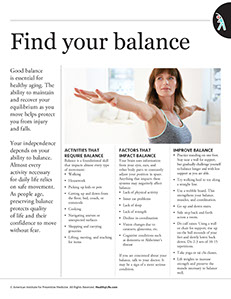
    Women with arms streched out, balancing.

    Good balance is essential for healthy aging. The ability to maintain and recover your equilibrium as you move helps protect you from injury and falls.

    Your independence depends on your ability to balance. Almost every activity necessary for daily life relies on safe movement. As people age, preserving balance protects quality of life and their confidence to move without fear.

    Activities that require balance

    Balance is a foundational skill that impacts almost every type of movement:

    *  Walking

    *  Housework

    *  Picking up kids or pets

    *  Getting up and down from the floor, bed, couch, or commode

    *  Cooking

    *  Navigating uneven or unexpected surfaces

    *  Shopping and carrying groceries

    *  Lifting, moving, and reaching for items

    Factors that impact balance

    Your brain uses information from your eyes, ears, and other body parts to constantly adjust your position in space. Anything that impacts these systems may negatively affect balance:

    *  Lack of physical activity

    *  Inner ear problems

    *  Lack of sleep

    *  Lack of strength

    *  Decline in coordination

    *  Vision changes due to cataracts, glaucoma, etc.

    *  Cognitive conditions such as dementia or Alzheimer’s disease

    If you are concerned about your balance, talk to your doctor. It may be a sign of a more serious condition.

    Improve balance

    *  Practice standing on one foot. Stay near a wall for support, but gradually challenge yourself to balance longer and with less support as you are able.

    *  Try walking heel to toe along a straight line.

    *  Use a wobble board. This strengthens your balance, muscles, and coordination.

    *  Go up and down stairs.

    *  Side step back and forth across a room.

    *  Do calf raises. Using a wall or chair for support, rise up on the ball mounds of your feet and slowly lower back down. Do 2-3 sets of 10-15 repetitions.

    *  Take yoga or tai chi classes.

    *  Lift weights to increase strength and preserve the muscle necessary to balance well.
    © American Institute for Preventive Medicine
  • What To Do About Liver Spots

    Mature Health: Over Age 50

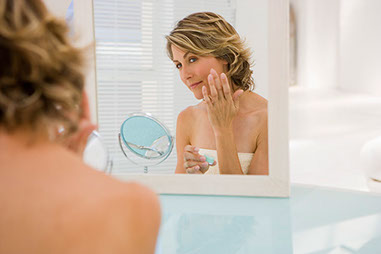
    Image of women looking in a mirror examing her face.

    Years spent soaking up the sun can result in circular patches of light brown pigmentation, called liver spots or age spots, on your face, arms, neck, and the back of your hands. Liver spots have nothing to do with the liver, though; they’re “superfreckles”-areas of dark pigment triggered by overexposure to the sun. Here’s what you can do to minimize liver spots.

    *  Apply a concealer (cover-up cream) that matches your skin tone.

    *  Always apply a sunscreen lotion with a sun protection factor (SPF) of 15 or higher 30 to 45 minutes before you go outdoors.

    *  Apply an over-the-counter bleaching cream to the discolored areas. (These products can take months to work and lighten spots only slightly.)

    If these tactics don’t help, consult a dermatologist. He or she may recommend one of the following medical treatments for liver spots.

    *  A prescription bleaching cream.

    *  A prescription peeling cream, like Retin-A.

    *  Chemical peels (a mild acid is applied with a cotton swab to each patch of pigment).

    *  Dermabrasion (the skin is numbed, then rubbed with a high-speed electrical device).

    These treatments all produce some discomfort and sometimes leave a permanent white spot where the skin has been treated, however.

    A Year of Health Hints book by the American Institute for Preventive Medicine. www.HealthyLife.com. All rights reserved.

    © American Institute for Preventive Medicine
  • Make The Most Of Mealtime

    Mature Health: Over Age 50

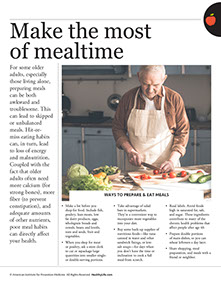
    Image of a man pan stirring vegetables.

    Mealtime is something to look forward to. But for some older adults, especially men living alone, preparing meals can be both awkward and troublesome. This can lead to the “tea and toast” syndrome of skipped or unbalanced meals. Hit-or-miss eating habits can, in turn, lead to loss of energy and malnutrition. Coupled with the fact that older adults often need more calcium than other folks (for strong bones), more fiber (to prevent constipation), and adequate supplies of other important dietary components, poor meal habits can directly affect your health.

    Here are a few hints to make preparing meals and eating meals more pleasant and convenient.

    *  Make a list before you shop for food. Include fish, poultry, lean meats, nonfat dairy products, whole-grain breads and cereals, fresh fruits and vegetables.

    *  When you shop for meat or produce, ask a store clerk to cut or repackage large quantities into smaller single- or double-serving portions.

    *  Take advantage of salad bars in supermarkets. They’re a convenient way to incorporate fresh vegetables into your diet.

    *  Buy some back-up supplies of nutritious foods-like tuna canned in water or low-salt soups-for days when you don’t have the time or inclination to cook a full meal from scratch.

    *  Read labels. Avoid foods high in fat, salt, and sugar. These ingredients contribute to many of the chronic health problems that affect people after age 40.

    *  Prepare double portions of main dishes, so you can reheat leftovers a day or two later.

    *  Share shopping, meal preparation, and meals with a friend or neighbor.

    A Year of Health Hints book by the American Institute for Preventive Medicine. www.HealthyLife.com. All rights reserved.

    © American Institute for Preventive Medicine

  • Debunking The Myth Of Senility

    Mature Health: Over Age 50

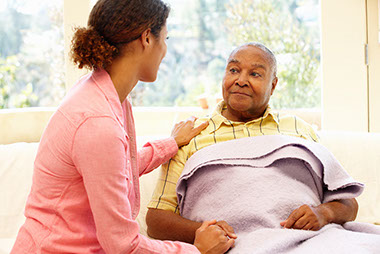
    Image of mature male with a family member holding his hand in comfort.

    Don’t think that you’re getting senile just because you forget someone’s name or can’t remember where you parked your car. Everyone forgets occasionally. The truth is, most people do not become senile. Senility (or senile dementia) is a state of confusion and forgetfulness triggered by mental decline. Almost 100 different conditions mimic the symptoms of senility. (Alzheimer’s disease is the most common. Poor nutrition, hormone disorders, and use of certain medications can also cause confusion and forgetfulness. Even then, senility is misdiagnosed up to 20 percent of the time. So don’t assume that you or anyone else is senile without a thorough medical exam.

    A Year of Health Hints book by the American Institute for Preventive Medicine. www.HealthyLife.com. All rights reserved.

    © American Institute for Preventive Medicine
  • How To Prevent Bowel Problems

    Mature Health: Over Age 50

    Image of fiber rich grains and berries.

    By the time people reach their forties, fifties, or sixties, they will usually experience some form of bowel trouble such as diverticulosis, irritable bowel, and constipation.

    To prevent various kinds of bowel trouble, practice these healthful habits.

    *  Eat a diet high in fiber. (Oat bran, wheat bran, beans, fruit, and vegetables are good sources of fiber.)

    *  Avoid routine use of laxatives, since they disrupt the normal rhythm of the bowel. To ease elimination, take a high-fiber preparation like Metamucil instead.

    *  Drink at least six to eight 8-ounce glasses of water a day.

    *  Avoid straining when passing stool.

    You should see your doctor if you notice blood in the stool, experience severe abdominal pain, pass pencil-thin stools, or note a significant change in your bowel habits.

    A Year of Health Hints book by the American Institute for Preventive Medicine. www.HealthyLife.com. All rights reserved.

    © American Institute for Preventive Medicine
  • Enhance Your Sense Of Taste

    Mature Health: Over Age 50

    Image of fresh foods and herbs, such as potatos, tomatoes, onions, etc.

    Adding a lot of salt to foods, eating more sweets, and finding meals less enjoyable are signs that your sense of taste is fading. As you age, you may lose up to 50 percent of your taste buds. But you don’t have to resign yourself to a diet that tastes dull and bland. You can take the following steps to perk up your sense of taste.

    *  Eat fresh foods instead of canned or processed items. Fresh-cooked foods are more flavorful and have more texture, which adds to the enjoyment of food.

    *  Pep up your vegetables with flavor enhancers like savory herbs, lemon juice, slivered almonds, and sliced onions instead of extra salt.

    *  Marinate meats and fish in salad dressings or fruit juices before cooking.

    *  Include tart foods and beverages like salt-free pickles, oranges, and lemonade in your meals.

    *  Think visually. Colorful foods, garnishes, and an attractive table setting make meals more appetizing.

    *  Bring chilled foods to room temperature before serving. Flavors are more pronounced when food is warm.

    A Year of Health Hints book by the American Institute for Preventive Medicine. www.HealthyLife.com. All rights reserved.

    © American Institute for Preventive Medicine

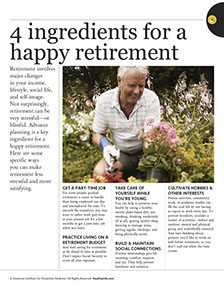
  • Four Ingredients For A Happy Retirement

    Mature Health: Over Age 50

    Image of retired man gardening.

    Retirement involves major changes in your income, lifestyle, social life, and self-image. Not surprisingly, retirement can be very stressful-or blissful. Advance planning is a key ingredient for a happy retirement. A survey conducted by researchers at the University of Michigan found that 75 percent of those who had planned for retirement enjoyed it. Here are some specific ways you can make retirement less stressful and more satisfying.

    Get a part-time job.

    For some people, gradual retirement is easier to handle than being employed one day and unemployed the next. To smooth the transition, you may want to either work part-time at your present job for a few months or get a part-time job at another firm when you leave.

    Practice living on a retirement budget before you retire.

    And start saving for retirement as far ahead of time as possible. Don’t expect Social Security to cover all your expenses.

    Take care of yourself while you’re young.

    You can help to preserve your health by eating a low-fat diet, not smoking, drinking moderately (if at all), learning to manage stress, getting regular checkups, and being physically active.

    Cultivate hobbies and other outside interests.

    Fitness activities, community work, or academic studies can fill the void left by not having to report to work every day. To prevent boredom, consider a variety of activities-indoor and outdoor, mental and physical, group and individually oriented. And start thinking about projects you’d like to work on well before retirement, so you don’t stall out when the time comes.

    A Year of Health Hints book by the American Institute for Preventive Medicine. www.HealthyLife.com. All rights reserved.

    © American Institute for Preventive Medicine

  • Help For People Who Snore And Twitch

    Mature Health: Over Age 50

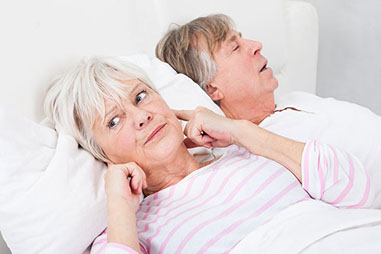
    Image of man snoring as spouse is awake plugging her ears.

    Does your bed partner snore or toss and turn during the night? Does he or she periodically twitch like a mackerel out of water for no reason at all? Are you faced with two alternatives: Sleeping in the guest room or not sleeping at all?

    Older adults-especially men-tend to develop two kinds of sleep disturbances. One is sleep apnea: Breathing stops for short periods of time and is followed by loud snoring. The other is nocturnal myoclonus, or restless legs-frequent jerking motions that sometimes awaken both the jerker and the person who shares the bed.

    Sleeping with the head of the bed elevated can make breathing easier and discourage snoring. Since being overweight and drinking alcohol seem to aggravate both sleep apnea and myoclonus, losing excess pounds and avoiding alcohol can help. Sleeping pills, too, can aggravate sleep apnea, so people who have this problem should use other ways to get a good night’s sleep.

    You may suffer one or both of these sleep disturbances and not even know it unless your partner complains-and you should take the complaints seriously.

    Sleep apnea may seem like nothing more than a nuisance, but it can be life-threatening if left untreated. So if you or your partner has this problem, see a doctor.

    A Year of Health Hints book by the American Institute for Preventive Medicine. www.HealthyLife.com. All rights reserved.

    © American Institute for Preventive Medicine
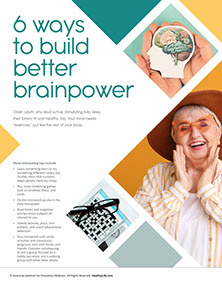
  • Six Ways To Build Better Brainpower

    Mature Health: Over Age 50

    Image of adults writing and using a computer.

    Research shows that older adults who lead active, stimulating lives keep their brains fit and healthy, too. Your mind needs “exercise,” just like the rest of your body.

    Some mind-stimulating tips include:

    *  Learn something new-or try something different-every day. Studies show that curiosity keeps people mentally sharp.

    *  Play mind-stretching games such as Scrabble, chess, and cards.

    *  Do the crossword puzzle in the daily newspaper.

    *  Read books and magazine articles about subjects of interest to you.

    *  Attend lectures, plays, and exhibits, and watch educational television.

    *  Use memory aids, such as appointment calendars, “to do” lists, and Post-it notes.

    Also, concentrate on what people say, repeat what you want to remember out loud, and associate an action with an object (like leaving your tote bag near the door so you remember to take it with you when you leave).

    A Year of Health Hints book by the American Institute for Preventive Medicine. www.HealthyLife.com. All rights reserved.

    © American Institute for Preventive Medicine

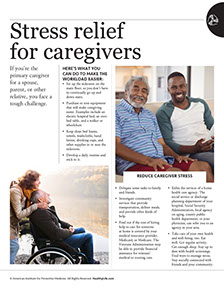
  • Stress Relief For Caregivers

    Mature Health: Over Age 50

    Image of a caregiver helping a man in a wheelchair.

    If you’re the primary caregiver for a spouse, parent, or other relative, you face a tough challenge. Here’s what you can do to make the workload easier.

    *  Set up the sickroom on the main floor, so you don’t have to continually go up and down stairs.

    *  Purchase or rent equipment that will make caregiving easier. Examples include an electric hospital bed, an over-bed table, and a walker or wheelchair.

    *  Keep clean bed linens, towels, washcloths, hand lotion, drinking cups, and other supplies in or near the sickroom.

    *  Develop a daily schedule and stick to it.

    To reduce the stress of your ongoing responsibility:

    *  Delegate some tasks to family and friends.

    *  Investigate community services that provide transportation, deliver meals, and provide other kinds of help.

    *  Enlist the services of a home health care agency. The social service or discharge planning department of your hospital, Social Security Administration, local agency on aging, county public health department, or your physician, can refer you to an agency in your area.

    *  Plan to get out of the house to shop or socialize at least one day a week.

    *  Find out if the cost of hiring help to care for someone at home is covered by your medical insurance provider, Medicaid, or Medicare. The Veterans Administration may be able to provide financial assistance for veterans’ medical or nursing care.

    A Year of Health Hints book by the American Institute for Preventive Medicine. www.HealthyLife.com. All rights reserved.

    © American Institute for Preventive Medicine