Tag: healthy-eating

  • Nutrition For Children

    Children’s Health

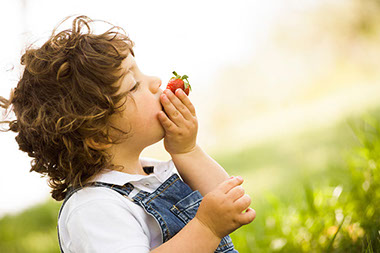
    Image of toddler eating a strawberry.

    Birth to 2 Years Old

    *  Breast-feed your baby from birth to 6 months of age. Breast-feed for the first year, if you can. If you can’t breast-feed or don’t want to, give iron-enriched formula (not cow’s milk) for the first 12 months. After that and up to age 2, use whole cow’s milk to replace formula or breast milk. Don’t limit fat for the first 2 years of life.

    *  Follow your child’s doctor’s advice on breast-feeding and what formula and vitamins to give your baby. Breast-fed babies who do not get regular exposure to sunlight may need vitamin D supplements.

    *  Start solid foods as advised by your baby’s doctor. It is common to do this at 4 to 6 months of age. Iron-enriched infant rice cereal is usually the first food given.

    *  Start new foods one at a time. Wait 1 week before adding each new cereal, vegetable, or other food. Doing this makes it easier to find out which foods your baby has a problem with.

    *  Use iron-rich foods, such as grains, iron-enriched cereals, and meats.

    *  Do not give honey to infants during the first 12 months of life.

    *  Don’t let a baby fall asleep with a bottle that has formula, juice, or milk. The sugars in these can cause tooth decay.

    Two Years and Older

    *  Give a variety of healthy foods for meals and snacks. Follow guidelines from theChooseMyPlate.gov/kidsWeb site. Let your child choose which healthy foods and how much to eat to satisfy his or her hunger.

    *  Help your child maintain a healthy weight. Give proper foods. Promote regular exercise. Lead by example. Children learn from what they see parents do, as well as, from what parents say. Eat with your children. Be a role model for good eating. Exercise, too.

    *  Let your child help plan meals and snacks, shop for food, and prepare foods.

    *  Don’t force your child to eat certain foods. Don’t use food to reward or punish behavior.

    *  Don’t give foods that can lead to choking, such as hard candies and whole grapes.

    *  Teach healthy behaviors in a fun way. For ideas to help get children to eat well and be more active, access the Web sites under “Resources”.

    Resources

    5-2-1-0 Let’s Go!

    www.letsgo.org

    ChooseMyPlate.gov

    www.choosemyplate.gov/kids/index.html

    We Can!™ Ways to Enhance Children’s  Activity & Nutrition
    www.nhlbi.nih.gov/health/educational/wecan

    Page from Healthier at Home book by the American Institute for Preventive Medicine. www.HealthyLife.com. All rights reserved.

    © American Institute for Preventive Medicine
  • The Importance Of Portions: Size Matters

    HEALTHY EATING

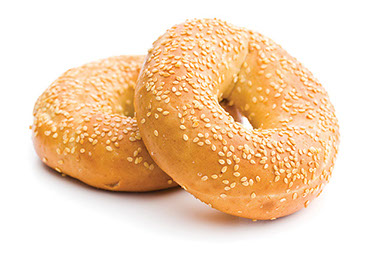
    Image of 2 bagels.

    If it seems like food portions are bigger today than they were years ago, it’s not your imagination. Health experts say that food sizes – and obesity rates – have grown in the last 20 years. Focusing on healthy foods is important. But portion sizes are also an important factor to think about when you eat. Whether it’s a cookie or a plate of spaghetti, how much you eat is just as important as what you eat. After all, the total calories you consume each day can mean the difference between gaining weight and losing it.

    Reality check: Portions are bigger today

    Take a look at these food comparisons, and find out what you need to do to burn off those extra calories.

    Bagel

    20 years ago: 140 calories, 3-inch diameter

    Today: 350 calories, 6-inch diameter

    Calorie difference: 210 calories

    You have to rake leaves for 50 minutes to burn the extra 210 calories. (Based on 130-pound person)

    Cheeseburger

    20 years ago: 330 calories

    Today: 590 calories

    Calorie difference: 260 calories

    You have to lift weights for 1.5 hours to burn the extra 260 calories. (Based on 130-pound person)

    Soda

    20 years ago: 85 calories, 6.5 ounces

    Today: 250 calories, 20 ounces

    Calorie difference: 165 calories

    You have to work in the garden for 35 minutes to burn 165 calories. (Based on 160-pound person)

    Source: National Heart, Lung, and Blood Institute Obesity Education Initiative

    © American Institute for Preventive Medicine

  • Want To Eat Healthier?

    HEALTHY EATING

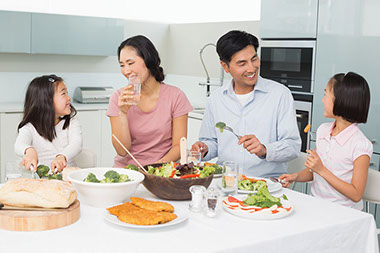
    Image of family eating dinner at the kitchen table.

    Then cook meals at home

    People who frequently cook meals at home eat healthier and consume fewer calories than those who cook less, according to Johns Hopkins Bloomberg School of Public Health research.

    “When people cook most of their meals at home, they consume fewer carbohydrates, less sugar and less fat than those who cook less or not at all-even if they are not trying to lose weight,” according to a study in Public Health Nutrition.

    © American Institute for Preventive Medicine