Tag: Healthy Holidays

  • Brussels Sprouts: A Winter Veggie Powerhouse

    HEALTHY EATING

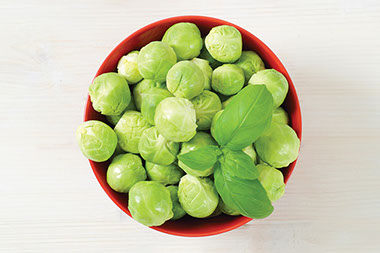
    Brussels spouts in red bowl.

    Brussels sprouts may have a reputation for being the vegetable your mother made you eat. But there’s plenty of reasons that adults and kids alike should eat their Brussels sprouts. Their peak season is fall to winter, so now is a good time to try them.

    Why eat Brussels sprouts?

    Brussels sprouts belong to the cruciferous vegetable family. Other cruciferous vegetables include broccoli, cauliflower, kale and cabbage.

    Like other veggies, brussels sprouts are low in calories and packed with nutrients. They also have plenty of fiber to help with digestion. Fiber may also help you feel fuller, longer.

    Brussels sprouts also have some special health benefits. They may play a role in reducing the risk of developing cancer.

    How to cook brussels sprouts

    Brussels sprouts are versatile and can be roasted, used in casseroles, salads and even on pizza. Many people can find a way to cook them that agrees with their tastes.

    A popular way to roast them is to toss them with honey, lemon juice or dried fruit for a sweet side dish. But brussels sprouts also work well with savory flavors like parmesan cheese or garlic.

    Nutrition

    One half cup of cooked Brussels sprouts contains just 28 calories. It also contains 2 grams of fiber and very little fat and carbohydrates. Brussels sprouts are a good source of many important nutrients, including vitamins A and C. These vitamins are antioxidants, which help fight inflammation and some diseases.

    In addition, Brussels sprouts are packed with vitamin K, which is important for blood clotting and healthy bones. Brussels sprouts contain important minerals like iron, magnesium and phosphorus. And finally, they contain heart-healthy omega-3 fats.

    If you haven’t eaten Brussels sprouts in a while, give them a try. They make a nutritious and delicious addition to any diet.

    Sources: Academy of Nutrition and Dietetics, National Institutes of Health, US Department of Agriculture

    © American Institute for Preventive Medicine
  • Cranberries A Healthy Holiday Dish

    HEALTHY EATING

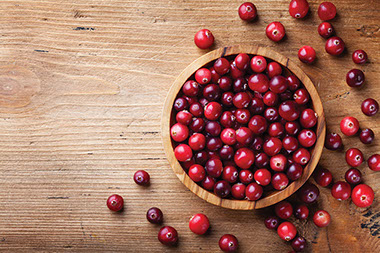
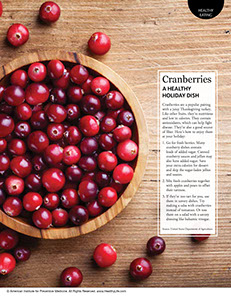
    Bowl of cranberries.

    Cranberries are a popular pairing with a juicy Thanksgiving turkey. Like other fruits, they’re nutritious and low in calories. They contain antioxidants, which can help fight disease. They’re also a good source of fiber. Here’s how to enjoy them at your holiday:

    1.  Go for fresh berries. Many cranberry dishes contain loads of added sugar. Canned cranberry sauces and jellies may also have added sugar. Save your extra calories for dessert and skip the sugar-laden jellies and sauces.

    2.  Mix fresh cranberries together with apples and pears to offset their tartness.

    3.  If they’re too tart for you, use them in savory dishes. Try making a salsa with cranberries instead of tomatoes. Or toss them on a salad with a savory dressing like balsamic vinegar.

    Source: United States Department of Agriculture

    © American Institute for Preventive Medicine
  • Enjoy Thanksgiving Without Weight Gain

    HEALTHY EATING

    Family and friends sitting around the table having dinner.

    Most of us think of Thanksgiving as a huge meal where we enjoy our favorite foods. But you don’t have to feel guilty afterward. You can truly enjoy your holiday meal and hang on to your healthy habits.

    Don’t “save your appetite”

    Many people think that they should skip breakfast and lunch so they can be extra hungry for Thanksgiving dinner. This usually leads to extreme hunger and  overeating. In fact, you’ll probably eat much more than you would have done if you had eaten lunch!

    Instead of skipping meals, focus on eating very healthy meals early in the day to avoid feeling too hungry. This helps you make smart choices and control portion sizes when you show up for dinner.

    Enjoy every bite

    Start with smaller portions, and eat slowly while smelling and tasting each bite. We often overeat when we gobble food down quickly. We don’t truly enjoy it and experience how delicious it is. You can get just as much satisfaction and enjoyment from eating smaller portions.

    Small, slow and steady is key

    The appearance of food makes a difference in how much we eat. If you use a big plate, you may be more tempted to fill it up and eat more. It helps to start with a smaller plate.

    Put down your fork and wait a few minutes before getting second helpings. Give your stomach time to tell your brain that it’s full. You may find that you don’t need more food after all.

    Focus on colorful fruits and vegetables

    The fall harvest can be a great way to enjoy the season. Make your dish “to pass” a healthy plate of winter squash or baked apples (without added sugar). Or try roasted broccoli or cauliflower.

    If you’re hosting the meal, make sure you have lots of vegetables and fruits on the menu. For example, appetizers can be cut-up veggies, rather than chips.

    Don’t put healthy habits on “hold”

    The holidays are busy, but a 15-minute walk will help lower stress levels and burn a few calories. Keep exercise and healthy habits in mind, even if you decide to indulge in a few treats.

    Remember that one holiday slip-up doesn’t mean you have to give up your healthy eating or exercise plan! Get back on track tomorrow.

    Sources: Academy of Nutrition and Dietetics, American Heart Association

    © American Institute for Preventive Medicine

  • Fill Your Grill, But Keep It Healthy

    HEALTHY EATING

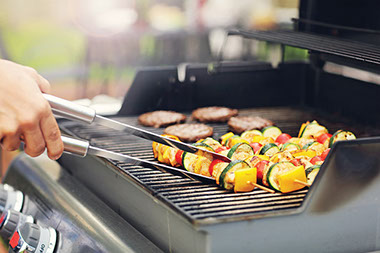
    Vegetables on the grill.

    Many people like to use their grill or barbecue during the summer months. While grilling can create delicious meals, it’s important to know how to avoid grilling meats the wrong way, which can increase cancer-causing substances in the food.

    Substances known as polycyclic aromatic hydrocarbons (PAHs) and heterocyclic amines (HCAs) can be found in meat that is cooked at high temperatures. These substances have been shown to cause cancer in laboratory animals. But the levels used in the animal studies were very high. Experts cannot say for sure how much of these substances would cause cancer in people.

    PAHs and HCAs can be found in meat that has been grilled, especially if it’s charred or blackened. Meat that is smoked may also contain these chemicals.

    To lower these substances in grilled food, you can:

    *  Avoid burning or charring the food when grilling.

    *  Turn meat frequently when grilling to avoid burnt or very hot areas.

    *  Don’t let the flames touch the meat directly.

    *  Marinade the meat first.

    *  Wrap meat in foil before placing it on the grill.

    *  Trim excess fat off of meat to avoid charring.

    *  Cut it up. Smaller pieces of meat will cook faster throughout. Try skewers or small pieces mixed in foil packets with vegetables.

    Beyond meat

    Vegetables and fruits can be delicious on the grill and they don’t have the risk of PAHs or HCAs. This doesn’t mean that meat-lovers have to avoid their favorite foods. Instead, have a portion of meat about the size of a deck of cards. Then fill the rest of your plate with vegetables. Red peppers, tomatoes, pineapple, peaches and asparagus are just a few of the vegetarian options that are both delicious and nutritious on the grill.

    Sources: American Institute for Cancer Research, National Cancer Institute

    © American Institute for Preventive Medicine
  • Get Grilled On Safety Tips

    HEALTHY EATING

    Man grilling food outside.

    Metal grill brushes pose dangers

    If you’ve ever used a grill, you know that it needs to be cleaned. Many people reach for a metal wire grill brush to remove stuck-on food and debris. But this could be a dangerous mistake.

    The American Medical Association says that wire grill brushes were responsible for more than 1,600 emergency room visits in just one year. These brushes have metal bristles that can break off and stick to the grill. They may be too small to see, so you don’t know they’re there. When you cook food on your grill, the tiny bristles can stick to the food.

    If someone accidentally swallows one of these metal bristles, they can be seriously injured. The bristles can cut the inside of the mouth, throat or tonsils. This could require emergency surgery.

    If you use a wire brush to clean the grill, be sure to wipe the grill off with a cloth afterward. Check the underside of the grill and lid for any bristles too.

    You can also avoid using wire brushes altogether. Instead, soak the grill parts in soapy water and clean with a sponge or a paint scraper. Some people use a ball of aluminum foil to scrape the grill.

    Be safe with your grill

    *  Propane (gas) and charcoal grills should only be used outside. Never use them inside a garage, barn or other building.

    *  Keep the grill well away from your deck railings, tree branches and house.

    *  Don’t let children or pets near the grill.

    *  Open the gas grill lid before lighting it.

    *  Keep charcoal fluid out of reach of children and pets.

    *  Do not add charcoal fluid or other flammable liquids to a fire. Use it only to get the grill started.

    *  Let charcoal cool completely before throwing it away.

    Source: National Fire Protection Association

    © American Institute for Preventive Medicine

  • Simple Steps For A Safe Thanksgiving Turkey

    HEALTHY EATING

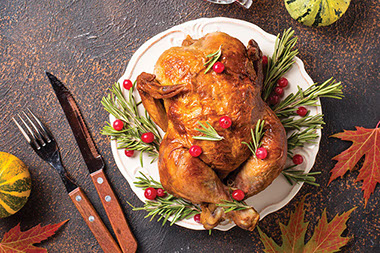
    Cooked turkey on plate.

    This Thanksgiving, millions of people will enjoy a plateful of turkey. Enjoy your meal, but remember to prepare your turkey safely to avoid food poisoning. This starts from the moment you bring your turkey home from the store.

    Think thawing

    Never thaw your turkey by leaving it out on the counter. When a turkey is left at room temperature for 2 hours, it can grow bacteria that make you sick. Instead, you can:

    *  Thaw your turkey in the refrigerator.

    *  Put your turkey in a plastic bag and thaw in cold water, changing the water every 30 minutes.

    Clean your hands, not  the turkey

    Don’t rinse or wash your turkey in the sink. This can spread germs. Instead, wash your hands well, both before and after handling the turkey. After you’ve put the turkey in the oven, carefully wash and disinfect any surfaces that touched the raw turkey.

    Temperature is key

    Cook your turkey at 325°F or above. Lower temperatures won’t heat up the bird quickly enough to kill bacteria. When you think the turkey is done, check the temperature. Use a meat thermometer and check the inner part of the thigh and wing. Also check the thickest part of the breast. The turkey is done when all of them are at 165°F.

    Stellar stuffing

    If you stuff your turkey, make sure it is completely cooked. Use a food thermometer to check that the stuffing reaches 165°F. After taking the turkey out of the oven, leave the stuffing in for about 20 more minutes. This helps ensure it is cooked thoroughly.

    Great leftovers

    Don’t leave leftover turkey out for more than two hours after cooking it. Put it in the refrigerator as soon as possible.

    Many people experience food poisoning around the holidays. This is often due to incorrectly cooked or stored turkey. This doesn’t have to happen to your family. Be safe about preparing your turkey and stay healthy this holiday.

    © American Institute for Preventive Medicine
  • Vegetarian Alternatives To Turkey

    HEALTHY EATING

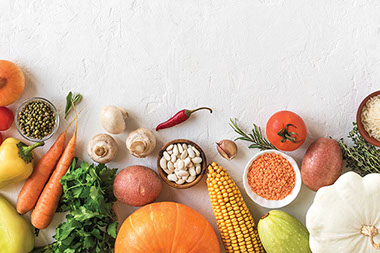
    Variety of fresh food ingredients.

    Your vision of a traditional Thanksgiving feast may have a giant roasted turkey as its centerpiece. But, increasingly, people are turning to vegetarian or low-meat diets as a healthy and environmentally friendly option. Whether you’re hosting a vegetarian holiday meal or just want to have vegetarian options available alongside your turkey, don’t worry. Vegetarian dishes are just as plentiful, easy to prepare, and satisfying. Try these four ingredients as vegetarian features at your holiday meal.

    Winter Squash

    A baked winter squash filled with delicious vegetables or stuffing mixture is delicious and will add an impressive fall display to your table. Here are a few types of winter squash that make the best holiday meal main dish:

    *  Pumpkin

    *  Acorn squash

    *  Butternut squash

    *  Spaghetti squash

    Tofurky

    The name says it all – tofu plus turkey makes tofurky. There are a variety of brands available, and you can even find it made into traditional turkey shapes.

    Remember that plain tofu itself doesn’t have a lot of flavor. If the brand you choose isn’t seasoned, find a recipe that is big on spices and flavorful ingredients.

    Mushrooms

    Mushrooms provide a big, savory taste. It’s easy to make them the star of the show. So many main dishes are enhanced with mushrooms, and they can even take the place of meat in some classic dishes.

    *  Stuffed mushroom caps

    *  Mushroom risotto or casserole

    *  Mushroom soup

    *  Mushroom with pasta

    Lentils

    Lentils have a deeper, meatier flavor and texture compared to other beans. Their savory profile makes them an easy feature for the main dish. They also pair well with cheese or nuts for added flavor.

    *  Lentil soups or stews

    *  Lentil meatloaf or meatballs

    *  Lentil salads

    *  Cheesy lentil bakes or casseroles

    © American Institute for Preventive Medicine
  • Navigate The Holiday Buffet

    Nutrition

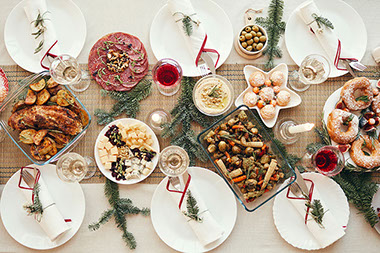
    Table filled with different food dishes.

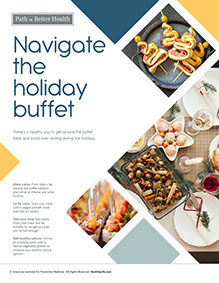
    There’s a healthy way to get around the buffet table and avoid over-eating during the holidays.

    *Make a plan:First, take a lap around the buffet table to plan what to choose and what to limit.

    *Go for color:Start your meal with a veggie-packed salad with lots of variety.

    *Take your time:Eat slowly. Enjoy your meal and be mindful to recognize when you’ve had enough.

    *Add healthy options:Arrive at a holiday party with a festive vegetable platter to increase your healthy choice options.

    Page from HealthyLife Weigh book by the American Institute for Preventive Medicine. www.HealthyLife.com. All rights reserved.

    © American Institute for Preventive Medicine
  • 10 Ways To Avoid Holiday Weight Gain

    HEALTHY EATING

    Image of women wearing a santa hat while taking her waist measurement.

    It can be especially hard to avoid extra pounds when there’s holiday food everywhere you turn. Stick to the basics of healthy eating so you can make it to the new year without regrets.

    1.Drink more water:Drinking water before you eat may help you feel fuller and eat less.

    2.Skip the soda, hot cocoa and high-sugar coffee drinks:Replacing sugary drinks with water can help you lose weight.

    3.Get exercise:Even just a few minutes a day has health benefits and can help you burn calories.

    4.Eat fruits and vegetables:These foods are generally packed with nutrition and low in calories.

    5.Get enough sleep:Lack of sleep can cause more cravings for unhealthy foods.

    6.Listen to your body:Stop eating when you start to feel full, not when you’re stuffed.

    7.Start with small portions:Start with smaller amounts of food on your plate, and wait to see if you need more later.

    8.Keep a food diary:This helps you get a clear picture of what you’ve eaten.

    9.Don’t eat and watch TV:This can lead to mindless eating and consuming too many calories.

    10.Build muscle:Muscles help your body burn more calories, even when resting.

    © American Institute for Preventive Medicine
  • Eating Healthy At Summer Gatherings

    HEALTHY EATING

    Image of a group of friends eating at a pinic table.

    Eating and socializing go hand in hand. Throughout human history, people have gathered together to eat. Some research has shown that when people are in a group, they tend to eat larger meals and more calories. As a result, it can be hard to stick with your healthy eating plans when you’re at a social event such as a summer barbecue or special occasion.

    To help you stay on track, try these tips from the Academy of Nutrition and Dietetics:

    *Drink plenty of water.Your body needs water for nearly all of its functions. And if you’re dehydrated, the hunger and thirst cues can get confused. Drink water at gatherings, especially before your meals. You may end up feeling fuller and eating less.

    *Bring your own food.If you know you’ll have a hard time passing up the high-calorie treats, bring your own healthy dish to pass. Summer is the optimal time to share delicious, fresh fruits and vegetables that are in season.

    *Don’t deprive yourself.You can still have a small portion of your favorite summer treat. Just fill up on the healthier options first. This will satisfy most of your hunger and can help you control your portion sizes. Choose low-calorie, high-fiber foods like fruits, vegetables and beans before you go for the fried foods or desserts.

    © American Institute for Preventive Medicine