Tag: Healthy Travel

  • Reduce Flight Risks

    Healthy Travel

    Don’t let motion and a long flight ruin your trip.

    Flying can trigger more than anxiety in airplane travelers. Sitting for hours in narrow, cramped seats can cause a decrease in blood flow and poor circulation in the legs. These problems can lead to “economy-class syndrome” which refers to a deep vein thrombosis – a blood clot in the leg. Even if you sit in first class or business class, there are things you can do to help avoid this problem. If your seatmates stare, suggest they join you!

    Image of flying airplane.

    Airplane aerobics:

    *  Tense your feet for five seconds, then relax them. Repeat with each muscle group, including your calves, thighs, buttocks, shoulders, neck, forearms, and hands.

    *  Drop your head forward. Then move it slowly to the right, to the back, then to the left and the front again.

    *  Raise both shoulders. Move them back, then down, and then forward in a circular motion.

    *  Reach toward the ceiling with your right arm and stretch. Repeat with your left arm.

    *  Flex and extend your feet. Spread and then point your toes up and down.

    *  Get up and walk at least once every hour.

    *  Focus on your breathing. Inhale and exhale slowly and deeply. It’ll help you get enough oxygen into your blood so you don’t feel fatigued.

    To deal with motion sickness:

    *  Reserve a seat over one of the wings, if you can.

    *  Avoid sitting in the tail section, which is usually the bumpiest.

    *  Get plenty of rest before you fly.

    *  Avoid drinking alcohol before or during travel.

    *  Take a motion sickness medication, such as Dramamine, 30 minutes before your plane takes off.

    *  Open overhead vents and direct air at your face.

    *  Don’t read while traveling and don’t focus on any other stationary object.

    *  Breathe slowly and deeply.

    Action Step

    Wear loose-fitting clothes, socks, and shoes. If you have cardiovascular disease, talk to your doctor about wearing compression stockings and other advice before you take long flights or travel long distances by car or train.
    Page image from Ways to Well-Being book by the American Institute for Preventive Medicine. www.HealthyLife.com. All rights reserved.

    © American Institute for Preventive Medicine

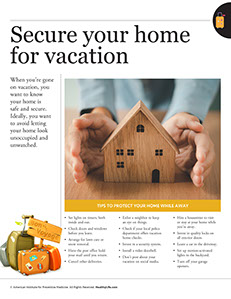
  • Secure Your Home For Vacation

    WELL-BEING

    Small wooden home on table with hands protecting it.

    When you’re gone on vacation, you want to know your home is safe and secure. Ideally, you want to avoid letting your home look unoccupied and unwatched.

    Tips to protect your home while away

    *  Set lights on timers, both inside and out.

    *  Check doors and windows before you leave.

    *  Arrange for lawn care or snow removal.

    *  Have the post office hold your mail until you return.

    *  Cancel other deliveries.

    *  Enlist a neighbor to keep an eye on things.

    *  Check if your local police department offers vacation home checks.

    *  Invest in a security system.

    *  Install a video doorbell.

    *  Don’t post about your vacation on social media.

    *  Hire a housesitter to visit or stay at your home while you’re away.

    *  Invest in quality locks on all exterior doors.

    *  Leave a car in the driveway.

    *  Set up motion-activated lights in the backyard.

    *  Turn off your garage openers.

    © American Institute for Preventive Medicine
  • Safe Travel For Pregnant Women

    Healthy Travel

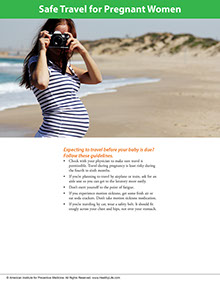
    Image of pregnant women on vacation.

    Expecting to travel before your baby is due? Follow these guidelines.

    *  Check with your physician to make sure travel is permissible. Travel during pregnancy is least risky during the fourth to sixth months.

    *  If you’re planning to travel by airplane or train, ask for an aisle seat so you can get to the lavatory more easily.

    *  Don’t exert yourself to the point of fatigue.

    *  If you experience motion sickness, get some fresh air or eat soda crackers. Don’t take motion sickness medication.

    *  If you’re traveling by car, wear a safety belt. It should fit snugly across your chest and hips, not over your stomach.

    Page image from A Year of Health Hints book by the American Institute for Preventive Medicine. www.HealthyLife.com. All rights reserved.

    © American Institute for Preventive Medicine
  • Why You Need A Vacation

    WORK LIFE

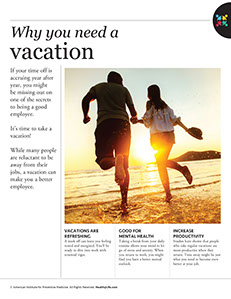
    Couple holding hands running into the ocean.

    If your time off is accruing year after year, you might be missing out on one of the secrets to being a good employee.

    It’s time to take a vacation! While many people are reluctant to be away from their jobs, a vacation can make you a better employee.

    Vacations are refreshing

    A week off can leave you feeling rested and energized. You’ll be ready to dive into work with renewed vigor.

    Good for mental health

    Taking a break from your daily routine allows your mind to let go of stress and anxiety. When you return to work, you might find you have a better mental outlook.

    Increase productivity

    Studies have shown that people who take regular vacations are more productive when they return. Time away might be just what you need to become even better at your job.

    © American Institute for Preventive Medicine
  • Taking The Stress Out Of Travel

    Healthy Travel

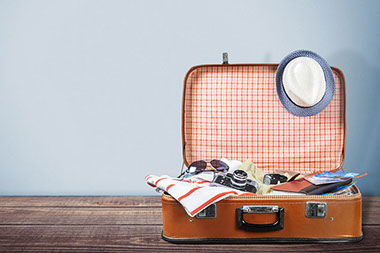
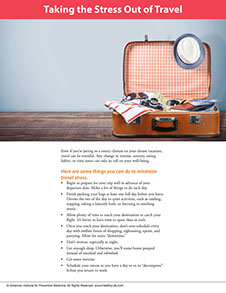
    Image of suit case opened.

    Even if you’re jetting to a sunny climate on your dream vacation, travel can be stressful. Any change in routine, scenery, eating habits, or time zones can take its toll on your well-being.

    Here are some things you can do to minimize travel stress.

    *  Begin to prepare for your trip well in advance of your departure date. Make a list of things to do each day.

    *  Finish packing your bags at least one full day before you leave. Devote the rest of the day to quiet activities, such as reading, napping, taking a leisurely bath, or listening to soothing music.

    *  Allow plenty of time to reach your destination or catch your flight. It’s better to have time to spare than to rush.

    *  Once you reach your destination, don’t over-schedule every day with endless hours of shopping, sightseeing, sports, and partying. Allow for some “downtime.”

    *  Don’t overeat, especially at night.

    *  Get enough sleep. Otherwise, you’ll come home pooped instead of renewed and refreshed.

    *  Get some exercise.

    *  Schedule your return so you have a day or so to “decompress” before you return to work.

    Page image from A Year of Health Hints book by the American Institute for Preventive Medicine. www.HealthyLife.com. All rights reserved.

    © American Institute for Preventive Medicine

  • Avoid Bed Bugs

    WELL-BEING

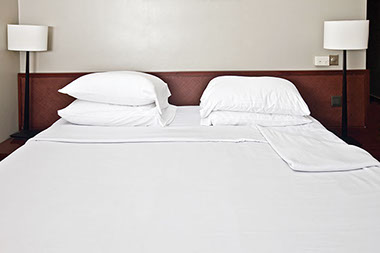
    Image of a bed.

    Upon entering a hotel room, place your luggage in the bathtub or on the toilet seat. Bed bugs can’t crawl up these surfaces and attach to your bags. While in the room, keep luggage on the luggage rack, off the floor. Hard-sided luggage lacks the folds and creases of soft-sided bags making it more difficult for the pests to hide in your bags.

    Since bed bugs are large enough to see, check the mattress and bed frame for any signs that the pests have been hiding there. Do you notice any tiny black spots? Spots and stains are good indicators of either a current or prior presence. Pull back sheets, inspect mattress seams and examine any other upholstered items in the room.

    Bed bugs are drawn to wood-don’t neglect the nightstand and dresser. If it appears as though the critters have invited themselves into your hotel room, ask the management for another room.

    Before packing the car for the trip home, place luggage in large plastic bags and knot securely. Once home, immediately wash all clothing on the hottest temperature setting suggested by the care labels. Dry on high heat for at least  30 minutes. Avoid packing items that can only be laundered on a cold-water setting, suggest The Maids, a residential cleaning service.

    © American Institute for Preventive Medicine
  • Don’T Let The Bed Bugs Bite

    SELF-CARE CORNER

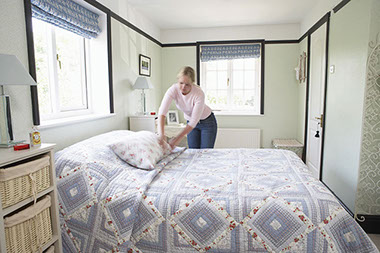
    Image of women making bed.

    Bed bugs have become more common in the U.S. in recent years. Common pesticides used to kill bed bugs may not work as well as they once did. The bugs may be getting “resistant,” which means they can survive pesticides used on them. This resistance, along with increased travel by people and lack of knowledge about how to get rid of them, are likely to blame for the rise in these pests.

    Bed bugs feed on blood so they are attracted to people and animals. They also come out at night, so the bed is the best place for them to find their meal.

    Check for bed bugs

    If you want to keep bed bugs out, you’ll need to check your home, as well as hotels while traveling. Look for small, reddish brown bugs about the size of an apple seed. Use a flashlight to get a good look. Check:

    *  Under and all around the mattress, box spring and bed frame

    *  Seams and small crevices where they like to hide –  bed bugs can get into cracks as thin as a credit card

    *  Nightstands and other furniture near beds

    Do I have bed bugs?

    Even if you don’t see any bugs, watch for signs that they are hiding in your home and biting people. The most common signs of bed bugs include:

    *  Small, reddish spots on bed sheets or mattresses

    *  Small round, dark spots on the bed  (may look like ink spots)

    *  Tiny eggs, egg shells or light yellow skins

    How to prevent them

    Bed bugs have been found in clean homes that are well cared for. They can be hard to keep out. These tips can help you keep them away:

    *  Check for bed bugs when you travel and don’t put your suitcase on the bed.

    *  When you get home from a trip, immediately wash your travel clothes in hot water.

    *  Keep luggage outside when you get home and vacuum it thoroughly. Empty the vacuum contents into a plastic bag, seal it and throw it in the garbage outside.

    If you find a bug that might be a bed bug, tape it to a piece of paper so you can show it to a pest control expert. Call a pest control company right away. If you live in an apartment or rental home, contact your landlord about what to do.

    The Environmental Protection Agency has information about getting rid of them on their website. Visitwww.epa.gov/bedbugs.

    Sources: National Institutes of Health, Environmental Protection Agency

    © American Institute for Preventive Medicine
  • Hassle-Free Screening Tips While Traveling

    WELL-BEING

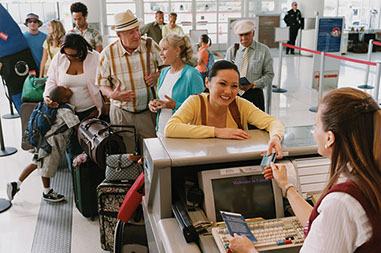
    Image of airport check-in line.

    If you’re flying, make sure you familiarize yourself with the TSA screening process. You’ll have smooth flying if you do the following when passing through airport security:

    *Clothing:To maximize efficiency at the security checkpoint, avoid wearing clothing with metal and stow all metal items in carry-on luggage.

    *Zip it:Make sure any liquids are in 3-ounce bottles in a clear, quart-size, zip top plastic bag.

    *Footwear:Passengers are required to remove footwear for X-ray screening. Wearing footwear that can be easily removed helps speed the screening process.

    *Boarding pass and ID:When approaching the security checkpoint, passengers will be asked to present a boarding pass and a government-issued identification.

    *Electronics:Large electronics such as laptops should be removed from their cases for X-ray screening. E-readers and small electronics may stay in luggage.

    *Locking checked bags:When locking checked baggage, use a TSA recognized lock. A list of these locks can be found atwww.tsa.gov.

    © American Institute for Preventive Medicine
  • How Not To Get Sick When Traveling

    SELF-CARE CORNER

    Illustration of different city landmarks.

    Nothing can ruin a vacation faster than someone getting sick. Whether you’re planning a trip just an hour away or across the ocean, there are many things you can do to stay healthy while away from home.

    See your doctor before you go

    Get a checkup before you go on vacation. Ask the doctor if you need any vaccines or preventive medicines. Some countries require vaccines that you wouldn’t normally need in the U.S. Make plans to get everyone vaccinated at least six weeks before you leave.

    If you take any medicines regularly, make sure you have enough to last throughout your trip. Running out of a prescription medicine can be inconvenient – or even dangerous –  if you’re not near your doctor or pharmacy. If possible, keep your medicine with you in a carry-on bag so you have it with you at all times.

    Avoid traveler’s diarrhea

    Traveler’s diarrhea is the most common travel-related illness. It can happen nearly anywhere if you eat contaminated food or drink contaminated water. Lower your risk of getting it with these guidelines:

    *  Eat only cooked food served hot.

    *  Avoid eating food from street vendors, if possible.

    *  Don’t eat or drink unpasteurized milk or dairy products.

    *  Avoid eating raw seafood or undercooked meats.

    *  Avoid tap water and ice on airplanes and in places where water may not be safe. Drink only commercially-bottled water and beverages.

    *  Use bottled water to brush your teeth when traveling abroad. Don’t get shower water in your mouth.

    *  Wash your hands thoroughly and often. Be especially careful about washing hands after using the bathroom and before eating.

    *  Consider bringing some anti-diarrhea medicine with you in case you get sick. Make sure you stay hydrated with water, electrolyte drinks, and/or sports drinks.

    Tell bugs to buzz off

    Mosquitoes can spread disease, both in the U.S. and abroad. Protect yourself by wearing repellents with DEET. Use bed nets for international travel in areas where bugs are a problem. If you’re traveling to a country with a higher risk of malaria, ask your doctor about preventive medicine to take before you go on your trip. Be sure to also pack lightweight clothing that covers the arms and legs to keep bugs off.

    A few simple precautions can ensure you have a safe and healthy summer vacation.

    © American Institute for Preventive Medicine
  • Preparing For A Vacation From Work

    WORK LIFE

    Image of family looking out of an airport window.

    To help make the most of your time off, be sure you’ve prepared for your absence at work. These steps can help you get ready for your well-deserved break:

    *Give people advance notice.As soon as you have plans, tell your supervisor and colleagues. If you have key clients or customers, be sure to tell them too.

    *Set up an out-of-office reply and voicemail.These basics let everyone know when you’ll get back with them. If possible, list a colleague’s name and number for urgent needs, but ask them first if this is okay.

    *Make a list of important tasks to complete before you leave.Then, stick to the list and make sure you get it done. This will help your colleagues and you’ll be able to rest easier on vacation.

    *Decide how you can be reached and let people know.If you don’t want phone calls or emails, let co-workers know. Some people want to take a complete break from work, while others like checking in. Or, you may tell people to call only if it’s urgent. It may depend on your job responsibilities and your preference.

    Traveling and spending

    In 2016, people in the U.S. spent $836.6 billion on domestic travel. This made up 84 percent of all travel expenditures. The money spent on travel in the U.S. directly supported over 7 million American jobs.

    Travelers spent $248.5 billion on food services. This accounted for 25 percent of travel expenses. It surpassed lodging expenses, which were 21.3 percent, or $210.8 billion, of total travel expenses.

    Source: U.S. Travel Association

    © American Institute for Preventive Medicine