Tag: HealthyLife® Weigh

  • Get Enough Sleep 2

    Healthylife® QuitWell™

    Part 5

    Women sleeping.

    Not getting enough sleep can affect nearly every aspect of your day:

    *  Less energy and desire to work on your goals

    *  Feeling down, anxious, or other negative feelings

    *  Decreased creativity, making it harder to solve problems or imagine doing things differently

    *  Increased cravings for tobacco/nicotine to stay alert

    *  More unstable blood sugar levels, leading to less healthy eating and stronger cravings for nicotine

    Tips for Improving Sleep

    *  Get to bed a little earlier than normal when quitting. This may help cut out an evening cigarette and can help your body recover.

    *  Create a comfortable place to sleep. Make sure your bed, pillows, and bedding are comfortable.

    *  Maintain a slightly cooler temperature in the bedroom.

    *  Avoid looking at a screen (TV, laptop, smartphone, tablet, etc.) 30 minutes before bed.

    *  Create a bedtime and waketime routine.

    *  Reserve the bed for sleep and sex. Avoid doing other activities in bed, like work or having a tough discussion.

    *  Have a small snack before bed if you are hungry.

    * Avoid foods high in sugar or refined carbohydrates just before bed. The rise in blood sugar can provide a burst of energy that keeps you alert and makes it difficult to fall asleep.

    *  Avoid foods that are likely to cause acid reflux (heartburn), gas, cramping, or indigestion if you are prone to these problems. Fatty or spicy foods, beans, garlic, peanuts, and dairy cause discomfort for some people.

    What action can you take tonight to improve your sleep?

    © American Institute for Preventive Medicine

  • Mindfulness 2

    Healthylife® QuitWell™

    Part 2

    Image of man walking his dog.

    Mindfulness means you are fully aware of what you are sensing in the current moment. Mindfulness can help you get through a stressful or uncomfortable time without your usual tobacco/nicotine use. It can also:

    *  Give your mind a chance to think creatively and come up with the answers to tough questions.

    *  Help you gently pull yourself back to the present when your mind wants to go somewhere else.

    *  Exercise greater control over your actions and your energy.

    *  Understand yourself more.

    *  Lower inflammation in the body.

    *  Activate areas in the brain that give you feelings of calmness.

    Mindfulness Exercise

    Practice mindfulness while you listen to music, walk, run, eat, or sit in traffic. You can also try this the next time you feel the desire to have a cigarette, dip, or puff from your vape:

    *  Try to physically pause your body. Sit or stand still. Maybe you can lean against the back of a chair or a wall. Get comfortable.

    *  Focus on your breathing or anything in the present, such as the sounds you hear or an object in your sight.

    *  As thoughts pop up in your mind, notice them without judging them. Picture your thoughts like clouds floating by-let them go by. Return your focus to what you see, hear, and feel.

    *  Notice the feelings you have about smoking/your habit and what may be making you feel that way. Be aware of what is helping you do what you want and what is not helping.

    *  When your mind starts to drift, imagine gently guiding it back to the present, as if you’re helping a child that has strayed off the path.

    The craving may have gone away or is now much less. If this is the case, try to do something else while the craving continues to fade.

    © American Institute for Preventive Medicine

  • Review And Prepare 7

    Healthylife® QuitWell™

    Part 4

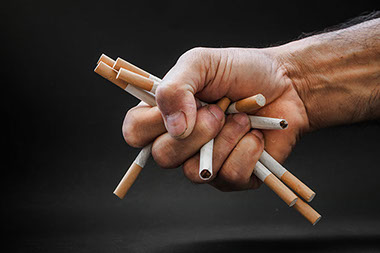
    Image of hand crushing a bunch of cigarettes.

    This section provided strategies to manage urges that you have for tobacco/nicotine. You also learned tools to manage yourself in a demanding, often stressful world.

    *  Which urge tamers and other strategies have you practiced already?

    *  Which tools have worked well for you? Add these to your quit plan.

    *  What gaps do you have in your quit plan? What is still a big challenge?

    Review this section often. What may have helped you get started may not be what takes you all the way to quitting completely. You may need to use new strategies as your life changes, new stressors arise, or new people enter your life. As you feel more and more ready to take action, strengthen your action plan by assigning urge tamers to triggers.

    © American Institute for Preventive Medicine

  • Plan Problem-Solving 2

    Healthylife® QuitWell™

    Part 2

    Image of smiling women at desk.

    Your worries and concerns take up time in your day. Many issues cannot simply be ignored or brushed aside. To avoid letting these thoughts trigger smoking or chewing habits, plan time to address them.

    Steps to Address Your Worries

    1. Write a worry at the top of a piece of paper. It may seem old-fashioned to write this down on paper, when so much is done on the computer or a smartphone. However, writing things down can be powerful.

    2. Divide the paper into three columns:

    a. What I can’t do. Recognize what is out of your control.

    b. What I can do. List possible actions that are within your control. Write things you know how to do and that are realistic actions for you to take.

    c. What I will do and when. Decide which action you are ready to take first. This action may not solve every part of the problem, but it is a small step toward a solution. Write when you will do this.

    3. After you have taken an action towards a solution, repeat this process the next day or when you are ready to take another step.

    © American Institute for Preventive Medicine

  • Practice Relaxation Techniques 2

    Healthylife® QuitWell™

    Part 4

    Image of man relaxing while reading a book.

    Use relaxation techniques to manage daily stressors.

    Plan Relaxation Time

    Plan time during the day to relax. You can also do relaxation exercises as needed during the day. Practice these techniques before, during, or after trigger activities (like eating or talking on the phone).

    Relaxation techniques can help reduce stress-related health problems, such as high blood pressure, headaches, and pain. These tools also help you to have greater physical and mental control. This helps you get through times when you may have had a cigarette or other form of tobacco/nicotine in the past.

    How the mind can control the body:

    *  It can slow brain wave patterns.

    *  It can reduce heart and breathing rates.

    *  It can increase blood flow to the limbs.

    *  It can relax muscles.

    Think about the rest of today. When can you spend 10 minutes relaxing? Here are a few ideas of times you can practice relaxation:

    *  Break times when you would usually be on your phone, checking apps or scrolling mindlessly

    *  While drinking your morning coffee

    *  Winding down for bed in the evening

    *  Walking the dog or playing with your pet

    © American Institute for Preventive Medicine

  • Relaxation Reflex 2

    Healthylife® QuitWell™

    Part 4

    Image of several people doing yoga.

    This skill involves relaxing 4 basic muscle groups. Tightening and releasing the muscles produces a soothing effect which helps you relax. Taking slow deep breaths and dropping the head and shoulders forward add to the effect.

    Practice every day for about 5-10 minutes. Divide the body into 4 muscle groups. Tense each group for 5-10 seconds, then release.

    *Arms and Hands– Lift arms, bend wrists and elbows, make fists, tighten upper arms.

    *Face and Neck– Squinch eyes, nose, cheeks, and brows, stretch mouth and grit teeth, point chin down toward chest.

    *Middle Torso– Push shoulders back, tighten stomach and small of back.

    *Legs and Feet– Lift legs off floor, hold straight out, point toes toward face, tighten thighs.

    When I will try this?

    (After) How did your body feel after this activity?

    (After) How did your stress level change after this activity?

    Practice this strategy regularly. It may not help you the first time you try it, but the next time it might. As you get better at it, it may become even more helpful to you.

    © American Institute for Preventive Medicine

  • Stages Of Change 2

    Healthylife® QuitWell™

    Part 1

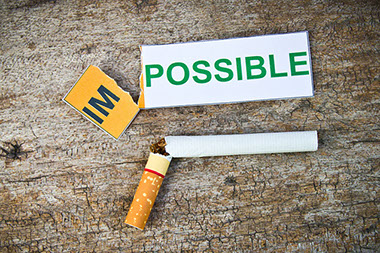
    Broken cigarette with a paper ripped to spell Possible from Impossible.

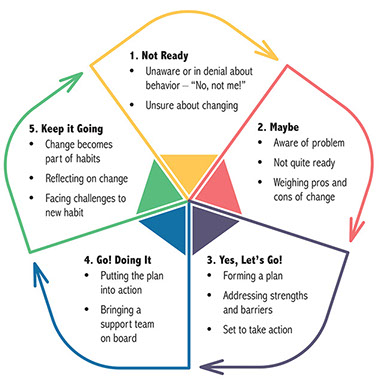
    This program does not assume you are ready to change. Or, you may be ready to make certain changes but not others. Other changes you may not have even thought of yet! The tools and strategies in this guide are designed to help you move forward through the stages of change.

    Using the diagram below, consider which stage you are at. What best describes where you are at today?

    Diagram showing the different stages of quitting.

    © American Institute for Preventive Medicine

  • Use The L.A.D.D.E.R. Technique 2

    Healthylife® QuitWell™

    Part 5

    Image of two friends talking.

    This is a step-by-step way to become more assertive.

    L:Look at your needs, wants, rights, and feelings about the situation.

    A:Arrange a meeting that is convenient for you and the other person to talk.

    D:Define the problem clearly to the other person.

    D:Describe your feelings using “I messages.” I message statements let you take charge of your feelings. The other person is less likely to get defensive.

    E:Express your needs and desires in an assertive manner using a few clear sentences. Be aware of your eye contact, hand gestures, posture, voice, and facial expression.

    R:Reinforce your remarks by saying what positive outcomes will occur for you and the other person.

    Example:

    L:I could use support from my close co-worker while I’m quitting vaping and I don’t want him to give me a hard time.

    A:I’ll arrange to speak to him first thing tomorrow.

    D:“Jack, I’m trying to quit and can really benefit from your support. I want to be able to take breaks with you, but it’s tough for me to do that if you offer me your vape.”

    D:“I feel like I could really achieve my goal with your help. Quitting is really important to me.”

    E:“I would like to take a walk with you instead of vaping, if you will join me. Or, we’ll have to catch up after work. Standing next to you while you vape is tough for me right now.”

    R:“I love getting away from hectic stuff at work by taking a break with you. I think taking a walk will help us both clear our heads and feel more ready to tackle the rest of the day.”

    © American Institute for Preventive Medicine

  • Avoid Drowsy Driving 2

    SleepWell® Program

    Week 2

    Image of a drowsy driver.

    Driving while sleepy can severely impair your driving and cause an accident. Studies have linked sleepiness and fatigue to decreases in reaction time, decision making, and mind and body coordination. All of these factors are very important for safe driving.

    According to estimates from the American Automobile Association (AAA), one out of every five deadly traffic accidents is due to drowsy driving. More than one-quarter of drivers admitted to driving in the past month while having trouble keeping their eyes open. (Source: AAA, 2014.)

    Drive when you feel alert. On long drives, plan 15 minute breaks to get out and stretch your legs every two hours.

    Closing your eyes for even a second (called microsleep) can be enough to travel blindly far down the road (or off the road). If you drive while you are fatigued, you and anyone around you is at serious risk.

    Signs of fatigue:

    *  You can’t stop yawning

    *  You have trouble keeping your head up

    *  Your eyes close for a moment or go out of focus

    *  You have wandering, disconnected thoughts

    *  You have no memory of driving the last few miles

    *  You miss seeing a sign or your exit

    *  You slow down when you don’t mean to or break suddenly or too late

    *  You drift across the road or veer off onto rumble strips

    What to do:

    *  Pull to the side of the road or go to a rest stop

    *  Take a 15-20 minute nap. If you can, have 250-300 mg caffeine (amount in 2 cups of coffee) before the nap.

    *  Get a non-drowsy person to drive or find some way of getting home without driving yourself

    *  Drive to a motel or place where you can sleep

    © American Institute for Preventive Medicine

  • Be Assertive 3

    SleepWell® Program

    Week 5

    Image of man practicing speech in mirror.

    Passive

    *  You lack expression for yourself.

    *  You do not stand up for your rights and needs.

    Result: You usually do not achieve your goal.

    Aggressive

    *  You stand up for your rights and needs, but at the expense of someone else.

    Result: You usually put down or hurt someone else. You gain no respect.

    Assertive

    *  You stand up for your rights and needs without putting down or hurting someone else.

    *  You increase the chance of achieving your goals.

    *  You express your feelings without becoming victim to them.

    Result: You build self-respect and feel good about yourself.

    What Assertive Looks Like

    Body Posture: Be relaxed and natural. Avoid slouching, putting your hands in your pockets, and facing away from the person you are speaking with.

    Eye Contact: Good eye contact is vital to convey self-confidence and interest. Don’t stare at the other person; this comes across as a challenge.

    Voice, Tone, and Quality: Use a strong, varied tone. Speak clearly and firmly. Don’t shout or speak too softly. Don’t whine.

    Distance from the Person: Don’t position yourself too far or too close.

    Facial Expression: Let your face convey the same message as what you are saying.

    Content: Use short sentences. Be specific, clear, and firm.

    Benefits of Being Assertive

    *  You can feel comfortable saying “no.”

    *  You have more confidence to ask others for help.

    *  You gain more respect from others.

    *  You feel less angry with yourself and with others.

    *  You feel justified to say what you want to say.

    *  You feel comfortable to request clarification.

    *  You accept compliments graciously.

    *  You can change your mind without feeling guilty.

    Practice First

    Plan or write down what you want to say. Have responses ready ahead of time to deal with questions and comments. Reinforce your remarks by saying what positive outcomes will occur for you and the other person. Practice in front of a mirror or with a friend.

    Use the L.A.D.D.E.R. Technique

    This is a step-by-step way to be more assertive.

    *Look at your needs, wants, rights, and feelings about the situation.

    *Arrange a meeting that is convenient for you and the other person to talk.

    *Define the problem or issue clearly to the other person.

    *Describe your feelings using “I messages.” I messages let you take charge of your feelings.

    *Express your needs and desires in an assertive manner using a few clear sentences. Be aware of your eye contact, hand gestures, posture, voice and facial expression.

    *Reinforce your remarks by saying what positive outcomes will occur for you and the other person.

    Example:

    L – I wish my partner would help with household chores so I don’t stay up so late at night finishing what needs to get done.

    A – I’ll plan to talk with him or her after dinner tomorrow.

    D – Tell your partner, “When I stay up late doing household chores, I do not get enough sleep at night. I don’t have enough energy to be alert and productive at work the next day.”

    D – “I feel I could get more sleep with your help.”

    E – “I would like to divvy up household to-dos between us. I know we are each better at different tasks.

    R – “This change would help me get more sleep at night and I will have more energy when we spend time together.”

    © American Institute for Preventive Medicine