Tag: HealthyLife® Weigh

  • Find Reasons To Care About Physical Activity

    Healthylife® Weigh

    Part 5

    Elderly couple jogging.

    Being physically active helps you manage your weight. When you engage in physical activity, you burn calories. The more intense the activity, the more calories you burn. However, all exercise boosts your metabolism. Exercise builds muscle, the biggest fat burner in the body. Even in a state of rest, muscle burns calories efficiently (you’ll still be experiencing the benefits of your morning workout in the afternoon). Losing weight can slow your metabolism, but exercise can balance this effect.

    There are many other reasons to be active that may motivate you. Being physically active may help you live out the values you identified in Part 1.

    © American Institute for Preventive Medicine

  • Supplements

    Healthylife® Weigh

    Part 7

    Doctor and patient talking.

    The term “dietary supplement” can be used for anything that you take orally to enhance your usual food intake. Dietary supplements include vitamins, minerals, amino acids, protein powders, and herbal products. Supplements do not have to be approved by the FDA.

    Reasons to Take a Supplement:

    *  Females who are pregnant or breastfeeding need more iron, folic acid, and calcium.

    *  Females with excessive menstrual bleeding may need to take an iron supplement.

    *  Some vegetarians may not get enough calcium, iron, zinc, and vitamin B12.

    *  Older adults and people with little exposure to sunlight may need a vitamin D supplement.

    *  People with certain disorders or diseases and people who take some medications may need a supplement. For example, people with high blood pressure who take a water pill may need to take a potassium supplement.

    Ask your doctor if you need any vitamin and/or mineral supplement due to a medical condition or any medication(s) you take. Supplements can interact with food and other medications.

    HealthyLife® Weigh Guidelines:

    1. Healthy adults and children can get the nutrients they need by choosing a variety of foods rather than taking supplements. This reduces the risk of deficiencies, as well as excesses.

    a. Do not take supplements that contain more than 10 times the Recommended Daily Intake (RDI) for a nutrient, particularly fat soluble vitamins (A, D, E, and K). The mineral selenium can also be harmful if taken in large amounts.

    b. The maximum value of vitamins is in food rather than supplements. It’s much better to get your vitamins and minerals from food rather than from pills. Unlike supplements, fruits, vegetables, and grains have dietary fiber that is beneficial, promotes regularity, and aids in the prevention of disease.

    2. Some supplement ingredients can be seriously harmful. Examples include high potency doses of some vitamins, such as niacin, amino acids (e.g., L-tryptophan) and herbs (e.g., chaparral, comfrey, and germander).

    3. Supplements may not be pure. If you have allergies, be sure to follow recommendations from your doctor or allergist before taking a supplement.

    Bottom Line: You should eat healthy foods to get needed nutrients. Consult your doctor or registered dietitian if you think taking vitamin/mineral supplements could benefit you.

    Resources for Supplement Information:

    Center for Food Safety and Applied Nutrition

    www.fda.gov/about-fda/fda-organization/center-food-safety-and-applied-nutrition-cfsan

    Food and Nutrition Information Center

    www.nal.usda.gov/fnic

    National Center for Complementary and Integrative Health (NCCIH)

    www.nccih.nih.gov

    National Institute of Health: Office of Dietary Supplements

    https://ods.od.nih.gov

    © American Institute for Preventive Medicine

  • Write A Grocery List

    Healthylife® Weigh

    Part 3

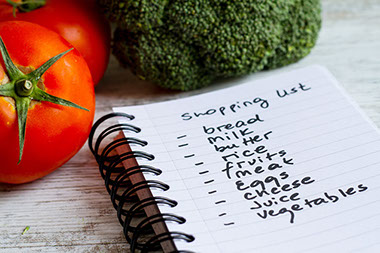
    Shopping list of groceries.

    1. Look at your weekly menu. Make a list of all of the ingredients you will need. Calculate how much you will need for the week. Example:

    *  2 oz. chicken breast x 5 meals = 10 oz. chicken breast

    *  2 cups greens x 3 meals = 6 cups greens

    2. What do you already have? Cross off what you don’t need to buy.

    3. On a fresh piece of paper, make a list of the ingredients you need to buy. Organize by section of the store to save time shopping.

    *  Fresh Fruits & Veggies

    *  Whole Grains (e.g., bread, pasta, rice, cereals), Beans & Lentils

    *  Meat/Poultry/Seafood/Tofu

    *  Misc. Aisles: Canned vegetables and fruits, nuts & seeds, dried fruit, oils

    *  Frozen Fruits & Veggies

    *  Dairy/Eggs

    Family Fun: Have your children help you write the grocery list each week. Practice math skills by adding the amounts you need for each item. Invite children to add a fruit or vegetable of their choice to the list. Have older children select a recipe and add ingredients to your list.

    © American Institute for Preventive Medicine

  • Address Depression

    Healthylife® Weigh

    Part 6

    Man coping with depression.

    Signs & Symptoms

    *  Feeling sad, hopeless, helpless, and/or worthless

    *  Fatigue

    *  Loss of interest in daily activities, including sex

    *  Change in eating and sleeping patterns

    *  Anger, anxiety, or irritability

    *  Having a hard time concentrating or making decisions

    *  Thoughts of suicide or death

    Strategy

    *  Accept thoughts as they are. Focus on your response, rather than trying to shoo away the emotion.

    *  Be with and call relatives and friends who lift your morale and make you laugh.

    *  Do something to help someone else.

    *  Keep up with your regular exercise.

    *  Do something different. Walk or drive to someplace new.

    *  Challenge yourself with a new project. It doesn’t have to be difficult, but it should be enjoyable.

    *  Watch a funny TV show or movie.

    *  Reflect on your expectations and make adjustments –  it takes a long time to change habits and feel the new habits are “normal.”

    *  Change your clothes. Take a shower. Do small self-care activities.

    If you feel depressed for two weeks or longer, see a doctor.

    For a screening test for depression, contact:

    Mental Health America

    800-969-6642

    www.mhanational.org

    © American Institute for Preventive Medicine

  • Change Is Your Choice

    Healthylife® Weigh

    Part 3

    Elderly couple eating dinner.

    The decision to make changes is up to you. You can decide which changes you want to make, how long it takes you to make them, and who you tell.

    Check in with yourself daily. Pick one of your action steps from Part 2 or a new one. Answer the following:

    *  What do I want to do? Am I willing to do this?

    *  If there is something I am unable to do, what do I need to do to get there?

    *  What am I going to do right now?

    Check in with Your Values

    Remember those values you identified in Part 1?

    *  How will continuing this journey help me live another one of my values?

    *  How have I cared for myself today?

    © American Institute for Preventive Medicine

  • Energy, Learning, And Focus

    Healthylife® Weigh

    Part 5

    Senior couple exercising in gym.

    Improved Energy Levels

    Exercise helps transport oxygen and nutrients to your tissues. When your heart and lungs are working more efficiently, you have more energy to work, do daily chores, keep up with active kids, and have fun.

    Improved Ability to Learn

    Exercise increases production of cells in the brain responsible for memory and learning. Exercise can help with decision-making and higher-level thinking. Exercise also helps increase brain volume and reduce the number and size of age-related holes in the brain. This decreases the risk for dementia and Alzheimer’s.

    Improved Focus

    Exercise that requires hand-eye coordination or quick foot work helps your brain cells grow. These exercises, like tennis or basketball, may improve your concentration skills better than more simple exercises, like riding a stationary bike.

    © American Institute for Preventive Medicine

  • Have Fun With Fruits And Vegetables

    Healthylife® Weigh

    Part 2

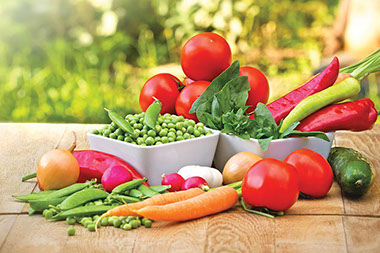
    A mix of colorful vegetables.

    Color

    *  Have color theme nights and plan a meal with foods of that color.

    *  Combine two brightly colored vegetables together (like vibrant red peppers and deep green broccoli).

    Shapes

    *  Cut fruits and vegetables into different shapes. Use a knife, cookie cutters, or a melon baller to cut stars, hearts, and other fun shapes into fruit.

    *  Use a knife or spiralizer to cut vegetables into strings, coins, or another shape.

    Texture & Temperature

    Serve fruits and vegetables at different temperatures and at different levels of “crunch.” Have raw carrots for lunch but soften celery in a soup at dinner. A salad can be hot. A soup can be cold.

    Pick a new way to prepare a vegetable this week. What best describe(s) how you plan to prepare it:

    *  Crunchy

    *  Soft

    *  Smooth

    *  Rough

    *  Jagged

    *  Al dente (firm in the middle)

    *  Hot

    *  Cold

    Toppings

    Add toasted nuts (flaked almonds, pine nuts, hazelnuts, or cashews), roasted garlic, crispy shallots, toasted seeds, or parmesan cheese to a vegetable-based salad, soup, or stir fry. Other flavorful additions include olives, chili, capers, anchovies, low-sodium soy sauce, and crumbled turkey bacon.

    Make it yours! Food can express your uniqueness.

    © American Institute for Preventive Medicine

  • Limit Artificial Sweeteners

    Healthylife® Weigh

    Part 3

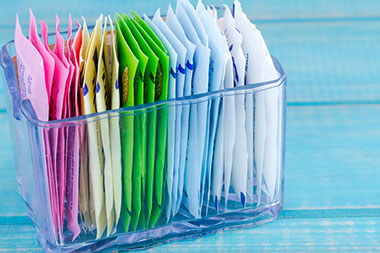
    Packets of artificial sweeteners in glass container.

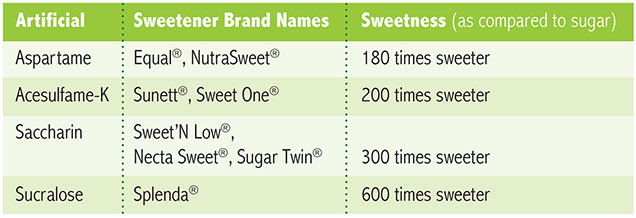
    Artificial sweeteners give a sweet taste without adding the calories you get with sugar. They don’t contribute to tooth decay and don’t raise blood sugar levels. However, consuming these sugar substitutes can have significant drawbacks. They may:

    1. Raise your sweetness threshold. This can make it harder to break a sugar “addiction.” Artificial sweeteners are hundreds of times sweeter than regular sugar. This may cause you to crave sweeter foods.

    2. Cause you to eat more. Eating and drinking sweet things signals the brain to want more. Even if the artificial sweetener doesn’t have any calories, it can lead to overeating and consuming extra foods that do.

    3. Cause discomfort. This can be headaches, exhaustion, and digestive discomfort, including gas, bloating, and constipation.

    4. Harm your gut bacteria. Artificial sweeteners may promote the growth of gut bacteria that store energy as fat. Gut bacteria that is not working properly also contributes to high blood sugar.

    Stevia (Truvia®, Pure Via®) is a non-caloric sweetener made from an herb. It has not been studied as much as artificial sweeteners, but it is still super sweet (300 times sweeter than sugar) and may cause digestive discomfort for some people.

    Sugar Alcohols (e.g., xylitol, sorbitol) are not sweeter than sugar and contain fewer calories than sugar. However, they may also cause digestive discomfort and headaches for some people.

    © American Institute for Preventive Medicine

  • Mindfulness

    Healthylife® Weigh

    Part 6

    Man mediating on bedroom floor.

    Mindfulness means you are fully aware of all aspects of what you are sensing in the current moment. Practice mindfulness while you listen to music, walk, run, garden, or eat.

    *  Focus on current thoughts without judging them.

    *  Put past thoughts and what the future has in store out of your mind.

    Mindfulness can activate areas in the brain that give you feelings of calmness and help reduce stress.

    Mindfulness Exercise

    *  Set aside five (or more) minutes. Find a place with no distractions.  Get comfortable.

    *  Focus on your breathing or anything in the present, such as the sounds you hear or an object in your sight.

    *  As thoughts pop up in your mind, let them go without judging them. Return your focus to what you see, hear, and feel.

    Mindful Eating

    *  Have a space for eating that is separate from where you do other tasks.

    *  Calm yourself first. Use other relaxation techniques to help you focus on the present.

    *  When you are eating, just eat. Avoid multi-tasking. Distractions like watching TV or looking at your phone take away from being mindful.

    *  Savor your food and the act of eating it. Embrace all of the senses-touch, smell, sight, taste, and sound.

    *  Avoid judging yourself while you eat. Once you have chosen what to eat, enjoy it fully.

    Practice Mindfulness with an Orange

    Peeling an orange or other fragrant fruit can help you practice focusing on the moment. Press your nail into the thick skin to break through. Breathe in the citrus scent as you slowly take pieces off the fruit. Bite into a slice of the orange. Notice the taste on your tongue and the feel of the juices.

    © American Institute for Preventive Medicine

  • Plan A Balanced Day

    Healthylife® Weigh

    Part 2

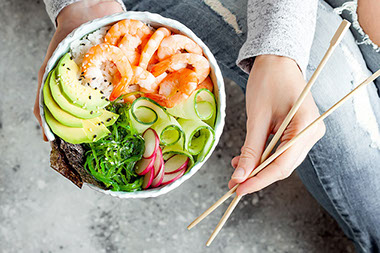
    Person holding a shrimp bowl with seaweed, avocado, cucumber, radish, sesame seeds.

    1. Select a healthy eating plan based on the calorie needs you identified. Or, follow these guidelines:

    – Plan A: best suited for women who are currently less active and want to lose more than 10-15 pounds. This calorie level is generally too low for men.

    – Plan B: best suited for women who are moderately active and for men who are less active and want to lose more than 10-15 pounds.

    – Plan C: best suited for men and for women who are very active and need to lose less than 10 pounds.

    2. Learn how much to eat from each food group. Meet, but don’t go over, your goals for each food group.

    3. Make healthier choices within each group. Choose nutrient-dense foods that meet your body’s needs.

    4. Make changes, as needed, to your plan. Meet your goals while having enough energy to do your favorite activities.

    5. Plan activity: Be physically active for at least 2 ½ hours (150 minutes) per week. You can do this for 5, 10, 15, 20, or 30 minutes at a time.

    © American Institute for Preventive Medicine