Tag: HealthyLife® Weigh

  • Face Unsupportive Situations

    Healthylife® Weigh

    Part 4

    Couple using laptop computer at home on sofa.

    Apply the suggestions in the table below to your challenges. Not all strategies will be right for all scenarios. You can turn a negative situation into a positive one for everyone.

    *  Let others know what your goals are and why you are working to achieve them.

    *  Model trying new foods and being open to new tastes.

    *  Reduce the amount of time spent with negative people, if possible.

    *  Describe your efforts as a lifestyle change rather than a diet.

    *  Share how you are doing things differently this time if you have struggled in the past.

    *  Let supportive people know how much their support means to you. Send a sincere thank you card, email, or share a kind word in person. They will likely help you again.

    *  Enjoy treats every now and then. Plan to have a small amount. Don’t let guilt rob you of enjoying the treat!

    © American Institute for Preventive Medicine

  • How Much Energy Do I Need?

    Healthylife® Weigh

    Part 2

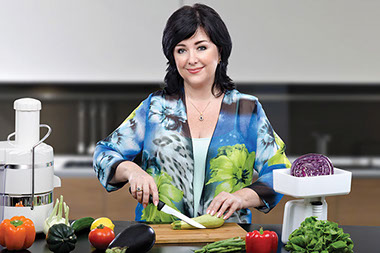
    Women cutting vegetables.

    Calories are units of energy that fuel your body for daily functions like breathing, eating, and thinking. Calories are also burned during physical activity. The more active you are, the more energy your body needs. Use the chart below to find your estimated daily energy needs. Calories needed vary by sex, age, and activity level. To determine your activity level, consider how you spend most of your day.

    *  Sedentary: You sit most of the day and do little to no physical activity (e.g., you walk once a week or do light gardening).

    *  Moderately Active: Your work involves movement, such as cleaning or light industrial work. You do some moderate-intensity physical activity a few times a week, like brisk walking or cycling.

    *  Active: Your work involves a lot of movement, such as heavy industrial work, construction work, or farming. You do physical activity most days during the week, such as jogging, swimming laps, intense walking, weight lifting, or sports.

    Chart showing calories needed per day by age, gender and activity level.

    These are roughly the calories you need per day to stay at your current weight.

    To lose 1 pound per week, you need to take in 500 fewer calories than you use/burn through daily activity. This guide encourages gradual, long-lasting weight loss.

    You can get your specific daily energy needs using the USDA’s SuperTracker online tool. Find this atwww.choosemyplate.gov/resources/MyPlatePlan.

    You can lose weight without severely restricting calories. Eating fewer than 1,200 calories per day can make it difficult for you to get all the nutrients you need. Eating this way can also be hard to follow long-term. A diet with fewer than 1,200 calories should be supervised by a doctor or dietitian.

    Special nutrition needs

    Talk to your doctor or dietitian before choosing an eating plan if you have special nutrition needs, such as:

    *  You are pregnant or breastfeeding

    *  You have a health condition or take medications

    © American Institute for Preventive Medicine

  • Look Past Advertising

    Healthylife® Weigh

    Part 3

    Man grocery shopping.

    Advertising can help point out healthy qualities in a food or drink. Advertising can also distract you from less healthy ingredients and nutrition facts. Check the nutrition facts and ingredients list to get the real scoop on what’s in the product. The drawbacks may outweigh the benefits advertised on the package.

    “Made With…”Example: Whole Grains, Real Fruit

    What it Means: At one point, the real ingredient (e.g., whole grain, fruit) was part of the product. That ingredient may have been processed further, causing it to lose nutrients. This claim does not tell you anything about how much of the whole food is in the end product.

    “Sugar Free”

    What it Means: A sugar free food has less than 0.5 grams of sugar per serving. What is in the food is more important than what the food is claiming to be free from. Check to see if extra saturated fat or artificial sweeteners have been added to make up for taste. Avoid foods high in saturated fat or foods containing artificial sweeteners.

    “Fat Free”

    What it Means: This food contains less than 0.5 grams of fat per serving (of any kind). If a food is fat free, make sure sugars or starches haven’t been added to replace the flavor and structure that fat gives food. Remember, unsaturated fat is an important part of a healthy diet and helps keep you feeling full.

    “Contains…”Example: Whole Grains, Real Fruit

    What it Means: This product contains some amount of this ingredient, but that amount may be very small. For example, a fruit drink that “contains real fruit” may be 10% real fruit juice and 90% added water and sugar. If you want more of the ingredient, like a whole grain or fruit, look for it to appear high on the list of ingredients.

    “Contains Zero Trans Fat”

    What it Means: There is no safe amount of trans fats, but a food label can say it contains zero trans fats if the trans fat content is below 0.5 grams per serving. To find trans fats, you will need to look at the ingredients. Avoid ingredients that are “hydrogenated” or “partially hydrogenated.”

    Organic, Grass-Fed, Cage-Free, Free-Range, Non-GMO

    Learn more about these marketing claims and labeling standards inPart 7of this guide.

    © American Institute for Preventive Medicine

  • Other Eating Patterns

    Healthylife® Weigh

    Part 7

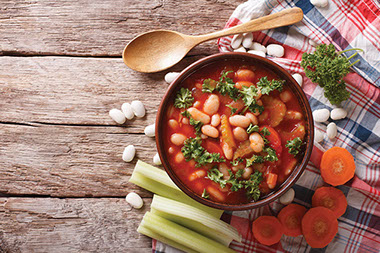
    Homemade bean soup.

    Vegetarian

    Vegetarian diets are plant-based eating patterns. There are variations of the vegetarian diet:

    *  Vegan: includes only foods from plants (e.g., vegetables, fruits, legumes, grains, seeds, and nuts). No foods from animal sources are included.

    *  Lacto-vegetarian: includes plant foods plus cheese and other dairy products.

    *  Lacto-ovo-vegetarian: includes plant foods, cheese, other dairy products, and eggs.

    Vegetarian diets are usually low in saturated fat because animal proteins, a source of saturated fat, are limited or eliminated. Eating a plant-based diet can lower your risk of obesity, coronary heart disease, high blood pressure, type 2 diabetes, and some forms of cancer.

    The healthy eating patterns in this guide encourage you to make most of your food choices from plants. If you follow a vegetarian diet, you don’t need to make many changes to the guidelines in this guide.

    Choose a variety of foods to obtain necessary nutrients. Choose plant-based protein sources. If consuming some animal-based protein sources, choose eggs, seafood, and low-fat dairy.

    Vegetarians are at higher risk for some vitamin and mineral deficiencies. You can obtain these nutrients by eating a variety of plant foods.

    *  Iron can be found in pumpkin seeds, dried beans, legumes, lentils, spinach, whole grains, and enriched products.

    *  Vitamin B12 can be found in fortified breakfast cereals, fortified soy beverages, and some brands of nutritional yeast.

    *  Vitamin D can be found in some mushrooms and pasture-raised eggs. It can also be obtained by spending time in sunlight for at least 15 minutes each day with your arms exposed.

    *  Zinc can be found in whole grains, quinoa, pumpkin seeds, chia seeds, pecans, walnuts, legumes, and shellfish.

    *  Calcium can be found in green leafy vegetables (e.g., spinach, kale), nuts, broccoli, legumes, soybean products, and fortified foods.

    If you are concerned about meeting nutrient requirements, have a dietitian take a closer look at your diet. You may need to take a supplement if you are struggling to meet nutritional requirements from food alone.

    Paleo Diet

    The paleo diet, created by Dr. Loren Cordein, is described as a “caveman” diet that our Paleolithic ancestors would have followed. This is a controversial claim and diet. However, following a paleo diet can point you in the direction of choosing some healthy foods. This diet includes grass-fed meats, fish/seafood, fresh fruits and vegetables, eggs, nuts, seeds, and healthy oils. These are all nutritious foods that fit into MyPlate.

    The diet excludes processed foods, refined sugar, salt, and refined vegetable oils (this guide also suggests you limit them). However, the paleo diet also excludes cereal grains, legumes, dairy, and potatoes. These foods are healthy choices and are included in a healthy eating plan.

    The paleo diet may be high in saturated fats and protein, which may increase risk for heart disease, kidney disease and some cancers if consumed for long periods of time. More research on the paleo diet’s long-term effects is needed. A paleo-themed cookbook or blog may give you ideas for preparing vegetables in different ways or using less sugar. However, avoid strictly following a diet that limits good sources of nutrients, like grains and legumes.

    © American Institute for Preventive Medicine

  • Plan Physical Activity

    Healthylife® Weigh

    Part 5

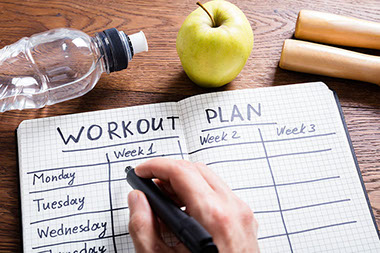
    Workout plan in notebook.

    *  What do you want to do?

    *  Are you doing this alone? Or, who will you do it with?

    *  Where and when will you do this?

    *  What do you need to wear? What do you need to bring?

    *  Write down your specific goals for this workout. If planning a HIIT or resistance training session, write down each part of your exercise plan. Bring this with you when you exercise.

    –  Warm-Up:

    –  Main Activity:

    –  Cool-Down/Stretching:

    © American Institute for Preventive Medicine

  • Say Nice Things To Yourself

    Healthylife® Weigh

    Part 4

    Woman holding red heart shape.

    These nice things are called affirmations. What you say to yourself is powerful. You may not strongly believe it at first, but keep going.

    1. State your affirmation in the present tense.

    2. Say what you want, rather than what you don’t want.

    3. Include feeling words that add positive emotion.

    4. Be specific about what you want, rather than being vague.

    5. Make the words simple and easy to remember.

    Here are a few ideas.

    *  I am special and unique.

    *  I am proud to be me.

    *  I take care of my body.

    *  I trust myself.

    *  I am thankful for my life.

    *  I love to play and have fun.

    *  I am a good friend.

    *  I love to learn.

    *  I am courageous.

    *  I am lovable.

    *  I am gentle and strong.

    *  I am learning from this experience.

    *  I choose to respect myself.

    *  I choose to be in control.

    *  I am in control of many things, but not all things.

    Start today.Choose one or two affirmations. Write this statement on a sticky note and put it where you will see it, like the bathroom mirror or on your computer monitor. Say it out loud or repeat it silently to yourself.

    The Poisoned Parrot

    Imagine you have a parrot. This parrot repeats everything you say about yourself, over and over again. It comments on your life, especially the things that go wrong.

    For example, you come home with several bags of treats and soda. The parrot squawks, “There you go again. You’re never going to lose weight. You could have made a list, but you didn’t. You keep saying you’re going to change, but you aren’t. You’re never going to change your habits.”

    How do you feel? How long would you put up with this parrot? Don’t put up with a bully in your head. Notice this “parrot” and cover the cage.

    © American Institute for Preventive Medicine

  • The Power Of A Phrase

    Healthylife® Weigh

    Part 4

    Mother and adult daughter having coffee together.

    Fill in the blank after the victim phrase with something you have caught yourself saying or feeling. In the third column, use an accountability phrase to re-write this statement.

    Victim Phrase

    *  I can’t…

    *  It’s useless…

    *  I have to…

    *  Why am I always the one who…

    *  I should…

    Drained Feeling

    *  Defeated

    *  Hopeless

    *  Obligated

    *  Burdened

    *  Guilt

    Accountability

    *  I can…

    *  There’s always a chance…

    *  I choose to…

    *  I’ll be the one who…

    *  I want to…

    In Control Feeling

    *  Confident

    *  Hopeful

    *  Decisive

    *  Secure

    *  Power

    © American Institute for Preventive Medicine

  • Be Assertive

    Healthylife® Weigh

    Part 4

    Women with arms crossed looking convinced and confident.

    Learn the differences between passive, aggressive, and assertive communication.

    Passive

    *  You lack expression for yourself.

    *  You do not stand up for your rights and needs.

    Result: You usually do not achieve your goal.

    Aggressive

    *  You stand up for your rights and needs, but at the expense of someone else.

    Result: You usually put down or hurt someone else. You gain no respect.

    Assertive

    *  You stand up for your rights and needs without putting down or hurting someone else.

    *  You express your feelings without becoming victim to them.

    Result: You build self-respect and feel good about yourself.

    Example: Your aunt offers you a large piece of cherry pie that she said she made especially for you. You know that you have eaten enough for the meal and eating the piece of pie does not fit your eating goals.

    *  Passive Response: “Thank you. It’s delicious!” Thinking… “I really don’t want to eat this right now, but I don’t want to hurt her feelings.”

    *  Aggressive Response: “I can’t believe you’re offering me cherry pie when you know I’m trying to lose weight. You’re going to ruin my diet!”

    *  Assertive Response: “I appreciate that you went to the trouble of making this pie for me! It looks great and I’m sure it tastes great. I am very serious about losing weight so I’d like to split that piece with someone.”

    What Assertive Looks Like

    *  Body Posture: Be relaxed and natural. Avoid slouching, putting your hands in your pockets, and facing away from the person you are speaking with.

    *  Eye Contact: Good eye contact is vital to convey self-confidence and interest. Don’t stare at the other person; this comes across as a challenge.

    *  Voice, Tone, and Quality: Use a strong, varied tone. Speak clearly and firmly. Don’t shout or speak too softly. Don’t whine.

    *  Distance from the Person: Don’t position yourself too far or too close.

    *  Facial Expression: Let your face convey the same message as what you are saying.

    *  Content: Use short sentences. Be specific, clear, and firm.

    Practice First

    Plan or write down what you want to say. Have responses ready ahead of time to deal with questions and comments. Reinforce your remarks by saying what positive outcomes will occur for you and the other person. Practice in front of a mirror or with a friend.

    Benefits of Being Assertive

    *  You can feel comfortable saying “no.”

    *  You have more confidence to ask others for help.

    *  You gain more respect from others.

    *  You feel less angry with yourself and with others.

    *  You feel justified to say what you want to say.

    *  You feel comfortable requesting clarification.

    *  You accept compliments graciously.

    *  You can change your mind without feeling guilty.

    © American Institute for Preventive Medicine

  • Control Catastrophic Thinking

    Healthylife® Weigh

    Part 4

    Woman thinking.

    Seeing the worst possible outcome for a situation can lead to anxiety and racing thoughts. Avoid focusing on the negative aspects of a situation or how it could be even worse. The unknown future can seem scary and full of negative potential. Dispute each irrational thought with a rational one. Challenge your “worst case scenario” with a “best case scenario” and options in between.

    *  What is statistically likely in this scenario?

    *  How might this situation turn out better than expected?

    *  What can I do to reduce the chances of the situation getting worse?

    Think of a “mountain” that you build out of a “molehill.” Challenge your thought with rational thinking. Complete the following chart with two examples of your own.

    Catastrophic Thought

    Example: The more weight I lose, the more I am going to gain back later. I am better off staying overweight.

    Alternative Thought

    Losing weight will help my health now and in the future. I can learn tools to maintain my weight loss. Even a small weight loss will have a big impact on my health.

    © American Institute for Preventive Medicine

  • Fast-Food Restaurants

    Healthylife® Weigh

    Part 3

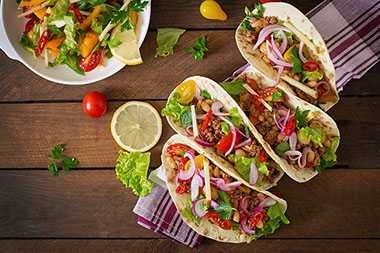
    Mexican tacos with meat, beans and salsa.

    Fast-food restaurants can be very convenient, especially if they have a drive-thru window. Look for the healthier choices on the menu, though they may not be the biggest or most colorfully advertised.

    If you are getting a meal, use the MyPlate guidelines. Choose from at least two food groups, like protein + fruit or protein + vegetable + dairy. Count these toward your goals for the day.

    Tips

    *  Choose grilled options over fried. This reduces saturated fat.

    *  Look for lower-sodium options.

    *  Order the smaller portions on the menu.

    *  Order water instead of 100% fruit juice. Order 100% fruit juice instead of soda.

    *  If you are treating yourself, choose a small portion, like a small ice cream.

    *  Eat half a portion and save the other half for later. Or, split a meal or menu item with a friend.

    Healthier Choices

    *  Regular burger, skip the fries and add a side salad with a vinaigrette dressing

    *  Grilled chicken wrap with apple slices and a side salad

    *  4-piece chicken nuggets, small fries, apples, yogurt

    *  Salad with chicken and a clementine

    *  Chili with a small salad

    *  Baked potato with plain yogurt

    A menu item may be prepared differently at a specific location, which affects nutrition. For example, an extra scoop of cheese or dash of salt can add extra saturated fat or a lot of sodium to a food. Take posted nutrition information with a grain of salt!

    © American Institute for Preventive Medicine