Tag: HealthyLife® Weigh

  • Power Of Perception

    Healthylife® Weigh

    Part 2
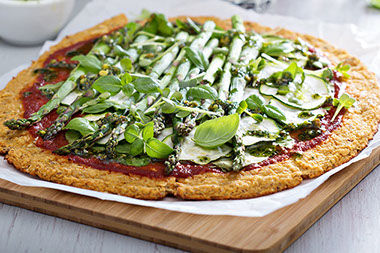
    Cauliflower pizza with spinach, zucchini and asparagus.

    Which words/phrases do you associate with vegetables?

    *  Green

    *  Filling

    *  Necessary evil

    *  Fiber

    *  Broccoli

    *  Minerals

    *  Boring

    *  Variety

    *  Hydrating

    *  Vitamins

    *  Colorful

    *  Fresh

    *  Salad

    *  Do I have to?

    *  Exciting

    *  Nourishing

    *  Canned

    *  Soggy

    *  Crisp

    *  French fries

    Having a positive attitude toward a food may help you be more willing to try it and include it in your diet.

    *  Look back at the words listed above. How do you think your current attitude toward vegetables influences your food choices?

    *  After learning about vegetables, how do you feel your attitude toward vegetables has changed?

    *  What is one new way you want to eat a vegetable this week?
    © American Institute for Preventive Medicine
  • Set Goals

    Healthylife® Weigh

    Part 3

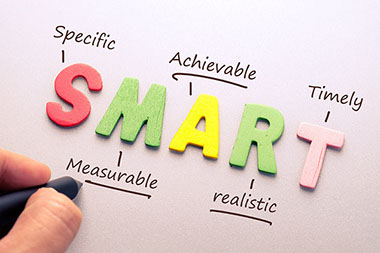
    The word Smart spelled out with wood lettering and hand writing definition for setting a smart goal.

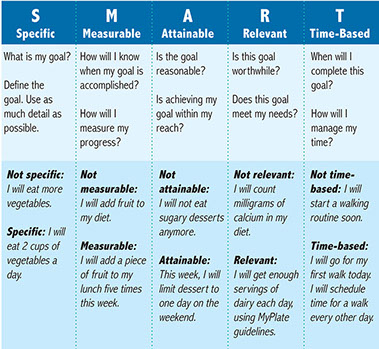
    Think of the actions you take on a daily basis as small steps toward your bigger goal. This guide has already given you many ideas for small steps, such as making half of your plate fruits and vegetables and choosing fewer sugar-sweetened drinks. Identify your next step and use the S.M.A.R.T. tool to improve the chances of reaching your goal.

    Stay motivated with the small successes you achieve along the way. Use yourEating & Exercise Tracker™every day for feedback on the effect your actions have on your energy level, mood, and weight.

    S.M.A.R.T. chart.

    © American Institute for Preventive Medicine
  • Use Food Labels

    Healthylife® Weigh

    Part 3

    Smiling woman shopping in supermarket and reading food label.

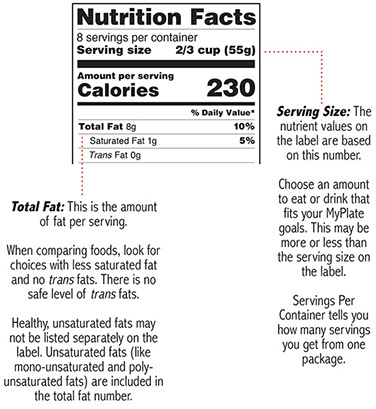
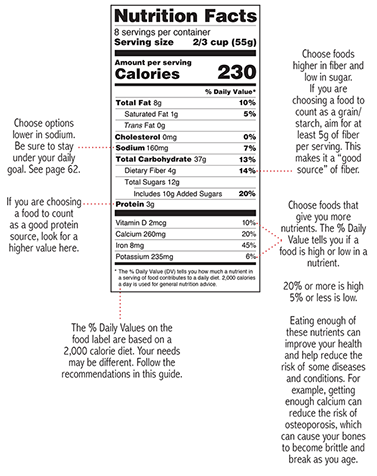
    Information on food labels can help you choose healthy foods and drinks and avoid less healthy options. Some of the healthiest foods, like fruits and vegetables, don’t have a label at all! Practice reading food labels with the foods you have at home or the next time you grocery shop.

    Chart breaking down how to read a food label.

    What seems “normal” as a portion is influenced by what you have eaten in the past, what you see others eat, what you have been served at a restaurant, and what is on a food label. Part of adopting a balanced diet may be creating a new “normal” for yourself that is pleasing, filling, AND the right amount for your body.

    Chart breaking down how to read a food label.

    © American Institute for Preventive Medicine
  • A Changing Food Label

    Healthylife® Weigh

    Part 3

    Man reading food label.

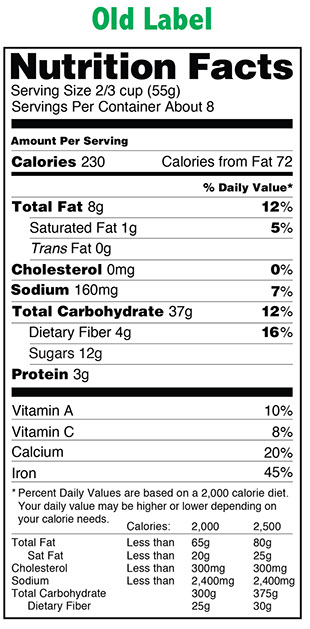
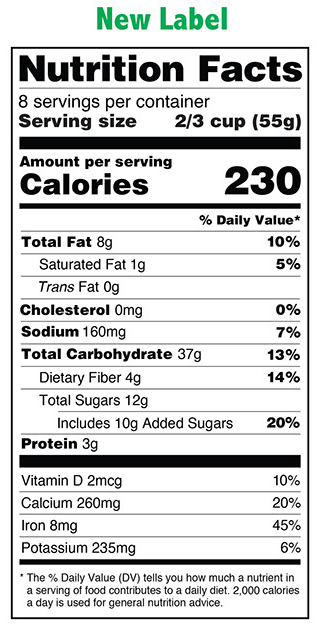
    In 2016, the FDA approved a new food label. The new food label is already on many foods. By mid-2021, all food labels will look like the new label. The new label will help you make more informed choices about what you eat. The changes are shown in the graphic below.

    Graphic of old and new food labels.
    Graphic of old and new food labels.

    © American Institute for Preventive Medicine

  • Be Persistent

    Healthylife® Weigh

    Part 7

    Man at gym holding a water bottle and apple.

    You may be reading this page well before you reach your goal. That’s okay. Understand that weight loss takes time. Continue to build on what you do each day. Remember, it isn’t a single healthy meal or workout that will get you to your goal. It’s also not a single poor choice or skipped workout that will derail you.

    *  Build trends of healthy choices.

    *  Know and live your values.

    *  Treat your thoughts and actions with compassion.

    *  Don’t settle with just what you know now. Keep learning.

    *  Create a web of support.

    © American Institute for Preventive Medicine
  • Dispute Unhelpful Thoughts

    Healthylife® Weigh

    Part 4

    Man thinking in front of black chalk board with arrows pointing.

    Thinking in all-or-nothing terms using words like “always,” “never,” and “every” can make it difficult to see options. Avoid thinking about people or situations using absolute terms. Logical thinking looks at more than one option. People can act in different ways. Situations can have many outcomes.

    Have you had any of the unhelpful thoughts below:

    *  Gaining weight and moving less is just part of getting older.

    *  Taking care of myself is selfish.

    *  I weigh less than those around me. At least I am doing better than they are.

    *  My spouse does the grocery shopping and cooking so I have very little control over what I eat.

    *  Eating healthy is too expensive.

    Question your unhelpful thoughts. The strategies on the following pages help to break down thoughts that you may be using as excuses not to change. If you notice you are thinking in absolutes, identify alternatives to your black and white thoughts.

    © American Institute for Preventive Medicine
  • Get Enough Sleep

    Healthylife® Weigh

    Part 3

    Man sleeping.

    Not getting enough sleep can affect your appetite and make it harder to manage your blood sugar. A shortage of sleep also:

    *  Triggers ghrelin, a hunger hormone. Ghrelin increases appetite, especially for sweets, salty foods, and starches.

    *  Decreases another hormone, leptin. Leptin helps your body know when you are full.

    *  Increases anxiety and negative feelings, which can lead you to eat unhealthy snacks and overeat “comfort foods.”

    *  Decreases energy to exercise.

    Tips for Improving Sleep

    *  Create a comfortable place to sleep. Make sure your bed, pillows, and bedding are comfortable.

    *  Maintain a slightly cool temperature in the bedroom.

    *  Avoid looking at a screen (TV, laptop, smartphone, tablet, etc.) 30 minutes before bed.

    *  Create a bedtime and waking routine.

    *  Reserve the bed for sleep and sex. Avoid doing other activities in bed, like work or having an argument.

    *  Have a small snack before bed if you are hungry.

    *  Avoid foods high in sugar or refined carbohydrates just before bed. The rise in blood sugar can provide a burst of energy that keeps you alert and makes it difficult to go to sleep.

    *  Avoid foods that are likely to cause acid reflux (heartburn), gas, cramping, or indigestion if you are prone to these problems. Fatty or spicy foods, beans, garlic, peanuts, and dairy foods may cause discomfort for some people.

    © American Institute for Preventive Medicine

  • It Takes A Village

    Healthylife® Weigh

    Part 4

    Three friends at the beach.

    Build support around you. Support from others can help:

    *  Motivate you and lift you up when you stumble.

    *  Hold you accountable.

    *  Give you new ideas and inspiration.

    *  Make activities more fun.

    Start With One Person

    Find someone you know and trust. This could be anybody-a family member, friend, or coworker. Perhaps this person already motivates you to make positive changes in your life.

    1. Let them know what you are trying to do.

    2. Ask them if they would be willing to support you.

    3. If “yes,” say “thank you!”

    4. Let them know how to help you. This may change over time.

    5. Thank this person often. Let them know the impact they are having on your lifestyle change.

    Let Others Know How to Help You

    Even when someone wants to help you, they may not know how. You have probably experienced this already, like when someone gives you cliché advice or gives you a sweet treat to cheer you up.

    Be specific when you tell others how to help you. Here are a few ideas.

    *  Remind you of your strengths and talents.

    *  Share healthy recipes for easy meals and snacks.

    *  Plan social times that don’t involve food. For example, go for a walk or go to the same exercise class.

    *  Give you non-food gifts only.

    *  Take care of your children so you can do your planned exercise. Or, plan an event where your families can be active together.

    © American Institute for Preventive Medicine
  • Massage

    Healthylife® Weigh

    Part 5

    Man getting a chair massage.

    Massage can be a form of recovery for your muscles. Massage, especially deep compression massage, can help relax tight muscles and knots that have formed between muscle layers. This can help with normal blood flow, keep your muscles flexible, and reduce pain.

    A professional massage therapist or a friend can assist you with massage.  Or, you can give yourself a massage.

    Self-Massage

    Use a foam roller, tennis ball, Thera Cane®, or muscle roller stick. These items are fairly inexpensive and can be purchased from major retailers and sporting goods stores. Or, using your fingers is free! Apply pressure to specific parts of your body. Go slowly. If you purchase a self-massage tool, follow package instructions.

    © American Institute for Preventive Medicine
  • Review And Prepare 4

    Healthylife® Weigh

    Part 4

    Waitress delivering food to table.

    This section looked at ways to create a helpful physical, social, and mental environment. Designing helpful environments can make it easier to change behaviors. Answer these questions:

    *  What changes have you made to your physical environment (e.g., pantry, kitchen countertops, plate size)? How have these changes helped you make healthier choices?

    *  What changes have you made to your social environment (e.g., being assertive, changing social media habits)? How have these changes helped you make healthier choices?

    *  What changes have you made to your mental environment (e.g., banishing black and white thinking, saying nice things to yourself)? How have these changes helped you make healthier choices?

    The next section focuses on physical activity and how to fit it into your daily routine. Start to think about your favorite ways to be active.

    © American Institute for Preventive Medicine