Tag: HealthyLife® Weigh

  • Practice Assertiveness

    Healthylife® Weigh

    Part 4

    Group friends enjoying a meal at home.

    Practice responding to common scenarios. Below are sample responses to a few statements and situations.

    “One piece of chocolate cake won’t hurt you.”

    You’re right, but a whole cake of pieces will! Since I’m not eating chocolate cake as often, I’ll enjoy a couple of bites with you. -OR-  I’m not eating chocolate cake as often. I’ll have a piece another time.

    “I made it just for you.”

    Wow, I really appreciate you thinking of me! I’m cutting back on how much I eat that treat right now. Can I have just a taste?

    “What’s the matter? Don’t you like it?”

    I am enjoying it, but since I’m changing how I eat, I’m eating the amount that’s just right for me.

    “You’ve been on every diet there is. This one won’t work either.”

    I appreciate your concern for my success, but this time my goal is a healthy lifestyle change and the weight loss is secondary. I’m doing things differently this time.

    Someone takes you on a “surprise” trip to the ice cream parlor.

    What a surprise! I’m going to enjoy a kiddie-size ice cream. Next time, maybe we could go for a walk, go someplace different, etc.

    Someone asks you to do something during planned physical activity time.

    Thanks for the invite, but I have plans to go to the gym today. How about we take a look at our schedules and find a time that works for both of us to do something in the future. Or, would you like to join me?

    You look great! You don’t need to change anything you’re doing!

    Thanks for the compliment! But, I want to look and FEEL my best so it’s important for me to keep implementing healthier lifestyle choices for myself.

    © American Institute for Preventive Medicine

  • Set Yourself Up For Success

    Healthylife® Weigh

    Part 5

    Man running along hiking trail.

    Create a consistent routine for yourself. Reduce the number of excuses you can make. Tips for creating an exercise habit:

    *Seize your moment.Be aware of when your motivation to exercise is high. You may prefer mornings over evenings. Or, the opposite. Plan to exercise when you are more likely to be physically and mentally on board with it.

    *Get ready ahead of time.Pack a bag with clothes, shoes, deodorant, hair ties, a water bottle, a small towel, and other supplies you’ll need. When exercise comes up on your calendar, all you have to do is grab the bag.

    *Get ready for round 2 ahead of time.Have several days’ worth of workout clothes clean and ready to go. Store workout clothes together so it is easy to re-fill your gym bag. Make it easier to repeat your habit.

    *Commit to repeating your routine.Join a recreational sports team, sign up for a class, or pay for a personal training package. Even if you are not feeling up to it one day, having it on the schedule may get you there.

    *Be accountable to someone.Commit to meeting a friend for exercise at a certain time. Get a workout buddy and swap shoes. If you don’t show up, they won’t be able to work out either! Or, commit to logging your workout on social media or with a friend.

    *Be patient.It may take time to find an activity you like. It may take even longer to feel like it is a normal part of your day to exercise. Keep going. You’ll get there!

    © American Institute for Preventive Medicine

  • Use Social Media For Support

    Healthylife® Weigh

    Part 4

    People using social media.

    Today’s social world goes beyond the people you see on a daily basis. From Facebook to Twitter, Instagram to Snapchat, social media may be a big part of your life. Perhaps you follow friends, family, sports and entertainment personalities, or online groups and message boards.

    Social media can be a powerful, positive part of your healthy lifestyle change. What you read, see, and hear can affect your mood, knowledge, what you think is normal, and how you feel about yourself. It can also be negative and make it harder for you to reach your goals.

    Positive ways to use social media:

    *  Follow friends, nutritionists, and food bloggers who promote positive, healthy body and mind messages.

    *  Un-follow or block individuals who tend to post negative comments or who engage in arguments on social media.

    *  Share what inspires and motivates you on social media.

    *  Instead of reading or listening to short clips of news, read more investigative and thorough articles that make you think. Use this as food for thought on your next walk or in a discussion.

    *  Explore websites that bring people who share a common interest together. Join an outdoor adventure club or social group on MeetUp! (www.meetup.com).

    *  Support your friends and family who you see working to make changes in their lives, whether in health or another area of life.

    *  Follow friends, bloggers, or magazines that share ideas for meals, snacks, or workouts.

    *  Share what challenges you face and ask for support from friends & family.

    *  Share your goals to improve accountability.

    *  Note how much time you spend on social media sites. Could this time be spent planning a grocery list, going for a quick walk, or getting to bed earlier?

    Follow & Subscribe

    Tune into positive influencers on social media. Subscribe to recipe-packed magazines and blogs. Find new information, colorful ideas, and inspiring people to help you stay motivated and find social support.

    Magazines (and corresponding websites):

    *  Clean Eating (www.cleaneating.com)

    *  Eating Well (www.eatingwell.com)

    *  Cooking Light (www.cookinglight.com)

    *  Vegetarian Times (even if you’re not a vegetarian, this magazine provides great plant-based meal and snack ideas!)(www.vegetariantimes.com)

    *  Experience Life (www.experiencelifemag.com)

    Blogs & Social Media Accounts

    Pinterest (www.pinterest.com) – Think of Pinterest as a picture-book guide to meal plans, recipes, printables, workout ideas, and inspiration. This site offers much more than tips for healthy eating, but here are some search terms to get you started: “clean eating” “healthy recipes” “healthy (food item, like stir fry or quiche)” or “easy workouts.”

    @SproutedKitchen (Twitter, Instagram) andwww.sproutedkitchen.com– Whole foods inspiration and recipes

    @Veggieful (Twitter, Instragam)- Ideas for incorporating more fiber-rich, plant-based foods into your diet

    @Skinnytaste (Twitter, Instagram) andwww.skinnytaste.com– A healthy take on many easy, familiar recipes

    Content and advertising in these publications and websites may or may not reflect the opinion of the American Institute for Preventive Medicine or that of its Medical Review Board.

    Filter Your Social Media

    *  Who or what do I want to start following?

    *  Who or what do I need to stop following?

    *  How can I reduce the time I spend on social media?

    Comparing Yourself to Others

    Avoid physical comparisons with others. You will never look exactly like someone else. Instead, look at the qualities you admire in others.

    *  Who is someone I admire? What values does this person show by their actions? Underline the values you want to have yourself (e.g., sense of adventure).

    *  What actions can I take to start living one of those values?

    © American Institute for Preventive Medicine

  • Add A Stress-Busting Food To Your Day

    Healthylife® Weigh

    Part 6

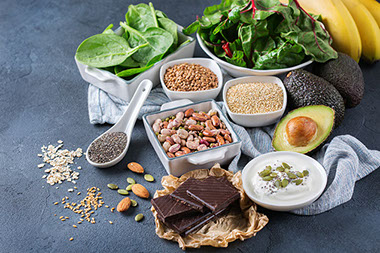
    Variety of food items high in magnesium.

    What you eat may impact your mood. Make sure you are eating a balanced diet with nutrient-dense foods. B vitamins and magnesium can be helpful for managing anxiety and boosting your mood. Avoid foods and drinks high in sugar that can cause mood swings and fatigue.

    B Vitamins

    B vitamins can stimulate the brain’s production of serotonin. This helps you relax and feel good.

    Good Sources of B Vitamins

    *  Animal products: fish, poultry, meat, eggs, or dairy

    *  Whole grains, beans and lentils

    *  Fruits and vegetables, especially leafy greens, papayas, oranges, and cantaloupe

    *  Fortified breakfast cereals and enriched soy or rice milk

    *  Nuts, such as almonds, pistachios, and walnuts

    Magnesium

    Magnesium has a calming effect on the brain. It can help relax muscles, blood vessels, and the gastrointestinal tract. Magnesium can also boost serotonin and reduce mood swings.

    Good Sources of Magnesium:

    *  Dark leafy greens

    *  Nuts, seeds, and dried fruit

    *  Beans and lentils

    *  Whole grains

    *  Avocados and bananas

    *  Dark chocolate

    *  Yogurt

    *  Fish

    © American Institute for Preventive Medicine

  • Befriend Healthy Fats

    Healthylife® Weigh

    Part 2

    Bottles of olive oil.

    Fats and oils do not have a separate section on MyPlate. Many foods that are sources of healthy fats are part of other groups. For example, nuts and seeds are part of the protein group. Avocados are part of the vegetable group.

    Fat has 9 calories per gram, making it a concentrated form of energy. Fat has more than twice the calories per gram that protein and carbohydrates have. That means there is a lot of energy (calories) in just one spoonful! It is important to select fats that are giving you the most nutritional value for those calories.

    Fats:

    *  Provide energy, especially long-term energy

    *  Transport fat-soluble vitamins (A, D, E, and K)

    *  Help the body make hormones

    *  Help you feel satisfied and full longer

    *  Make up cell structures in body tissues

    *  Cushion vital organs

    *  Support healthy skin and hair

    Chooseplant-based sources of fat most often. Healthy choices are nuts, seeds, nut and seed butters, canola oil, olives, olive oil, and avocado. These foods contain more unsaturated fats (monounsaturated and polyunsaturated fats). Salmon is also a good source of healthy omega-3 fats. While some research suggests that coconut and coconut oil contain a healthy form of saturated fat, there is still much debate in the scientific community about any health benefits.

    Even with healthy fats… Appropriate serving sizes for these foods are small. A small amount will help you feel full and provide many nutrients!

    Limitanimal sources of fat (red meat, processed meats, butter, whole-milk dairy). These foods contain more saturated fat. Saturated fat raises low-density lipoprotein (LDL) (“bad” cholesterol). This increases the risk for heart disease, especially when combined with a higher sugar diet.

    Avoidtransfats in any amount.Transfats are made when manufacturers add hydrogen to vegetable oil. This process gives foods a longer shelf life and adds flavor.Transfats raise your LDL cholesterol and lower your high-density lipoprotein (HDL) (“good” cholesterol). Eatingtransfats increases your risk of developing heart disease, stroke, and type 2 diabetes. Avoid products that contain “hydrogenated oils” or “partially hydrogenated oils.” These ingredients are not considered safe by the U.S. Food and Drug Administration (FDA).

    © American Institute for Preventive Medicine

  • Do Activities You Enjoy

    Healthylife® Weigh

    Part 5

    Older couple riding bikes.

    Answer these questions.

    *  What activities have I been good at before?

    *  What activities do I enjoy doing?

    *  What equipment do I have or can I use?

    *  What outcomes do I want to achieve?

    *  What activities am I physically able to do?

    © American Institute for Preventive Medicine

  • Grains And Starches

    Healthylife® Weigh

    Part 2

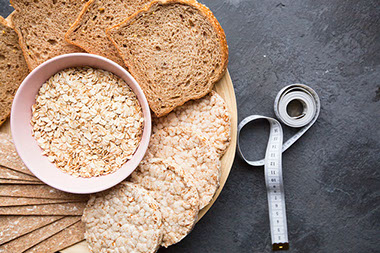
    A bowl of oat flakes, wholegrain bread, crisps and tape-measure.

    Grains & starches make up one quarter of MyPlate. This section includes foods made from grains, such as wheat, rice, quinoa, and oats. It also includes starchy vegetables like potatoes, winter squash, peas, and legumes.

    1 ounce of grains & starches counts as:

    *  1 slice of bread

    *  1 ounce ready-to-eat cereal (about 1 cup cereal flakes)

    *  ½ cup cooked rice, pasta, or cereal

    *  1 tortilla (6-inch diameter)

    *  1 pancake (5-inch diameter)

    *  ¼ cup cooked beans or lentils

    *  5 whole wheat crackers

    *  ½ English muffin

    *  1 small potato (2-3 inches in diameter)

    *  ½ cup mashed potatoes

    *  1 cup green peas

    *  3 cups popped popcorn

    Grains and starchy vegetables are a healthy source of carbohydrates. They provide important vitamins, minerals, dietary fiber, and phytochemicals (plant chemicals). Some are also good sources of protein.

    Limiting grains to a quarter of your plate may be a change for you.   Here are some tips to modify your favorite foods:

    *  Lose the top. Create an open-face sandwich or hamburger.

    *  Double the veggies. In a casserole, use a 2 to 1 or 3 to 1 ratio with vegetables to whole grain pasta or rice.

    *  Add extra veggies to a whole grain pizza crust. You’ll feel fuller with fewer slices of pizza.

    Choose Whole Grains

    Whole grains are nutrient-dense carbohydrates. Whole grains contain the entire grain kernel, including the endosperm, bran, and germ. The bran and germ contain vitamins, minerals, fiber, protein, antioxidants, and healthy fats. The endosperm contains carbohydrate, protein, and trace amounts of vitamins and minerals.

    When grains are processed, the bran and germ are removed. The endosperm by itself does not have as many nutrients as the whole grain.

    Enriched grains have nutrients added back into the food during processing. However, the vitamins and minerals that are added back in are only some of the nutrients lost during processing. Consuming the whole grain is the best way to obtain the nutrients originally found in that food.

    Make at least half of your grain choices whole grains.

    Look for “whole grain” on an ingredients label. For a grain product like bread, cereal, or pasta, this should be the first ingredient. If there is a blend of whole and enriched grains, the product may not have as much nutritional value as a product made with only whole grains.

    Try different whole grains. Each variety offers different nutrients and flavor. Swap out white pasta or rice for one with whole grains this week. Or, use half white and half whole grain choices. Work up to using all whole grains.

    *  Whole wheat, rye, or oats

    *  Millet

    *  Whole grain barley, flour, or cornmeal

    *  Oatmeal

    *  Bulgur

    *  Quinoa

    *  Buckwheat

    *  Brown rice

    Limit your intake of refined grains like white flour and white rice. These grains have been stripped of many nutrients and fiber. Limit foods made with refined grains like cookies, cakes, and some snack foods. These foods may be high in saturated and trans fats, added sugars, and sodium. For the calories those foods have, you may not be getting many nutrients. Eating these foods does not give you a “bang for your buck.”

    Eat Foods Rich in Fiber

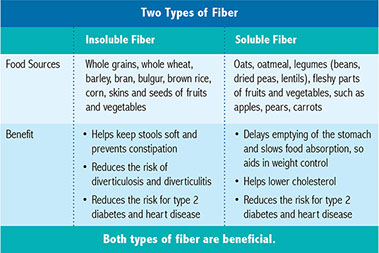
    Fiber is a carbohydrate. It does not provide 4 calories per gram that other carbohydrates do because the body does not break down fibers and absorb them. Foods with fiber do, however, have calories. Fiber is found in plant foods. Animal foods do not have fiber. Include fiber from a variety of sources. Include vegetables, fruits, seeds, nuts, legumes, and whole grains in your diet.

    How Much Fiber Do I Need Each Day?

    Men: About 38 grams daily

    Women: About 25 grams daily

    How Can I Meet this Goal?

    The average American consumes only 15 grams of fiber a day. Here are some easy meal and snack suggestions for increasing your fiber consumption.

    *  Make half of your plate fruits and vegetables.

    *  Add legumes (beans, lentils, etc.) to salads, soups, chili, etc.

    *  Snack on raw veggies.

    *  Choose whole fruits over fruit juices.

    *  Swap white and refined breads/cereals/pastas for whole grain breads/cereals/pastas.

    *  Add flaxseed meal to oatmeal, smoothies, yogurt, and baked goods.

    *  Add berries to salads, oatmeal, and yogurt.

    *  Purée cooked vegetables and add to sauces and stews.

    *  Slice or grate spinach and carrots to add to banana bread, shakes, eggs, or stir fry.

    *  Soak chia seeds in water for an hour or more. They will form a goopy gel that can be used for thickening smoothies, making pudding, or replacing eggs in baked goods.

    Increase your fiber intake gradually. Your digestive system needs time to catch up. Adding too much fiber too quickly can cause gas, bloating, cramps, and diarrhea. Add 5 grams of fiber a day at two-week intervals until you are meeting the Institute of Medicine goal (25 grams daily for women; 38 grams daily for men).

    As you increase your fiber intake, be sure to increase your water consumption as well. Fiber needs water to function properly and to comfortably clear your colon.

    Legumes (Beans and Peas)

    Legumes include all kinds of beans (kidney, pinto, white, black, garbanzo, lima), split peas, lentils, and edamame (green soybeans). Legumes are an excellent source of dietary fiber, protein, iron, zinc, potassium, and other important nutrients. Their nutrient profile puts them in the starchy vegetable group as well as in the protein group. They can be counted toward either of the MyPlate food groups.

    Ways to include legumes in your diet:

    *  Add different kinds of beans to a chili or soup. Each type of bean offers something different and helpful for your body.

    *  Pack edamame as a grab-and-go snack.

    *  Toss cooked, washed beans onto a salad for a filling meal with long-lasting energy.

    *  Add black or pinto beans to a burrito with grilled vegetables and brown rice. Top with salsa for an extra source of vegetables.

    Starchy Vegetables

    Include starchy vegetables to fulfill the grain/starch requirement. Aim for at least one of your daily starch choices to be from this group.

    Starchy Vegetables (1 serving = 1/2 cup to 1 cup)

    *  Corn

    *  Green peas

    *  White potatoes

    *  Parsnips

    *  Butternut squash

    *  Acorn squash

    *  Plantains

    *  Pumpkin

    *  Sweet potatoes

    Ways to include starchy vegetables in your diet:

    *  Use potatoes and squash as a thickener in soups.

    *  Add corn to a breakfast burrito with beans, eggs, and salsa.

    *  Cube peeled winter squash, such as butternut squash, and roast in the oven with oil and spices.

    *  Spiralize squash for a colorful cold salad.

    *  Blend pumpkin purée into muffins for a punch of vitamin A and fiber.

    © American Institute for Preventive Medicine

  • Join The Team: The Rest Of Your Kitchen

    Healthylife® Weigh

    Part 4

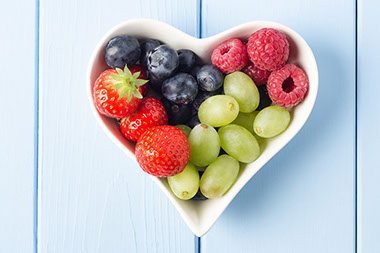
    Selection of fruits in a heart shaped bowl.

    Avoid going to battle every day with unhealthy choices. Learn your own strengths and weaknesses. If you are more likely to chop veggies after shopping than after coming home from work, do this after shopping and store in clear containers. If having visible candy is tempting, keep it in a tin in the basement, out of sight and inconvenient.

    Dish Cupboards

    *  Stock small bowls and plates on easy-to-reach shelves. Put large plates and bowls in a hard-to-reach place or in another closet in the house.

    *  Put smaller wine glasses in front of larger ones. Use tall, narrow glasses for non-water drinks.

    *  Make it easier to cook. Have a blender on the counter and organize your pots and pans to make it easy to pull out a frying pan or pot.

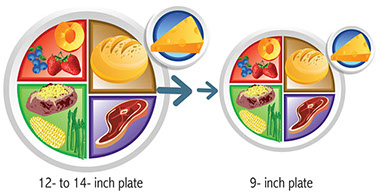
    Use a smaller plate (9-10 inches) and downsize your cereal bowl. This helps reduce portion sizes, even if what is on your plate has not changed.

    Use dessert forks, appetizer forks, or child-sized utensils to eat your meals. This will help you take smaller bites and eat slower. You may find you feel full before you’ve finished your meal! You may also be satisfied with less.

    Counter Tops & Kitchen Space

    *  Add a fruit bowl to the counter with two or more fruits. Tomatoes can go in here too! Roma tomatoes can make for a refreshing, convenient, and filling snack!

    *  Organize counter tops and decrease kitchen clutter-even on the refrigerator door.

    *  Take out the lounge factor-no TV, tablets, comfy chairs, etc. Spending extra time in the kitchen could lead to munching and eating when you are not hungry.

    *  Don’t sit down to a meal unless it includes a fruit or vegetable.

    Pantry

    *  Keep healthy choices at eye level-oatmeal, quinoa, nut butters, beans, canned fruit in water or juice, whole grain pasta, rice, etc.

    *  Move foods you want to eat less of to a less convenient location (like in a cupboard you need a stool to reach) or to a different place in the house where you do not go as often (like the basement or laundry room).

    *  Store packaged, processed foods in solid-colored bins in a closed pantry or closet.

    *  Make less healthy foods less visible and harder to reach. Make healthy foods more visible and easier to reach.

    Now Go! Take a Look

    *  Is there food sitting out in the open in your kitchen? If so, what is visible (e.g., bags of chips or boxes of cereal on top of the fridge, bowl of fruit on the table)?

    *  Where do you keep “treat” foods (desserts, sweet snacks, chips, etc.)?

    *  How quickly can you reach for these? Is it easy?

    *  Where else can you store highly processed snacks and high-sugar treats? If options are limited, put them in a solid-colored plastic container or put them on a shelf that is not at eye level. These changes might help everyone else in your household too!

    *  When you drink water, do you prefer filtered, chilled water, or tap water? Is your preferred water easily accessible?

    © American Institute for Preventive Medicine

  • Master Food Prep

    Healthylife® Weigh

    Part 3

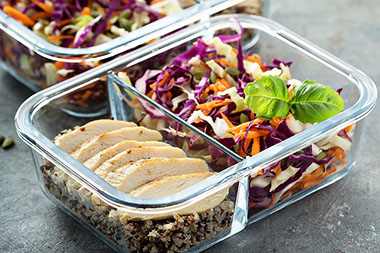
    Healthy meal prep with quinoa and chicken.

    Food preparation does not need to take a lot of time. The more you prepare food, the better you will get at being efficient in the kitchen!

    1. Make double batches of dinner meals. Freeze individual portions in airtight containers. Label with the date and what it is.

    2. Buy pre-cut vegetables, either fresh or frozen.

    3. Keep a supply of foods on hand that can be stored for weeks or months, such as brown rice, quinoa, whole grain pasta, frozen and canned vegetables, beans, tuna, oils, and spices.

    4. Cut up fruits and vegetables and store them in individual bags or containers for easy, grab-and-go snacks. Dry anything you have washed by laying it on a towel. This will help prevent mold.

    5. Freeze berries or sliced and peeled bananas. They can be easily added to smoothies or pancakes.

    Tips for Nibbling Cooks

    Be aware of how much you eat while cooking. A taste here and there can help you check for flavor, such as when seasoning a soup. Too many nibbles can add up to a lot of extra eating in your diet.

    *  Have a small snack before you start cooking, like a piece of fruit or raw veggies and hummus.

    *  Chew sugar-free gum with xylitol, which does not cause tooth decay.

    *  Brush and floss your teeth before you cook.

    *  Sip water every time you are tempted to snack on the meal you are preparing.

    *  Sit down when you eat. Use utensils for all items you eat.

    © American Institute for Preventive Medicine

  • Review And Prepare 5

    Healthylife® Weigh

    Part 5

    Friends hiking through hills.

    This section guided you to make physical activity part of your daily life. Most importantly, this section encouraged you to look at why you are being active and how to have a healthy relationship with your body. Answer the following questions.

    *  How have you sat less and moved more this week?

    *  What changes are you making to how you exercise (e.g., adding variety to cardio activities, adding resistance training)?

    *  How are you managing time differently to have more time to be active?

    *  What is something amazing about what your body can do?

    The next section will help you manage emotional eating and be more mindful. Make sure you are pacing yourself through this guide. Take time to practice strategies and address unhelpful thoughts.

    © American Institute for Preventive Medicine