Tag: Heart & Circulation

  • What To Do About Varicose Veins

    SELF-CARE CORNER

    Doctor and patient talking.

    Do you have bulging veins on your legs? The veins may be blue, purple or red in color. If so, you may have varicose veins.

    What are varicose veins?

    Your heart is always pumping blood out to your organs. Then, the blood goes back to the heart through the veins. Veins have special valves that push the blood back toward the heart.

    Sometimes these valves stop working correctly. This may happen if valves get weaker over time. Then the blood pools in the vein, unable to move. Blood that is pooling in a vein may cause the bulge or bump of a varicose vein.

    Not just cosmetic

    Some people don’t like the look of varicose veins. But they can also cause other problems. Varicose veins may itch or cause pain, swelling or heaviness in the legs.

    They can also continue to weaken the vein over time. This can cause skin changes like open sores or hard, thick areas of skin.

    Medical options

    Ask your doctor about medical procedures that can help. Options may include:

    *  Lasers that heat the vein and close it off

    *  Injections that seal the vein closed

    *  Surgery to remove the vein if non-invasive options don’t work

    Helping at home

    If varicose veins bother you, there are some things you can do.

    *  First, work toward a healthy weight. Being overweight puts more pressure on the veins.

    *  Be active. Exercise gets your blood pumping. This helps move blood out of the veins.

    *  Ask your doctor about compression stockings. These can help relieve pain and heaviness for some people. These are available at drug stores and online without a prescription if your doctor gives you the okay to wear them.

    *  Put your legs up. When possible, keep your legs up above your heart.

    *  Don’t wear clothes that are very tight around the waist or upper thighs.

    Source: National Heart, Lung and Blood Institute, National Institutes of Health

    © American Institute for Preventive Medicine
  • Blood Donation

    Medical Care

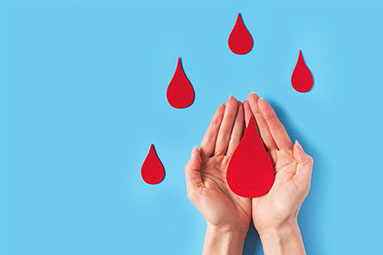
    Hands cupped together holding a red paper shaped as a blood drop.

    Giving blood is very safe.

    Every 2 seconds, someone in the U.S. needs blood. Approximately 29,000 blood donations are needed every day.

    To donate blood, you must be at least 17 years old, weigh more than 110 pounds and be in good health. Find out about other guidelines for donating blood fromredcross.org.

    Giving blood is very safe. Sterile procedures are followed. When you donate blood, you cannot get HIV, the virus that causes AIDS.

    If you are going to have surgery and may need blood, you can give your own blood ahead of time. This is called autologous blood transfusion.

    A Year of Health Hints book by the American Institute for Preventive Medicine. www.HealthyLife.com. All rights reserved.

    © American Institute for Preventive Medicine
  • Can You Lower Triglycerides Naturally?

    SELF-CARE CORNER

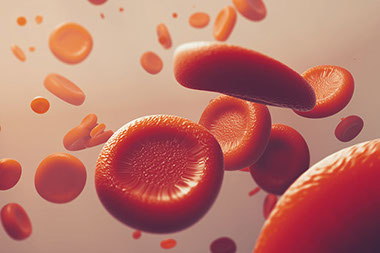
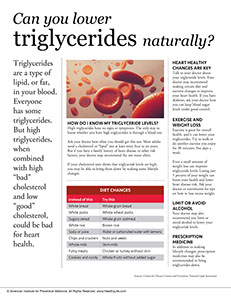
    Illustration of blood cells.

    Triglycerides are a type of lipid, or fat, in your blood. Everyone has some triglycerides. But high triglycerides, when combined with high “bad” cholesterol and low “good” cholesterol, could be bad for heart health.

    How do I know my triglyceride levels?

    High triglycerides have no signs or symptoms. The only way to know whether you have high triglycerides is through a blood test.

    Ask your doctor how often you should get this test. Most adults need a cholesterol or “lipid” test at least every four to six years. But if you have a family history of heart disease or other risk factors, your doctor may recommend the test more often.

    If your cholesterol tests shows that triglyceride levels are high, you may be able to bring them down by making some lifestyle changes.

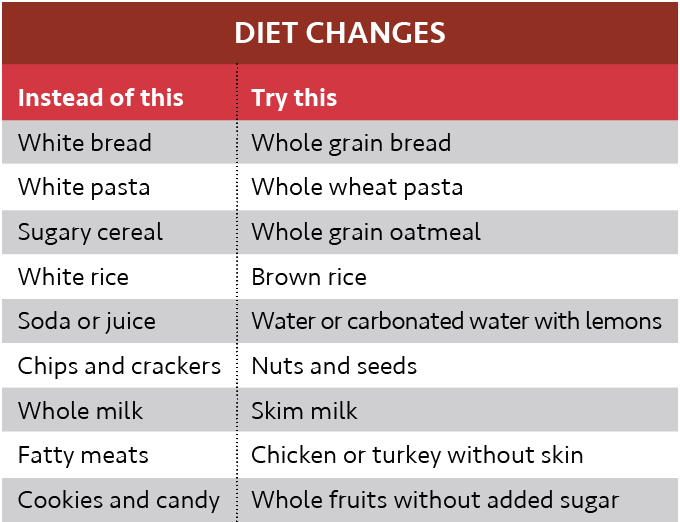
    Chart of Diet Changes - Try this instead of this.

    Heart healthy changes are key

    Talk to your doctor about your triglyceride levels. Your doctor may recommend making certain diet and exercise changes to improve your heart health. If you have diabetes, ask your doctor how you can keep blood sugar levels under good control.

    Exercise and weight loss

    Exercise is great for overall health, and it can lower your triglycerides. Try to walk or do another exercise you enjoy for 30 minutes, five days a week.

    Even a small amount of weight loss can improve triglyceride levels. Losing just 5 percent of your weight can boost your health and lower heart disease risk. Ask your doctor or nutritionist for tips on how to lose excess weight.

    Limit or Avoid Alcohol

    Your doctor may also recommend you limit or avoid alcohol to lower your triglyceride levels.

    Prescription Medicine

    In addition to making lifestyle changes, prescription medicines may also be recommended to bring triglycerides down.

    Sources: Centers for Disease Control and Prevention, National Lipid Association

    © American Institute for Preventive Medicine
  • Cool That Heartburn

    SELF-CARE CORNER

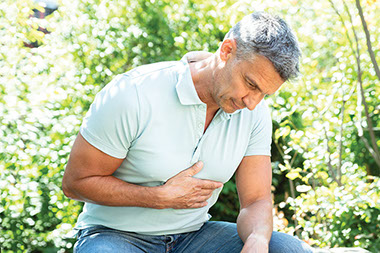
    Man suffering from heartburn.

    Do you get a burning feeling in your chest after eating or at night? Does it get worse if you lie down or bend over?

    Many people have heartburn once in a while.

    Don’t ignore frequent heartburn

    When heartburn keeps happening, it could hurt your health. Frequent heartburn that lasts longer than two weeks is called gastroesophageal reflux disease (GERD). This condition can damage your throat or even cause breathing problems.

    See a doctor about frequent heartburn so you can get treatment.

    If you get occasional heartburn, there are several ways you can reduce it or avoid it:

    *  Stay upright after eating. Don’t lie down after a meal. This can cause the acid and food to come up and into your esophagus.

    *  Avoid activities that use the tummy muscles right after eating. This includes activities like hard exercise or lifting heavy objects.

    *  Eat smaller meals. Eat your food slowly and stop before you feel overly full.

    *  Avoid heartburn triggers. This includes caffeine, chocolate, fatty foods, fried foods and spicy foods.

    *  Work toward a healthy weight if you are overweight.

    *  Ask your doctor about using an antacid for occasional heartburn.

    Heartburn drug recall

    Recently, the Food and Drug Administration (FDA) found that an acid reflux (GERD) medicine contained a “probable human carcinogen” at low levels. This means that these medicines contain something that could potentially cause cancer.

    The drug, known as ranitidine or Zantac, is an H2-blocker. It works by reducing the amount of acid in the stomach. After FDA’s announcement, some drug companies recalled their ranitidine products. Some pharmacies also pulled the medicine off their shelves.

    If you are taking ranitidine or Zantac, talk to your doctor. There are other FDA-approved medicines that could work for you. Your doctor can help you choose the best treatment.

    FDA continues to evaluate the safety of ranitidine and will provide more information as it becomes available.

    Source: Food and Drug Administration

    © American Institute for Preventive Medicine
  • Get To Know An Aed

    MEDICAL NEWS

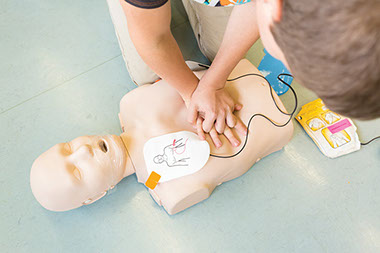
    Person training to use an AED.

    Automated external defibrillators help a person who is in cardiac arrest. They can deliver an electric shock to help get the heart beating normally again.

    You may have seen AEDs at places like stores, malls, hotels or gyms. Many public places have them and they are usually mounted on a wall.

    What is cardiac arrest?

    Cardiac arrest and a heart attack are not the same thing.

    In a heart attack, a blockage stops blood flow to the heart. But with cardiac arrest, the heart’s electrical rhythm isn’t working properly. The heart stops pumping, or is “arrested.” A heart attack can cause cardiac arrest.

    Why should I learn to use an AED?

    Sudden cardiac arrest is a major cause of death. An AED is the only way to restore a person’s heart rhythm during cardiac arrest. Knowing how to do cardiopulmonary resuscitation (CPR) is also helpful.

    You still need to call 911 if someone is in cardiac arrest. But it takes a few minutes for an ambulance to arrive. In those minutes, an AED could be life-saving.

    When to use one

    If a person has cardiac arrest, they will be completely unresponsive. If the person cannot talk or wake up, check to see if they are breathing. If they aren’t breathing and don’t have a pulse, start CPR and ask someone else to get the AED, if possible.

    What to do

    Even if you’re not trained, you can use an AED on someone in cardiac arrest. The machine helps guide you along. Here’s what to do:

    *  Call 911 or have someone else call.

    *  If possible, have someone do chest compressions or CPR while someone else gets the AED ready.

    *  Turn on the AED.

    *  Remove clothes from the person’s chest. Dry their skin with a cloth if needed.

    *  Put the pads on the chest as pictured on the pads.

    *  Do not place AED pads on top of a pace maker.

    *  First, the AED will measure the person’s heart rhythm. Don’t touch the person while this happens.

    *  If the person needs a shock, the AED will tell you.

    *  The AED will tell you when it gives a shock and what to do next. Stand back while it gives a shock through the pads.

    Together, CPR and an AED can save lives.

    Sources: American Heart Association, American Red Cross

    © American Institute for Preventive Medicine
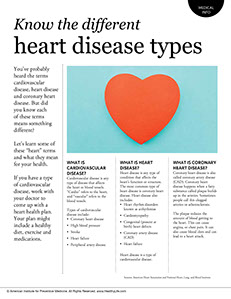
  • Know The Different Heart Disease Types

    MEDICAL NEWS

    Heart on a blue background.

    You’ve probably heard the terms cardiovascular disease, heart disease and coronary heart disease. But did you know each of these terms means something different?

    Let’s learn some of these “heart” terms and what they mean for your health. If you have a type of cardiovascular disease, work with your doctor to come up with a heart health plan. Your plan might include a healthy diet, exercise and medications.

    What is cardiovascular disease?

    Cardiovascular disease is any type of disease that affects the heart or blood vessels. “Cardio” refers to the heart, and “vascular” refers to the blood vessels.

    Types of cardiovascular disease include:

    *  Coronary heart disease

    *  High blood pressure

    *  Stroke

    *  Heart failure

    *  Peripheral artery disease

    What is heart disease?

    Heart disease is any type of condition that affects the heart’s function or structure. The most common type of heart disease is coronary heart disease. Heart disease also includes:

    *  Heart rhythm disorders known as arrhythmias

    *  Cardiomyopathy

    *  Congenital (present at birth) heart defects

    *  Coronary artery disease (CAD)

    *  Heart failure

    Heart disease is a type of cardiovascular disease.

    What is coronary heart disease?

    Coronary heart disease is also called coronary artery disease (CAD). Coronary heart disease happens when a fatty substance called plaque builds up in the arteries. Sometimes people call this clogged arteries or atherosclerosis.

    The plaque reduces the amount of blood getting to the heart. This can cause angina, or chest pain. It can also cause blood clots and can lead to a heart attack.

    Sources: American Heart Association and National Heart, Lung, and Blood Institute

    © American Institute for Preventive Medicine
  • Know Your Heart Risk

    MEDICAL NEWS

    Winter image of hands wearing red gloves making a heart shape.

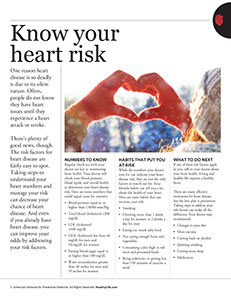
    One reason heart disease is so deadly is due to its silent nature. Often, people do not know they have heart issues until they experience a heart attack or stroke.

    There’s plenty of good news, though. The risk factors for heart disease are fairly easy to spot. Taking steps to understand your heart numbers and manage your risk can decrease your chance of heart disease. And even if you already have heart disease, you can improve your odds by addressing your risk factors.

    Numbers to know

    Regular check-ins with your doctor are key to monitoring heart health. Your doctor will check your blood pressure, blood lipids, and overall health to determine your heart disease risk. Here are some numbers that could signal cause for concern:

    *  Blood pressure equal to or higher than 130/80 mm/Hg

    *  Total blood cholesterol ≥200 mg/dL

    *  LDL cholesterol  ≥100 mg/dL

    *  HDL cholesterol less than 40 mg/dL for men and 50 mg/dL for women

    *  Fasting blood sugar equal to or higher than 100 mg/dL

    *  Waist circumference greater than 40 inches for men and 35 inches for women

    Habits that put you at risk

    While the numbers your doctor tests for can indicate your heart disease risk, they are not the only factors to watch out for. Your lifestyle habits can tell you a lot about the health of your heart. Here are some habits that can increase your risk:

    *  Smoking

    *  Drinking more than 1 drink a day for women or 2 drinks a day for men

    *  Eating too much salty food

    *  Not eating enough fruits and vegetables

    *  Consuming a diet high in red meat and processed foods

    *  Being sedentary, or getting less than 150 minutes of exercise a week

    What to do next

    If any of these risk factors apply to you, talk to your doctor about your heart health. A long and healthy life requires a healthy heart.

    There are many effective treatments for heart disease, but the best plan is prevention. Taking steps to address your risk factors can make all the difference. Your doctor may recommend:

    *  Changes to your diet

    *  More exercise

    *  Cutting back on alcohol

    *  Quitting smoking

    *  Getting more sleep

    *  Medication

    © American Institute for Preventive Medicine
  • Quick Healthy Heart Habits

    WELL-BEING

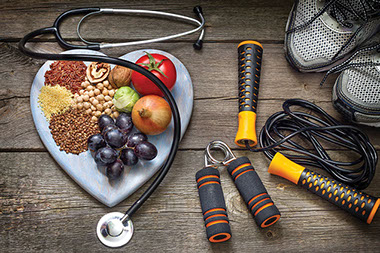
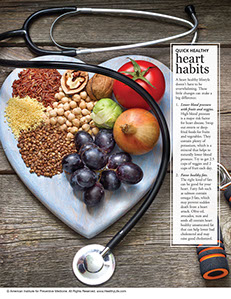
    Image of heart plate with heart healthy foods and fitness gear.

    A heart healthy lifestyle doesn’t have to be overwhelming. These little changes can make a big difference:

    1.  Lower blood pressure with fruits and veggies. High blood pressure is a major risk factor for heart disease. Swap out sweets or deep-fried foods for fruits and vegetables. They contain plenty of potassium, which is a mineral that helps to naturally lower blood pressure. Try to get 2.5 cups of veggies and 2 cups of fruit each day.

    2.  Favor healthy fats. The right kind of fats can be good for your heart. Fatty fish such as salmon contain omega-3 fats, which may prevent sudden death from a heart attack. Olive oil, avocados, nuts and seeds all contain heart healthy unsaturated fat that can help lower bad cholesterol and may raise good cholesterol.

    © American Institute for Preventive Medicine
  • Protect Your Heart

    Heart & Circulation Problems

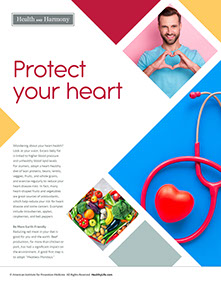
    Man smiling make hands into heart shape.

    Wondering about your heart health? Look at your waist. Excess belly fat is linked to higher blood pressure and unhealthy blood lipid levels. For starters, adopt a heart-healthy diet of lean proteins, beans, lentils, veggies, fruits, and whole grains, and exercise regularly to reduce your heart disease risks. In fact, many heart-shaped fruits and vegetables are great sources of antioxidants, which help reduce your risk for heart disease and some cancers. Examples include strawberries, apples, raspberries, and bell peppers.

    Be More Earth-Friendly

    Reducing red meat in your diet is good for you and the earth. Beef production, far more than chicken or pork, has had a significant impact on the environment. A good first step is to adopt “Meatless Mondays.”

    Health at Home Lifetime book by the American Institute for Preventive Medicine. www.HealthyLife.com. All rights reserved.

    © American Institute for Preventive Medicine
  • Take Control Of Your Blood Pressure

    General Health Conditions

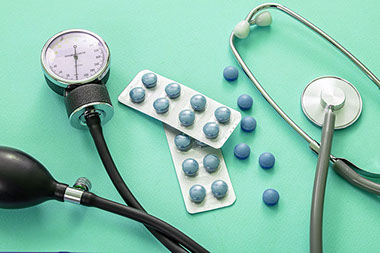
    Part of a blood pressure cuff and medications.

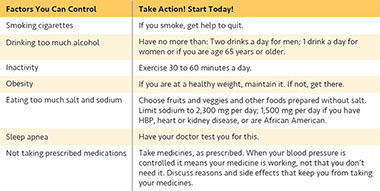
    Getting older, having a family history of high blood pressure (HBP), and being African American are risk factors you cannot control. Lower risk factors for HBP that you can control.

    Action Step:Get your blood pressure checked at every office visit or at least every two years.

    Health at Home Lifetime book by the American Institute for Preventive Medicine. www.HealthyLife.com. All rights reserved.

    © American Institute for Preventive Medicine