Tag: Heart & Circulation

  • 5 Numbers You Need To Know By Heart

    SELF-CARE CORNER

    Close-up image of doctor's hand holding a green apple.

    Pass codes, phone numbers, social security numbers, clothing sizes and addresses. We all have a lot of numbers in our heads, but heart experts at The Ohio State University Wexner Medical Center say there are 5 more numbers you need to know. These are the numbers your doctor will use to assess your risk for getting heart disease.

    1.Blood pressure.This is the force of blood against the walls of the arteries. It’s measured as two numbers-the systolic pressure, as the heart beats, over the diastolic pressure, as the heart relaxes between beats. A normal blood pressure is under 120/80. Talk to your doctor if it is higher than that. Simple lifestyle changes can help you lower your blood pressure and potentially avoid taking medication.

    2.BMI.This measures your weight for your body surface area. It is used as a reliable indicator of body fatness for most people. Use an online calculator to assess your risk. Search for “BMI” atwww.nhlbi.nih.gov.

    3.Waist circumference.Fat that is carried around the abdomen increases the risk of heart disease and type 2 diabetes. Measure your waist at the belly button, not where your clothing waistband sits. Women should be less than 35 inches and men should be less than 40 inches at the waist.

    4.Cholesterol.While the body makes all of the cholesterol it needs, it is also found in animal sources of food. High cholesterol can lead to heart disease and build-up of plaque in the arteries. Know your total cholesterol number and your low-density lipoprotein, or LDL, number. That’s the bad cholesterol that can cause problems. A healthy cholesterol number is below 200. A healthy LDL number is below 130, 100, or 70 depending on your heart disease risk.

    5.Blood sugar.This reading tells doctors how much glucose is in the blood. High levels of blood glucose cause diabetes, which increases the risk for cardiovascular disease. A healthy fasting blood sugar number is under 100 after not eating for 8 hours.

    © American Institute for Preventive Medicine
  • I Cannot Tell Afib

    MEDICAL NEWS

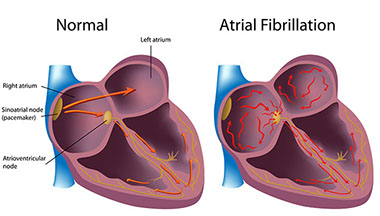
    Illustration of a normal heart vs a heart with AFib.

    Atrial fibrillation or AFib is the most common heart arrhythmia or irregularity in the U.S. It affects up to 4 million people.

    AFib needs to be taken seriously. It increases the risk of stroke by as much as 5 times and can contribute to heart failure and other heart conditions.

    When someone develops AFib, the upper chambers of the heart, the atria, beat rapidly and irregularly. “The atria quiver instead of squeezing normally. This causes slow blood flow, which leads to clots and stroke,” said Dr. Eric Rashba, Director of the Heart Rhythm Center at Stony Brook University Heart Institute.

    People with AFib often feel a fluttering in their chest, an unexplained racing of the heart, or that their heart is skipping beats. Other symptoms include fatigue, dizziness, shortness of breath, and lack of energy. Up to 10% of AFib patients have no symptoms at all.

    AFib can be related to high blood pressure, an overactive thyroid, congestive heart failure, or diseased heart valves. It is important to be diagnosed and treated early.

    The longer you wait for diagnosis and treatment, the more AFib progresses and becomes increasingly difficult to treat. Your doctor can refer you to a heart specialist. Initial treatment is medication. New procedures are also available.

    © American Institute for Preventive Medicine

  • Is Your Heart Older Than You?

    MEDICAL NEWS

    Image of man suffering a heart attack.

    The year you were born reveals your age. It’s part of your identity. But despite the number on your driver’s license, your heart may be telling a different story.

    According to the Centers for Disease Control and Prevention, 75 percent of Americans have hearts that are older than their actual age. For men, the average heart age is 8 years older, and for women, it’s 5 years. This means many people are at high risk of heart attacks and strokes – even if they don’t know it.

    Your “heart age” is based on certain risk factors you may have for heart disease. This includes lifestyle habits, your body mass index, and certain health problems. You can lower your heart age by adopting heart-healthy habits such as a healthy diet, regular exercise, and not smoking.

    Signs of a heart attack

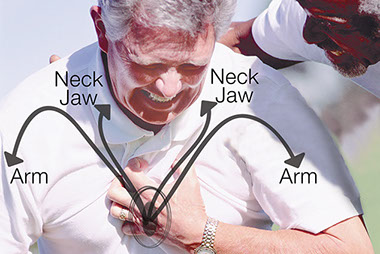
    *  Pressure, squeezing, or pain in the chest

    *  Pain in the jaw, neck, upper back, arms, or abdomen

    *  Trouble breathing

    *  Feeling dizzy or nauseated

    *  Cold sweats

    If you experience these symptoms, call 911 or have someone take you to the emergency room.

    Source: American Heart Association

    © American Institute for Preventive Medicine
  • 6 Healthy Heart Numbers

    Heart & Circulation Problems

    Women smiling while making hands into a heart shape.

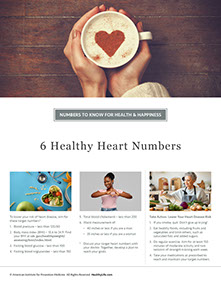
    To lower your risk of heart disease, aim for these target numbers*:

    1.  Blood pressure – less than 120/80

    2.  Body mass index (BMI) – 18.6 to 24.9. Find your BMI atcdc.gov/healthyweight/assessing/bmi/index.html.

    3.  Fasting blood glucose – less than 100

    4.  Fasting blood triglycerides – less than 150

    5.  Total blood cholesterol – less than 200

    6.  Waist measurement of:

    – 40 inches or less if you are a man

    – 35 inches or less if you are a woman

    * Discuss your target heart numbers with your doctor. Together, develop a plan to reach your goals.

    Take Action: Lower Your Heart Disease Risk

    1.  If you smoke, quit. Don’t give up trying!

    2.  Eat healthy foods, including fruits and vegetables and limit others, such as saturated fats and added sugars.

    3.  Do regular exercise. Aim for at least 150 minutes of moderate activity and two sessions of strength training each week.

    4.  Take your medications as prescribed to reach and maintain your target numbers.

    Health at Home Lifetime book by the American Institute for Preventive Medicine. www.HealthyLife.com. All rights reserved.

    © American Institute for Preventive Medicine

  • Pump Up Your Heart In 5 Easy Steps

    SELF-CARE CORNER

    Image of older women laughing.

    Did you know that a good night’s sleep can help prevent heart disease? That’s just one way to lower your risk. Dr. Holly Andersen, director of education and outreach at NewYork-Presbyterian Hospital/Weill Cornell Medical Center, offers some easy steps to improve heart health and overall well-being:

    Step 1: Know your numbers.

    Your blood pressure, cholesterol, and triglyceride levels are the most important numbers you will need to know before you take the path to good heart health. A normal blood pressure level is 140/85 or lower, total cholesterol levels should be less than 200, and triglycerides less than 150.

    Step 2: Start walking.

    Exercise really is the fountain of youth. A simple 20- to 30-minute walk a few days a week can actually cut your risk of premature death by more than half. Physical activity also improves sleep, reduces stress, elevates mood, reduces blood pressure, improves cholesterol, improves brain health, and prevents memory loss.

    Step 3: Laugh out loud.

    Laughter is good medicine. Just 15 minutes of laughter is about equal to 30 minutes of aerobic exercise with respect to our heart health. So choose funny movies on Netflix. Laughter has also been linked to the healthy function of blood vessels, an increase in the brain hormones that improve mood, and reduction of pain  and anxiety.

    Step 4: Focus on your waistline, not your weight.

    Your waistline is a better measurement of your overall health than your weight because the amount of fat around your waistline is directly linked to high blood pressure and high cholesterol and can place you at increased risk for diabetes. Anything you can do to make your waistline smaller is definitely a step in the right direction. Liposuction doesn’t count!

    Step 5: Get a good night’s sleep.

    Sleep is one of the most undervalued elements of our daily routines, but it is absolutely vital to good health. Lack of sleep increases your blood pressure, induces stress, increases your appetite and slows down your metabolism, dampens your mood and decreases your brain power.

    © American Institute for Preventive Medicine

  • Angina

    Heart & Circulation Problems

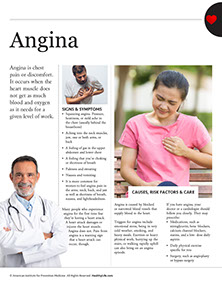
    Angina is chest pain or discomfort. It occurs when the heart muscle does not get as much blood and oxygen as it needs for a given level of work.

    Signs & Symptoms

    *  Squeezing pressure, heaviness, or mild ache in the chest (usually behind the breastbone)

    *  Aching in a tooth with or without squeezing pressure in the chest

    *  Aching into the neck muscles, jaw, one or both arms, or back

    *  A feeling of gas in the upper abdomen and lower chest

    *  A feeling that you’re choking or shortness of breath

    *  Paleness and sweating

    *  Nausea and vomiting

    Many people who experience angina for the first time fear they’re having a heart attack. A heart attack damages or injures the heart muscle. Angina does not. Pain from angina is a warning sign that heart attack can occur, though.

    Causes

    Angina is caused by blocked or narrowed blood vessels that supply blood to the heart.

    Episodes of angina are often brought on by anger, excitement, or emotional shock. Exertion or heavy physical work, hurrying up the stairs, or walking rapidly uphill can also bring on an angina episode.

    If you have angina, your doctor or a cardiologist should follow you closely. He or she may prescribe:

    *  Medications, such as nitroglycerin, beta- blockers, and a low- dose daily aspirin

    *  Daily physical exercise specific for you

    *  Surgery, such as angioplasty or bypass surgery

    Self-Care

    Medical care is needed to treat angina. If you have angina, these self-care measures can be part of your treatment plan.

    *  Don’t smoke. If you smoke, quit.

    *  Follow a low-saturated fat, low cholesterol diet.

    *  Eat 5 to 6 small meals instead of 3 large meals a day.

    *  Maintain a healthy weight. If you are overweight, lose weight.

    *  After you eat, rest or do a quiet activity.

    *  Minimize exposure to cold, windy weather.

    *  Take medication(s), as prescribed.

    *  Avoid sudden physical exertion, such as running to catch a bus.

    *  Avoid anger whenever you can.

    *  Manage stress.

    When to Seek Medical Care

    Contact Doctor When:

    *  You have been diagnosed with angina and there is a change in your angina symptoms. You may, for example, start to feel symptoms at rest.

    *  You have minor chest pain that is not due to an injury or strain, does not let up, and/or is not relieved by rest.

    Get Immediate Care When:

    *  You have symptoms of a heart attack.

    *  You have been diagnosed with angina and your chest pain does not respond to your prescribed medicine or the pain does not go away in 10 to 15 minutes.

    Health at Home Lifetime book by the American Institute for Preventive Medicine. www.HealthyLife.com. All rights reserved.

    © American Institute for Preventive Medicine
  • Simple Ways To Lower Cholesterol

    SELF-CARE CORNER

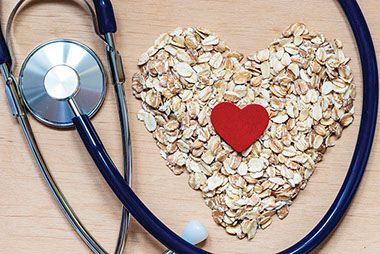
    Image of oats shaped in a heart.

    You can’t feel or see high cholesterol, but it’s nothing to brush aside. People with high cholesterol have twice the risk of heart disease as those who have normal levels. The Centers for Disease Control and Prevention says 1 out of 3 American adults has high cholesterol – and less than half of them get the treatment they need.

    A simple blood test, done at least every five years, can tell you if you have high cholesterol. If your levels are high, your doctor may put you on a cholesterol-lowering program. This may include medicine, but often includes changes you can make at home to be healthier.

    Lifestyle changes are an important way to lower high cholesterol and cut your risk of heart disease. Even if your cholesterol isn’t high, these changes can help you keep it at a healthy level. The American Academy of Family Physicians says people should:

    *Avoid smoking or quit if you do smoke.Smoking lowers your good cholesterol. Talk to your doctor if you need help quitting tobacco.

    *Work toward a healthy weight.Losing just a few pounds can lower bad cholesterol and triglycerides.

    *Get active.Exercise can raise HDL (good) cholesterol and lower LDL (bad) cholesterol and triglycerides. Try for 30 minutes of activity, 5 days per week.

    *Get more fiber in your diet.Soluble fiber, found in oats, legumes, and fruits and vegetables, may help lower cholesterol.

    *Eat healthy fats.Avoid saturated and trans fats found in many processed, fried and animal foods. Focus on healthy fats found in olive oil, fish, avocados, seeds and nuts.

    *Eat more vegetarian proteins.Beans, nuts, peas, soy and lentils are healthy proteins that don’t have the saturated fats found in most meat.

    *Limit foods with cholesterol.Healthy people should eat less than 300 milligrams of cholesterol per day. People with heart disease may need to eat less than 200 milligrams a day.

    *Ask about supplements.Some natural supplements can help lower cholesterol in addition to making healthy diet and exercise changes. These include:

    – Plant sterols and stanols

    – Omega-3 fatty acids (usually found in fish oil supplements)

    – Red yeast rice

    Always ask your doctor before taking any natural supplements, especially if you have health conditions or take any medicines.

    © American Institute for Preventive Medicine

  • Cardiac Rehab

    Heart & Circulation Problems

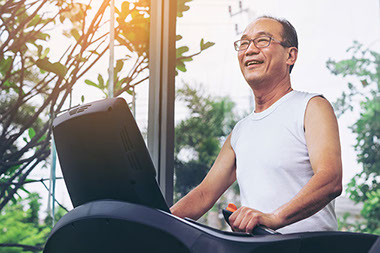
    Smiling women with laptop.

    Ask your doctor if taking baby aspirin is a good heart health decision for you.

    Cardiac rehab benefits persons who have had a heart attack, heart surgery, or who have heart disorders, such as angina.

    If you or a family member needs cardiac rehab, follow your doctor’s advice. Rehab includes exercise therapy, counseling, and learning ways to reduce the risk for further problems.

    To help prevent heart disease: Get to and stay at a healthy weight; do regular exercise; don’t smoke and avoid secondhand smoke; and keep your blood cholesterol, blood pressure, and blood sugar levels under control.

    Regular physical activity lowers the risk of heart attacks, but people who are normally inactive who shovel snow, run to catch a bus, etc. are at a greater risk of having a heart attack. Try not to overexert yourself, especially if you are out of shape.

    Health at Home Lifetime book by the American Institute for Preventive Medicine. www.HealthyLife.com. All rights reserved.

    © American Institute for Preventive Medicine

  • Slash Your Cholesterol Levels

    SELF-CARE CORNER

    Illustration of a heart with a pop out illustration of a build up in an artery.

    Many people don’t really know what cholesterol is, or why it matters for your health.

    If your cholesterol levels are too high, you are at an increased risk of heart attack and stroke. This is because too much “bad” LDL cholesterol causes a hard buildup inside your arteries known as plaque. If this buildup breaks loose, it can block an artery to your brain or your heart.

    The good news is there are a number of ways to help lower your cholesterol to a healthy level. Your doctor can help you decide what you need. Medicines can help, but there are also natural ways you can slash your cholesterol. They include:

    *Don’t eat trans fats.Transfats are listed on food labels and are known to raise “bad” LDL cholesterol levels. They are found in processed foods such as doughnuts, cookies, biscuits, pies, crackers and margarines. Be sure to check the Nutrition Facts panel for trans fats and avoid them whenever possible.

    *Cut back on saturated fats.These are found in meat and dairy products. They are okay to eat in small amounts. The American Heart Association recommends up to 6 percent of your daily calories be from saturated fat.

    *Eat “good” fats. Some fats are good for your cholesterol.They include monounsaturated and polyunsaturated fats. These are found in plant foods and oils such as canola, olive, safflower and grapeseed oils. Avocado, seeds and nuts are also great sources. Fatty fish, such as salmon, also include heart-healthy fats known as omega-3s.

    *Eat colorful fruits and vegetables.Brightly colored berries, dark green spinach, orange sweet potatoes and more: colors are good for lowering cholesterol! Eat plenty of bright produce for a boost in cholesterol-lowering nutrients.

    *Cut back on sugar and refined grains.Sweets, white bread, and anything that contains added sugar should be limited. These foods don’t help your heart or your overall health.

    Sources: American Heart Association; Harvard Medical School

    When to check your cholesterol

    Your cholesterol can be checked with a simple blood test. High cholesterol has no symptoms, so you won’t know you have it unless you get checked. The American Heart Association says adults age 20 and older should have their cholesterol checked every four to six years. Some people may need it checked more often. See your doctor for regular checkups to discuss your cholesterol and other heart disease risk factors.

    © American Institute for Preventive Medicine
  • Chest Pain

    Heart & Circulation Problems

    Heart Attack

    Signs & Symptoms

    *  Chest pressure, squeezing, burning, tightness, or pain (may spread to the arm, neck, back, tooth, or jaw).

    *  Chest discomfort with: Shortness of breath; sweating; nausea; fast or uneven pulse; lightheadedness; fainting.

    *  Chest pain that does not respond to medicine for a person with angina or heart problems.

    What To Do

    Call 9-1-1!

    Dissecting Aortic Aneurysm

    This is a tear in the main artery from the heart.

    Signs & Symptoms

    *  Severe chest pain with extreme pain felt across the upper back (not just on one side) that came on within 15 minutes without an injury, back strain, etc. The pain can spread to the abdomen.

    *  A knife-like sensation from front to back.

    *  Dizziness and fainting.

    What To Do

    Call 9-1-1 or go to the emergency department of a hospital! Do not take aspirin.

    Blood clot(s) to the lungs

    Signs & Symptoms

    Chest pain that gets worse when taking deep breaths and occurs with any of these conditions:

    *  Sudden shortness of breath and severe problems breathing.

    *  Rapid heartbeat.

    *  Cough with bloody sputum.

    *  Sudden onset of chest pain with calf pain.

    *  Long periods of being immobile from bed rest, recent surgery, or prolonged travel.

    What To Do

    Call 9-1-1 or go to the emergency department of a hospital!

    Collapsed Lung

    Trauma to the chest is the main cause.

    Signs & Symptoms

    *  Sudden and sharp chest pain or tightness with breathing.

    *  Increasing shortness of breath.

    What To Do

    Call 9-1-1 or go to the emergency department of a hospital!

    Angina

    Signs & Symptoms

    Squeezing, pressure, indigestion feeling, or pain (often dull) in the chest. The pain may spread to the arm, neck, jaw, or back. Symptoms come on or are made worse by stress or physical exertion. They ease with rest.

    What To Do

    SeeAngina.

    Shingles

    Signs & Symptoms

    The pain is on only one side of the chest and is not affected by breathing. A burning feeling and a skin rash are at the site of the pain.

    What To Do

    SeeShingles.

    Tuberculosis (TB)

    Chronic lung infection with a certain bacteria.

    Signs & Symptoms

    Vague pain in the chest (if any). Shortness of breath; chronic fatigue; cough with phlegm or blood; night sweats; appetite and weight loss; and fever.

    What To Do

    See doctor.

    Heartburn or Hiatal Hernia

    {Note: This could also signal a heart attack.}

    Signs & Symptoms

    Burning feeling in the chest or just above the stomach that comes and goes before, during, or after eating. It gets worse when you bend over or lie down.

    What To Do

    SeeHeart Attack,Heartburn & Indigestion,Hiatal Hernia, andPeptic Ulcers

    Pleurisy

    The membrane that surrounds the lungs is inflamed. Muscle strain or rib injury.

    Signs & Symptoms

    Chest pain that worsens with deep breaths, coughing, or touching the chest or ribs.

    What To Do

    See doctor for diagnosis.

    Flu, Pneumonia, Bronchitis, or Other Upper Respiratory Infection

    Signs & Symptoms

    Chest pain with fever and coughing up green, yellow, or gray mucus.

    What To Do

    See doctor.

    Precordial Catch Syndrome

    This harmless, recurrent problem usually occurs in young adults.

    Signs & Symptoms

    Sudden, sharp pain below the left nipple that lasts less than a minute or so.

    What To Do

    See doctor for diagnosis. Try daily stretching exercises to reduce getting these pains.

    Costochondritis

    This is inflammation where the ribs attach to the breastbone.

    Signs & Symptoms

    Pain and tender feeling in the upper part of the chest. The pain gets worse when pressure is applied to the area. It can get worse with deep breaths, too.

    What To Do

    See doctor for diagnosis. Take an OTC medicine for pain and swelling. Apply a heating pad set on low or a hot water bottle to the area of pain.

    Healthier at Home book by the American Institute for Preventive Medicine. www.HealthyLife.com. All rights reserved.

    © American Institute for Preventive Medicine