Tag: Heart Disease

  • Know Your Heart Risk

    MEDICAL NEWS

    Winter image of hands wearing red gloves making a heart shape.

    One reason heart disease is so deadly is due to its silent nature. Often, people do not know they have heart issues until they experience a heart attack or stroke.

    There’s plenty of good news, though. The risk factors for heart disease are fairly easy to spot. Taking steps to understand your heart numbers and manage your risk can decrease your chance of heart disease. And even if you already have heart disease, you can improve your odds by addressing your risk factors.

    Numbers to know

    Regular check-ins with your doctor are key to monitoring heart health. Your doctor will check your blood pressure, blood lipids, and overall health to determine your heart disease risk. Here are some numbers that could signal cause for concern:

    *  Blood pressure equal to or higher than 130/80 mm/Hg

    *  Total blood cholesterol ≥200 mg/dL

    *  LDL cholesterol  ≥100 mg/dL

    *  HDL cholesterol less than 40 mg/dL for men and 50 mg/dL for women

    *  Fasting blood sugar equal to or higher than 100 mg/dL

    *  Waist circumference greater than 40 inches for men and 35 inches for women

    Habits that put you at risk

    While the numbers your doctor tests for can indicate your heart disease risk, they are not the only factors to watch out for. Your lifestyle habits can tell you a lot about the health of your heart. Here are some habits that can increase your risk:

    *  Smoking

    *  Drinking more than 1 drink a day for women or 2 drinks a day for men

    *  Eating too much salty food

    *  Not eating enough fruits and vegetables

    *  Consuming a diet high in red meat and processed foods

    *  Being sedentary, or getting less than 150 minutes of exercise a week

    What to do next

    If any of these risk factors apply to you, talk to your doctor about your heart health. A long and healthy life requires a healthy heart.

    There are many effective treatments for heart disease, but the best plan is prevention. Taking steps to address your risk factors can make all the difference. Your doctor may recommend:

    *  Changes to your diet

    *  More exercise

    *  Cutting back on alcohol

    *  Quitting smoking

    *  Getting more sleep

    *  Medication
    © American Institute for Preventive Medicine

  • Know The Different Heart Disease Types

    MEDICAL NEWS

    Heart on a blue background.

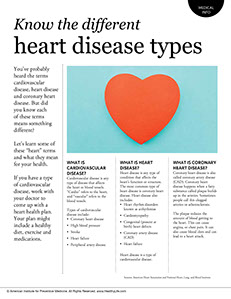
    You’ve probably heard the terms cardiovascular disease, heart disease and coronary heart disease. But did you know each of these terms means something different?

    Let’s learn some of these “heart” terms and what they mean for your health. If you have a type of cardiovascular disease, work with your doctor to come up with a heart health plan. Your plan might include a healthy diet, exercise and medications.

    What is cardiovascular disease?

    Cardiovascular disease is any type of disease that affects the heart or blood vessels. “Cardio” refers to the heart, and “vascular” refers to the blood vessels.

    Types of cardiovascular disease include:

    *  Coronary heart disease

    *  High blood pressure

    *  Stroke

    *  Heart failure

    *  Peripheral artery disease

    What is heart disease?

    Heart disease is any type of condition that affects the heart’s function or structure. The most common type of heart disease is coronary heart disease. Heart disease also includes:

    *  Heart rhythm disorders known as arrhythmias

    *  Cardiomyopathy

    *  Congenital (present at birth) heart defects

    *  Coronary artery disease (CAD)

    *  Heart failure

    Heart disease is a type of cardiovascular disease.

    What is coronary heart disease?

    Coronary heart disease is also called coronary artery disease (CAD). Coronary heart disease happens when a fatty substance called plaque builds up in the arteries. Sometimes people call this clogged arteries or atherosclerosis.

    The plaque reduces the amount of blood getting to the heart. This can cause angina, or chest pain. It can also cause blood clots and can lead to a heart attack.

    Sources: American Heart Association and National Heart, Lung, and Blood Institute

    © American Institute for Preventive Medicine
  • 6 Healthy Heart Numbers

    Heart & Circulation Problems

    Women smiling while making hands into a heart shape.

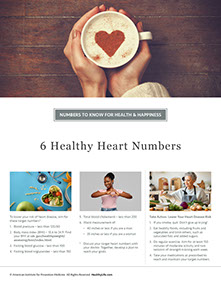
    To lower your risk of heart disease, aim for these target numbers*:

    1.  Blood pressure – less than 120/80

    2.  Body mass index (BMI) – 18.6 to 24.9. Find your BMI atcdc.gov/healthyweight/assessing/bmi/index.html.

    3.  Fasting blood glucose – less than 100

    4.  Fasting blood triglycerides – less than 150

    5.  Total blood cholesterol – less than 200

    6.  Waist measurement of:

    – 40 inches or less if you are a man

    – 35 inches or less if you are a woman

    * Discuss your target heart numbers with your doctor. Together, develop a plan to reach your goals.

    Take Action: Lower Your Heart Disease Risk

    1.  If you smoke, quit. Don’t give up trying!

    2.  Eat healthy foods, including fruits and vegetables and limit others, such as saturated fats and added sugars.

    3.  Do regular exercise. Aim for at least 150 minutes of moderate activity and two sessions of strength training each week.

    4.  Take your medications as prescribed to reach and maintain your target numbers.

    Health at Home Lifetime book by the American Institute for Preventive Medicine. www.HealthyLife.com. All rights reserved.

    © American Institute for Preventive Medicine

  • Angina

    Heart & Circulation Problems

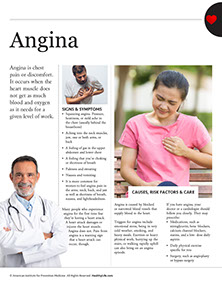
    Angina is chest pain or discomfort. It occurs when the heart muscle does not get as much blood and oxygen as it needs for a given level of work.

    Signs & Symptoms

    *  Squeezing pressure, heaviness, or mild ache in the chest (usually behind the breastbone)

    *  Aching in a tooth with or without squeezing pressure in the chest

    *  Aching into the neck muscles, jaw, one or both arms, or back

    *  A feeling of gas in the upper abdomen and lower chest

    *  A feeling that you’re choking or shortness of breath

    *  Paleness and sweating

    *  Nausea and vomiting

    Many people who experience angina for the first time fear they’re having a heart attack. A heart attack damages or injures the heart muscle. Angina does not. Pain from angina is a warning sign that heart attack can occur, though.

    Causes

    Angina is caused by blocked or narrowed blood vessels that supply blood to the heart.

    Episodes of angina are often brought on by anger, excitement, or emotional shock. Exertion or heavy physical work, hurrying up the stairs, or walking rapidly uphill can also bring on an angina episode.

    If you have angina, your doctor or a cardiologist should follow you closely. He or she may prescribe:

    *  Medications, such as nitroglycerin, beta- blockers, and a low- dose daily aspirin

    *  Daily physical exercise specific for you

    *  Surgery, such as angioplasty or bypass surgery

    Self-Care

    Medical care is needed to treat angina. If you have angina, these self-care measures can be part of your treatment plan.

    *  Don’t smoke. If you smoke, quit.

    *  Follow a low-saturated fat, low cholesterol diet.

    *  Eat 5 to 6 small meals instead of 3 large meals a day.

    *  Maintain a healthy weight. If you are overweight, lose weight.

    *  After you eat, rest or do a quiet activity.

    *  Minimize exposure to cold, windy weather.

    *  Take medication(s), as prescribed.

    *  Avoid sudden physical exertion, such as running to catch a bus.

    *  Avoid anger whenever you can.

    *  Manage stress.

    When to Seek Medical Care

    Contact Doctor When:

    *  You have been diagnosed with angina and there is a change in your angina symptoms. You may, for example, start to feel symptoms at rest.

    *  You have minor chest pain that is not due to an injury or strain, does not let up, and/or is not relieved by rest.

    Get Immediate Care When:

    *  You have symptoms of a heart attack.

    *  You have been diagnosed with angina and your chest pain does not respond to your prescribed medicine or the pain does not go away in 10 to 15 minutes.

    Health at Home Lifetime book by the American Institute for Preventive Medicine. www.HealthyLife.com. All rights reserved.

    © American Institute for Preventive Medicine
  • Chest Pain

    Heart & Circulation Problems

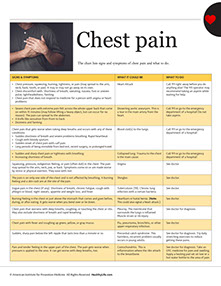
    Heart Attack

    Signs & Symptoms

    *  Chest pressure, squeezing, burning, tightness, or pain (may spread to the arm, neck, back, tooth, or jaw).

    *  Chest discomfort with: Shortness of breath; sweating; nausea; fast or uneven pulse; lightheadedness; fainting.

    *  Chest pain that does not respond to medicine for a person with angina or heart problems.

    What To Do

    Call 9-1-1!

    Dissecting Aortic Aneurysm

    This is a tear in the main artery from the heart.

    Signs & Symptoms

    *  Severe chest pain with extreme pain felt across the upper back (not just on one side) that came on within 15 minutes without an injury, back strain, etc. The pain can spread to the abdomen.

    *  A knife-like sensation from front to back.

    *  Dizziness and fainting.

    What To Do

    Call 9-1-1 or go to the emergency department of a hospital! Do not take aspirin.

    Blood clot(s) to the lungs

    Signs & Symptoms

    Chest pain that gets worse when taking deep breaths and occurs with any of these conditions:

    *  Sudden shortness of breath and severe problems breathing.

    *  Rapid heartbeat.

    *  Cough with bloody sputum.

    *  Sudden onset of chest pain with calf pain.

    *  Long periods of being immobile from bed rest, recent surgery, or prolonged travel.

    What To Do

    Call 9-1-1 or go to the emergency department of a hospital!

    Collapsed Lung

    Trauma to the chest is the main cause.

    Signs & Symptoms

    *  Sudden and sharp chest pain or tightness with breathing.

    *  Increasing shortness of breath.

    What To Do

    Call 9-1-1 or go to the emergency department of a hospital!

    Angina

    Signs & Symptoms

    Squeezing, pressure, indigestion feeling, or pain (often dull) in the chest. The pain may spread to the arm, neck, jaw, or back. Symptoms come on or are made worse by stress or physical exertion. They ease with rest.

    What To Do

    SeeAngina.

    Shingles

    Signs & Symptoms

    The pain is on only one side of the chest and is not affected by breathing. A burning feeling and a skin rash are at the site of the pain.

    What To Do

    SeeShingles.

    Tuberculosis (TB)

    Chronic lung infection with a certain bacteria.

    Signs & Symptoms

    Vague pain in the chest (if any). Shortness of breath; chronic fatigue; cough with phlegm or blood; night sweats; appetite and weight loss; and fever.

    What To Do

    See doctor.

    Heartburn or Hiatal Hernia

    {Note: This could also signal a heart attack.}

    Signs & Symptoms

    Burning feeling in the chest or just above the stomach that comes and goes before, during, or after eating. It gets worse when you bend over or lie down.

    What To Do

    SeeHeart Attack,Heartburn & Indigestion,Hiatal Hernia, andPeptic Ulcers

    Pleurisy

    The membrane that surrounds the lungs is inflamed. Muscle strain or rib injury.

    Signs & Symptoms

    Chest pain that worsens with deep breaths, coughing, or touching the chest or ribs.

    What To Do

    See doctor for diagnosis.

    Flu, Pneumonia, Bronchitis, or Other Upper Respiratory Infection

    Signs & Symptoms

    Chest pain with fever and coughing up green, yellow, or gray mucus.

    What To Do

    See doctor.

    Precordial Catch Syndrome

    This harmless, recurrent problem usually occurs in young adults.

    Signs & Symptoms

    Sudden, sharp pain below the left nipple that lasts less than a minute or so.

    What To Do

    See doctor for diagnosis. Try daily stretching exercises to reduce getting these pains.

    Costochondritis

    This is inflammation where the ribs attach to the breastbone.

    Signs & Symptoms

    Pain and tender feeling in the upper part of the chest. The pain gets worse when pressure is applied to the area. It can get worse with deep breaths, too.

    What To Do

    See doctor for diagnosis. Take an OTC medicine for pain and swelling. Apply a heating pad set on low or a hot water bottle to the area of pain.

    Healthier at Home book by the American Institute for Preventive Medicine. www.HealthyLife.com. All rights reserved.

    © American Institute for Preventive Medicine
  • Heart Attack

    First Aid

    A heart attack happens when the heart does not get enough blood supply for a period of time. Part or all of the heart muscle dies.

    Signs, Symptoms & Causes

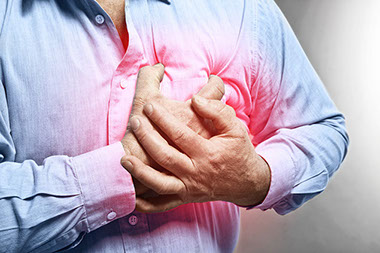
    Close up image of man holding chest in pain.

    A heart attack may have warning signs. It can occur without signs, too. This is called a “silent” heart attack.

    Causes

    *  The most common cause is one or more blood clots that block an artery in the heart. Often, a blood clot forms in an artery already narrowed by plaque.

    *  Having a heart attack in the past increases the risk for another one.

    *  Spasms occur in the large coronary artery. This can be triggered by: Heavy physical exertion, such as shoveling snow; exposure to cold; severe emotional stress; and having a heavy meal. These triggers are more likely to affect persons who are not active.

    *  Cocaine or amphetamine abuse can cause a sudden heart attack. This can happen in persons with no signs of heart disease.

    Warning Signs

    Note: If any of these signs occur, call 9-1-1.

    Common Warning Signs

    *  Feeling of pain (may spread to or be felt in the arm, neck, tooth, jaw, or back), tightness, burning, squeezing, or heaviness in the chest. This lasts more than a few minutes or goes away and comes back.

    *  Chest discomfort with:

    – Fainting

    – Feeling lightheaded.

    – Nausea.

    – Shortness of breath.

    – Sweating.

    Other Warning Signs

    *  Unusual chest, abdominal, or stomach pain.

    *  Dizziness; nausea; trouble breathing; jaw or arm pain without chest pain.

    *  Fast or uneven heartbeat or pulse.

    *  Sweating for no reason, pale, gray, or clammy skin.

    Signs More Likely in Women Than Men

    An uneasy feeling in the chest with: Unexplained or extreme anxiety; unusual fatigue or weakness; fluttering heartbeats; or severe indigestion that doesn’t go away with an antacid.

    Treatment

    A heart attack is a medical emergency! Treatment works best when it is given within 1 to 2 hours after symptoms start. Treatment includes:

    *  Medicine(s) to keep blood from clotting.

    *  “Clot busters” to dissolve blood clots in heart arteries.

    *  Tests to diagnose the status of the heart and arteries.

    *  Angioplasty, stents, or bypass surgery, if needed.

    Prevention

    *  Follow prevention measures in Heart Disease.

    *  Take medications, as prescribed.

    *  Don’t shovel snow or carry heavy objects, especially if you are not physically fit.

    *  Don’t use amphetamines and/or cocaine.

    Questions to Ask

    Self-Care / Prevention

    Call 9-1-1 or your local rescue squad right away! Call when warning signs start. Don’t wait to see if the pain goes away.

    First Aid for a Heart Attack Before Emergency Care

    *  CHECK for a response. Do CPR, as needed.

    *  If the person uses and has nitroglycerin, place one tablet under the tongue. Give as many as 3 tablets in 10 minutes.

    *  Give the person a regular (325 mg.) aspirin or 4 children’s chewable aspirins (81 mg. each) to chew on. Give the aspirin after calling 9-1-1. Ask the 9-1-1 dispatcher if aspirin should be taken.

    {Note: Don’t use aspirin if the person is allergic to it or has a condition that makes using it risky.}

    *  If you can’t call 9-1-1, drive the person to the hospital right away. If you are having heart attack signs, don’t drive yourself unless you have no other choice.

    *  Loosen clothing around the neck, chest, and waist. Don’t let the person lie down, especially if he or she has breathing problems. A half-sitting position is better. Put the legs up. Bend them at the knees. Put a pillow or rolled towel under the knees. Support the back.

    *  Reassure the person that you have called for medical help and will stay with him or her until it arrives.

    *  After a heart attack, follow the doctor’s treatment plan.

    Healthier at Home book by the American Institute for Preventive Medicine. www.HealthyLife.com. All rights reserved.

    © American Institute for Preventive Medicine
  • Heart Disease

    Heart & Circulation Problems

    Heart disease is a common term for coronary artery disease (CAD). It is the number one cause of death in the U.S. in both men and women. With heart disease, arteries that supply blood to the heart become hardened and narrowed. Heart disease can lead to these problems:

    *  Angina. With this, the heart muscle does not get as much blood and oxygen as it needs for a given level of work. A heart attack damages the heart muscle. Angina does not. It is a warning sign that a heart attack could occur, though.

    *  Heart attack.

    *  Heart failure (HF). With this, the heart “fails” to supply the body with enough blood and oxygen for its needs. This develops slowly. It becomes chronic.

    Signs & Symptoms

    *  Symptoms of angina are pain, discomfort, or a squeezing pressure in the chest. Aching in a tooth, jaw, or neck can also occur. Symptoms usually go away with rest and/or nitroglycerin. Angina attacks may occur with anger, excitement, or exertion, such as walking up a hill.

    *  Symptoms of a heart attack.

    *  Symptoms of heart failure are: Shortness of breath; feeling very tired or weak; swelling in the lower legs, ankles, and feet; dry cough or one with pink, frothy mucus; rapid weight gain; and a fast heart beat.

    Causes

    Illustration of healthy artery vs a clogging artery.

    Heart disease is caused by atherosclerosis. This is the buildup of plaque in the inner walls of the arteries. The plaque is made up of blood platelets, cholesterol, fibrous tissue, and sometimes calcium. The plaque narrows the arteries. This slows or blocks the flow of blood to the heart.

    Some factors increase the risk of heart disease. The more risk factors; the higher the risk.

    Risk Factors That Can’t Be Changed

    *  A past heart attack or stroke.

    *  Being a male 45 years or older.

    *  Being a female 55 years or older.

    *  Family history of heart disease:

    – A father or brother had heart disease before age 55.

    – A mother or sister had heart disease before age 65.

    Risk Factors That Can Be Controlled

    *  High blood pressure.

    *  High-risk blood cholesterol levels.

    *  Smoking.

    *  Being overweight or obese.

    *  Lack of physical activity.

    *  Having diabetes and high total and/or LDL (bad) cholesterol.

    *  Using cocaine or amphetamines.

    *  Metabolic syndrome.

    Other Factors that May Play a Role in Heart Disease

    *  Waist measurement > 40 inches for men; > 35 inches for women.

    *  C-reactive protein (CRP) in the blood. Levels of CRP rise when there is inflammation in the body.

    *  Elevated blood homocysteine levels.

    *  Infections, such as chlamydia pneumoniae.

    *  Elevated blood lipoprotein (a).

    *  Elevated blood triglycerides.

    Treatment

    The goals of treatment are to relieve symptoms, control or reduce risk factors, stop or slow further damage to the arteries, and prevent and treat cardiac events. Treatment includes:

    *  Self-Care / Prevention measures on this page.

    *  Medications.

    *  Procedures to open blocked or narrowed arteries or bypass them.

    *  Cardiac rehabilitation (rehab).

    Questions to Ask

    Self-Care / Prevention

    *  Have regular medical checkups. Get your blood pressure checked at each office visit or or as advised by your doctor. Get your blood cholesterol tested regularly, as advised by your doctor.

    *  Don’t smoke. If you smoke, quit.

    *  Get to or stay at a healthy weight.

    *  Take all medications as prescribed.

    *  If you are 50 to 69 years old, ask your doctor about the benefits and harms of aspirin therapy (e.g., 1 low-dose aspirin daily) to help prevent cardiovascular disease.

    *  See your doctor if you have any of the Signs & Symptoms of Diabetes.

    *  Follow a diet low in saturated fats, trans fats, and cholesterol. Limit sodium to 1,500 to 2,400 milligrams per day. Follow theDASH Eating Plan.

    *  Get regular exercise. Follow your doctor’s advice.

    *  Manage stress. Practice relaxation techniques.

    *  If you drink alcohol, do so in moderation. Too much alcohol can raise the risk for high blood pressure, heart disease, stroke, and other health problems. Moderate drinking, may be linked to a lower risk of coronary heart disease in some persons. Moderation means no more than 2 drinks a day for men; 1 drink a day for women and persons age 65 and older. One drink = 5 oz. of wine; 12 oz. of beer; or 1-1/2 oz. of 80-proof liquor.

    *  Ask your doctor how much, if any, alcohol you should drink.

    *  Get your doctor’s advice about taking vitamins, minerals, and herbal products.

    Metabolic Syndrome

    Metabolic Syndrome is having at least three of these five conditions:

    1.  Abdominal obesity. Waist measurement for this varies according to sex and ethnic group. Ask your doctor.

    2.  High triglycerides:* ≥ 150 mg/dL

    3.  Low HDL-cholesterol:* < 40 mg/dL for males; < 50 mg/dL for females

    4.  High blood pressure:* ≤ 140 mm Hg systolic and/or ≤ 90 mm Hg diastolic

    5.  High fasting glucose:* ≥ 100 mg/dL

    * Or taking medication to treat this condition.

    Resources

    The American Heart Association

    800.AHA.USA1 (242.8721)

    www.heart.org/HEARTORG

    National Heart, Lung, and Blood Institute (NHLBI)

    www.nhlbi.nih.gov

    Healthier at Home book by the American Institute for Preventive Medicine. www.HealthyLife.com. All rights reserved.

    © American Institute for Preventive Medicine
  • Heart Failure

    Heart & Circulation Problems

    The heart is the body’s pump. When it can’t pump well enough to meet the body’s needs, it is called heart failure (HF). The heart itself doesn’t fail, but “fails” to supply the body with enough blood and oxygen. The pumping action of the heart decreases. Blood flow slows down. This causes excess fluid (edema) in tissues throughout the body. The term congestive heart failure, used in the past, is due to the excess fluid or congestion. Heart failure needs a doctor’s diagnosis and care!

    Signs & Symptoms

    *  Shortness of breath.

    *  Feeling very tired or weak.

    *  Dry cough or a cough with pink, frothy mucus.

    *  Swelling of the lower legs, ankles, and feet. Your shoes can suddenly feel too tight.

    *  Decreased appetite and nausea.

    *  Rapid weight gain over several days or weeks without an increase in food intake. You could gain up to 1 pound a day.

    *  A fast heartbeat. Sometimes the heartbeat is irregular.

    *  Feeling anxious or restless.

    *  A feeling of suffocation. This is caused by fluid that collects in the lungs. It can be difficult to lie flat. You may need to sleep on 2 or more pillows. You may wake up suddenly from sleep feeling short of breath.

    Causes

    Anything that damages the heart muscle or makes it work too hard can cause heart failure. This includes:

    *  One or more heart attacks. This is the number 1 cause.

    *  Advanced coronary artery disease.

    *  High blood pressure that is not controlled.

    *  High blood pressure in the lungs (pulmonary hypertension).

    *  Alcohol and/or drug abuse.

    *  Severe or chronic lung disease (e.g., emphysema).

    *  Diabetes, especially if it is poorly controlled.

    *  Pericarditis. This is a swelling or thickening of the lining that surrounds the heart. This can restrict the heart’s pumping action.

    *  Abnormal heart valves. Causes include rheumatic heart disease and heart defects present at birth.

    *  Abnormal heart rhythm.

    *  A viral infection. This is rare and happens only if the infection affects the heart and causes cardiomyopathy, a muscle disease of the heart.

    Diagnosis

    Ways to Diagnose Heart Failure:

    *  A medical history and physical exam. Blood and urine tests.

    *  A chest X-ray to see if the heart is enlarged and if the lungs are congested.

    *  An ECG (also called EKG) to look for an enlarged heart, heart muscle damage, and abnormal heart rhythms.

    *  An echocardiogram. This test uses sound waves to show the heart’s size, shape, and movement.

    *  An exercise stress test.

    *  A cardiac catheterization. This test diagnoses coronary artery disease and checks for past heart attacks.

    Self-Care / Prevention

    Some causes of heart failure can be prevented. These include heart attacks, coronary artery disease, high blood pressure, rheumatic fever, and substance abuse.

    To Prevent Heart Attacks and Coronary Artery Disease:

    *  Don’t smoke. If you smoke, quit!

    *  Have regular medical checkups. Get your blood pressure checked at each office visit or at least every 2 years. Get your blood cholesterol tested as advised by your doctor.

    *  Take all medicines as prescribed. These include ones for high blood pressure, etc.

    *  Ask your provider about taking a low dose of aspirin (e.g., 1 baby aspirin) daily.

    *  Get to or stay at a healthy body weight.

    *  Strictly limit or avoid alcohol.

    *  Do regular physical activity. {Note: Talk to your health care provider before you start an exercise program. This is important if you have been inactive for a long period of time, are overweight, are over age 35, or have any medical problems.}

    *  Get a test to screen for diabetes as advised by your doctor. Having diabetes and high blood cholesterol increase the risk for heart disease.

    Self-Care

    *  Weigh yourself daily to check for excess fluid weight gain. Keep a record of what you weigh. Take it with you when you visit your health care provider. Call your provider, though, if your weight increases suddenly (3 or more pounds in 1 day).

    *  Limit sodium (part of salt) to about 2,000 milligrams per day.

    *  Limit fluids as advised by your health care provider.

    *  Have 5 to 6 small (instead of 3 large) meals a day.

    *  Stay as active as you can.

    *  Do not have more than one alcoholic drink a day, if at all. One drink equals 4 to 5 oz. of wine; 12 oz. of beer; or 1-1⁄2 oz. of 80 proof liquor.

    *  Eat healthy.

    *  Exercise on a regular basis as advised by your health care provider.

    *  Modify your daily activities as needed so you don’t place too heavy a demand on your heart. Alternate activity with periods of rest.

    *  Sit up when you rest, if this makes breathing easier. Sleep on 2 or more pillows and/or raise the head of your bed 6 inches when you sleep.

    *  Don’t smoke. If you do, quit!

    *  Lose weight if you are overweight.

    *  Follow your health care provider’s treatment program. Take your medication(s) as prescribed.

    Medical Care

    Call Health Care Provider For:

    *  A new onset of shortness of breath or fatigue when you do your normal activities or lie down.

    *  A new onset of swelling in the ankles and feet and it is harder to breathe when you lie down flat.

    *  Coughing up pink or frothy mucus with mild shortness of breath.

    *  An unexplained weight gain of 3 to 5 pounds.

    *  Having heart failure and you have symptoms of a cold or flu. These may add stress to your heart.

    *  Having heart failure and your symptoms worsen.

    Get Immediate Care For:

    *  Severe shortness of breath (you are too short of breath to say a few words) with or without wheezing (a high pitched whistling sound).

    *Heart Attack Warning Signs

    Resources

    American Heart Association

    800.242.8721

    www.heart.org/HEARTORG

    National Heart, Lung, and Blood Institute

    www.nhlbi.nih.gov

    Heart Failure brochure by the American Institute for Preventive Medicine. www.HealthyLife.com. All rights reserved.

    © American Institute for Preventive Medicine
  • 5 Numbers You Need To Know By Heart

    SELF-CARE CORNER

    Close-up image of doctor's hand holding a green apple.

    Pass codes, phone numbers, social security numbers, clothing sizes and addresses. We all have a lot of numbers in our heads, but heart experts at The Ohio State University Wexner Medical Center say there are 5 more numbers you need to know. These are the numbers your doctor will use to assess your risk for getting heart disease.

    1.Blood pressure.This is the force of blood against the walls of the arteries. It’s measured as two numbers-the systolic pressure, as the heart beats, over the diastolic pressure, as the heart relaxes between beats. A normal blood pressure is under 120/80. Talk to your doctor if it is higher than that. Simple lifestyle changes can help you lower your blood pressure and potentially avoid taking medication.

    2.BMI.This measures your weight for your body surface area. It is used as a reliable indicator of body fatness for most people. Use an online calculator to assess your risk. Search for “BMI” atwww.nhlbi.nih.gov.

    3.Waist circumference.Fat that is carried around the abdomen increases the risk of heart disease and type 2 diabetes. Measure your waist at the belly button, not where your clothing waistband sits. Women should be less than 35 inches and men should be less than 40 inches at the waist.

    4.Cholesterol.While the body makes all of the cholesterol it needs, it is also found in animal sources of food. High cholesterol can lead to heart disease and build-up of plaque in the arteries. Know your total cholesterol number and your low-density lipoprotein, or LDL, number. That’s the bad cholesterol that can cause problems. A healthy cholesterol number is below 200. A healthy LDL number is below 130, 100, or 70 depending on your heart disease risk.

    5.Blood sugar.This reading tells doctors how much glucose is in the blood. High levels of blood glucose cause diabetes, which increases the risk for cardiovascular disease. A healthy fasting blood sugar number is under 100 after not eating for 8 hours.

    © American Institute for Preventive Medicine

  • I Cannot Tell Afib

    MEDICAL NEWS

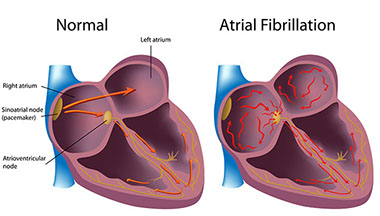
    Illustration of a normal heart vs a heart with AFib.

    Atrial fibrillation or AFib is the most common heart arrhythmia or irregularity in the U.S. It affects up to 4 million people.

    AFib needs to be taken seriously. It increases the risk of stroke by as much as 5 times and can contribute to heart failure and other heart conditions.

    When someone develops AFib, the upper chambers of the heart, the atria, beat rapidly and irregularly. “The atria quiver instead of squeezing normally. This causes slow blood flow, which leads to clots and stroke,” said Dr. Eric Rashba, Director of the Heart Rhythm Center at Stony Brook University Heart Institute.

    People with AFib often feel a fluttering in their chest, an unexplained racing of the heart, or that their heart is skipping beats. Other symptoms include fatigue, dizziness, shortness of breath, and lack of energy. Up to 10% of AFib patients have no symptoms at all.

    AFib can be related to high blood pressure, an overactive thyroid, congestive heart failure, or diseased heart valves. It is important to be diagnosed and treated early.

    The longer you wait for diagnosis and treatment, the more AFib progresses and becomes increasingly difficult to treat. Your doctor can refer you to a heart specialist. Initial treatment is medication. New procedures are also available.

    © American Institute for Preventive Medicine