Tag: heart health

  • Easy Food Swaps For A Healthy Heart

    HEALTHY EATING

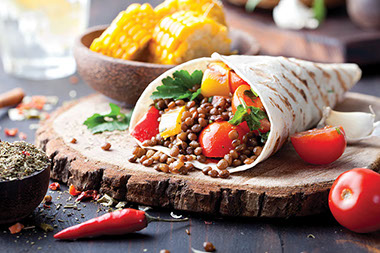
    Image of a healthy vegetable wrap.

    Eating better for your heart doesn’t have to be complicated. In fact, making some small substitutions in your diet each day can add up to better health. It doesn’t require a big investment of time or money to make these changes:

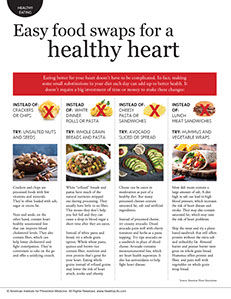
    Instead of: Crackers or chips

    Try: Unsalted nuts and seeds

    Crackers and chips are processed foods with few vitamins and minerals. They’re often loaded with salt, sugar or excess fat.

    Nuts and seeds, on the other hand, contain heart healthy unsaturated fats that can improve blood cholesterol levels. They also contain fiber, which can help lower cholesterol and fight constipation. They’re convenient to take on the go and offer a satisfying crunch.

    Instead of:  White dinner rolls or pasta

    Try: Whole grain breads and pasta

    White “refined” breads and pastas have much of the natural nutrients stripped out during processing. They usually have little to no fiber. This means they don’t help you feel full and they can cause a drop in blood sugar a short time after they are eaten.

    Instead of white pasta and bread, try a whole grain option. Whole wheat pasta, quinoa and brown rice contain fiber, nutrients and even protein that’s great for your heart. Eating whole grains instead of refined grains may lower the risk of heart attack, stroke and obesity.

    Instead of: Cheesy pasta or sandwiches

    Try: Avocado sliced or spread

    Cheese can be eaten in moderation as part of a healthy diet. But many processed cheeses contain saturated fat, salt and artificial ingredients.

    Instead of processed cheese, try creamy avocado. Diced avocado pairs well with cherry tomatoes and herbs as a pasta topping. Try ripe avocado on a sandwich in place of sliced cheese. Avocado contains monounsaturated fats, which are heart health superstars. It also has antioxidants to help fight heart disease.

    Instead of:  Lunch meat sandwiches

    Try: Hummus and vegetable wraps

    Most deli meats contain a large amount of salt. A diet high in salt can lead to high blood pressure, which increases the risk of heart disease and stroke. They may also contain saturated fat, which may raise the risk of heart problems.

    Skip the meat and try a plant-based sandwich that still offers protein without the extra salt and unhealthy fat. Almond butter and peanut butter taste great on whole grain bread. Hummus offers protein and fiber, and pairs well with vegetables on whole grain wrap bread.

    Source: American Heart Association
    © American Institute for Preventive Medicine
  • Go Nuts For A Healthy Heart

    HEALTHY EATING

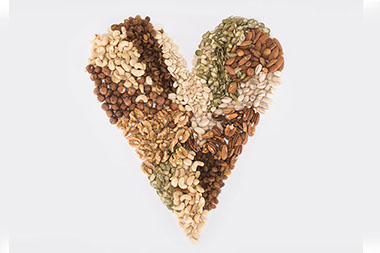
    Variety of nuts shaped into a heart.

    Nuts often get a reputation as being unhealthy. We add them to cookies and ice cream. People eat them by the handful at parties. But do nuts deserve a bad rap?

    Concerns about calories

    For years, many people avoided nuts because they are high in calories and fat. However, newer research finds that nuts can be an important part of a healthy diet. They contain many nutrients needed for body functions.

    The key is to eat nuts in moderation. This means you may need to eat smaller portions. Then, you can avoid eating too many calories from nuts.

    Look at the serving size on a package of nuts to get an idea of how much to eat. One serving may be quite small (2-4 tablespoons).

    Some Fats are Healthy

    Yes, most nuts are high in total fat. But these fats found in nuts actually promote good health! Most are high in healthy monounsaturated or polyunsaturated fats.

    Monounsaturated and polyunsaturated fats can help lower bad cholesterol, which can lower the risk of heart disease and stroke. The American Heart Association recommends people eat more of these fats from healthy sources like nuts and seeds.

    Protein packed

    Nuts are a good source of plant-based protein. Protein is an essential nutrient that the body needs for building muscle, repairing tissues and making hormones.

    It takes longer for the body to digest proteins than carbohydrates. That’s why eating some protein could help you feel less hungry than if you ate only carbohydrates, like crackers or bread.

    The Dietary Guidelines for Americans recommend that people eat healthy sources of protein, like those that come from nuts and seeds, and plant foods.

    Which types to eat

    Of course, there are many different kinds of nuts. Each type tastes different and may contain a variety of nutrients. As long as you’re not coating nuts with sugar and salt, any type can be healthy.

    Take a look at your favorite nut’s nutrition facts and go from there. For instance, macadamia nuts are one of the highest in calories and fat per ounce. But take those calories into account, and eat them instead of chips or cookies.

    Replace unhealthy, processed foods with nuts. You’ll get more nutrients and might even feel more full.

    Sources: Academy of Nutrition and Dietetics, National Institutes of Health, U.S. Department of Agriculture

    © American Institute for Preventive Medicine
  • Love Your Heart

    Heart & Circulation Problems

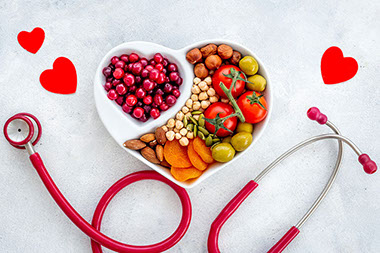
    Heart shape plate with heart healthy foods.

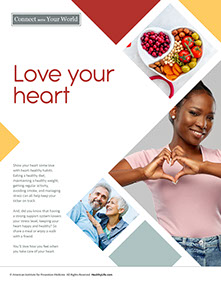
    Show your heart some love with heart-healthy habits. Eating a healthy diet, maintaining a healthy weight, getting regular activity, avoiding smoke, and managing stress can all help keep your ticker on track.

    And, did you know that having a strong support system lowers your stress level, keeping your heart happy and healthy? So share a meal or enjoy a walk with a friend.

    You’ll love how you feel when you take care of your heart.

    Health at Home Lifetime book by the American Institute for Preventive Medicine. www.HealthyLife.com. All rights reserved.

    © American Institute for Preventive Medicine
  • Protect Your Heart

    Heart & Circulation Problems

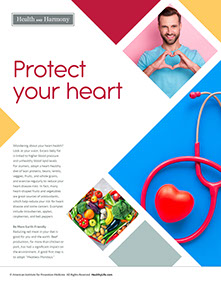
    Man smiling make hands into heart shape.

    Wondering about your heart health? Look at your waist. Excess belly fat is linked to higher blood pressure and unhealthy blood lipid levels. For starters, adopt a heart-healthy diet of lean proteins, beans, lentils, veggies, fruits, and whole grains, and exercise regularly to reduce your heart disease risks. In fact, many heart-shaped fruits and vegetables are great sources of antioxidants, which help reduce your risk for heart disease and some cancers. Examples include strawberries, apples, raspberries, and bell peppers.

    Be More Earth-Friendly

    Reducing red meat in your diet is good for you and the earth. Beef production, far more than chicken or pork, has had a significant impact on the environment. A good first step is to adopt “Meatless Mondays.”

    Health at Home Lifetime book by the American Institute for Preventive Medicine. www.HealthyLife.com. All rights reserved.

    © American Institute for Preventive Medicine