Tag: Heart Wellness

  • Cool That Heartburn

    SELF-CARE CORNER

    Man suffering from heartburn.

    Do you get a burning feeling in your chest after eating or at night? Does it get worse if you lie down or bend over?

    Many people have heartburn once in a while.

    Don’t ignore frequent heartburn

    When heartburn keeps happening, it could hurt your health. Frequent heartburn that lasts longer than two weeks is called gastroesophageal reflux disease (GERD). This condition can damage your throat or even cause breathing problems.

    See a doctor about frequent heartburn so you can get treatment.

    If you get occasional heartburn, there are several ways you can reduce it or avoid it:

    *  Stay upright after eating. Don’t lie down after a meal. This can cause the acid and food to come up and into your esophagus.

    *  Avoid activities that use the tummy muscles right after eating. This includes activities like hard exercise or lifting heavy objects.

    *  Eat smaller meals. Eat your food slowly and stop before you feel overly full.

    *  Avoid heartburn triggers. This includes caffeine, chocolate, fatty foods, fried foods and spicy foods.

    *  Work toward a healthy weight if you are overweight.

    *  Ask your doctor about using an antacid for occasional heartburn.

    Heartburn drug recall

    Recently, the Food and Drug Administration (FDA) found that an acid reflux (GERD) medicine contained a “probable human carcinogen” at low levels. This means that these medicines contain something that could potentially cause cancer.

    The drug, known as ranitidine or Zantac, is an H2-blocker. It works by reducing the amount of acid in the stomach. After FDA’s announcement, some drug companies recalled their ranitidine products. Some pharmacies also pulled the medicine off their shelves.

    If you are taking ranitidine or Zantac, talk to your doctor. There are other FDA-approved medicines that could work for you. Your doctor can help you choose the best treatment.

    FDA continues to evaluate the safety of ranitidine and will provide more information as it becomes available.

    Source: Food and Drug Administration

    © American Institute for Preventive Medicine
  • Quick Healthy Heart Habits

    WELL-BEING

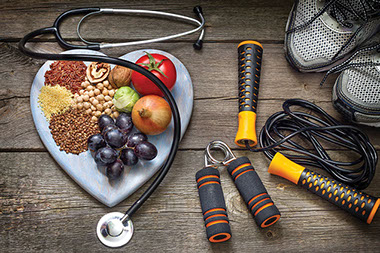
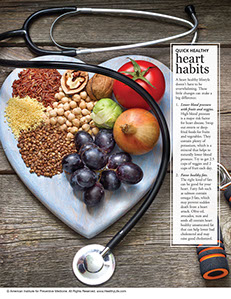
    Image of heart plate with heart healthy foods and fitness gear.

    A heart healthy lifestyle doesn’t have to be overwhelming. These little changes can make a big difference:

    1.  Lower blood pressure with fruits and veggies. High blood pressure is a major risk factor for heart disease. Swap out sweets or deep-fried foods for fruits and vegetables. They contain plenty of potassium, which is a mineral that helps to naturally lower blood pressure. Try to get 2.5 cups of veggies and 2 cups of fruit each day.

    2.  Favor healthy fats. The right kind of fats can be good for your heart. Fatty fish such as salmon contain omega-3 fats, which may prevent sudden death from a heart attack. Olive oil, avocados, nuts and seeds all contain heart healthy unsaturated fat that can help lower bad cholesterol and may raise good cholesterol.

    © American Institute for Preventive Medicine
  • Cardiac Rehab

    Heart & Circulation Problems

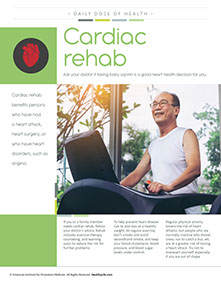
    Smiling women with laptop.

    Ask your doctor if taking baby aspirin is a good heart health decision for you.

    Cardiac rehab benefits persons who have had a heart attack, heart surgery, or who have heart disorders, such as angina.

    If you or a family member needs cardiac rehab, follow your doctor’s advice. Rehab includes exercise therapy, counseling, and learning ways to reduce the risk for further problems.

    To help prevent heart disease: Get to and stay at a healthy weight; do regular exercise; don’t smoke and avoid secondhand smoke; and keep your blood cholesterol, blood pressure, and blood sugar levels under control.

    Regular physical activity lowers the risk of heart attacks, but people who are normally inactive who shovel snow, run to catch a bus, etc. are at a greater risk of having a heart attack. Try not to overexert yourself, especially if you are out of shape.

    Health at Home Lifetime book by the American Institute for Preventive Medicine. www.HealthyLife.com. All rights reserved.

    © American Institute for Preventive Medicine
  • Love Is Healthy For Your Heart

    Heart & Circulation Problems

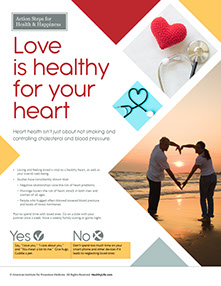
    Couple on beach making heart shape with their arms.

    Heart health isn’t just about not smoking and controlling cholesterol and blood pressure.

    *  Loving and feeling loved is vital to a healthy heart, as well as your overall well-being.

    *  Studies have consistently shown that:

    – Negative relationships raise the risk of heart problems.

    – Marriage lowers the risk of heart attack in both men and women of all ages.

    – People who hugged often showed lowered blood pressure and levels of stress hormones.

    Plan to spend time with loved ones. Go on a date with your partner once a week. Have a weekly family outing or game night.

    Say, “I love you,” “I care about you,” and “You mean a lot to me.” Give hugs. Cuddle a pet.

    Don’t spend too much time on your smart phone and other devices if it leads to neglecting loved ones.

    Health at Home Lifetime book by the American Institute for Preventive Medicine. www.HealthyLife.com. All rights reserved.

    © American Institute for Preventive Medicine

  • Love Your Heart

    Heart & Circulation Problems

    Heart shape plate with heart healthy foods.

    Show your heart some love with heart-healthy habits. Eating a healthy diet, maintaining a healthy weight, getting regular activity, avoiding smoke, and managing stress can all help keep your ticker on track.

    And, did you know that having a strong support system lowers your stress level, keeping your heart happy and healthy? So share a meal or enjoy a walk with a friend.

    You’ll love how you feel when you take care of your heart.

    Health at Home Lifetime book by the American Institute for Preventive Medicine. www.HealthyLife.com. All rights reserved.

    © American Institute for Preventive Medicine
  • Small Changes Your Heart Will Love

    MEDICAL NEWS

    Image of a basket filled with fruits and vegetables.

    You may know the basics of heart health that include a healthy diet, exercise, healthy weight, and avoiding tobacco. But, don’t let these major goals overwhelm you. Instead, take small steps each day that add up to big heart-healthy benefits.

    Say bye-bye to beige and eat the rainbow.

    Look at your plate’s color before you eat a meal. If it’s mostly browns, such as breads, pasta and meat, see if you can brighten it up with fruits and vegetables. Leafy greens, yellow peppers, carrots, blueberries and strawberries are just a few of the brightly colored foods that are great for your heart.

    Cut back on sodium when you can.

    If you’ve been eating salt for years, it can be hard to cut it out completely. But you may not taste the difference if you gradually replace some of the salt in your diet with herbs and spices without sodium. Cutting back on sodium can reduce your risk of heart attack, heart failure, and stroke. Many processed foods already contain high amounts of sodium, and adding salt to food greatly increases sodium intake for many people.

    Walk, if you can’t run.

    For many people, jogging, running, or other high-intensity workouts aren’t possible. Fortunately, you don’t have to choose a tough workout to get heart benefits. Start walking just a few minutes a day. Increase the amount of time you walk when you can until you are walking 30 minutes a day most days of the week. Brisk walking can be just as beneficial to your heart as running.

    If you use tobacco, keep trying to quit.

    Quitting tobacco is hard, and many people struggle to succeed. You may have strong urges to use tobacco or you may slip up and start again after you’ve quit. When this happens, be patient with yourself. Understand that many people have to quit several times before they’ve quit for good. When you quit, your heart – and your entire body – will start to heal. You’ll reduce your risk of heart disease, lung cancer, and many other serious diseases. Talk with your health care provider about prescription medication or nicotine replacement therapy.  Many of these treatments are now covered by insurance.

    Source: American Heart Association

    © American Institute for Preventive Medicine