Tag: heart

  • Bring On The Barley

    HEALTHY EATING

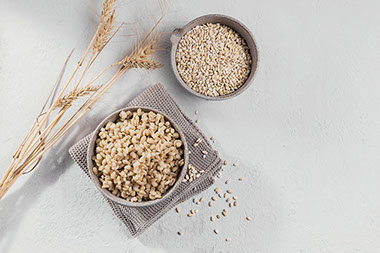
    Two bowls filled with barley, one cooked, one raw.

    In its whole-grain form, barley is packed with a wealth of beneficial nutrients. Known for its nutty flavor and slightly chewy texture, it makes a great addition to soups, salads, and many other dishes.

    What’s in it

    *Fiber:One-quarter cup of uncooked, whole-grain barley (3/4 cup cooked) has 8 grams of fiber.

    *Beta-glucan:One of the unique fiber types in barley, beta-glucan, has been shown to lower blood LDL-cholesterol levels by aiding cholesterol excretion from the body.

    *Antioxidants:Contains many vitamins, minerals, and phytochemicals. Vitamin E and lignans are two antioxidants in whole-grain barley.

    *Minerals:It provides a good source of iron, selenium, copper, and magnesium.

    Health benefits

    A diet high in whole grains, such as barley, is widely recognized as beneficial to health. It may:

    *  Reduce the risk of heart disease

    *  Support healthy digestion

    *  Aid in weight management and weight loss

    *  Reduce the risk of type 2 diabetes

    *  Lower chronic inflammation

    *  Decrease the risk of cancer

    *  Support bone health

    Types of barley

    To get the health benefits of eating barley, you need to eat the whole-grain form. When a grain is refined, the bran and germ are stripped away, removing some key nutritional value, including its fiber.

    Barley comes in several forms, some of which are whole and some refined. Choose a whole-grain version!

    Whole grain barley

    *  Hulled barley

    *  Hulled barley grits

    *  Hulled barley flakes

    *  Whole grain barley flour

    Refined barley

    *  Pearl barley

    *  Quick pearl barley

    © American Institute for Preventive Medicine
  • Consider An Exercise Stress Test

    Fitness

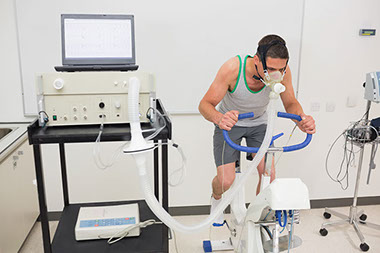
    Image of man performing a stress test.

    An exercise stress test measures the heart’s response to physical exertion and can give your doctor an idea of how safe it would be for you to exercise and at what intensity you can exercise with relative safety. If you undergo an exercise test, your doctor will ask you to either pedal a stationary bike or walk on a motorized treadmill that increases in speed or grade. Electrodes placed on your chest will monitor your heart activity. Your blood pressure will be monitored, too.

    Should you have an exercise stress test? According to the National Heart, Lung, and Blood Institute, exercise stress testing isn’t routinely done to screen for problems, such as coronary artery disease (CAD). Usually, you will have to have symptoms of CAD before a doctor recommends exercise stress testing.

    You should check with your doctor about the need for an exercise stress test. In general you may be advised to have an exercise stress test if:

    *  You plan to start a vigorous exercise program and you are a male over the age of 45 or a female over the age of 55, especially if you have:

    – Diabetes or kidney disease.

    – Very high blood pressure.

    – Very high LDL (bad) blood cholesterol.

    – A family history of heart disease or many risk factors for it.

    *  You have chest pain during physical activity.

    *  You have a diagnosed heart ailment, lung disease, or metabolic disorder.

    *  You feel faint, get a rapid heartbeat, or feel a fluttering feeling in your chest when you exercise.

    *  You get short of breath at rest or when you exercise.

    *  You have had an abnormal resting electrocardiogram (ECG).

    Page image from A Year of Health Hints book by the American Institute for Preventive Medicine. www.HealthyLife.com. All rights reserved.

    © American Institute for Preventive Medicine
  • Go Red To Manage Pain

    SELF-CARE CORNER

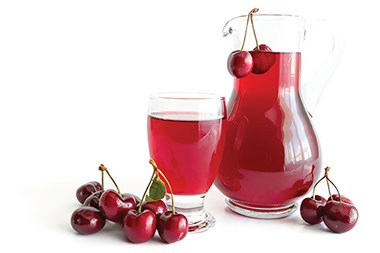
    Image of cherry juice.

    Tart cherries may help reduce chronic inflammation, especially for the millions of Americans suffering from joint pain and arthritis, according to research from Oregon Health & Science University. The researchers suggest tart cherries have the “highest anti-inflammatory content of any food” and can help people with osteoarthritis manage their disease.

    In a study of women ages 40 to 70 with inflammatory osteoarthritis, the researchers found that drinking tart cherry juice twice daily for three weeks led to significant reductions in important inflammation markers-especially for women who had the highest inflammation levels at the start of the study.

    Often thought of as “wear-and-tear” arthritis, osteoarthritis is the most common type of arthritis. Athletes are often at a greater risk for developing the condition, given their excessive joint use that can cause a breakdown in cartilage and lead to pain and injury, according to the Arthritis Foundation.

    Along with providing the fruit’s bright red color, the antioxidant compounds in tart cherries-called anthocyanins-have been specifically linked to high antioxidant capacity and reduced inflammation, at levels comparable to some well-known pain medications.

    Available every day of the year in dried, frozen, and juice forms, tart cherries are a versatile ingredient to include in any training or inflammation-fighting diet.

    © American Institute for Preventive Medicine
  • Olive Oil

    HEALTHY EATING

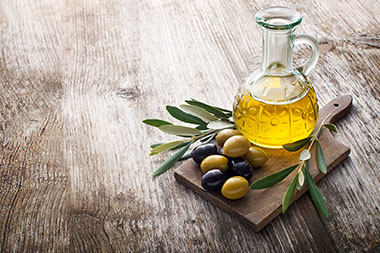
    Image of olives and olive oil.

    Olive oil is a more healthful choice than many other cooking fats. Using olive oil in place of saturated fats has been shown to help lower bad cholesterol and raise good cholesterol levels, which is why olive oil is heart healthy.

    Know these facts about olive oil, from the North American Olive Oil Association:

    *  Extra virgin olive oil is the most flavorful olive oil, with an unlimited range of flavors spanning from smooth and subtle to peppery and pungent. A finishing drizzle of extra virgin olive oil can enhance the texture, taste, and aroma of food.

    *  Olive oil, sometimes referred to as “classic” or “pure” olive oil, has a milder flavor with just a hint of fruitiness. The subtle flavor of olive oil makes it a perfect everyday cooking oil and easily adapts to a number of cooking methods such as grilling, sautéing, roasting, frying, and baking.

    *  Use bottled olive oil within 8 to 12 weeks of opening. Sealed packages can keep for up to 2 years.

    *  Dark bottles or tins are best at reducing potential damage from light.

    *  Avoid packages that show signs of improper handling or storage such as dust on the bottle, broken or loose seal on the cap, or an orange tint to the oil, which could indicate overexposure to fluorescent lighting or that heat has damaged the oil.

    *  Look for a country of origin statement, which is required by federal labeling laws and is typically found on the back label near the nutritional information.

    © American Institute for Preventive Medicine

  • Pump Up Your Heart In 5 Easy Steps

    SELF-CARE CORNER

    Image of older women laughing.

    Did you know that a good night’s sleep can help prevent heart disease? That’s just one way to lower your risk. Dr. Holly Andersen, director of education and outreach at NewYork-Presbyterian Hospital/Weill Cornell Medical Center, offers some easy steps to improve heart health and overall well-being:

    Step 1: Know your numbers.

    Your blood pressure, cholesterol, and triglyceride levels are the most important numbers you will need to know before you take the path to good heart health. A normal blood pressure level is 140/85 or lower, total cholesterol levels should be less than 200, and triglycerides less than 150.

    Step 2: Start walking.

    Exercise really is the fountain of youth. A simple 20- to 30-minute walk a few days a week can actually cut your risk of premature death by more than half. Physical activity also improves sleep, reduces stress, elevates mood, reduces blood pressure, improves cholesterol, improves brain health, and prevents memory loss.

    Step 3: Laugh out loud.

    Laughter is good medicine. Just 15 minutes of laughter is about equal to 30 minutes of aerobic exercise with respect to our heart health. So choose funny movies on Netflix. Laughter has also been linked to the healthy function of blood vessels, an increase in the brain hormones that improve mood, and reduction of pain  and anxiety.

    Step 4: Focus on your waistline, not your weight.

    Your waistline is a better measurement of your overall health than your weight because the amount of fat around your waistline is directly linked to high blood pressure and high cholesterol and can place you at increased risk for diabetes. Anything you can do to make your waistline smaller is definitely a step in the right direction. Liposuction doesn’t count!

    Step 5: Get a good night’s sleep.

    Sleep is one of the most undervalued elements of our daily routines, but it is absolutely vital to good health. Lack of sleep increases your blood pressure, induces stress, increases your appetite and slows down your metabolism, dampens your mood and decreases your brain power.

    © American Institute for Preventive Medicine
  • Simple Ways To Lower Cholesterol

    SELF-CARE CORNER

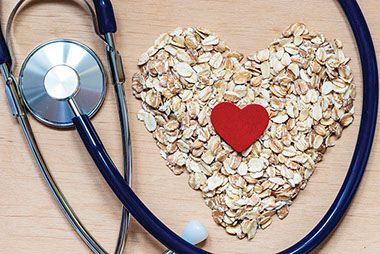
    Image of oats shaped in a heart.

    You can’t feel or see high cholesterol, but it’s nothing to brush aside. People with high cholesterol have twice the risk of heart disease as those who have normal levels. The Centers for Disease Control and Prevention says 1 out of 3 American adults has high cholesterol – and less than half of them get the treatment they need.

    A simple blood test, done at least every five years, can tell you if you have high cholesterol. If your levels are high, your doctor may put you on a cholesterol-lowering program. This may include medicine, but often includes changes you can make at home to be healthier.

    Lifestyle changes are an important way to lower high cholesterol and cut your risk of heart disease. Even if your cholesterol isn’t high, these changes can help you keep it at a healthy level. The American Academy of Family Physicians says people should:

    *Avoid smoking or quit if you do smoke.Smoking lowers your good cholesterol. Talk to your doctor if you need help quitting tobacco.

    *Work toward a healthy weight.Losing just a few pounds can lower bad cholesterol and triglycerides.

    *Get active.Exercise can raise HDL (good) cholesterol and lower LDL (bad) cholesterol and triglycerides. Try for 30 minutes of activity, 5 days per week.

    *Get more fiber in your diet.Soluble fiber, found in oats, legumes, and fruits and vegetables, may help lower cholesterol.

    *Eat healthy fats.Avoid saturated and trans fats found in many processed, fried and animal foods. Focus on healthy fats found in olive oil, fish, avocados, seeds and nuts.

    *Eat more vegetarian proteins.Beans, nuts, peas, soy and lentils are healthy proteins that don’t have the saturated fats found in most meat.

    *Limit foods with cholesterol.Healthy people should eat less than 300 milligrams of cholesterol per day. People with heart disease may need to eat less than 200 milligrams a day.

    *Ask about supplements.Some natural supplements can help lower cholesterol in addition to making healthy diet and exercise changes. These include:

    – Plant sterols and stanols

    – Omega-3 fatty acids (usually found in fish oil supplements)

    – Red yeast rice

    Always ask your doctor before taking any natural supplements, especially if you have health conditions or take any medicines.

    © American Institute for Preventive Medicine

  • Small Changes Your Heart Will Love

    MEDICAL NEWS

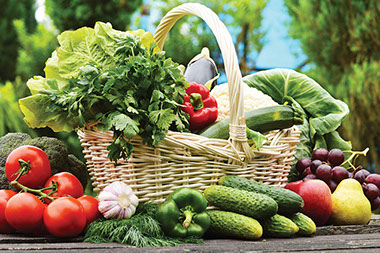
    Image of a basket filled with fruits and vegetables.

    You may know the basics of heart health that include a healthy diet, exercise, healthy weight, and avoiding tobacco. But, don’t let these major goals overwhelm you. Instead, take small steps each day that add up to big heart-healthy benefits.

    Say bye-bye to beige and eat the rainbow.

    Look at your plate’s color before you eat a meal. If it’s mostly browns, such as breads, pasta and meat, see if you can brighten it up with fruits and vegetables. Leafy greens, yellow peppers, carrots, blueberries and strawberries are just a few of the brightly colored foods that are great for your heart.

    Cut back on sodium when you can.

    If you’ve been eating salt for years, it can be hard to cut it out completely. But you may not taste the difference if you gradually replace some of the salt in your diet with herbs and spices without sodium. Cutting back on sodium can reduce your risk of heart attack, heart failure, and stroke. Many processed foods already contain high amounts of sodium, and adding salt to food greatly increases sodium intake for many people.

    Walk, if you can’t run.

    For many people, jogging, running, or other high-intensity workouts aren’t possible. Fortunately, you don’t have to choose a tough workout to get heart benefits. Start walking just a few minutes a day. Increase the amount of time you walk when you can until you are walking 30 minutes a day most days of the week. Brisk walking can be just as beneficial to your heart as running.

    If you use tobacco, keep trying to quit.

    Quitting tobacco is hard, and many people struggle to succeed. You may have strong urges to use tobacco or you may slip up and start again after you’ve quit. When this happens, be patient with yourself. Understand that many people have to quit several times before they’ve quit for good. When you quit, your heart – and your entire body – will start to heal. You’ll reduce your risk of heart disease, lung cancer, and many other serious diseases. Talk with your health care provider about prescription medication or nicotine replacement therapy.  Many of these treatments are now covered by insurance.

    Source: American Heart Association

    © American Institute for Preventive Medicine

  • 6 Healthy Heart Numbers

    Heart & Circulation Problems

    Women smiling while making hands into a heart shape.

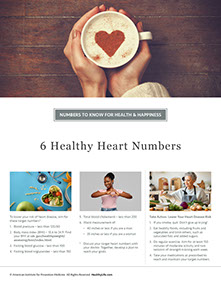
    To lower your risk of heart disease, aim for these target numbers*:

    1.  Blood pressure – less than 120/80

    2.  Body mass index (BMI) – 18.6 to 24.9. Find your BMI atcdc.gov/healthyweight/assessing/bmi/index.html.

    3.  Fasting blood glucose – less than 100

    4.  Fasting blood triglycerides – less than 150

    5.  Total blood cholesterol – less than 200

    6.  Waist measurement of:

    – 40 inches or less if you are a man

    – 35 inches or less if you are a woman

    * Discuss your target heart numbers with your doctor. Together, develop a plan to reach your goals.

    Take Action: Lower Your Heart Disease Risk

    1.  If you smoke, quit. Don’t give up trying!

    2.  Eat healthy foods, including fruits and vegetables and limit others, such as saturated fats and added sugars.

    3.  Do regular exercise. Aim for at least 150 minutes of moderate activity and two sessions of strength training each week.

    4.  Take your medications as prescribed to reach and maintain your target numbers.

    Health at Home Lifetime book by the American Institute for Preventive Medicine. www.HealthyLife.com. All rights reserved.

    © American Institute for Preventive Medicine

  • Ways To Improve Heart Health

    HEALTHY EATING

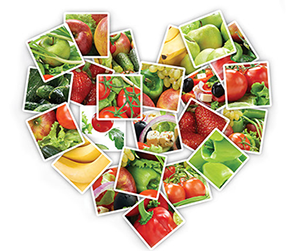
    Images of fruits and vegetables shaped into a heart.

    (With ingredients in the foods you already eat)

    Poor diet increases the risk of high blood pressure, high cholesterol, and poor circulation-3 major factors that affect overall heart health. Know which nutrients and foods in your diet may decrease risk for heart disease-the number one cause of death in the U.S.

    Phytosterols:Compounds similar to cholesterol that are found in all edible plants. They help reduce low density lipoprotein (LDL) cholesterol, which is a main risk factor for heart disease.

    Cocoa flavanols:Can help maintain the elasticity of blood vessels, which contributes to normal blood flow. Quite simply: dark chocolate.

    Omega-3 fatty acids:Primarily found in fish. Have been shown to decrease triglyceride levels, potentially lowering blood pressure.

    Hydroxytyrosol:An antioxidant found in olive oil, protects blood lipids (fats) from oxidative damage.

    Blueberries: May reduce high blood pressure.

    Oat beta-glucan:Daily consumption of at least 3 grams (your morning cereal) effectively lowers cholesterol.

    Grape seed extract:Shown to support blood pressure within a normal range. This is ground up seeds from red wine grapes.

    Vitamin K:Helps to keep excess calcium out of blood vessel walls and improve cardiovascular health. Found in green leafy vegetables.

    Dairy:Daily consumption of low-fat milk products decreases the risk of high blood pressure.

    Almonds:Improves serum fatty acid profiles and decreases the overall risk of heart disease (a handful a day).

    Walnuts:Good source of omega-3 fatty acids and alpha linolenic acid (ALA) which help your heart by preventing dangerous heart rhythms that can lead to heart attacks.

    © American Institute for Preventive Medicine
  • Cardiac Rehab

    Heart & Circulation Problems

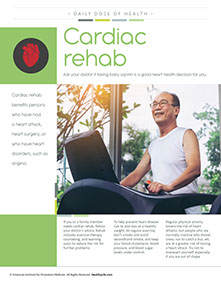
    Smiling women with laptop.

    Ask your doctor if taking baby aspirin is a good heart health decision for you.

    Cardiac rehab benefits persons who have had a heart attack, heart surgery, or who have heart disorders, such as angina.

    If you or a family member needs cardiac rehab, follow your doctor’s advice. Rehab includes exercise therapy, counseling, and learning ways to reduce the risk for further problems.

    To help prevent heart disease: Get to and stay at a healthy weight; do regular exercise; don’t smoke and avoid secondhand smoke; and keep your blood cholesterol, blood pressure, and blood sugar levels under control.

    Regular physical activity lowers the risk of heart attacks, but people who are normally inactive who shovel snow, run to catch a bus, etc. are at a greater risk of having a heart attack. Try not to overexert yourself, especially if you are out of shape.

    Health at Home Lifetime book by the American Institute for Preventive Medicine. www.HealthyLife.com. All rights reserved.

    © American Institute for Preventive Medicine