Tag: heat

  • Make Your Summer Workout Easier

    BE FIT

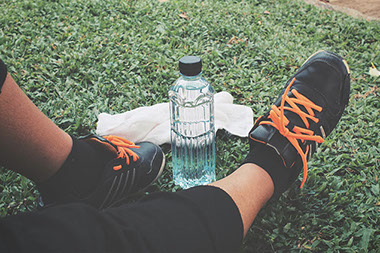
    Feet wearing tennis shoes and a bottle of water on grass.

    You can still enjoy a productive workout during the warmer months. Try these tips:

    1.Start early with water.Don’t wait to start drinking water right before you exercise. Drink water throughout the day to keep your body hydrated. Then, drink additional water during and after your workout.

    2.Go indoors when heat and humidity are too high.Don’t try to brave extreme weather with an outdoors workout. Heat exhaustion and heat stroke are dangerous and can happen to anyone. On heat advisory days, take your workout indoors.

    3.Wear the right clothes.Choose light-colored clothing that is made for sweating and workouts. Many new, lighter fabrics will keep sweat and moisture away, which makes you feel cooler. Cotton clothing is best suited for low-humidity weather conditions.

    4.Shun the midday sun.In the summer, limit or avoid heavy workouts from 10 a.m. to 4 p.m. The sun and temperatures will be hottest during these times. Instead, go out early in the morning or in the evening.

    Source: Academy of Nutrition and Dietetics

    © American Institute for Preventive Medicine

  • Plan For Summer Safety

    Home Safety

    Group of friends, holding sparklers around a picnic table.

    *  Use a broad-spectrum sunscreen with a sun protection factor (SPF) of 30 or higher.

    *  Wear sunglasses that block both UVA and UVB rays.

    *  Learn to swim and teach your children how to swim.

    * Check the depth of the water before diving into a pool. Don’t dive into water that is less than 9 feet deep. Never dive into an above-ground pool.

    Dos

    *  Watch a professional fireworks display in person or on TV.

    *  Wear and have children wear a personal flotation device when you are on a boat, water ski, etc.

    Don’ts

    *  Don’t play with fireworks or let your children play with fireworks.

    *  NEVER leave a child alone near a pool or water, not even for a few seconds.

    A Year of Health Hints book by the American Institute for Preventive Medicine. www.HealthyLife.com. All rights reserved.

    © American Institute for Preventive Medicine

  • Dehydration

    First Aid

    Image of women drinking a glass of water.

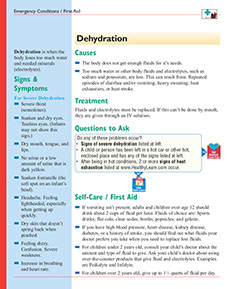
    Dehydration is when the body loses too much water and needed minerals (electrolytes).

    Signs & Symptoms

    For Severe Dehydration

    *  Severe thirst (sometimes).

    *  Sunken and dry eyes. Tearless eyes. (Infants may not show this sign.)

    *  Dry mouth, tongue, and lips.

    *  No urine or a low amount of urine that is dark yellow.

    *  Sunken fontanelle (the soft spot on an infant’s head).

    *  Headache. Feeling lightheaded, especially when getting up quickly.

    *  Dry skin that doesn’t spring back when pinched.

    *  Feeling dizzy. Confusion. Severe weakness.

    *  Increase in breathing and heart rate.

    Causes

    *  The body does not get enough fluids for it’s needs.

    *  Too much water or other body fluids and electrolytes, such as sodium and potassium, are lost. This can result from: Repeated episodes of diarrhea and/or vomiting; heavy sweating; heat exhaustion; or heat stroke.

    Treatment

    Fluids and electrolytes must be replaced. If this can’t be done by mouth, they are given through an IV solution.

    Questions to Ask

    Self-Care / First Aid

    *  If vomiting isn’t present, adults and children over age 12 should drink about 2 cups of fluid per hour. Fluids of choice are: Sports drinks; flat cola; clear sodas; broths; popsicles; and gelatin.

    *  If you have high blood pressure, heart disease, kidney disease, diabetes, or a history of stroke, you should find out what fluids your doctor prefers you take when you need to replace lost fluids.

    *  For children under 2 years old, consult your child’s doctor about the amount and type of fluid to give. Ask your child’s doctor about using over-the-counter products that give fluid and electrolytes. Examples are Pedialyte and Infalyte.

    *  For children over 2 years old, give up to 1-1/2 quarts of fluid per day.

    Healthier at Home book by the American Institute for Preventive Medicine. www.HealthyLife.com. All rights reserved.

    © American Institute for Preventive Medicine

  • Heat Illnesses

    First Aid

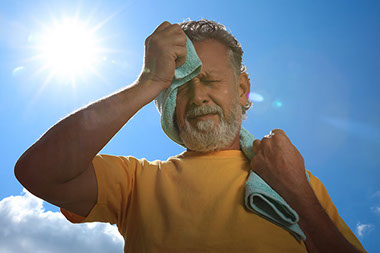
    Man outside in bright sun, wiping forehead with towel.

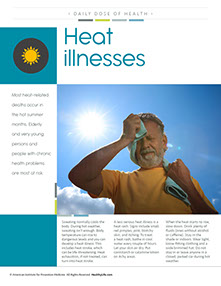
    Most heat-related deaths occur in the hot summer months. Elderly and very young persons and people with chronic health problems are most at risk.

    Sweating normally cools the body. During hot weather, sweating isn’t enough. Body temperature can rise to dangerous levels and you can develop a heat illness. This includes heat stroke, which can be life-threatening. Heat exhaustion, if not treated, can turn into heat stroke.

    A less serious heat illness is a heat rash. Signs include small red pimples, pink, blotchy skin, and itching. To treat a heat rash, bathe in cool water every couple of hours. Let your skin air dry. Put cornstarch or calamine lotion on itchy areas.

    When the heat starts to rise, slow down. Drink plenty of fluids (ones without alcohol or caffeine). Stay in the shade or indoors. Wear light, loose-fitting clothing and a wide brimmed hat. Do not stay in or leave anyone in a closed, parked car during hot weather.

    Health at Home Lifetime book by the American Institute for Preventive Medicine. www.HealthyLife.com. All rights reserved.

    © American Institute for Preventive Medicine
  • A Simple Remedy For Prickly Heat

    Skin Conditions

    Image of women sitting in grass field on sunny summer day.

    Feeling hot and sticky is bad enough. A visible sign of discomfort only makes it worse. Such is the case with prickly heat (also known as heat rash), identified by clusters of small blisters that itch and appear where you perspire the heaviest – the armpits, neck, back, or creases in the elbows (but not the face).

    Hot, humid weather, sensitive skin, and excess weight all aggravate prickly heat. Here are some simple ways to find relief:

    *  Wear loose, lightweight clothing.

    *  Dust the affected area with cornstarch.

    *  Take cool baths to reduce itching.

    *  Avoid hot, humid environments and stay in air-conditioned places, if possible.

    The key to managing prickly heat is to avoid sweating by staying in a cool environment. The rash will disappear in a couple of days.

    A Year of Health Hints book by the American Institute for Preventive Medicine. www.HealthyLife.com. All rights reserved.

    © American Institute for Preventive Medicine
  • Avoid Summer Headaches

    SELF-CARE CORNER

    Image of women sitting at the beach talking on the phone.

    The sun can be especially bothersome if you suffer from migraine. Looking directly or indirectly at the sun can trigger a migraine attack for some people.

    Don’t forget your shades-sunglasses, visors, or sun hat when you are out and enjoying the sunshine at the beach, tennis court, golf course, or a baseball game, advises the National Headache Foundation.

    Other summer headache triggers include changes in barometric pressure. Watch out for those sudden thunderstorms and windy days.

    Drink plenty of water, not soft drinks, to help prevent those “dehydration” headaches. You don’t want to drink too many soft drinks containing caffeine, which can also contribute to your headaches.

    At backyard barbecues and picnics, you may encounter food items that you wouldn’t normally eat. The sauces and dry rubs on those tasty ribs may contain monosodium glutamate (MSG) to which many headache sufferers are sensitive. The spread at a picnic may include aged cheeses, hot dogs, and other meats with nitrates, and pickles-all possible triggers. Also watch your intake of beer and cocktails.

    © American Institute for Preventive Medicine