Tag: home

  • Audit Your Home For Safety

    Home Safety

    Most accidents happen at home. If you think your house is “home, safe home,” take a look around. At first glance it may look orderly, but certain common trouble spots can lead to cuts, falls, burns, or other injuries. The following room-by-room checklist can alert you to accidents waiting to happen.

    Kitchen

    *  Cleaners and dangerous chemicals should be stored out of children’s reach.

    *  Scissors, knives, ice picks, and other sharp tools should be stored separately from other utensils out of the reach of children.

    *  Towels, curtains, and other flammable materials should hang a safe distance from heat sources like the stove.

    *  Kitchen fans and stove ventilation exhausts should be clean and in good working order.

    *  Electrical cords should run a safe distance from the sink or range.

    *  Electrical outlets should not be overloaded.

    *  A sturdy step stool should be available to help reach high cabinets.

    *  Vinyl floors should be cleaned with nonskid wax.

    *  A nonskid floor mat should be in place in front of the sink.

    *  The kitchen should be well-lit.

    Bedroom

    *  Electrical cords should be tucked away from foot traffic and in good working order.

    *  Electrical outlets should not be overloaded.

    *  Electric blankets should not be covered by bedspreads or other blankets when in use.

    *  Carpeting should be secured to the floor.

    *  A night-light should be situated between the bed and the bathroom or hallway.

    *  The bedroom telephone should be easy to reach, even from the floor, if necessary.

    *  Ashtrays, irons, electric hair curlers, and other potential fire hazards should be located away from bedding, curtains, or other flammable material.

    *  Smoke detectors should be located near entrances to rooms.

    Bathroom

    *  Floor mats should have nonskid backing.

    *  Rubber mats or adhesive-backed strips should be in place in the bathtub or shower stall.

    *  A support bar should be securely installed in the bathtub or shower stall.

    *  Hair dryers, electric shavers, or other electric appliances should be kept away from water and unplugged when not in use.

    *  A light switch should be located near the bathroom entrance or entrances.

    Halls and Stairs

    *  Halls and stairs should be well-lit, with a light switch at each end of a stairway.

    *  If a staircase is dimly lit, the top and bottom steps should be marked with reflective tape.

    *  Sturdy hand rails should be securely installed on both sides of each stairway.

    *  Floor covering on stairs and in halls should be skid-proof or carpeted and not creased or frayed.

    *  Stairways should be clear of shoes, books, toys, tools, or other clutter.

    *  When young children are in the house, gates should block access to stairways.

    Basement and Garage

    *  To avoid confusion and misuse, all chemicals and cleaners should be kept in their original containers.

    *  Hazardous chemicals should be kept under lock and key or out of reach of children.

    *  Sharp or otherwise potentially hazardous tools should be in good working order.

    *  Gasoline and other flammable materials should be stored in airtight containers and away from heat sources (outside the home, if possible).

    *  To prevent suffocation, dispose of all plastic bags, or keep them out of reach of children.

    *  Don’t leave objects small enough to be swallowed within reach of children.

    *  Buy a radon test kit from your state department of health or department of environmental protection, or contact the National Radon Hotline at 1.800.767.7236 for information on radon testing. (Radon is an invisible gas that causes health problems if it builds up in homes and can’t escape.) If your home has high radon levels, hire a reliable radon expert to help you reduce levels of this gas in your home.

    Elsewhere around the House

    *  Outdoor porches and walkways should be kept clear of ice in winter weather.

    *  Window screens should be securely fastened, especially if small children are around.

    *  Take steps to remedy unsafe situations as soon as possible.
    A Year of Health Hints book by the American Institute for Preventive Medicine. www.HealthyLife.com. All rights reserved.

    © American Institute for Preventive Medicine
  • Be Safe – Prevent Falls Checklist

    Home Safety

    *  Do regular exercise to improve strength and balance.

    *  Ask your care team if conditions you have or medications you take raise your risk for falls. Ask how to lower the risk.

    *  Install handrails on both sides of the stairs.

    *  Keep stair areas well lit. Install a switch at the top and bottom of the stairs.

    *  Make sure that carpet on stairs is nailed down securely.

    *  Keep stairs clear of clutter.

    *  Install grab bars in the shower, tub, and toilet area.

    *  Use a shower bench that has rubber tips on the legs.

    *  Before getting in the tub, test the bath water. Make sure it is not too hot.

    *  Use a bath mat with suction cups or use nonslip adhesive strips in the tub/shower.

    *  Don’t use any loose area rugs.

    *  Keep lamp switches within easy reach.

    *  Arrange furniture so there is a clear path for walking.

    *  Test if furniture is sturdy enough to lean on.

    *  Clear away phone or electrical wires from walk paths.

    *  Use night lights.

    *  Only use step stools with handrails.

    *  Have snow and icy patches cleared from the sidewalk and steps.

    Note: Let your health care team know if you have had a fall.

    Other Home Safety Tips

    *  Keep emergency phone numbers posted.

    *  Stock first aid supplies.

    *  Never smoke in bed or when you feel drowsy. Better yet, don’t smoke at all!

    *  Install smoke alarms. Check them every 6 months. Keep a fire extinguisher in the kitchen and garage.

    *  Install carbon monoxide detectors in your home and garage.

    *  If you use a space heater, make sure it has an emergency shut off.

    *  Plan an escape route in case of fire.

    Health at Home Lifetime book by the American Institute for Preventive Medicine. www.HealthyLife.com. All rights reserved.

    © American Institute for Preventive Medicine
  • Home Medical Tests

    Medical Exams

    Home medical tests let you check for and monitor health conditions at home.

    Self-Testing Kits

    *  Diagnose when conditions are or are not present. These include kits that test for blood cholesterol level and blood in the stool.

    *  Monitor a chronic condition. These include kits that test for blood sugar levels and blood pressure readings.

    The U.S. Public Health Service and the Food and Drug Administration (FDA) give tips for safe and proper use of self-testing kits. (Each of these does not apply to all tests.)

    *  Don’t buy or use a test kit after the expiration date.

    *  Follow storage directions on the label.

    *  Note special precautions, such as not eating certain foods before testing.

    *  Study the package insert. First, read it through to get a general idea of how to perform the test. Then, go back and review the instructions and diagrams until you fully understand each step.

    *  Know what the test is meant to do and what it doesn’t do. Tests are not always 100% accurate.

    *  Some test results rely on comparing colors. If you’re colorblind, ask someone who is not colorblind to help you read the results.

    *  Follow instructions exactly. Don’t skip a step.

    *  When you collect a urine sample, use a sterile or clean container.

    *  Some steps need to be timed. Use a watch or clock with a second hand.

    *  Note what you should do if the results are positive, negative, or unclear.

    *  If something is not clear, don’t guess. Call the “800” number on the package or call a pharmacist for information.

    *  Keep test kits that have chemicals out of the reach of children. Discard away used test materials as directed.

    Page from the Healthier at Home book by the American Institute for Preventive Medicine. www.HealthyLife.com. All rights reserved.

    © American Institute for Preventive Medicine
  • Home Safety Checklist

    Home Safety

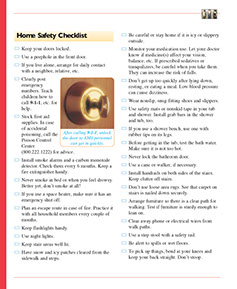
    *  Keep your doors locked.

    *  Use a peephole in the front door.

    *  If you live alone, arrange for daily contact with a neighbor, relative, etc.

    *  Clearly post emergency numbers. Teach children how to call 9-1-1, etc. for help.

    *  Stock first aid supplies. In case of accidental poisoning, call the Poison Control Center (800.222.1222) for advice.

    *  Install smoke alarms and a carbon monoxide detector. Check them every 6 months. Keep a fire extinguisher handy.

    *  Never smoke in bed or when you feel drowsy. Better yet, don’t smoke at all!

    *  If you use a space heater, make sure it has an emergency shut off.

    *  Plan an escape route in case of fire. Practice it with all household members every couple of months.

    *  Keep flashlights handy.

    *  Use night lights.

    *  Keep stair areas well lit.

    *  Have snow and icy patches cleared from the sidewalk and steps.

    *  Be careful or stay home if it is icy or slippery outside.

    *  Monitor your medication use. Let your doctor know if medicine(s) affect your vision, balance, etc. If prescribed sedatives or tranquilizers, be careful when you take them. They can increase the risk of falls.

    *  Don’t get up too quickly after lying down, resting, or eating a meal. Low blood pressure can cause dizziness.

    *  Wear nonslip, snug-fitting shoes and slippers.

    *  Use safety mats or nonskid tape in your tub and shower. Install grab bars in the shower and tub, too.

    *  If you use a shower bench, use one with rubber tips on its legs.

    *  Before getting in the tub, test the bath water. Make sure it is not too hot.

    *  Never lock the bathroom door.

    *  Use a cane or walker, if necessary.

    *  Install handrails on both sides of the stairs. Keep clutter off stairs.

    *  Don’t use loose area rugs. See that carpet on stairs is nailed down securely.

    *  Arrange furniture so there is a clear path for walking. Test if furniture is sturdy enough to lean on.

    *  Clear away phone or electrical wires from walk paths.

    *  Use a step stool with a safety rail.

    *  Be alert to spills or wet floors.

    *  To pick up things, bend at your knees and keep your back straight. Don’t stoop.

    Healthier at Home book by the American Institute for Preventive Medicine. www.HealthyLife.com. All rights reserved.

    © American Institute for Preventive Medicine
  • Home Safety

    Home Safety

    General Home Safety

    Food Safety

    Home Security

    Prepare for Disasters

    Prevent Choking, Suffocation, & Drowning

    Prevent Falls

    © American Institute for Preventive Medicine

  • Home Safety 2

    Home Safety

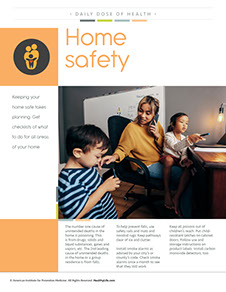
    Mother sitting in an office chair, talking on the phone, with 2 young kids

    Keeping your home safe takes planning. Get checklists of what to do for all areas of your home.

    The number one cause of unintended deaths in the home is poisoning. This is from drugs, solids and liquid substances, gases and vapors, etc. The 2nd leading cause of unintended deaths in the home or a group residence is from falls.

    To help prevent falls, use safety rails and mats and nonskid rugs. Keep pathways clear of ice and clutter.

    Install smoke alarms as advised by your city’s or county’s code. Check smoke alarms once a month to see that they still work.

    Keep all poisons out of children’s reach. Put child-resistant latches on cabinet doors. Follow use and storage instructions on product labels. Install carbon monoxide detectors, too.

    A Year of Health Hints book by the American Institute for Preventive Medicine. www.HealthyLife.com. All rights reserved.

    © American Institute for Preventive Medicine

  • Fire & Burn Awareness

    First Aid

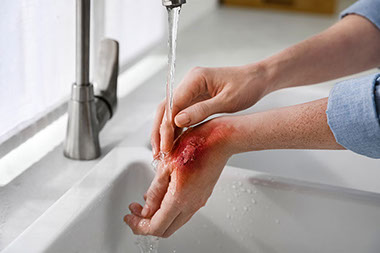
    Dental hygiene products, tooth brush, tooth paste, mouth wash, etc.

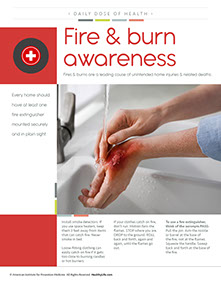
    Fires & burns are a leading cause of unintended home injuries & related deaths.

    Every home should have at least one fire extinguisher mounted securely and in plain sight.

    Install smoke detectors. If you use space heaters, keep them 3 feet away from items that can catch fire. Never smoke in bed.

    Loose-fitting clothing can easily catch on fire if it gets too close to burning candles or hot burners.

    If your clothes catch on fire, don’t run. Motion fans the flames. STOP where you are. DROP to the ground. ROLL back and forth, again and again, until the flames go out.

    To use a fire extinguisher, think of the acronym PASS:

    Pull the pin. Aim the nozzle or barrel at the base of the fire, not at the flames. Squeeze the handle. Sweep back and forth at the base of the fire.

    Health at Home Lifetime book by the American Institute for Preventive Medicine. www.HealthyLife.com. All rights reserved.

    © American Institute for Preventive Medicine
  • Avoiding Chemicals In The Home

    SELF-CARE CORNER

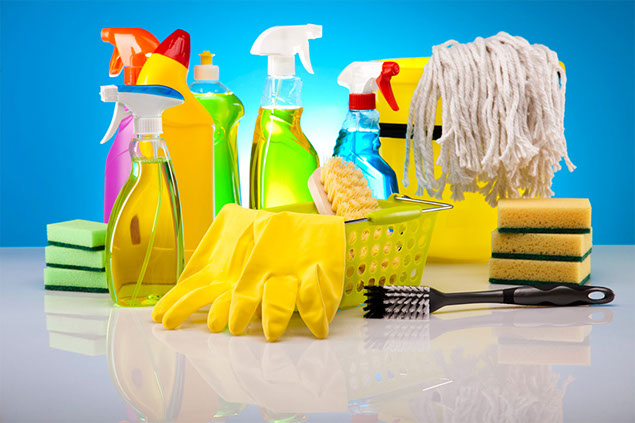
    Image of variety of cleaning supplies.

    Many common household items contain chemicals. Not all chemicals are bad for your health, but some can be harmful. To keep yourself and your family healthy, it’s best to take steps to reduce or avoid chemicals that could be unsafe.

    Did you know possible toxic substances can be found in cleaning products, furniture, carpet and shower curtains? Here’s how to avoid unsafe levels of toxins:

    *Read labels carefully.Many cleaning products have warnings and directions for how to use them. Follow these carefully. For instance, if it says, “use in a well-ventilated area,” you should be sure to open a window to the outside.

    *Be aware of odors.If something gives you a headache, sore throat or makes you cough, this may be a sign that you shouldn’t use it anymore.

    *Protect your skin.Wear gloves when using cleaning products and wash your hands after cleaning. Don’t let children use products with any chemicals in them like bleach, ammonia or strong cleaning ingredients.

    *Get checked for lead.If you live in a home built before 1980, ask your local health department how you can get your home and water checked for lead. You can’t see, smell or taste lead. Lead is harmful to the brain and affects children’s development. Find out if your home is at risk and take steps to get it removed, if needed.

    *Avoid pesticides whenever possible.Contact professional pest control companies for insect problems.

    *Choose fragrance-free products when possible.Many fragrances contain chemicals that disrupt hormone functions in the body. Also, some people are sensitive to fragrances.

    *Replace old nonstick pans that look worn or scratched.They may contain chemicals that can get into your food.

    *Look for cleaning products that have the Environmental Protection Agency’s “Safer Choice” label.For more information, visitwww.epa.gov/saferchoice/products.

    If someone in your home may have ingested a poisonous product, call The American Association of Poison Control Centers at (800) 222-1222.

    Remove dust for a healthier home

    Did you know household dust often contains chemicals and toxins from your home? A good way to reduce your exposure to them is to keep dust down. Try these tips:

    *  Choose non-toxic or “Safer Choice” cleaning products. White vinegar is an effective non-toxic cleaner for many surfaces.

    *  Use a damp rag without chemicals to dust.

    *  Clean floors with a damp mop or a steam-only mop.

    *  Vacuum floors regularly and use a vacuum with a high efficiency particulate air (HEPA) filter.

    *  Open windows to bring in fresh air whenever possible.

    *  Change furnace and air filters regularly.

    *  Wash hands often.

    Source: National Institutes of Health, Environmental Protection Agency

    © American Institute for Preventive Medicine
  • Is Your Home Safe From Radon?

    MEDICAL NEWS

    Image of hand holding an illustration of a home.

    Indoor radon is the second leading cause of lung cancer in the U.S. Breathing it over long periods can present a significant health risk to families all over the country.

    Radon is an invisible radioactive gas that seeps into homes undetected through foundation cracks. It can reach harmful levels if trapped indoors. It travels up from underground sources of uranium in the earth’s crust.

    The radon threat is preventable with some simple steps. In existing homes, families can begin protecting themselves by buying an easy-to-use radon test kit to find out if a high level exists. If so, a high level might be lowered simply with a straight-forward radon venting system installed by a contractor.

    In new homes, builders can easily and economically include radon-resistant features during construction. Home buyers should ask for these. The EPA also recommends that home buyers ask their builder to test for radon gas before they move in.

    According to the EPA, 1 in every 15 homes nationwide has a high radon level. Test your home for radon every 2 years. Retest for it any time you move, make structural changes to your home, or occupy a previously unused level of a house.

    © American Institute for Preventive Medicine