Tag: Home Safety

  • Burglarproof Your Home

    Home Safety

    Don’t be an easy target for thieves.

    Most home burglaries are the work of amateurs who are looking for a quick in and out. Make it look like someone is at home, especially while you are away.

    Dos:

    *  Inspect all locks on exterior doors. If they can be opened with a screwdriver or a credit card, replace them with single cylinder deadbolt locks.

    *  Install outside lighting with motion sensors around the house and garage.

    *  Consider installing an alarm system. Make sure the sign for it can be easily seen from the street.

    *  Close and lock windows. Put a metal or wooden rod between windows and frames, especially in door walls.

    *  Keep shrubs in front of windows no higher than three feet tall. This makes it hard for a burglar to hide in them.

    *  Engrave a personal contact code on your TV and other valuables to make them harder to sell and easier to trace.

    *  Join or start a neighborhood watch group.

    If your home will be vacant for several days or longer:

    *  Ask a relative or a neighbor you trust to watch your house. Consider leaving a key with one of them and ask them to do a periodic walk-through.

    *  Put a stop on delivery of mail and newspapers.

    *  Arrange for someone to mow the lawn or clear snow from the driveway and sidewalk. Ask a neighbor to park in your driveway.

    *  Preset automatic light timers to keep the house   well-lit during the evening and make it look like someone is home.

    *  Keep a radio on while you are gone. Set it to a 24-hour news or talk station.

    *  Find out if your local police department keeps a “vacant house list.” This alerts police to drive by and check on your house if you are gone for a week or longer.

    Action Step

    Store valuable items in places not easily seen. As an extra preventive measure, put valuable jewelry in a bank safety deposit box.

    Ways to Well-Being book by the American Institute for Preventive Medicine. www.HealthyLife.com. All rights reserved.

    © American Institute for Preventive Medicine

  • Prevent Fires & Burns

    Home Safety

    Do This, Not That

    Simple actions can make you and your family safer and keep your things from going up in smoke.

    Most home fire deaths occur at night. If you think that you’ll be awoken by smoke, noise, or breaking glass, then you’re almost certainly wrong. Every fire produces large amounts of carbon monoxide which is a very toxic and odorless gas. You will most likely be overcome by this as you sleep and never wake up.

    Smoke alarms can make the difference between dying in your sleep and getting your family to safety. About two-thirds of home fire deaths occur in homes that have no smoke alarms or have ones that are not working.

    General Guidelines

    Cooking Safety

    Electrical Safety

    Safe at Home - Do This, Not That Book. Published by the American Institute for Preventive Medicine.

    © American Institute for Preventive Medicine

  • Child Safety

    Child Safety

    Do This, Not That

    According to the Centers for Disease Control and Prevention (CDC):

    *  Injuries are the leading cause of death in children and teens.

    *  Each year, nearly 9 million children aged 0 to 19 years are seen in emergency departments for injuries. More than 9,000 children die as a result of being injured.

    *  Injury treatment is the leading cause of medical spending for children.

    The leading causes of injury death differed by age group.

    *  For children less than 1 year of age, 2/3rds of injury deaths were due to suffocation.

    *  Drowning was the leading cause of injury death for those 1 to 4 years of age.

    *  For children 5 to 19 years of age, the most injury-related deaths were due to being an occupant in a motor vehicle traffic crash.

    Most child injures are preventable. Use the tips in this section to keep your children safe at home.

    General Guidelines

    Safe at Home - Do This, Not That Book. Published by the American Institute for Preventive Medicine. www.HealthyLife.com. All rights reserved.

    © American Institute for Preventive Medicine

  • Reduce Indoor Air Pollution For A Healthier Home

    Home Safety

    Women tending to her plants.

    *  Do not smoke. Do not allow smoking in your house.

    *  Open windows as much as you can to let fresh outdoor air in.

    *  Live clean and green. Use baking soda, vinegar, plain soap, etc. and/or 100 percent biodegradable products that do not have chlorine, phosphates, and dyes. Paint with zero-or low volatile organic (VOC) compound paints. Use products with the EPA’s “Design for the Environment (DfE)” on the label. Find out more fromepa.gov/dfe.

    *  Have green houseplants, such as Boston ferns and spider plants. These absorb indoor air pollutants.

    *  Choose energy-efficient products, such as ones with an ENERGY STAR. Find out about these fromenergystar.gov.

    *  To help eliminate gases, odors, chemicals and particles, put an air filter or electronic air cleaner on your furnace. Or use a portable air purifier and/or a vacuum that has a HEPA filter.

    *  To limit mold growth, keep your house clean, dry, and well ventilated.

    A Year of Health Hints book by the American Institute for Preventive Medicine. www.HealthyLife.com. All rights reserved.

    © American Institute for Preventive Medicine

  • Avoiding Stranger Danger Isn’T Just For Kids

    Home Safety

    Image of a person in shadow.

    Always be on alert and aware of your surroundings.

    You don’t have to be paranoid that people are out to get you, but you should be cautious to avoid being robbed, carjacked, raped, and even killed for nothing more than a pair of shoes. Protect yourself and those you love.

    At home:

    *  When you move into a new home or apartment, change all locks right away.

    *  Use deadbolt locks on doors. Secure windows so they can’t be opened more than five inches from the outside.

    *  Keep shades or curtains drawn after dark and turn on outside lights.

    *  Install motion sensor lights that turn on when someone passes by.

    *  Don’t open your door to anyone you don’t know.

    *  Don’t list your first name in the phone book. Keep your name off your mailbox.

    On the go:

    *  Carry a cell phone with you. Make sure it’s charged.

    *  Walk tall on the streets and stay alert. Avoid walking alone at night, dark alleys, and people who look suspicious.

    *  Carry a whistle or stickpin.

    *  Make sure your car has plenty of gas.

    *  If your car breaks down, call for help. Stay inside with the doors locked and the windows up. Turn on your flashers and wait for police or other help to arrive.

    *  If someone approaches your car, crack your window and ask him or her to call for help. Don’t let the person into your car.

    *  Don’t hitchhike or pick up hitchhikers.

    *  If you are going on a date with someone you just met, meet him or her in a public place.

    Action Step

    Use common sense. Don’t jog, bike, or hike alone in secluded areas day or night. Instead, join a club or ask a friend who shares the same interests to join you.
    Ways to Well-Being book by the American Institute for Preventive Medicine. www.HealthyLife.com. All rights reserved.

    © American Institute for Preventive Medicine

  • Home Security

    Home Safety

    Do This, Not That

    According to the FBI:

    *  13% of homes are burglarized a year.

    *  A home is invaded every 12 seconds.

    *  Most home burglaries occur between 9 a.m. and 5 p.m.

    *  85% of all break-ins occur through the door.

    *  67% of all burglaries involved forcible entry. Door frame failure is usually the cause.

    Most home burglaries are the work of amateurs who are looking for a quick way in and out. Follow tips in this section to keep your home as secure as possible. Also, keep others from finding out when you will be on vacation. For example, do not post your whereabouts on social networks. It is best to not leave a spare key under the doormat, in a fake rock, or in a flower pot next to the door. Instead, give a spare key to a trusted neighbor or nearby friend.

    General Guidelines

    Safe at Home - Do This, Not That Book. Published by the American Institute for Preventive Medicine. www.HealthyLife.com. All rights reserved.

    © American Institute for Preventive Medicine
  • Know How To Use A Fire Extinguisher

    Home Safety

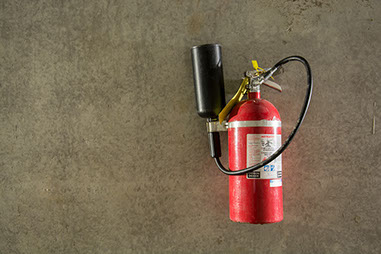
    Image of fire extinguisher.

    Every home should have at least one fire extinguisher. Extinguishers should be mounted in plain sight and be simple for all family members (except small children, of course) to use in an emergency. Show the babysitter how it works, too.

    *  Buy a multipurpose extinguisher rated 2A10BC or higher. The letters indicate the type of fire the extinguisher will douse. “A” units are for combustible materials like paper or wood, “B” units are for flammable liquids like gasoline, and “C” units are for electrical fires. The numbers relate to the size of the fire. The higher the number, the greater the capacity to extinguish that fire.

    *  Check for a UL (Underwriters Laboratory) or FM (Fire Mutual) code. They tell you the product is effective, safe, and reliable.

    *  Be sure the directions are simple to understand. Mount the fire extinguisher securely, in plain sight.

    *  Be sure you understand how the firing mechanism works. Check to see whether you need to push a button or pull a lever. Don’t activate the extinguisher, though. Once you do, it must be serviced and recharged, even if you only use it for a few seconds and the gauge indicates it’s full.

    *  Check the pressure indicator once a month to be sure the extinguisher works.

    To use a fire extinguisher, remember the acronym PASS.

    *  Pull the pin.

    *  Aim the nozzle or barrel at the base of the fire, not at the flames.

    *  Squeeze the handle.

    *  Sweep back and forth at the base of the fire.

    A Year of Health Hints book by the American Institute for Preventive Medicine. www.HealthyLife.com. All rights reserved.

    © American Institute for Preventive Medicine
  • Home Safety Checklist

    Home Safety

    *  Keep your doors locked.

    *  Use a peephole in the front door.

    *  If you live alone, arrange for daily contact with a neighbor, relative, etc.

    *  Clearly post emergency numbers. Teach children how to call 9-1-1, etc. for help.

    *  Stock first aid supplies. In case of accidental poisoning, call the Poison Control Center (800.222.1222) for advice.

    *  Install smoke alarms and a carbon monoxide detector. Check them every 6 months. Keep a fire extinguisher handy.

    *  Never smoke in bed or when you feel drowsy. Better yet, don’t smoke at all!

    *  If you use a space heater, make sure it has an emergency shut off.

    *  Plan an escape route in case of fire. Practice it with all household members every couple of months.

    *  Keep flashlights handy.

    *  Use night lights.

    *  Keep stair areas well lit.

    *  Have snow and icy patches cleared from the sidewalk and steps.

    *  Be careful or stay home if it is icy or slippery outside.

    *  Monitor your medication use. Let your doctor know if medicine(s) affect your vision, balance, etc. If prescribed sedatives or tranquilizers, be careful when you take them. They can increase the risk of falls.

    *  Don’t get up too quickly after lying down, resting, or eating a meal. Low blood pressure can cause dizziness.

    *  Wear nonslip, snug-fitting shoes and slippers.

    *  Use safety mats or nonskid tape in your tub and shower. Install grab bars in the shower and tub, too.

    *  If you use a shower bench, use one with rubber tips on its legs.

    *  Before getting in the tub, test the bath water. Make sure it is not too hot.

    *  Never lock the bathroom door.

    *  Use a cane or walker, if necessary.

    *  Install handrails on both sides of the stairs. Keep clutter off stairs.

    *  Don’t use loose area rugs. See that carpet on stairs is nailed down securely.

    *  Arrange furniture so there is a clear path for walking. Test if furniture is sturdy enough to lean on.

    *  Clear away phone or electrical wires from walk paths.

    *  Use a step stool with a safety rail.

    *  Be alert to spills or wet floors.

    *  To pick up things, bend at your knees and keep your back straight. Don’t stoop.

    Healthier at Home book by the American Institute for Preventive Medicine. www.HealthyLife.com. All rights reserved.

    © American Institute for Preventive Medicine
  • Use Ladders Safely

    Home Safety

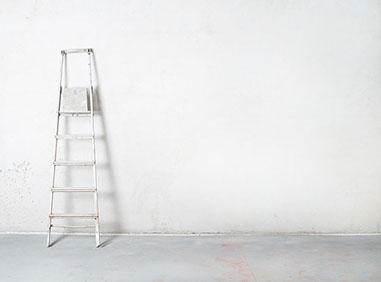
    Image of a ladder.

    Follow safety tips to keep you from an injury sustained on a ladder.

    *  Make sure your ladder is long enough for you to reach the job without standing on the top three steps or overextending your body.

    *  Check the ladder for cracks or weak spots before you use it. Metal ladders should have nonskid steps and footings. (Don’t paint a ladder; you’ll hide defects.)

    *  Make sure the soles of your shoes or boots are dry and have enough tread to prevent slipping.

    *  Always steady a ladder on firm ground or a flat board.

    *  Never place a ladder in front of a door that someone may open.

    *  Wear tools on a belt or keep them in your pocket so you can keep your hands free when climbing up or down a ladder.

    *  To avoid losing your balance while standing on a ladder, don’t lean too far back or to the side.

    *  Don’t use a ladder outdoors on a very windy day.

    *  To avoid electrocution, don’t use metal ladders near power lines.

    A Year of Health Hints book by the American Institute for Preventive Medicine. www.HealthyLife.com. All rights reserved.

    © American Institute for Preventive Medicine