Tag: hydrate

  • Keeping Cool When Work Heats Up

    WORK LIFE

    Image of a great of employees.

    Have you ever been in a tense situation at work? Perhaps two people were arguing or someone got angry with you.

    Though it’s hard to stay calm in these types of situations, it’s the best thing you can do. If you don’t react strongly, you can help defuse tension and find a helpful resolution.

    Focus on a solution

    It’s easy to get wrapped up in the problem, not the solution. Ask yourself, “what are we trying to accomplish?” Many workplace arguments start because two people have different ideas about what should be done. But, both people ultimately want to fix the same problem.

    Sometimes, an argument can be stopped if both parties remember what they both want: a good outcome. Talk about what you agree upon, and try to build from there.

    Take pause

    When something stressful is happening, your body immediately wants to respond. You may feel tense and anxious. You may also want to run from the situation or defend yourself. This is a normal “fight-or-flight” response that wants to protect you. But, this isn’t always the best way to react. Here’s how you can stay in control:

    *  Watch your breathing. Take deep, slow breaths to help calm your body’s natural response to stress. This can help you think more clearly and lower your anxious feelings.

    *  Think before you speak. It’s okay to pause before answering a question. Also, you can say, “Let me think about that for a moment.” This gives you time to come up with a professional response, rather than an angry one.

    *  Wait to hit “send.” Read emails out loud to yourself before you send them. Save the draft and wait before you send it if you’re angry. This can help avoid something you will later regret.

    © American Institute for Preventive Medicine

  • Dry Skin

    Skin Conditions

    Signs & Symptoms

    *  Itchy skin. The skin can be red from scratching it.

    *  Chapped skin.

    *  Skin cracks, peels, and/or flakes.

    Causes

    *  Aging. The body naturally produces less oil and moisture.

    *  Cold winter weather. Dry air or heat.

    *  Washing the skin often. Using harsh skin products.

    *  Chronic and excessive sun exposure.

    *  Allergies. An underactive thyroid gland. Diabetes. Kidney disease. Other skin conditions, such as psoriasis.

    Treatment

    Dry skin is not a serious health risk. It can be managed with self-care. When dry skin is a symptom of a health problem, treating the problem treats the dry skin.

    Questions to Ask

    Self-Care / Prevention

    *  Drink 8 or more glasses of water a day.

    *  Apply an oil- based lotion daily.

    *  Wear rubber gloves when you wash dishes.

    *  Take showers instead of baths. Use warm (not hot) water. Try sponge baths.

    *  Apply a moisturizing cream while your skin is damp. Use products with lanolin.

    *  If you do bathe, do so for only 15 to 20 minutes in lukewarm water. Pat yourself dry. Do not rub.

    *  Put soap on a washcloth, not right on the skin.

    *  Use a mild liquid soap, like Cetaphil lotion or use a fatted soap. Avoid deodorant, medicated, or alkaline soaps.

    *  Don’t use moisturizers with fragrances, preservatives, or alcohol.

    *  Use a night cream for the face.

    *  Stay out of the strong sun. Do not use tanning salons. When in the sun, use a sunblock with a sun protection factor (SPF) of at least 15.

    *  Don’t scratch or rub dry skin.

    Resources

    American Academy of Dermatology

    866.503.SKIN (503.7546)

    www.aad.org

    Healthier at Home book by the American Institute for Preventive Medicine. www.HealthyLife.com. All rights reserved.

    © American Institute for Preventive Medicine

  • Heat Exhaustion & Heat Stroke

    First Aid

    Sweat evaporates from the skin to cool the body. If this personal cooling system does not work right or fails to work, heat exhaustion or a heat stroke can occur.

    Heat exhaustion is a warning that the body is getting too hot. With a heat stroke, body organs start to overheat. They will stop working if they get hot enough. If it is not treated, a heat stroke can result in death.

    Signs & Symptoms

    For a Heat Stroke

    These signs and symptoms can occur suddenly with little warning:

    *  Very high temperature (104ºF or higher).

    *  Hot, dry, red skin. No sweating.

    *  Deep breathing and fast pulse. Then shallow breathing and weak pulse.

    *  Confusion. Hallucinations.

    *  Convulsions.

    *  Loss of consciousness.

    For Heat Exhaustion

    *  Normal, low, or only slightly elevated body temperature.

    *  Cool, clammy, pale skin. Sweating.

    *  Dry mouth. Thirst.

    *  Fatigue. Weakness. Feeling dizzy.

    *  Headache.

    *  Nausea. Vomiting can occur.

    *  Muscle cramps.

    *  Weak or rapid pulse.

    Causes

    Anything that keeps the body’s natural cooling system from working right can lead to heat exhaustion and heat stroke. This includes:

    *  Extreme heat and humidity.

    *  Being in places without fans or air conditioners during hot, humid weather.

    *  Not being able to get to public air-conditioned places. Waiting for a bus or other type of public transportation in hot, humid weather.

    *  Overdressing.

    *  Changes in the skin due to aging.

    *  Poor circulation. Heart, lung, and/or kidney disease.

    *  Not being able to sweat due to medicines, such as water pills and some used for mental illnesses.

    *  Alcohol or drug use.

    *  Any illness that causes weakness, fever, vomiting, or diarrhea.

    Treatment

    A heat stroke is a medical emergency.

    Heat exhaustion may respond to self-care measures. If not, medical care is needed.

    Prevention

    *  Drink lots of liquids, especially if your urine is dark yellow. Drink water, sport drinks, such as Gatorade, etc.

    *  Do not stay in or leave anyone in a closed, parked car during hot weather.

    *  Don’t have drinks with alcohol or caffeine.

    *  Use caution when you are in the sun. At the first sign of heat exhaustion, get out of the sun. If you can, avoid midday heat. Do not do vigorous activity during the hottest part of the day (11:00 a.m. to 4:00 p.m.).

    *  Wear light, loose-fitting clothing, such as cotton, so sweat can evaporate. Wear a wide-brimmed hat with vents. Use an umbrella for shade.

    *  If you feel very hot, try to cool off. Open a window. Use a fan. Go to an air-conditioned place.

    *  Check with your doctor about sun exposure if you take:

    – Water pills.

    – Mood-altering medicines.

    – Some antibiotics, such as tetracycline.

    Questions to Ask

    Self-Care / First Aid

    First Aid for a Heat Stroke

    Call 9-1-1!

    Before Emergency Care Arrives

    *  Move the person to a cool place indoors or under a shady tree. Place the feet higher than the head to avoid shock.

    *  Remove clothing. Either wrap the person in a cold, wet sheet; sponge the person with towels or sheets that are soaked in cold water; or spray the person with cool water. Fan the person.

    *  Put ice packs or cold compresses on the neck, under the armpits, and on the groin area.

    *  Once the person’s temperature gets to 101ºF, place him or her in the Recovery Position. Do not lower the temperature further.

    *  Don’t give fever reducing medicine.

    *  Don’t use rubbing alcohol.

    First Aid for Heat Exhaustion

    *  Move to a cool place indoors or in the shade. Lie down.

    *  Loosen clothing.

    *  Drink fluids, such as cool or cold water. Add 1/2 teaspoon of salt to 1 quart of water. Sip this. Or, drink sport drinks, such as Gatorade, etc.

    *  Have salty foods, such as saltine crackers, if you tolerate them.

    *  Massage and stretch cramped muscles.

    Healthier at Home book by the American Institute for Preventive Medicine. www.HealthyLife.com. All rights reserved.

    © American Institute for Preventive Medicine

  • Skin Safety

    Skin Conditions

    The skin is your body’s largest organ. It protects your internal organs from environmental irritants, infections, and ultraviolet light; all of which can be harmful. Take good care of your skin so it can do its job. Keep your skin clean and protect it from injury.

    Tattoo and Body Piercing Safety

    You may already have one or more tattoos and/or area(s) of your body pierced. You may be thinking about getting one of these procedures done as a way to fit in and look like others; as a way to express your individuality; and/or to get noticed. Before you get a tattoo or a part of your body pierced, consider the following:

    *  In many states, the law does not allow minors to get tattoos. Find out about this in your state.

    *  Unsterile tattooing equipment and needles can transmit serious infectious diseases, such as tetanus, hepatitis B, and HIV. Never do one of these procedures on yourself or have anyone else do it that is not certified by the Association of Professional Piercers (APP) or the Alliance of Professional Tattooists (APT). Certified members are trained in strict safety and health requirements. Because of the high risk of infection, you cannot donate blood for one year after getting a tattoo.

    *  Tattoos and body piercings also carry the risk of less serious local infections. You will need to follow proper care procedures for weeks or months after the procedure to reduce the risk of getting an infection. You may also get large growths of scar tissues called keloids.

    *  Tattoos are not easily removed and in some cases may cause permanent discoloration. Keep a record of the dyes used in the tattoo you get. This includes the lot number of each pigment. If you choose to get a tattoo removed in the future, this information will be helpful. Think carefully before getting a tattoo and consider the possibility of an allergic reaction. Know that it is expensive, too, to get a tattoo removed. Don’t get a tattoo or body piercing done on an impulse. Wait at least 24 hours.

    *  Visit several tattoo parlors to see whether the tattooist follows recommended safety guidelines and sterilization techniques, such as using a heat sterilization machine regulated by the Food and Drug Administration (FDA).

    *  For body piercing, to avoid allergic reactions and infections, jewelry made from non- corrosive, non-toxic metals should be used. Examples are solid 14K gold (not gold-plated), niobium, surgical stainless steel, and titanium.

    *  After the procedure, follow the skin care guidelines provided by your skin piercer or tattooist. Care of the site will depend on its location and/or the procedure you had done.

    *  According to the APT guidelines, these practices should be followed:

    – The tattooist should have an autoclave (a heat sterilization machine regulated by the FDA) on the premises.

    – Consent forms (which the customer must sign) should be handed out before tattooing.

    – Immediately before tattooing, the tattooist should wash and dry his or her hands thoroughly and put on medical latex gloves, which should be worn at all times during application of the tattoo.

    – Needle bars and tubes should be autoclaved after each customer. Non-autoclavable surfaces, such as pigment bottles, drawer pulls, chairs, tables, sinks, and the immediate floor area, should be cleaned with a disinfectant, such as a bleach solution.

    – Used absorbent tissues should be placed in a special puncture-resistant, leak-proof container for disposal.

    Protect Your Skin From Sun Damage

    Do you look forward to semester breaks so you can relax in the sun and get a tan? Many students do. A suntan looks good, but it is a sign that your skin is trying to protect itself from damage. Be especially careful not to get sunburned. In fact, you should never get sunburned! It can lead to premature aging, wrinkling of the skin, and skin cancer. (Be extra cautious if you have a family history of skin cancer.) Even if you are not concerned about these problems now, the pain and blisters that come with a severe sunburn can make spring break unbearable.

    The risk for sunburn is increased for persons with fair skin, blue eyes, red or blond hair, and for persons taking some medicines. These include birth control pills; some antibiotics, such as tetracycline and sulfa drugs; and Benadryl, an over-the-counter antihistamine.

    To Prevent Sunburn

    *  Avoid exposure to the midday sun (10 a.m. to 4 p.m. standard time or 11 a.m. to 5 p.m. daylight saving time).

    *  Use sunscreen with a sun protection factor (SPF) of 15 to 30 or more when exposed to the sun. The lighter your skin, the higher the SPF number should be. Apply the sunscreen 15 to 30 minutes before you go out in the sun. Use about 2 tablespoons to adequately cover all exposed body parts. Reapply sunscreen every 60 to 90 minutes, even if the sunscreen is water-resistant.

    *  Along with sunscreen, use moisturizers, makeup, lip balm, etc. that contain sunscreen. Use water- based ones if you have acne.

    *  Wear a wide-brimmed hat and long sleeves.

    *  Wear clothing with sunscreen protection or muted colors, such as tan. Bright colors and white reflect the sun onto the face.

    *  Wear sunglasses that absorb at least 90% of both UVA and UVB rays.

    Student Self-Care book by the American Institute for Preventive Medicine. www.HealthyLife.com. All rights reserved.

    © American Institute for Preventive Medicine

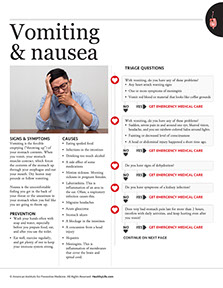
  • Vomiting & Nausea

    Abdominal & Urinary Conditions

    Signs & Symptoms

    *  Vomiting is throwing up the stomach’s contents. Dry heaves may precede or follow vomiting.

    *  Nausea is when you feel like you’re going to throw up.

    Causes

    *  Viruses in the intestines. Eating spoiled food or eating or drinking too much.

    *  A side effect of some medications, such as certain antibiotics.

    *  Motion sickness. Morning sickness in pregnant females.

    *  Labyrinthitis. This is inflammation of an area in the ear. Often, a respiratory infection causes this.

    *  Migraine headaches.

    *  Acute glaucoma.

    *  Stomach ulcers.

    *  A blockage in the small or large intestine (bowel).

    *  A concussion from a head injury.

    *  Hepatitis.

    *  Meningitis. This is inflammation of membranes that cover the brain and spinal cord.

    Questions to Ask

    Self-Care / Prevention

    For Vomiting

    *  Don’t smoke, drink alcohol, or take aspirin.

    *  Don’t eat solid foods. Don’t drink milk.

    *  Drink clear liquids at room temperature (not too hot or cold). Good examples are water; sport drinks, such as Gatorade; diluted fruit juices; ginger ale, etc. Take small sips. Drink only 1 to 2 ounces at a time. Stir carbonated beverages to get all the bubbles out before you sip them. Suck on ice chips if nothing else will stay down. {Note: For children, contact your child’s doctor about using over- the-counter (OTC) mixtures, such as Pedialyte.}

    *  Gradually return to a regular diet, but wait about 8 hours from the last time you vomited. Start with foods like dry toast, crackers, rice, and other foods that are easy to digest. Or, eat foods as tolerated. Avoid greasy or fatty foods.

    For Nausea Without Vomiting

    *  Drink clear liquids. Eat small amounts of dry foods, such as soda crackers, if they help.

    *  Avoid things that irritate the stomach, such as alcohol and aspirin.

    *  For motion sickness, use an over-the-counter medicine, such as Dramamine. You could also try Sea-Bands, a wrist band product that uses acupressure on a certain point on the wrist to control motion sickness. Sporting goods stores and drugstores sell Sea-Bands.

    Resources

    Foodsafety.gov

    www.foodsafety.gov

    Healthier at Home book by the American Institute for Preventive Medicine. www.HealthyLife.com. All rights reserved.

    © American Institute for Preventive Medicine

  • Drink Water

    Healthylife® Weigh

    Part 3

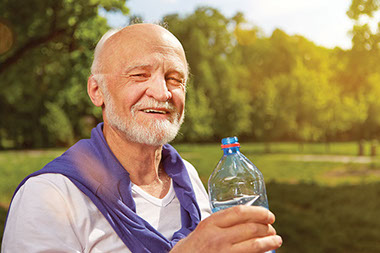
    Elderly man drinking water.

    Water does many important jobs for your body:

    *  Transports nutrients

    *  Helps you digest food

    *  Carries waste from the body

    *  Regulates body temperature

    *  Gives a feeling of fullness

    *  Helps break down fat for energy

    *  Lubricates joints

    *  Helps prevent muscle cramps

    Action Steps:

    *  Drink a glass of water before meals and snacks. This may help you manage your appetite.

    *  Replace a sugar-sweetened drink with water.

    *  Eat foods that are high in water, like cucumbers, leafy greens, and watermelon.

    *  Drink water regularly throughout the day.

    *  Keep a water bottle handy that you can refill when needed.

    *  If you are increasing your fiber intake, also increase your water intake to reduce the risk of constipation.

    How much should I drink?

    Your water needs depend on your activity level and weight. A general rule of thumb is to drink 8 cups of water per day. You may need more if you are very active or sweat a lot.

    How do I know if I’ve had enough?

    Check your urine. When you are properly hydrated, your urine should be light yellow or clear. If it is a darker yellow, you need to drink more water.

    © American Institute for Preventive Medicine

  • Sporting Events And Concerts

    Healthylife® Weigh

    Part 3

    Couple enjoying snacks at an outdoor event.

    Food courts and concession stands usually have very limited menus. Stadiums or arenas may not allow you to bring your own food or drink into the venue. Here are some tips to help you stick to your healthy goals:

    *  Eat before you go.

    *  Order water.

    *  Follow the fast food guidelines.

    *  Split a meal or snack with a friend.

    *  Choose treats wisely.

    *  Limit alcohol.

    What to do when no healthy choices are available:

    1. If you are hungry, eat something small. It may not be the healthiest choice, but it is important to listen to your body’s physical hunger cues.

    2. Drink water.

    3. Chew on sugar-free gum with xylitol.

    4. Make your next meal or snack a healthy one.

    5. Plan ways to make healthy choices for future events. If possible, eat a meal or have a healthy snack before the event. Plan to limit how much you will eat of items sold at the event.

    © American Institute for Preventive Medicine

  • 5 Ways To Make It A Healthy Work Day

    WORK LIFE

    Image of a healthy lunch.

    Are you looking for ways to be your best at your job? No matter what kind of work you do, you can improve your overall health and productivity with some simple, everyday habits.

    Get enough sleep.

    The National Heart, Lung, and Blood Institute says getting the right amount of rest helps you both physically and mentally. It boosts your energy and improves your immune system. It may also lower your risk of heart disease, diabetes and stroke. It helps you think, learn, react and deal with stress and anxiety. Aim for seven to nine hours of sleep each night.

    Stay hydrated.

    Drinking enough water is important for any job – whether you sit or stand at a desk, or you’re lifting and moving throughout your day. When you are even slightly dehydrated, you can feel sluggish and you may struggle with problem-solving. If possible, take sips from a water bottle as you go through your day. The color of your urine can tell you if you’re staying hydrated. It should be colorless or light yellow, according to The American Academy of Family Physicians.

    Pack healthy snacks & lunches.

    Eating fresh fruits, vegetables, whole grains and lean protein can give you energy as you move through your day. Don’t choose unhealthy processed foods or fast food. Pack a healthy lunch the night before work, so you can just grab it and go in the morning.

    Wash your hands often.

    Areas in your workplace can be hot spots for germs that can make you sick. Wash your hands with soap and water after using the restroom, before eating, and after touching shared surfaces, such as door handles and computer keyboards. If someone around you is ill, avoid contact with them and be extra diligent about washing your hands.

    Get up & move.

    Avoid sitting at a desk all day without getting some physical activity. Get up and stretch when possible such as during a long conference call. If you get a lunch break, consider taking a 10-minute walk. This can energize you and help you cope with a stressful day.

    © American Institute for Preventive Medicine